Tag Archives: Middle East

Michele Bachmann wins foreign policy debate, Santorum second

Here’s a summary from the highly-biased pro-Romney Jennifer Rubin of the Washington Post.

Excerpt:

The foreign policy debate Tuesday night was a surprise on many counts. It was lively and serious, which many debates haven’t been. Rep. Michele Bachmann (R-Minn.) exceeded expectations. Rick Santorum showed personal restraint (not complaining about the lack of attention) and displaying his depth of knowledge.

[Bashes Gingrich for a while]

[…]At the other extreme was Bachmann who was poised, informed and knowledgable throughout. She made clear that Obama’s lack of leadership is responsible for Iran’s progress on a nuclear weapon. She defended aid to Pakistan which is in our national security interest. She made an excellent point about sending our dollars to China, which in effect builds up its military at the expense of ours. She pivoted on an energy question to chide Obama for delaying on the Keystone pipeline. If she performs this well in future debates, look for her to make progress reclaiming support in Iowa.

[Praises Romney for a while]

[…]Santorum also had a strong night. He turned the conversation on the “war on terror” to a discussion of jihadism. He defended foreign aid (a smart, but not popular position). On the immigration issue he wove in his support for an economic plan focused on reviving American manufacturing. And he got Romney to agree in the closing round that we have an acute national security problem in this hemisphere. He was calmer and more presidential than he has been in past debates.

However, Gingrich definitely got stung by his support for amnesty. He may be smart, but he’s quite moderate on many issues. Not as liberal as Romney, though.

I think it’s time that the Republican party give Michele Bachmann another look. And I think Santorum is a solid on social and foreign policy issues. He’s just moderate on fiscal issues.

More about Michele Bachmann

Speeches:

Reactions from her first debate performance:

Profiles of Michele Bachmann:

And here are some of her media interviews and speeches in the House of Representatives.

Related posts

IAEA report expected to show that Iran now has the ability to build a nuclear bomb

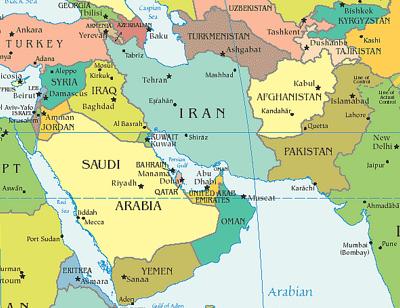
Map of the Middle East

From Fox News.

 Pakistan, North Korea and a former weapons scientist from the Soviet Union reportedly all helped Iran with its nuclear weapons quest, according to an impending U.N. nuclear watchdog report expected to show the Islamic regime has mastered the science of building a bomb.

The International Atomic Energy Agency’s report due out this week will lay out findings collected over years of intelligence gathering. It is expected to reinforce concerns that Iran didn’t actually abandon its weapons-related research in 2003, as indicated by a 2007 National Intelligence Estimate given to then-President George W. Bush.

U.S. intelligence agencies reported in 2007 that they believed Tehran halted its experiments in response to international and domestic pressures. But an ongoing investigation by the Fox News Specials Unit concludes that more than 600 entities were working inside Iran to support its program, and at least 40 sites where the work is taking place are suspected to exist across the country.

For British, French and American investigators, one of the most concerning sites is the Qom uranium enrichment construction site, hidden deep in the mountains. The latest intelligence shows that security walls have doubled around the site. Its scale cannot be explained by any known civilian nuclear energy use.

David Albright, a former IAEA official and president of the Washington-based Institute for Science and International Security who reviewed the intelligence files, told The Washington Post that Iran’s nuclear weapons program “never really stopped” and also concluded that Iran “has sufficient information to design and produce a workable implosion nuclear device.”

Western diplomats and nuclear experts briefed on the findings in the IAEA report also told the Post that foreign scientists offered assistance in overcoming key technical hurdles.

The documents reportedly show that a former Soviet weapons scientist named Vyacheslav Danilenko allegedly tutored Iranians for several years on building high-precision detonators needed to trigger a nuclear chain reaction. The Post reported that Pakistani and North Korean officials also gave to Iran mathematical formulas and codes as well as a so-called neutron initiator, which shoots a stream of atomic particles into the weapon’s fissile core at the start of the chain reaction.

There are two things to point out about this story. The first thing is that it was a strategic disaster for us to back out of Iraq, because that’s where we need to be to be able to gather intelligence, mount covert ops, run interdiction on attempts to transfer WMDs to Syria, etc. We really need to be in theater in order to deal with Iran, Syria and groups like Hezbollah, Iran’s Quds force and Muqtada Al Sadr’s Mahdi Army.

Unfortunately, I think that David Axelrod is running our national security now, which is why Obama pulled out forces out of Iraq.

Excerpt:

Three years, two abject failures. The first was the administration’s inability, at the height of American post-surge power, to broker a centrist nationalist coalition governed by the major blocs — one predominantly Shiite (Maliki’s), one predominantly Sunni (Ayad Allawi’s), one Kurdish — that among them won a large majority (69 percent) of seats in the 2010 election.

Vice President Biden was given the job. He failed utterly. The government ended up effectively being run by a narrow sectarian coalition where the balance of power is held by the relatively small (12 percent) Iranian-client Sadr faction.

The second failure was the SOFA [Status of Forces Agreement] itself. U.S. commanders recommended nearly 20,000 troops, considerably fewer than our 28,500 in Korea, 40,000 in Japan and 54,000 in Germany. The president rejected those proposals, choosing instead a level of 3,000 to 5,000 troops.

A deployment so risibly small would have to expend all its energies simply protecting itself — the fate of our tragic, missionless 1982 Lebanon deployment — with no real capability to train the Iraqis, build their U.S.-equipped air force, mediate ethnic disputes (as we have successfully done, for example, between local Arabs and Kurds), operate surveillance and special-ops bases, and establish the kind of close military-to-military relations that undergird our strongest alliances.

The Obama proposal was an unmistakable signal of unseriousness. It became clear that he simply wanted out, leaving any Iraqi foolish enough to maintain a pro-American orientation exposed to Iranian influence, now unopposed and potentially lethal. Message received. Just this past week, Massoud Barzani, leader of the Kurds — for two decades the staunchest of U.S. allies — visited Tehran to bend a knee to both President Mahmoud Ahmadinejad and Ayatollah Ali Khamenei.

The second thing to point out is the question of what we should be doing to restrain Iran’s nuclear ambitions. Click here for a run-down of some of our options. There are a lot of things we could do short of all-out war, but that would require that we had a statesman in the White House – someone who takes foreign policy seriously and treats it as more than a political issue.

A previous post I wrote showed how arms that China sells to Iran make their way to Hezbollah to be used against Israeli assets. That’s what we can expect will happen with nuclear weapons that Iran develops. Are we willing to accept that? There is also the matter of the Mexican drug cartels, the Quds force, Hugo Chavez in Venezuela and our porous border with Mexico. Are we willing to risk that?

We need to take the gloves off our national security agencies, especially the CIA, and do what has to be done.

Top ten foreign policy and national security issues for 2012

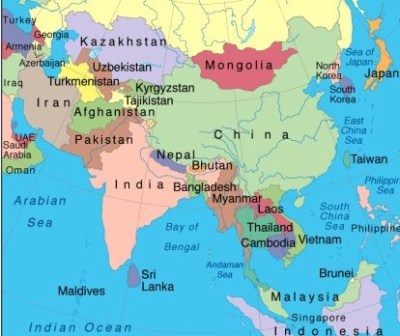
Map of Asia
Map of Asia

From the American Enterprise Institute.

Here’s the list:

  1. Iran, and the American retreat from Iraq
  2. Dealing with Islam and China in South Asia
  3. America’s strategy for Pakistan
  4. Defense spending priorities
  5. American support for Israel
  6. The Islamization of Turkey
  7. Collapse of the European economies
  8. Demographic crisis in Europe
  9. Demographic crisis in Russia
  10. Strategy for the Middle East

They have one article linked for each topic, so I chose the Islamization of Turkey.

Full text:

Turkey was a key American ally throughout the Cold War. As one of only two NATO countries to share a border with the Soviet Union, Turkey proved pivotal not only to the defense of Europe but also for American interests in Asia. The Turkish army fought alongside U.S. troops in Korea. Americans embraced Turkey not only for its strategic role, but also for its values. The Turkish government was decidedly Western-leaning. Turkey may have been majority Muslim, but most Turks saw their future tied more to the West than the Middle East.

Over the past nine years, however, Turkey has changed. No longer can Turkey be called a democracy. The Pew Global Attitudes Project now ranks Turkey as the most anti-American country it surveys. Reporters Without Frontiers ranks Turkish press freedom below even Zimbabwe and Venezuela. Turkey has imprisoned more journalists than even China and Iran. As Prime Minister Recep Tayyip Erdoğan has sought to Islamize society, Turkish women have lost both their equality and safety: The murder rate of women has increased 1,400 percent since Erdoğan’s Justice and Development Party took power.

Erdoğan has reoriented Turkey’s foreign policy as well. Turkey now not only embraces the Arab world, but it allies itself with its more radical factions: Turkey endorses Hamas, Hezbollah, Sudan’s genocidal dictator Omar al-Bashir, and the Islamic Republic of Iran. Whereas a decade ago, the alliance between Turkey and Israel stabilized the Eastern Mediterranean, today diplomats worry that Turkey’s antagonism toward both Israel and Cyprus could lead to military conflict in the region. In September 2010, Turkey raised eyebrows at the Pentagon when it held secret war games with the Chinese air force without first alerting Washington. Because Turkey increasingly is the obstacle to NATO consensus, its future in the defensive alliance may now be open to question.

Any new president will be faced with serious decisions regarding Turkey. Should Turkey remain in NATO? If so, should the United States share its next generation F-35 Joint Strike Fighters, Predators, and AWACS aircraft with Turkey? Lastly, if Erdoğan fulfills his promise to use the Turkish navy to challenge Israel’s blockade of Gaza, leading to a fight between two traditional American allies, on whose side will the White House be, and what actions would the new president take?

This is a primer, so the articles are fairly short. Just enough to give you background information on the hot spots that the next President will have to deal with. Can you think of any issues they left out? I think that we should also be concerned with the drug cartels in Mexico, the continuous sabre-rattling from Venezuela, threats to our Asian allies from China, and whether we still need to have so many troops in Europe and South Korea.

It’s good for Christians to have some awareness of national security and foreign policy issues. It only takes an hour to read a few articles and to have some understanding of the issues we are facing, so that we can discuss them with others and vote properly. There’s going to be a foreign policy debate for the GOP primary on November 22, 2011, so it would be good for us to study up so we can understand what they are talking about.