
Tag Archives: Martyr

Left-wing media silent on Afghan Christian’s impending execution

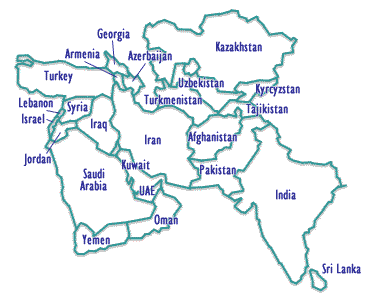
Map of the Middle East

This is from National Review. (H/T Kelly)

Excerpt:

A terrible drama is unfolding in Afghanistan: There are reports that Said Musa, whose situation I described at Christmas, will soon be executed for the ‘crime’ of choosing to become a Christian. (For background, see here.)

Musa was one of about 25 Christians arrested on May 31, 2010, after a May 27 Noorin TV program showed video of a worship service held by indigenous Afghan Christians; he was arrested as he attempted to seek asylum at the German embassy. He converted to Christianity eight years ago, is the father of six young children, had a leg amputated after he stepped on a landmine while serving in the Afghan Army, and now has a prosthetic leg. His oldest child is eight and one is disabled (she cannot speak). He worked for the Red Cross/Red Crescent as an adviser to other amputees.

He was forced to appear before a judge without any legal counsel and without knowledge of the charges against him. “Nobody [wanted to be my] defender before the court. When I said ‘I am a Christian man,’ he [a potential lawyer] immediately spat on me and abused me and mocked me. . . . I am alone between 400 [people with] terrible values in the jail, like a sheep.” He has been beaten, mocked, and subjected to sleep deprivation and sexual abuse while in prison. No Afghan lawyer will defend him and authorities denied him access to a foreign lawyer.

Any and every human being who is imprisoned, abused, or tortured for the free and peaceful expression of their faith deserves our support, but Musa is also a remarkable person and Christian. In a letter smuggled to the West, he says, “The authority and prisoners in jail did many bad behaviour with me about my faith in the Lord Jesus Christ. For example, they did sexual things with me, beat me by wood, by hands, by legs, put some things on my head.”

He added a thing much more important to him, that they “mocked me ‘he’s Jesus Christ,’ spat on me, nobody let me for sleep night and day. . . . Please, please, for the sake of Lord Jesus Christ help me.” (View the full letter here)

He has not, in fact, even appealed to be released, only to be transferred to another prison. He has also stated that he is willing to give his life for his faith. “Please, please you should transfer me from this jail to a jail that supervises the believers. . . . I also agree . . . to sacrifice my life in public [where] I will tell [about my] faith in Lord Jesus Christ, son of God, [so] other believers will take courage and be strong in their faith.”

Newspapers in the U.K. and elsewhere in Europe have reported the story, but with, the exception of the Wall Street Journal and, of course, NRO, American outlets have not found it worthy of attention. The Journal reports that “Afghan officials have been unapologetic: ‘The sentence for a convert is death and there is no exception,’ said Jamal Khan, chief of staff at the Ministry of Justice. ‘They must be sentenced to death to serve as a lesson for others.’”

It’s instructive to consider the types of victims that the left wing-media covers. There were thousands of stories about Matthew Sheppard and Rodney King. But almost no stories at all about Said Musa. I wonder why that is?

Is there a difference between Christian martyrs and Muslim martyrs?

I found an interesting post on the Truth in Religion & Politics blog that asks and answers the question.

Excerpt:

What is so unique about the earliest disciples of Jesus being martyred for their claim Jesus was raised from the dead?  Many believers of various religious systems–Muslims for example–die and commit suicide regularly for what they believe to be true.  Christian apologists arguing for the historicity of the Resurrection use the fact that Jesus’ disciples and subsequent followers allowed themselves to be killed, without recanting their conviction that Jesus was raised from the dead.  Is this line of reasoning valid?  Does the fact that others die willingly for their religious faith undercut the veracity of the argument for the Resurrection?

The most important aspect of this detail is the historical proximity of the disciples to the event.  The disciples were contemporaries of Jesus and the Resurrection event.  They were witnesses to Jesus’ life; witnesses to His death; and claimed to be witnesses of His being alive after having been buried.

If we claim the Resurrection was a story invented by the disciples, we have to also have to claim they died for an event they knew they invented themselves.

[…]Keep in mind I am not arguing for modern or even 2nd century Christian martyrs as evidence, but rather the first disciples who claimed to be actual witnesses to the events themselves.  Muslims who die in suicide attacks are not first hand witnesses to Allah, or miracles of Allah.  Mohammad did not perform miracles, he claimed only to be a prophet.  Given this aspect of Islam, Mohammad’s cohorts were getting their theological insight second-hand from someone who claimed to speak for God.  They are not in parallel circumstances as the first martyred disciples who claimed to see with their own eyes the events for which they were killed.  Muslims willingly die for what someone told them was true, and in fact they do believe the message of Mohammad is true, but they lack first hand experience of his claims; they could not necessarily have known his claims were false.  Jesus’ disciples claimed to be eye witnesses to the Resurrection, they would be in the position to know their own story was false.

Lots of people die for their beliefs, but only the first century Christian martyrs were in a position to know whether they saw Jesus after his death or not.

Contrasting Muslim martyrs and Christian martyrs

Claudia Rosett

Story from Forbes magazine, by Claudia Rosett. (H/T Muddling Towards Maturity)

Excerpt:

This past Christmas Day brought us the stories of two young men, both willing to martyr themselves for their beliefs, but in ways and for visions so utterly different that their tales might serve as a parable for the defining struggles of our time.

One, as you surely know, was the underwear bomber, Umar Farouk Abdulmutallab, a wealthy young Muslim from a prominent Nigerian family. Following his embrace of radical Islam, he tried to sacrifice himself–allegedly–in a botched attempt to sow terror and death by blowing up an American airliner packed with 289 other people, en route to Detroit. Having entered American air space decked out as a suicide bomber, he is now availing himself of U.S. constitutional rights, granted to him by the Obama Administration, to plead not guilty to criminal charges.

The other martyr, in stark contrast, was a 28-year-old Christian missionary, Robert Park. An American of Korean descent, Park offered himself up peacefully, on Christmas Day, for the cause of life and liberty for others. He went to northeast China, and from there walked across the frozen Tumen River into North Korea. Witnesses told reporters that as he went, he called out, in Korean, messages of God’s love, as well as “I am an American citizen.” He took with him a letter to North Korean tyrant Kim Jong-il, asking Kim to open his country and shut down his prison camps.

Are all religions basically the same? Are the beliefs different? Do different beliefs result in different actions? Does it make sense to equate Islam with Christianity? What do people do when they are fully committed to their religion? These are two different versions of full commitment. Two different versions of full commitment.

Park’s final interview with Reuters is here.