Tag Archives: Invention

Is Obama right to say that technology destroys jobs?

From the Wall Street Journal, a rebuttal to the community organizer’s latest episode of economic illiteracy.

Excerpt:

Today, a couple of workers can manage an egg-laying operation of almost a million chickens laying 240,000,000 eggs a year. How can two people pick up those eggs or feed those chickens or keep them healthy with medication? They can’t. The hen house does the work—it’s really smart. The two workers keep an eye on a highly mechanized, computerized process that would have been unimaginable 50 years ago.

But should we call this progress? In a sense it sounds like a deal with the devil. Replace workers with machines in the name of lower costs. Profits rise. Repeat. It’s a wonder unemployment is only 9.1%. Shouldn’t the economy put people ahead of profits?

Well, it does. The savings from higher productivity don’t just go to the owners of the textile factory or the mega hen house who now have lower costs of doing business. Lower costs don’t always mean higher profits. Or not for long. Those lower costs lead to lower prices as businesses compete with each other to appeal to consumers.

The result is a higher standard of living for consumers. The average worker has to work fewer and fewer hours to earn enough money to buy a dozen eggs or a pair of shoes or a flat-screen TV or a new car that’s safer and gets better mileage than the cars of yesteryear. That higher standard of living comes from technology. It isn’t just the rich who get cheaper TVs and cars, plus the convenience of using an ATM at midnight.

Somehow, new jobs get created to replace the old ones. Despite losing millions of jobs to technology and to trade, even in a recession we have more total jobs than we did when the steel and auto and telephone and food industries had a lot more workers and a lot fewer machines.

Why do new jobs get created? When it gets cheaper to make food and clothing, there are more resources and people available to create new products that didn’t exist before. Fifty years ago, the computer industry was tiny. It was able to expand because we no longer had to have so many workers connecting telephone calls. So many job descriptions exist today that didn’t even exist 15 or 20 years ago. That’s only possible when technology makes workers more productive.

This is discussed more in Jay Richards’ book “Money, Greed and God“, which is an excellent little introduction to economics meant for Christians. The chapter you want is on “The Materialist Myth”, which is the idea that wealth is only ever shuffled around, and never created.
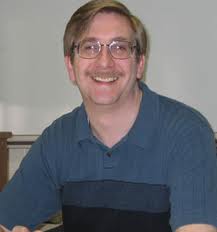
Tim McGrew explains how undesigned coincidences affect textual reliability

Tim McGrew
Tim McGrew

UPDATE: This post has been linked by Denyse O’Leary at the famous ID blog Uncommon Descent! Denyse’s blog is the Post-Darwinist.

I found this lecture from philosopher Tim McGrew at MandM. Tim teaches at Western Michigan University.

The MP3 file is here.

Tim’s wife Lydia explains the concept of undesigned coincidences on her blog:

Undesigned coincidences in the Gospels … is an argument that was well-known in the nineteenth century but has, for no really clear reason, simply been forgotten as time has gone on. It is a cumulative case argument that the Gospels reflect, to an important extent, independent knowledge of actual events. Please note that this argument is quite independent of one’s preferred answer to the synoptic question. That is to say, even if, e.g., Mark was the first Gospel and others had access to Mark and show signs of literary dependence on Mark, the argument from undesigned coincidences provides evidence for independent knowledge of real events among the Gospel writers. There are many more of such coincidences beyond those given in the talk.

Basically, this argument finds cases where the same story is in two sources, but where some important detail is left out of one account so that something about the story seems out of place. But the other source has the missing detail that unlocks the mystery. This makes the sources appear to be independent, especially as more of these coincidences pile up. If this happens a lot, it argues for independent sources, which means that the story is multiply attested, which it is it less likely to have been made up.

My favorite example was the Philip example from John 6.

Lydia explains that example here:

As I was listening to Tim’s examples, I was struck by all the reasons there might be for a real eyewitness not to fill out the explanation for a detail. Think for example how tedious it is to listen to someone who goes back to explain every little detail he mentions in a story.

[…]Similarly, as John is telling the story about the feeding of the five thousand, it would be quite natural for him to say that Jesus asked Philip where they could buy bread if he were really an eyewitness–that is, because he remembered that Jesus did ask Philip. (Tim talks about why it was Philip in the interview.) But John himself might have had to stop and think for a moment if someone had asked him, “Why did Jesus ask Philip rather than any of the other disciples?” Presumably when John told the story, he wasn’t particularly thinking about some special reason for Jesus to select Philip for the question. But if someone were forging the story as fiction, he would have a reason for choosing to use a given disciple as a character at that point in his fictional narrative, and therefore he would be unlikely to choose that character without making the reason clearer to his readers.

All sorts of such things can happen when one is telling a true story, especially a story one has witnessed. One gets caught up in what one actually remembers and drops in incidental references to small facts, which facts are to some extent selected randomly by the memory as one brings the scene back to memory. This is typical of real memoirs but not of elaborate forgeries.

Lydia is also a philosopher, and her Ph.D is from Vanderbilt University. She’s put together a nice list of resources on historical apologetics. She is a homeschooling mom – I LOVE THAT!!!

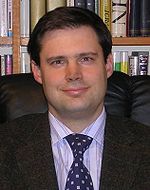
Peter Williams on whether the gospels are based on eyewitness testimony

Peter J. Williams
Peter J. Williams

This is a lecture I found from Dr. Peter J. Williams. He’s giving the lecture in Texas! Isn’t that a hoot?

Here’s the main lecture: (54 minutes)

And here’s the Q&A: (9 minutes)

About Peter Williams:

Peter J. Williams is the Warden (CEO) of Tyndale House and a member of the Faculty of Divinity in the University of Cambridge. He received his MA, MPhil and PhD, in the study of ancient languages related to the Bible from Cambridge University. After his PhD, he was on staff in the Faculty of Divinity, Cambridge University (1997–1998), and thereafter taught Hebrew and Old Testament there as Affiliated Lecturer in Hebrew and Aramaic and as Research Fellow in Old Testament at Tyndale House, Cambridge (1998–2003). From 2003 to 2007 he was on the faculty of the University of Aberdeen, Scotland, where he became a Senior Lecturer in New Testament and Deputy Head of the School of Divinity, History and Philosophy. In July 2007 he became the youngest Warden in the history of Tyndale House. He also retains his position as an honorary Senior Lecturer in Biblical Studies at the University of Aberdeen.

Summary of the lecture:

  • What if the stories about Jesus are legendary?
  • were the gospels transmitted accurately?
  • were the gospels written in the same place as where the events happened?
  • do the gospel authors know the customs and locations where the events happened?
  • do the gospels use the right names for the time and place where the events took place?
  • do the gospels disambiguate people’s names depending on how common those names were?
  • how do the New Testament gospels compare to the later gnostic gospels?
  • how do the gospels refer to the main character? How non-Biblical sources refer to Jesus?
  • how does Jesus refer to himself in the gospels? do the later Christians refer to him that way?
  • how does Jesus teach? do later Christians teach the same way?
  • why didn’t Jesus say anything about early conflicts in the church (the Gentiles, church services)?
  • did the writers of the gospels know the places where the events took place?
  • how many places are named in the gospels? how about in the later gnostic gospels?
  • are the botanical details mentioned in the gospels accurate? how about the later gnostic gospels?

And here are the questions from the audience:

  • how what about the discrepancies in the resurrection narratives that Bart Ehrman is obsessed with?
  • what do you think of the new 2011 NIV translation (Peter is on the ESV translation committee)?
  • how did untrained, ordinary men produce complex, sophisticated documents like the gospels?
  • is oral tradition a strong enough bridge between the events and the writers who interviewed the eyewitnesses?
  • what does the name John mean?
  • why did the gospel writers wait so long before writing their gospels?
  • do you think that Matthew and Luke used a hypothetical source which historians call “Q”?
  • which gospel do critical historians trust the least and why?

I really enjoyed watching this lecture. He’s getting some of this material from Richard Bauckham’s awesome book “Jesus and the Eyewitnesses”, so if you aren’t familiar with it, you can get an idea of what’s in it. Peter Williams is a lot of fun to listen to – an excellent speaker. And this material was NEW TO ME. I like the way that this lecture is filled with little UK expressions like “mind the gap” and “Yah?”. He doesn’t say “if you like” as much as Justin Brierley, though. Just once I would like to have a discussion with Justin and have him say that, then I would say “no I don’t like that”. I think that would be funny, and I would love to see the expression on his face when I said that.

You can read an interview with Peter Williams here on Between Two Worlds.

And you can listen to the Peter Williams vs Bart Ehrman debate on Apologetics 315.

And Apologetics 315 also posted Peter Williams’ assessment of Bart Ehrman’s “Misquoting Jesus”.