
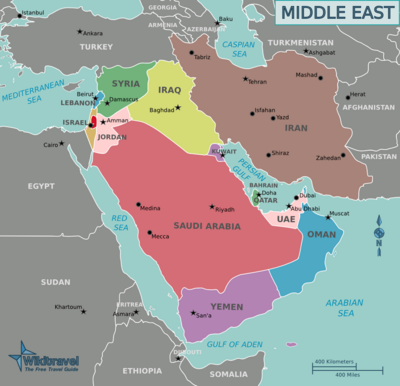
I posted earlier in the week about how our best option was a targeted strike (SSM or standoff) to the top level of the Assad regime, but it looks like there is another viable conservative view on what to do about Syria.
Here’s the post from the Heritage Foundation, my favorite conservative think tank.
Five reasons:
- The Responsibility to Protect (R2P) doctrine is not adequate justification for direct military intervention.
- A vital U.S. interest is not at stake.
- It would not be a wise use of military force.
- Missile attacks would only make President Obama look weaker.
- It would distract from what the U.S. should be doing.
Here’s the detail on Number 4:
4. Missile attacks would only make President Obama look weaker. Much like President Clinton’s ineffective cruise missile strikes on Osama bin Laden’s terrorist camps, strikes would only be seen as a sign that the U.S. is lacking a clear, decisive course of action. The Middle East would see this as another effort from the Obama Administration to look for an “easy button” and lead from behind rather than exercise real, constructive leadership.
The other concern that people have is the opposition is even more penetrated by Al Qaeda than I first thought.
More Heritage Foundation:
What should America be doing?
We should not be doing missile strikes, as many reports have indicated could be a possibility.
Al-Qaeda and other Islamist groups have been the principal beneficiaries of Obama’s passive, “hands-off” approach to the worsening Syria crisis. The Obama Administration urgently needs to develop a strategy not only to counter Assad’s use of chemical weapons but prevent those weapons from falling into the hands of al-Qaeda, Hezbollah, or other Islamist terrorist groups that have flocked to Syria.
Rather than attempting to intervene directly in the conflict, the U.S. should be working with other countries in the region to hasten the end of the Assad regime and deal with the refugee crisis and terrorist strongholds.
I don’t think that Heritage is responding to the idea of a targeted strike against the key people in the Assad regime as much as they are opposed to a general military strike against military targets. Everyone agrees on that, though. The strike option I presented (from Bret Stephens of the Wall Street Journal) was aimed at Assad and his henchmen.
The other concern that’s emerged (in the Associated Press, no less) is that it’s not 100% certain that the Assad regime was responsible for the use of chemical weapons. (H/T ECM)
Excerpt:
The intelligence linking Syrian President Bashar Assad or his inner circle to an alleged chemical weapons attack is no “slam dunk,” with questions remaining about who actually controls some of Syria’s chemical weapons stores and doubts about whether Assad himself ordered the strike, U.S. intelligence officials say.
[…]A report by the Office of the Director for National Intelligence outlining that evidence against Syria includes a few key caveats — including acknowledging that the U.S. intelligence community no longer has the certainty it did six months ago of where the regime’s chemical weapons are stored, nor does it have proof Assad ordered chemical weapons use, according to two intelligence officials and two more U.S. officials.
[…]A three-page report released Thursday by the British government said there was “a limited but growing body of intelligence” blaming the Syrian government for the attacks. And though the British were not sure why Assad would have carried out such an attack, the report said there was “no credible intelligence” that the rebels had obtained or used chemical weapons.
Like the British report, the yet-to-be-released U.S. report assesses with “high confidence” that the Syrian government was responsible for the attacks that hit suburbs east and west of Damascus, filled with a chemical weapon, according to a senior U.S. official who read the report.
The official conceded there are caveats in the report and there is no proof saying Assad personally ordered the attack. There was no mention in the report of the possibility that a rogue element inside Assad’s government or military could have been responsible, the senior official said.
ECM wonders why the Assad regime would try to hasten their own demise by using chemical weapons, especially when they are winning. Still, I think it’s more likely than not right now that Assad is responsible for using the chemical weapons.
Ed Morrissey at Hot Air notes that Obama has not presented a comprehensive case for intervention in Syria. Who says? Donald Rumsfeld! Morrissey says that Bush administration’s case for war was much more thorough and had more support than Obama’s case against Syria.
My reasons for initially supporting the strike at the top level of the regime was to deter the future use of chemical weapons. I still favor that course of action, but on the condition that we clear up these uncertainties *first* and get Congressional approval *first*. You can’t just do these things willy-nilly, especially when there are uncertainties.
 WINTERY KNIGHT