
Tag Archives: Health-care

NBC News: “Obama administration knew millions could not keep their health insurance”

That’s the headline from the actual NBC News article.

Here’s the thesis:

President Obama repeatedly assured Americans that after the Affordable Care Act became law, people who liked their health insurance would be able to keep it. But millions of Americans are getting or are about to get cancellation letters for their health insurance under Obamacare, say experts, and the Obama administration has known that for at least three years.

According to recent estimates, it’s 16 million. A previous estimate by CBO in 2012 said that up to 20 million could lose their employer-based coverage.

More:

Four sources deeply involved in the Affordable Care Act tell NBC News that 50 to 75 percent of the 14 million consumers who buy their insurance individually can expect to receive a “cancellation” letter or the equivalent over the next year because their existing policies don’t meet the standards mandated by the new health care law. One expert predicts that number could reach as high as 80 percent. And all say that many of those forced to buy pricier new policies will experience “sticker shock.”

None of this should come as a shock to the Obama administration. The law states that policies in effect as of March 23, 2010 will be “grandfathered,” meaning consumers can keep those policies even though they don’t meet requirements of the new health care law. But the Department of Health and Human Services then wrote regulations that narrowed that provision, by saying that if any part of a policy was significantly changed since that date — the deductible, co-pay, or benefits, for example — the policy would not be grandfathered.

It’s the HHS regulations that make it so that “grandfathered” plans cannot be kept – and those are part of this Obamacare project, because the regulations deal with how it is implemented.

More:

Buried in Obamacare regulations from July 2010 is an estimate that because of normal turnover in the individual insurance market, “40 to 67 percent” of customers will not be able to keep their policy. And because many policies will have been changed since the key date, “the percentage of individual market policies losing grandfather status in a given year exceeds the 40 to 67 percent range.”

That means the administration knew that more than 40 to 67 percent of those in the individual market would not be able to keep their plans, even if they liked them.

Yet President Obama, who had promised in 2009, “if you like your health plan, you will be able to keep your health plan,” was still saying in 2012, “If [you] already have health insurance, you will keep your health insurance.”

“This says that when they made the promise, they knew half the people in this market outright couldn’t keep what they had and then they wrote the rules so that others couldn’t make it either,” said  Robert Laszewski, of Health Policy and Strategy Associates, a consultant who works for health industry firms. Laszewski estimates that 80 percent of those in the individual market will not be able to keep their current policies and will have to buy insurance that meets requirements of the new law, which generally requires a richer package of benefits than most policies today.

Obama knew, when he said those famous words, that they were not true. He’s a liar.
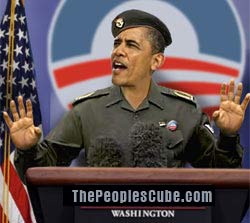
Is it time to start thinking of an exit strategy for the quagmire of Obamacare?

Baghdad Obama says: "No one will lose their health care plan!"
Baghdad Obama says: “No one will lose their health care plan!”

Letitia posted this article from the pro-Obama NBC News.

Excerpt:

Health plans are sending hundreds of thousands of cancellation letters to people who buy their own coverage, frustrating some consumers who want to keep what they have and forcing others to buy more costly policies.

The main reason insurers offer is that the policies fall short of what the Affordable Care Act requires starting Jan. 1. Most are ending policies sold after the law passed in March 2010. At least a few are canceling plans sold to people with pre-existing medical conditions.

[…][T]he cancellation notices, which began arriving in August, have shocked many consumers in light of President Barack Obama’s promise that people could keep their plans if they liked them.

“I don’t feel like I need to change, but I have to,” said Jeff Learned, a television editor in Los Angeles, who must find a new plan for his teenage daughter, who has a health condition that has required multiple surgeries.

An estimated 14 million people purchase their own coverage because they don’t get it through their jobs. Calls to insurers in several states showed that many have sent notices.

Florida Blue, for example, is terminating about 300,000 policies, about 80 percent of its individual policies in the state. Kaiser Permanente in California has sent notices to 160,000 people – about half of its individual business in the state. Insurer Highmark in Pittsburgh is dropping about 20 percent of its individual market customers, while Independence Blue Cross, the major insurer in Philadelphia, is dropping about 45 percent.

[…]Some receiving cancellations say it looks like their costs will go up, despite studies projecting that about half of all enrollees will get income-based subsidies.

Kris Malean, 56, lives outside Seattle, and has a health policy that costs $390 a month with a $2,500 deductible and a $10,000 in potential out-of-pocket costs for such things as doctor visits, drug costs or hospital care.

As a replacement, Regence BlueShield is offering her a plan for $79 more a month with a deductible twice as large as what she pays now, but which limits her potential out-of-pocket costs to $6,250 a year, including the deductible.

“My impression was …there would be a lot more choice, driving some of the rates down,” said Malean, who does not believe she is eligible for a subsidy.

Regence spokeswoman Rachelle Cunningham said the new plans offer consumers broader benefits, which “in many cases translate into higher costs.”

“The arithmetic is inescapable,” said Patrick Johnston, chief executive officer of the California Association of Health Plans. Costs must be spread, so while some consumers will see their premiums drop, others will pay more — “no matter what people in Washington say.”

Health insurance experts say new prices will vary and much depends on where a person lives, their age and the type of policy they decide to buy. Some, including young people and those with skimpy or high-deductible plans, may see an increase. Others, including those with health problems or who buy coverage with higher deductibles than they have now, may see lower premiums.

Blue Shield of California sent roughly 119,000 cancellation notices out in mid-September, about 60 percent of its individual business. About two-thirds of those policyholders will see rate increases in their new policies, said spokesman Steve Shivinsky.

But the media told me that Obamacare was affordable! It’s even called the Affordable Care Act. Would a bunch of doped-up leftists  who dropped math in junior high school mislead me about how health insurance works? Inconceivable!

Obamacare web site hides health insurance costs until users apply for subsidies

Another article from health care policy expert Avik Roy in Forbes magazine.

Excerpt:

A growing consensus of IT experts, outside and inside the government, have figured out a principal reason why the website for Obamacare’s federally-sponsored insurance exchange is crashing. Healthcare.gov forces you to create an account and enter detailed personal information before you can start shopping. This, in turn, creates a massive traffic bottleneck, as the government verifies your information and decides whether or not you’re eligible for subsidies. HHS bureaucrats knew this would make the website run more slowly. But they were more afraid that letting people see the underlying cost of Obamacare’s insurance plans would scare people away.

“Healthcare.gov was initially going to include an option to browse before registering,” report Christopher Weaver and Louise Radnofsky in the Wall Street Journal. “But that tool was delayed, people familiar with the situation said.” Why was it delayed? “An HHS spokeswoman said the agency wanted to ensure that users were aware of their eligibility for subsidies that could help pay for coverage, before they started seeing the prices of policies.” (Emphasis added.)

As you know if you’ve been following this space, Obamacare’s bevy of mandates, regulations, taxes, and fees drives up the cost of the insurance plans that are offered under the law’s public exchanges. AManhattan Institute analysis I helped conduct found that, on average, the cheapest plan offered in a given state, under Obamacare, will be 99 percent more expensive for men, and 62 percent more expensive for women, than the cheapest plan offered under the old system. And those disparities are even wider for healthy people.

That raises an obvious question. If 50 million people are uninsured today, mainly because insurance is too expensive, why is it better to make coverage even costlier?

The answer is that Obamacare wasn’t designed to help healthy people with average incomes get health insurance. It was designed to force those people to pay more for coverage, in order to subsidize insurance for people with incomes near the poverty line, and those with chronic or costly medical conditions.

But the laws’ supporters and enforcers don’t want you to know that, because it would violate the President’s incessantly repeated promise that nothing would change for the people that Obamacare doesn’t directly help. If you shop for Obamacare-based coverage without knowing if you qualify for subsidies, you might be discouraged by the law’s steep costs.

So, by analyzing your income first, if you qualify for heavy subsidies, the website can advertise those subsidies to you instead of just hitting you with Obamacare’s steep premiums. For example, the site could advertise plans that cost “$0″ or “$30″ instead of explaining that the plan really costs $200, and that you’re getting a subsidy of $200 or $170. But you’ll have to be at or near the poverty line to gain subsidies of that size; most people will either not qualify for a subsidy, or qualify for a small one that, net-net, doesn’t make up for the law’s cost hikes.

This political objective—masking the true underlying cost of Obamacare’s insurance plans—far outweighed the operational objective of making the federal website work properly. Think about it the other way around. If the “Affordable Care Act” truly did make health insurance more affordable, there would be no need to hide these prices from the public.

The plain truth of the matter is that you can’t lower the costs of health care by covering more people or by covering more treatments or by regulating more doctors. All of those things don’t lower the cost of health insurance – they raise it. The subsidies that the Democrats are offering are costs that are being added to the deficit. They will have to be paid by job creators and their employees through higher taxes later. Obamacare didn’t solve a thing. It just adds costs and complexity. It’s the equivalent of shuffling deck chairs on the Titanic.

Related posts