Tag Archives: Greece

What is the future of the European Union?

From the Wall Street Journal.

Excerpt:

In 1965, government spending as a percentage of GDP averaged 28% in Western Europe. Today it hovers just under 50%. In 1965, the fertility rate in Germany was a healthy 2.5 children per mother. Today it is a catastrophic 1.35. During the postwar years, annual GDP growth in Europe averaged 5.5%. After 1973, it rarely exceeded 2.3%. In 1973, Europeans worked 102 hours for every 100 worked by an American. By 2004 they worked just 82 hours for every 100 American ones.

[…]What is now happening in Europe isn’t so much a crisis as it is an exposure: a Madoff-type event rather than a Lehman one. The shock is that it’s a shock. Greece was never going to be bailed out and will, sooner or later, default. The banks holding Greek debt will, sooner or later, be recapitalized. The recapitalization will be borne by German taxpayers, and it will bring them—sooner rather than later—to the outer limit of their forbearance. The Chinese will not ride to the rescue: They know not to throw good money after bad.

And then Italy will go Greek. Europe’s crisis will lap on U.S. shores, and America’s economic woes will lap on Europe’s—a two-way tsunami.

America will survive this because America is a state. But as Bismarck once remarked, “Whoever speaks of Europe is wrong. Europe is a geographical expression.” The “fiscal union” that’s being mooted will never come to pass: German voters won’t stand for it, and neither will any other country that wants to retain fiscal independence—which is to say, the core attribute of democratic sovereignty.

What comes next is the explosion of the European project. Given what European leaders have made of that project over the past 30-odd years, it’s not an altogether bad thing. But it will come at a massive cost. The riots of Athens will become those of Milan, Madrid and Marseilles. Parties of the fringe will gain greater sway. Border checkpoints will return. Currencies will be resurrected, then devalued. Countries will choose decay over reform. It’s a long, likely parade of horribles.

Wow… things really are bad in Europe. And here, too.

Check out this editorial in the Washington Examiner.

Excerpt:

[A] congressional report released last week added another layer of explanation for the abject failure of Obamanomics since 2009. Along with the explosion of federal spending, Obama directed his appointees at key federal departments and agencies to embark on an unprecedented expansion of bureaucratic regulation. Thousands of new bureaucrats were hired at places like the Department of Heath and Human Services and the U.S. Environmental Protection Agency, and legions of costly new regulations soon poured forth.

The report by the House Oversight and Government Reform Committee headed by Rep. Darrell Issa, R-Calif., took aim at Obama’s “regulatory tsunami” and concluded that the pace and scale of new regulations threatens the ability of the government to fulfill even its most basic regulatory functions. Here’s how the congressional panel summarized its conclusions:

“The Obama Administration has created a regulatory environment that is suffocating America’s entrepreneurs’ ability to create jobs and grow businesses, … This regulatory tsunami has caused job creators to lock down at a time when we need them to expand. The committee has found that the problems created by this regulatory tsunami goes far beyond the cost of the regulations themselves, but also include breakdowns in the regulatory process itself that is having a severe impact on large and small businesses alike.”

Specifically, the panel found at least 219 “economically significant regulations in the pipeline, which if finalized, will impose costs of $100 million or more annually on the economy.” That’s a minimum of $219 billion in added costs to do business in this country over the next decade. Even worse, the panel found the Obama bureaucrats have already imposed 75 major new regulations that are projected to add another $380 billion in costs.

The Issa panel concluded that, as a result of this flood of new rules, “the regulatory process is broken” and that it is “being manipulated and exploited in an effort to reward allies of the Obama administration such as environmental groups, trial lawyers and unions.”

All we have to do to screw up this economy is do what the Europeans are doing – and we are.

Italy’s debt crisis – what can we learn from it?

Map of Europe
Map of Europe

Very bad news for Italy, but a learning opportunity for us.

Excerpt:

Fears are spreading that Italy may soon have to follow Greece, Ireland, and Portugal and seek a financial bailout from the European Union and the International Monetary Fund. Doubts over the sustainability of Italy’s explosive cocktail of high debt and low growth have led to violent routs that saw Italian stocks plunge and bond yields soar in recent days.

Italy is the seventh-largest economy in the world and the third-largest economy in the euro zone (the group of countries which use the euro as their common currency). It is also the third-most indebted country in the world after the United States and Japan. In its European context, Italy’s mountain of debt is more than that of all the other so-called PIGS (Portugal, Ireland, Greece, and Spain) group of financially troubled countries combined.

Given the massive size of the Italian economy, many analysts believe that Italy (like Spain) is too big to be rescued and that a full-blown debt crisis in the country could lead to the collapse of Europe’s single currency.

Confidence in Italy began to erode after Moody’s Investors Service and Standard & Poor’s announced in recent weeks that they are reviewing the country’s sovereign credit rating. The review for a possible downgrade of Italy’s rating comes amid stalled economic growth that will complicate any efforts to reduce the country’s debt load, and political infighting in Rome over budget cuts required to prevent government borrowing costs from spiraling to unaffordable levels.

There is no quick fix for the two most immediate problems ailing Italy: the country’s towering national debt and extremely poor prospects for economic growth.

At 120 percent of GDP, Italy’s debt is the EU’s second-largest by that measure after Greece, which has a debt-to-GDP ratio of 150 percent. Italy’s €1.8 trillion ($2.5 trillion) debt, which is equal to the country’s national income, poses an unsustainable economic burden that will push Italy into the abyss if the government’s debt servicing costs keep rising.

What can we learn from Italy that we should avoid?

First, they are planning to balance the budget by 2014:

The plan calls for freezing public sector pay, reducing funding to local government and health services, increasing the retirement age, and cracking down on tax evasion. Italians will also have to pay €25 for some non-emergency hospital visits and €10 above existing fees to see specialists. The aim is to cut the budget deficit from 3.9 percent this year to 2.2 percent in 2013 and to balance the budget by 2014.

We are running massive 1.6 trillion dollar deficits under Obama, and he refuses to balance the budget. Even if he took every penny earned by those households earning $200,000 or more per year, that would not generate enough money to cover his massive 1.6 trillion dollar spending sprees. The problem is not revenue, it’s spending.

And what else can we learn from Italy?

Here’s more from the PJM article:

Everyone seems to agree that Italy’s growth problems are structural and systemic. As noted recently by the Economist magazine: “Between 2000 and 2010 Italy’s average growth, measured by GDP at constant prices, was just 0.25% a year. Of all the countries in the world, only Haiti and Zimbabwe did worse.”

Says the Economist: “Many things contribute to these gloomy figures. Italy has become a place that is ill at ease in the world, scared of globalization and immigration. It has chosen a set of policies that discriminate heavily in favor of the old and against the young. Combined with an aversion to meritocracy, this is driving large numbers of talented young Italians abroad. In addition, Italy has failed to renew its institutions and suffers from debilitating conflicts of interest in the judiciary, politics, the media, and business. These are problems that concern the nation as a whole, not one province or another.”

Does that sound familiar? That’s right! The Democrats are scared of globalization. They oppose free trade deals that reduce the prices of consumer goods. The Democrats favor distributing wealth from young to old. They oppose reforming entitlements like Social Security and Medicare for young people. The Democrats are opposed to meritocracy. They are the party of unions, tenure and wealth redistribution. It’s this economics illiteracy that is slowing down economic growth here at home. We need to vote the people who make economic decisions by feelings out. And we need to put the people who make economic decisions based on job creation in.


Jim Demint introduces bill to halt funding for European bailouts

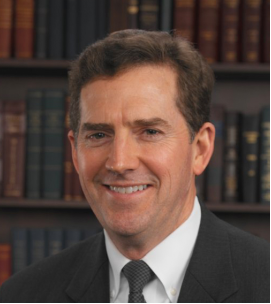
Senator Jim Demint

The Wall Street Journal reports on the Republican effort to halt taxpayer-funded bailouts for socialist European nations.

Excerpt:

A group of Republican senators plan to renew their attempts at stopping the U.S. from funding International Monetary Fund loans to Greece and other countries after the Senate failed to vote on their proposal last week.

A spokesman for Sen. Jim DeMint (R., S.C.), who is leading the effort, said the GOP senators plan to soon introduce stand-alone legislation that would direct the U.S. Treasury to vote against any IMF assistance to European Union nations for the foreseeable future. If enacted into law, it could halt U.S. participation in any future IMF attempts to stabilize the sovereign debt crisis in Europe.

The proposal comes as finance ministers work towards a political agreement committing to provide financing to meet a growing gap in Greece’s funding needs beyond the current EUR110 billion, which in turn would allow the IMF to release a delayed tranche of cash in early July.

[…]Attempts by GOP lawmakers to block IMF loans failed to gain traction in Congress last year. And President Barack Obama has asserted in a signing statement after a House vote on an IMF provision that he doesn’t recognize Congress’ ability to tell the administration how to vote at the IMF.

Greece embraced socialism, and now they have to face the music.