Tag Archives: Foreign Policy

How the weak Democrat foreign policy caused the Syria crisis, and what to do now

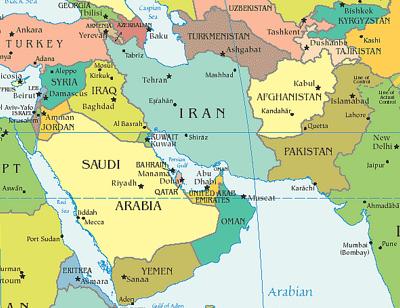
Map of the Middle East

The UK Telegraph’s Nile Gardiner explains how Democrat foreign policy made the current crisis in Syria worse.

Excerpt:

Bashar al-Assad’s regime in Syria is monstrous. A hundred thousand civilians have died at its hands in the last two years, and more than a million Syrians have fled the country since it began its war of attrition against rebel groups. It is almost certainly responsible for the massacre of up to 1,300 people in a suburb of Damascus last week through the use of chemical weapons. Many of the victims included women and children. Assad is a Baathist thug of the highest order, a figure of unremitting evil with few parallels in the modern world. The downfall of his dictatorship cannot come soon enough, and no peace can be realistically achieved in Syria until Assad goes.

In the face of Assad’s brutality, however, Washington and the West as a whole have been largely impotent. The White House’s strategy has been one of abject confusion, with no clear leadership from the president. Barack Obama’s approach has been one of “leading from behind,” a phrase first coined by one of his own advisers. He has been content to farm out US foreign policy to a feckless United Nations, and has kowtowed to a ruthless Moscow, which views Syria as a client state, a useful bulwark against American influence in the Middle East, and a thorn in the side of the world’s superpower.

The Russian “reset,” pioneered by Hillary Clinton as Secretary of State, has been one of the biggest foreign policy flops of the modern era, involving an extraordinary degree of deference towards a major strategic adversary. Clinton, it should be recalled, referred to Assad as “a reformer” as recently as April 2011, while former House Speaker Nancy Pelosi, as well as former Senate Foreign Relations Committee chairman John Kerry, made a number of trips to Damascus to meet with Assad prior to the civil war.

Similarly, the Obama administration has been content to allow the Iranians to plough money, arms and military personnel into Syria in support of Assad, providing a vital lifeline for the pariah state. Washington’s engagement strategy with Tehran has been a massive folly, simply emboldening the Mullahs with no consequences.

My Dad and I were talking about what the United States should do now to deter the use of chemical weapons, and we came up with two alternatives. Use our covert operations capability (such as it is) to kill Assad or go with a tactical military strike against the top of the Assad regime – either surface-to-surface missiles or standoff air strike. I think that Obama has weakened the clandestine services so much over the years by exposing their methods, exposing their sources, prosecuting them for doing their jobs, etc. that they are not strong enough to do the job. So it’s going to have to be a more messy military strike against the top level of the Assad regime, if the goal is to solve the problem.

Foreign policy expert Bret Stephens writes about that option in the Wall Street Journal.

Excerpt:

Should President Obama decide to order a military strike against Syria, his main order of business must be to kill Bashar Assad. Also, Bashar’s brother and principal henchman, Maher. Also, everyone else in the Assad family with a claim on political power. Also, all of the political symbols of the Assad family’s power, including all of their official or unofficial residences. The use of chemical weapons against one’s own citizens plumbs depths of barbarity matched in recent history only by Saddam Hussein. A civilized world cannot tolerate it. It must demonstrate that the penalty for it will be acutely personal and inescapably fatal.

[…]As it is, a strike directed straight at the Syrian dictator and his family is the only military option that will not run afoul of the only red line Mr. Obama is adamant about: not getting drawn into a protracted Syrian conflict. And it is the one option that has a chance to pay strategic dividends from what will inevitably be a symbolic action.

[…]On Monday John Kerry spoke with remarkable passion about the “moral obscenity” of using chemical weapons, and about the need to enforce “accountability for those who would use the world’s most heinous weapons against the world’s most vulnerable people.” Amen, Mr. Secretary, especially considering that you used to be Bashar’s best friend in Washington.

[…]The world can ill-afford a reprise of the 1930s, when the barbarians were given free rein by a West that had lost its will to enforce global order. Yes, a Tomahawk aimed at Assad could miss, just as the missiles aimed at Saddam did. But there’s also a chance it could hit and hasten the end of the civil war. And there’s both a moral and deterrent value in putting Bashar and Maher on the same list that once contained the names of bin Laden and Anwar al-Awlaki.

The rest of the article evaluates alternatives like striking Syria’s chemical weapons dumps, but concludes that a strike against the top of the Assad regime as the best option, if the goal is to solve the problem. I am not even sure if it is possible to get the top of the Assad regime this way, since we need intelligence to know where they are, and maybe even to point LTIDs at the targets. That can’t be done with the push of a button. These options require intelligence work to have been done up front, and we haven’t done it. Now we are stuck with the need to deter chemical weapon use, but we have few options and fewer capabilities.

There are two problems with Bret Stephens’ preferred scenario. First, the Assad regime has the backing of the Russians and the Iranians. They might not like it if we took out their puppet and his helpers. Second, the influence of the moderates in the Syrian opposition is uncertain. We don’t have a clear ally in the Syrian opposition, like we do in Egypt with the Egyptian army. From what I am hearing, the rebels are significantly Al Qaeda. We could have been cultivating those relationships with the moderate faction, but we were not doing that. So the whole thing is very risky. It didn’t need to be this bad, but we elected the pacificist multiculturalist moral relativist CYA Democrats in charge, and they’ve made a mess of the Middle East. Instead of elevating the Muslim Brotherhood in Libya and Egypt, we should have been focused like a laser beam on Syria. We weren’t engaged like we should have been.

To quote again from Nile Gardiner’s UK Telegraph article:

Syria is not Iraq or Afghanistan, where the United States had clear-cut military objectives and national interests at stake when it went to war. The conflict in Syria is further complicated by the rise of Islamist groups with links to al-Qaeda, who have thrived amidst the chaos, and in some cases have targeted the Christian minority in the country. The Obama administration has made little serious effort to cultivate pro-Western, non-Islamist rebels in Syria, whose influence has waned, while the Islamists have gained strength.

Ultimately, the Syrian debacle has exposed the emptiness of the Obama doctrine, one that is based upon hand-wringing, appeasement, and the scaling back of American power. President Obama has been content to weaken US influence, while playing a back seat role on the world stage. There are many things the White House could have done to erode Assad’s regime over the past two years while strengthening the hand of pro-Western rebels, including aggressively challenging Iranian support for Damascus, forcefully standing up to Moscow at the UN Security Council, coordinating support for the Free Syrian Army among the Gulf States and Turkey, and pressuring the Saudis to crack down on Islamist networks fueling al-Qaeda-tied groups in Syria.

But, of course, the Obama administration did none of those things, because those things would require leadership and vision.

By the way, in case you are wondering where Syria’s chemical weapons came from, the most likely scenario is that they were moved from Iraq. We had reliable intelligence before the Iraq war that Saddam had chemical weapons, and evidence emerged later that Iraq’s WMDs were moved to Syria.

UPDATE: Ralph Peters who is an expert in foreign policy is saying no to the strike idea. He prefers do nothing to an effective strike (the Bret Stephens option). But Peters doesn’t think that Obama will do an effective strike. So I am not sure what to do now. I am hearing that the opposition is not moderate in any way, and we shouldn’t be helping them at all by attacking Assad.

Mainstream media silent as Muslim Brotherhood targets Christians in Egypt

Investors Business Daily reports.

Excerpt:

Christians in Egypt are again the target of Islamist Muslim Brotherhood supporters using the new violence as a cover for ongoing persecution. If Christians were burning mosques, the world would be outraged.

Amid the raging violence in Egypt, a less-publicized war is being waged against Egypt’s long-persecuted Coptic Christians, this time using the excuse that they were somehow involved in the military’s ouster of the Muslim Brotherhood’s Mohammed Morsi from power.

Coptic Christians comprise up to 10% of Egypt’s 84 million people.

Ishaq Ibrahim from the Egyptian Initiative for Personal Rights group has documented as many as 39 incidents of violence against churches, monasteries, Coptic schools and shops in different parts of the country within the past few days. They include Thursday’s torching of the Prince Tadros Church in the province of Fayoum, where three similar attacks occurred on other churches the day before.

Islamists firebombed the Mar Gergiss Church in Sohag, a city with a large community of Coptic Christians, burning it to the ground. Islamists previously raised an al-Qaida flag over the church.

Another two places of worship, the Churches of Abraham and the Virgin Mary, were attacked in El-Menia province, leaving them partially damaged by fire. St. Theresa Church in Assiut in Upper Egypt was also burned.

[…]In a terrorist attack one minute after midnight on Jan. 1, 2011, 21 Christians attending a New Year’s mass were killed, and 97 people, mostly Christians, were injured as worshipers were leaving a New Year’s mass at the Saints Church in Alexandria.

On April 7, two Copts were killed and 84 injured by a mob using guns, wielding machetes, throwing stones and possibly hurling Molotov cocktails at mourners exiting St. Mark’s Coptic Orthodox Cathedral in Cairo. The worshippers were mourning the deaths of four Copts in an April 4 attack in Khossus in which a nursery and church were burned.

An investigation into the October 2011 attack on Coptic Christians in Cairo’s Maspero district, leaving 30 dead and more than 500 wounded, was shut down by the Morsi regime. In the Egypt of the Muslim Brotherhood, Christian lives mean little.

As the administration quibbles over the definition of a “coup” regarding Egypt’s military aid, we are reminded the U.S. and NATO went to war over the “ethnic cleansing” of Muslims in Bosnia. What will be our response to the ethnic cleansing of 10% of Egypt’s population?

One of the troubling things that I’ve noticed with younger evangelicals and libertarians is that they don’t understand that wars start when bad people believe that they can behave aggressively and no one will stop them. Being nice doesn’t work on bad people, it just makes them act that more more aggressively.

Here’s an article from Townhall by famous economist Thomas Sowell, in which he explains how tyrants respond to weak foreign policy.

Excerpt:

On the international scene, trying to assuage aggressors’ feelings and look at the world from their point of view has had an even more catastrophic track record. A typical sample of this kind of thinking can be found in a speech to the British Parliament by Prime Minister Neville Chamberlain in 1938: “It has always seemed to me that in dealing with foreign countries we do not give ourselves a chance of success unless we try to understand their mentality, which is not always the same as our own, and it really is astonishing to contemplate how the identically same facts are regarded from two different angles.”

Like our former ambassador from the Carter era, Chamberlain sought to “remove the causes of strife or war.” He wanted “a general settlement of the grievances of the world without war.” In other words, the British prime minister approached Hitler with the attitude of someone negotiating a labor contract, where each side gives a little and everything gets worked out in the end. What Chamberlain did not understand was that all his concessions simply led to new demands from Hitler — and contempt for him by Hitler.

What Winston Churchill understood at the time, and Chamberlain did not, was that Hitler was driven by what Churchill called “currents of hatred so intense as to sear the souls of those who swim upon them.” That was also what drove the men who drove the planes into the World Trade Center.

Pacifists of the 20th century had a lot of blood on their hands for weakening the Western democracies in the face of rising belligerence and military might in aggressor nations like Nazi Germany and imperial Japan. In Britain during the 1930s, Labor Party members of Parliament voted repeatedly against military spending, while Hitler built up the most powerful military machine in Europe. Students at leading British universities signed pledges to refuse to fight in the event of war.

All of this encouraged the Nazis and the Japanese toward war against countries that they knew had greater military potential than their own. Military potential only counts when there is the will to develop it and use it, and the fortitude to continue with a bloody war when it comes. This is what they did not believe the West had. And it was Western pacifists who led them to that belief.

Then as now, pacifism was a “statement” about one’s ideals that paid little attention to actual consequences. At a Labor Party rally where Britain was being urged to disarm “as an example to others,” economist Roy Harrod asked one of the pacifists: “You think our example will cause Hitler and Mussolini to disarm?”

The reply was: “Oh, Roy, have you lost all your idealism?” In other words, the issue was about making a “statement” — that is, posturing on the edge of a volcano, with World War II threatening to erupt at any time. When disarmament advocate George Bernard Shaw was asked what Britons should do if the Nazis crossed the channel into Britain, the playwright replied, “Welcome them as tourists.”

Ronald Reagan and Margaret Thatcher called this view “peace through strength”. There is only one reason why evil people do not attack – because they think that good people have the firepower tomake them pay dearly for their aggression, and – and this is very important – the will to use it.

The important thing to realize is that without a powerful military, there is nothing that we can do when the Muslim Brotherhood goes after Coptic Christians in Egypt. Happy talk isn’t going to solve anything. To deter aggression, you need to have a credible threat of military force deployed in the region. Even if you don’t go to war, the other guy has to believe that you can and that you will. That’s what stops bad people from being aggressive. What Benghzi showed the Islamists is that they could do anything they wanted, and no one is going to stop them. That’s why Christians are dying by the bushel in Egypt today.

Left-wing media turning on Obama over his foreign policy failures

Dr. Stuart Schneiderman has read all the left-wing news sources and found some surprising views.

Excerpt:

The news hasn’t really reached the public, but Obama-supporting media outlets are starting to see the mess that the Obama/Clinton/Kerry foreign policy has produced.

It is so bad that columnists are not even trying to moderate their negative judgments.

From Frida Ghitis on the CNN site:

America’s foreign policy has gone into a tailspin. Almost every major initiative from the Obama administration has run into sharp, sometimes embarrassing, reverses. The U.S. looks weak and confused on the global stage.

This might come as happy news to some opponents of the administration who enjoy seeing Barack Obama fail, but it shouldn’t.

America’s failure in international strategy is a disaster-in-the-making for its allies and for the people who see the U.S. model of liberal democracy as one worth emulating in their own nations.

On Russia, she continues, the verdict is clear:

Relations with Russia have fallen off a cliff, making the theatrical “reset” of 2009 look, frankly, cringe-worthy.

Syria, of course, is even worse:

Obama dramatically warned Syrian dictator Bashar al-Assad, as he slaughtered his people by the thousands, that if he used chemical or biological weapons, he would cross a “red line.” The line was crossed and not much happened. Syria is crumbling, self-destructing in a civil war that I, for one, believe could have turned out quite differently if Washington had offered material and diplomatic support for moderates in the opposition. Fears that the opposition would be dominated by extremists became a self-fulfilling prophecy.

The centerpiece of the Obama/Clinton foreign policy initiative was Egypt. You know how that has worked out:

But it is Egypt where America’s foreign policy fiasco is most visible.

It was in Cairo in 2009, where the newly elected Obama, still reflecting the glow of sky-high expectations, launched his campaign to repair relations with the so-called “Muslim World.”…

Nobody knew what would happen in Cairo’s Tahrir Square a few years later. But today, the same people who yearned for democracy despise Washington. When Egyptians elected a Muslim Brotherhood president, Washington tried to act respectfully, but it showed a degree of deference to the Muslim Brotherhood that ignored the ways in which the group violated not only Egyptians’ but America’s own standards of decency and rule of law.

As tensions in Egypt grow between Islamists on one side and the military and anti-Islamists on the other, there is one sentiment shared by all: Both sides feel betrayed by Washington.

Egypt’s most powerful man, Gen. Abdel Fatah al-Sissi, said, “You [the U.S.] left the Egyptians; you turned your back on the Egyptians, and they won’t forget that.”

It’s not just CNN, though. He has quotations from articles in the radically, radically leftist New York Times and the left-wing extremist New Yorker, too. The New Yorker is disgusted with the way that Obama has handled Libya. It’s getting so bad that not even Obama’s biggest cheerleaders can ignore it.