
Tag Archives: Euthanasia

Canadian Liberal Party introduces bill to legalize euthanasia

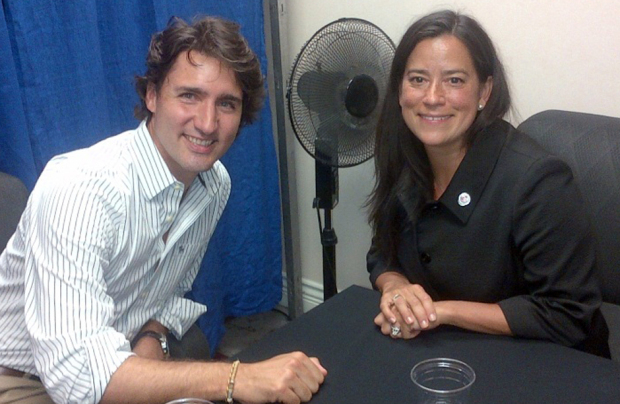
Jody Wilson-Raybould, Minister of Justice and Attorney General of Canada
Jody Wilson-Raybould, Minister of Justice and Attorney General of Canada (right)

Life Site News has a story about Canada’s new assisted suicide bill:

The Liberal government’s euthanasia bill introduced Thursday will not protect vulnerable Canadians or the conscience rights of physicians, say anti-euthanasia activists.

While Justice Minister Jody Wilson-Raybould’s Bill C-14 is more restrictive than the legislative framework the special joint parliamentary committee recommended in its February 2016 report, it essentially provides “a perfect cover for acts of murder, absolutely,” says Alex Schadenberg, executive director of the Euthanasia Prevention Coalition.

The draft legislation restricts eligibility for euthanasia and assisted suicide to competent patients 18 years of age and older who have “an incurable serious and incurable illness, disease or disability” which “causes them enduring physical or psychological suffering that is intolerable to them and that cannot be relieved under conditions,” who are in “an advanced state of decline in capability” and whose “natural death is reasonably foreseeable.”

The legislation mandates that a patient request assisted suicide or voluntary euthanasia in writing, and that this request be approved by two independent medical practitioners, or nurse practitioners.

It mandates a 15-day waiting period after the request is approved, but that period can be waived if the two medical practitioners deem the patient’s condition will deteriorate before that time is up.

[…]Schadenberg says the bill “does not provide effective oversight in the law,” because while it calls for two independent physicians or nurse practitioners to approve a request for euthanasia,  “this is the system where the doctor or nurse practitioner who does the act also does the reporting.”

The legislation also provides “legal immunity for anyone, anyone who does anything at a person’s request, under Sections 241.3, 241.5,” he said.

[…][W]hile the bill acknowledges conscience rights in its preamble, it “provides no protection for conscientious objectors,” according to Albertos Polizogopoulos, a constitutional lawyer for Canadian Physicians for Life.

Canadian doctors are already forced to perform abortions against their conscience, so this last point is no great surprise.

In a country that has single payer health care, all medical care is paid for by the federal government. You pay into the system your whole life (at an average of 42% of your income, in Canada) and then at the end, you get in line and hope that the government will treat you. It is extremely convenient for the government to kill off patients who are elderly. Elderly patients won’t be able to vote in many more elections, but they will want to draw away funds that could be used to buy the votes of young people who want “free” breast enlargements, plastic surgery, sex changes and IVF treatment. So the government has every incentive to cut loose the old people and then buy the votes of young people with the taxpayer money they save. Single payer health care is a scam to help politicians stay in power.

Similar laws in places like Belgium and Netherlands have been used to cut down on the medical bills that the government must pay.

A Parliamentary committee brief that I found on the Canadian government web site says this:

A study published in the NEJM entitled: Recent Trends in Euthanasia and Other End-of-Life Practices in Belgium (March 19, 2015) found that 4.6% of all deaths in the first six months of 2013, in the Flanders region of Belgium, were by assisted death and 1.7% of all deaths were assisted deaths without explicit request representing more than 1000 assisted deaths without explicit request in 2013.

The supplemental appendix in the study informs us how the researchers classified the data.

It states: “If in the latter case the drugs had been administered at the patient’s explicit request, the act was classified as euthanasia or assisted suicide depending on whether the patient self-administered the drugs. If drugs were used with the same explicit intention to hasten death but without the patient’s explicit request, the act was classified as hastening death without explicit patient request. This can include cases where a patient request was not judged as explicit by the physician, where the request came from the family or where the physician acted out of compassion.”

This research study confirms that many intentional hastened deaths are occurring without the explicit request of the patient which contravenes the Belgian assisted death law and medical ethics.

Previously, I blogged about how the UK government provides bonuses to hospitals who put elderly patients on an end-of-life pathway.

Ethicist Wesley J. Smith comments on the Canadian law in National Review.

Excerpt:

The Canadian government has tabled its new euthanasia bill–and as expected, it will be the most radical in the world.

Since the death doctor need not be present at the demise, the bill creates an unprecedented license for family members, friends–heck, a guy down the street–to make people dead.

[…]In short, this provision is the perfect defense for the murder of sick and disabled people who requested lethal drugs.

The George Delury case is an example of what I mean: Delury said he assisted wife, Myrna Lebov’s suicide out of “compassion” and at her request due to MS.

But his real hope was not only to be free from care giving, but become famous writing a book about her death. (He did, What If She Wants to Die?)

It almost worked. But because assisted suicide was a criminal offense, authorities conducted an investigation and discovered his diary.  It showed that contrary to the compassionate face Delury was conjuring, in reality, he emotionally pressured Myrna into wanting to commit suicide, telling her, for example, that she was a burden and ruining his life.

He also withheld full dosage of antidepressants so he could use those drugs to kill her. And, he but put a plastic bag over her head to make sure she died.

If euthanasia Canada’s bill had been the law of New York when Delury killed Myrnov, he might have been able to coerce her into asking for lethal drugs. At that point, he could have killed her any time he wanted and there wouldn’t have been a criminal investigation to find his diary.

Canada has just paved the way for a person, hungry for an inheritance or ideologically predisposed, to get away with the perfect murder.

In the last election, the Liberal Party promised the Canadian voters the moon, in terms of new spending. They said it would only add 10 billion to the deficit this year. But now (after the election) the number has exploded to 30 billion this year and over 100 billion over the next five years. Could this euthanasia plan be the first step in balancing the books, so they can win re-election?

What happens when Christians vote to put secular government in charge of health care?

Canada Election 2015: Socialists in red, Communists in Orange, Conservatives in blue

No need to wonder, just look north to Canada. Wesley J. Smith explains in First Things.

Excerpt:

Last year, the Canadian Supreme Court created a right to euthanasia and assisted suicide. To qualify for death, the court ruled unanimously, one must be a competent adult with a medically diagnosed condition causing “irremediable suffering”—a circumstance wholly determined by the patient and including “psychological suffering.”

The decision went well beyond mere legalization. Indeed, the court manufactured an enforceable legal right for qualified patients to receive what Canadian policymakers are euphemistically calling “medical aid in dying” (MAID).

But what about doctors opposed to euthanasia? The court left with Parliament and the medical colleges (associations) the decision of whether and how to accommodate doctors with conscience objections, granting a one-year (now extended) period within which to enact laws to govern the practice. Since then, civil liberties groups, provincial medical colleges, and official government commissions have urged Parliament … to pass laws that would coerce doctors who are religiously or philosophically opposed to euthanasia to cooperate actively in mercy killings by forcing them to procure death doctors for their patients.

But isn’t there a “Constitution” in Canada? Yes, but it’s interpreted by unelected judges:

All of this would seem to fly in the face of Canada’s 1982 Charter of Rights and Freedoms,which states, “Everyone has the fundamental freedom of conscience and religion.” Illustrating the utter lack of regard that secularized Canada now has for religious liberty, the Canadian Civil Liberties Association—that country’s counterpart to the ACLU—applauded the parliamentary committee’s call to stomp upon religious conscience as a “promising step forward.”

Doctors aren’t the only ones threatened with religious persecution under Canada’s looming euthanasia regime. Provincial and federal commissions have both recommended that nurses, physician’s assistants, and other such licensed medical practitioners be allowed to do the actual euthanizing under the direction of a doctor.

Voting for a single-payer health care system, such as the one praised by Donald Trump, makes the situation much worse:

Even Catholic and other religious nursing homes and hospices may soon be required by law to permit euthanasia on their premises, for the federal commission recommended that federal and provincial governments “ensure that all publicly funded health care institutions provide medical assistance in dying.” That is a very broad category. Canada has a single-payer, socialized healthcare financing system that permits little private-pay medical care outside of nursing homes. Not only that, but as Alex Schadenberg, director of the Canada-based Euthanasia Prevention Coalition told me, “religiously-affiliated institutions [in Canada] have become the primary care facilities for elderly persons, those requiring psychiatric care, and dying persons. They are now being told that as a condition of providing those services they will be required to permit doctors to kill these very patients by lethal injection. If they refuse, they will find themselves in a showdown with the government.”

The more people who opt to kill themselves, the less the government has to pay in health care. Naturally, the secular government looks at euthanasia as a great way to cut the costs of taxpayers who have paid into the single-payer system their whole lives, and now want to make withdrawals. If the government kills them now, they get to keep all the money, and not give any of it back.

The rights to religious liberty and conscience protections are put at risk everywhere that the secular government takes over the private sector. Christians need to be careful what they vote for at election time. Small government is best for religious liberty and conscience protections.

New study: legalizing physician-assisted suicide increases suicide rates

A conflict of worldviews

Ryan T. Henderson writes about it for the Daily Signal.

He writes:

[T]he October issue of the Southern Medical Journal included a study examining the correlation between legalizing physician-assisted suicide and the overall suicide rate. The study, “How Does Legalization of Physician-Assisted Suicide Affect Rates of Suicide?”, contradicts the notion that legalizing assisted suicide would reduce the total number of suicides by helping people cope with their declining condition.

The study… showed that suicides increase when physician-assisted suicide is legalized: “Controlling for various socioeconomic factors, unobservable state and year effects, and state-specific linear trends, we found that legalizing PAS [physician-assisted suicide] was associated with a 6.3 percent increase in total suicides.” Later, the researchers commented that “the introduction of [physician-assisted suicide] seemingly induces more self-inflicted deaths than it inhibits.”

The study was intended to determine whether or not the legalization of physician-assisted suicide provides an effective form of suicide prevention for those considering non-assisted suicide. Such is the claim of the Swiss group EXIT, which advocates for the legalization of physician-assisted suicide on the basis that “the option of physician-assisted suicide is actually an effective form of suicide prevention.”

To test this claim, researchers took suicide rates from states that have already legalized physician-assisted suicide—including Oregon, Washington, and Vermont—and compared them both to the suicide rates in the same states before physician-assisted suicide was legalized, and to suicide rates in states where physician-assisted suicide is not yet legal.

According to the researchers, “There is no evidence that [physician-assisted suicide] is associated with significant reductions in nonassisted suicide for either older or younger people.”  Furthermore, the data “do not suggest that on average PAS leads to delays in non-assisted suicide.”

As one might suspect, the researchers found that instead of reducing suicides, legalizing physician-assisted suicide increases them. This uptick in suicides following the legalization of physician-assisted adds another reason to the already long list of reasons that physician-assisted suicide is bad policy.

I love this study, because this is the exact same methodology that economists like John Lott and Gary Beck use to analyze the effects of concealed carry laws on violent crime. This is the right way to explore how changes in the law change human behavior. You don’t want to just say what you think will happen, because it feels good to you. You want to look in other places and times where these laws have been tried, and then see the results. That’s the conservative approach to decision-making.
