Tag Archives: Energy Policy

New report compares cost of coal power to renewable wind and solar power

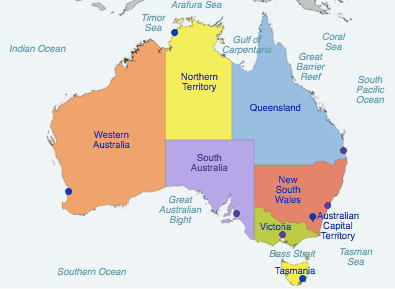
Map of Australia
Map of Australia

From the Victorian Auditor-General’s Report, April 2011. (H/T Joanne Nova)

Here’s the chart:
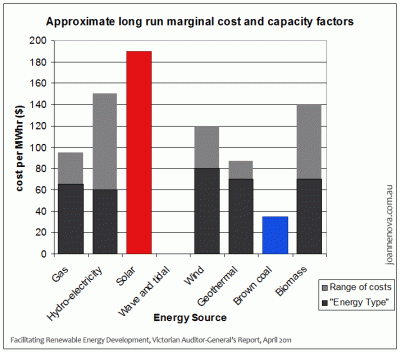
Cost of renewable wind and solar energy

Click here for a bigger version.

Compared to coal, wind power is incredibly expensive, and solar power is even worse.

What happened when the Canadians embraced wind and solar power?

What happened to consumer energy prices in Ontario when the Liberal government embraced unproven wind and solar power?

The Globe and Mail explains:

If you haven’t opened your September hydro bill yet, you’re in for a shock. Rates have risen 18 per cent this year to date, and that’s just the start. By this time next year – election time – Ontario power consumers will be forking over about twice as much (in nominal terms) as they did when Dalton McGuinty took office in 2003.

[…]Power expert Tom Adams may know more about this subject than any other living being. And he’s steamed. Ontario’s rates, he says, have already surpassed the U.S. average and are headed for European levels – “just because of public policy.”

The policy is to go all out on renewables – wind and solar– whether or not it makes sense. The province is paying sky-high rates for power it doesn’t need so we can have wind turbines marching on and on to the horizon, just like Denmark does. “Power demand has been dropping since 2005,” says Mr. Adams. In fact, we have so much excess supply that, from time to time, it threatens to crash the system. Because of this, we’re even paying the neighbours to take the power off our hands.

“Ontario will need new power supplies in the future,” Mr. Adams says. “But why not buy it when we need it?” Instead of waiting, the power authority is signing long-term contracts at the rate of about $1-billion a week, while paying enormous premiums to attract wind and solar producers. In other words, it’s making 20-year commitments to pay stunningly high prices for power we don’t need.

On top of that, the province is building new transmission lines to nowhere while neglecting to ensure that Toronto’s hospitals and banks can keep the lights on. In July, Toronto experienced what Mr. Adams calls “Ontario’s first green blackout.” That blackout occurred because the city’s downtown core is badly underpowered. It has the weakest power system of any financial centre in the developed world.

Why haven’t we done anything about it? Because the green lobby has been campaigning for conservation, instead. And so, when the government started picking sites for transmission upgrades, it decided to build a power line up the shore of Lake Nipigon to connect remote wind turbines to Thunder Bay.

Ever since the days of Adam Beck, the father of public power in Ontario, the province’s energy policy has been linked to economic policy. The motto was reliable power at cost. Now energy policy has been entirely decoupled from economic policy and attached to the runaway train of environmental policy. Everyone in the power system knows it. But they’re so terrified to raise their hands, most of the public is still in the dark.

The National Post wrote about how the Ontario government wastes taxpayer money to subsidize big corporations who experiment with unproven, expensive energy programs, like solar power.

Excerpt:

The Swedish retail giant IKEA announced yesterday it will invest $4.6-million to install 3,790 solar panels on three Toronto area stores, giving IKEA the electric-power-producing capacity of 960,000 kilowatt hours (kWh) per year. According to IKEA, that’s enough electricity to power 100 homes. Amazing development. Even more amazing is the economics of this project. Under the Ontario government’s feed-in-tariff solar power scheme, IKEA will receive 71.3¢ for each kilowatt of power produced, which works out to about $6,800 a year for each of the 100 hypothetical homes. Since the average Toronto home currently pays about $1,200 for the same quantity of electricity, that implies that IKEA is being overpaid by $5,400 per home equivalent.

Welcome to the wonderful world of green economics and the magical business of carbon emission reduction. Each year, IKEA will receive $684,408 under Premier Dalton McGuinty’s green energy monster — for power that today retails for about $115,000. At that rate, IKEA will recoup $4.6-million in less than seven years — not bad for an investment that can be amortized over 20.

No wonder solar power is such a hot industry. No wonder, too, that the province of Ontario is in a headlong rush into a likely economic crisis brought on by skyrocketing electricity prices. To make up the money paid to IKEA to promote itself as a carbon-free zone, Ontario consumers and industries are on their way to experiencing the highest electricity rates in North America, if not most of the world.
The government’s regulator, the Ontario Energy Board, has prepared secret forecasts of how much Ontario consumers are going to have to pay for electricity over the next five years. The government won’t allow the report to be released. The next best estimate comes from Aegent Energy Advisors Inc., in a study it did for the Canadian Manufactures and Exporters group. Residential rates are expected to jump by 60% between 2010 and 2015. Industrial customers will be looking at a 55% increase.

Going back to 2003, based on numbers dug up by consultant Tom Adams, the price of residential electricity in Ontario hovered around 8.5¢ a kWh in 2003 — the first year of the McGuinty Liberal regime. By 2015, Aegent Energy estimates the price will be up to 21¢, an increase of 135%. Doubling the price of electricity in a decade is no way to spur growth and investment. In this age of global economic competition IKEA may end up with fewer sales of its Billy bookshelves in Toronto because its customers will be bogged down with soaring power bills and a sliding economy.

How about wind power in a coastal province like New Brunswick? Is that any better? The National post explains the costs and drawbacks of wind power.

Excerpt:

A $200-million wind farm in northern New Brunswick is frozen solid, cutting off a potential supply of renewable energy for NB Power.

The 25-kilometre stretch of wind turbines, located 70 kilometres northwest of Bathurst, N.B. has been completely shutdown for several weeks due to heavy ice covering the blades.

[…]Wintery conditions also temporarily shutdown the site last winter, just months after its completion. Some or all of the turbines were offline for several days, with “particularly severe icing” blamed.

The accumulated ice alters the aerodynamics of the blades, rendering them ineffective as airfoils. The added weight further immobilizes the structures.

[…]Melissa Morton, a spokeswoman for the utility, says the contract isn’t based on power delivered during a specific period, but rather on an annual basis.

“Our hopes is that it will balance out over the 12-month period and, historically, that has been the case.”

Despite running into problems in consecutive winters, Ms. Morton says NB Power doesn’t have concerns about the reliability of the supply from the Caribou Mountain site.

It’s a waste of taxpayer money.
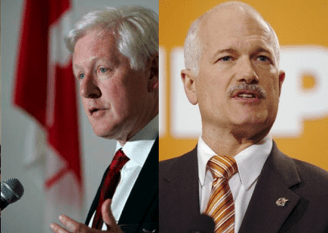
NDP leader Jack Layton would kill jobs and raise energy prices with cap-and-trade

NDP leaders Bob Rae and Jack Layton

The Ottawa Sun reports on what Jack Layton’s cap-and-trade carbon tax would do to the economy and jobs. (H/T Blue Like You)

Excerpt:

If NDP Leader Jack Layton wins a minority government May 2, supported by the Liberals and Bloc Quebecois, he plans to make Canadians pay a new charge estimated at $21.5 billion over the next four years for the right to emit man-made carbon dioxide into the atmosphere.

Under Layton’s proposed cap-and-trade plan, this money will be paid by ordinary Canadians in higher retail costs for goods and services, along with job layoffs and lower salaries and benefits for workers.

Layton’s plan is to impose cap-and-trade on us soon after the NDP takes power.

We know this because in outlining his proposal during the election, the NDP estimated it will collect $3.6 billion from cap-and-trade in this fiscal year alone, which started April 1 and ends March 31, 2012…

Remember what happened to consumer energy prices in Ontario when Dalton McGuinty embraced unproven wind and solar power?

The Globe and Mail explains:

If you haven’t opened your September hydro bill yet, you’re in for a shock. Rates have risen 18 per cent this year to date, and that’s just the start. By this time next year – election time – Ontario power consumers will be forking over about twice as much (in nominal terms) as they did when Dalton McGuinty took office in 2003.

[…]Power expert Tom Adams may know more about this subject than any other living being. And he’s steamed. Ontario’s rates, he says, have already surpassed the U.S. average and are headed for European levels – “just because of public policy.”

The policy is to go all out on renewables – wind and solar– whether or not it makes sense. The province is paying sky-high rates for power it doesn’t need so we can have wind turbines marching on and on to the horizon, just like Denmark does. “Power demand has been dropping since 2005,” says Mr. Adams. In fact, we have so much excess supply that, from time to time, it threatens to crash the system. Because of this, we’re even paying the neighbours to take the power off our hands.

“Ontario will need new power supplies in the future,” Mr. Adams says. “But why not buy it when we need it?” Instead of waiting, the power authority is signing long-term contracts at the rate of about $1-billion a week, while paying enormous premiums to attract wind and solar producers. In other words, it’s making 20-year commitments to pay stunningly high prices for power we don’t need.

On top of that, the province is building new transmission lines to nowhere while neglecting to ensure that Toronto’s hospitals and banks can keep the lights on. In July, Toronto experienced what Mr. Adams calls “Ontario’s first green blackout.” That blackout occurred because the city’s downtown core is badly underpowered. It has the weakest power system of any financial centre in the developed world.

Why haven’t we done anything about it? Because the green lobby has been campaigning for conservation, instead. And so, when the government started picking sites for transmission upgrades, it decided to build a power line up the shore of Lake Nipigon to connect remote wind turbines to Thunder Bay.

Ever since the days of Adam Beck, the father of public power in Ontario, the province’s energy policy has been linked to economic policy. The motto was reliable power at cost. Now energy policy has been entirely decoupled from economic policy and attached to the runaway train of environmental policy. Everyone in the power system knows it. But they’re so terrified to raise their hands, most of the public is still in the dark.

The National Post wrote about how the Ontario government wastes taxpayer money to subsidize big corporations who experiment with unproven, expensive energy programs, like solar power.

Excerpt:

The Swedish retail giant IKEA announced yesterday it will invest $4.6-million to install 3,790 solar panels on three Toronto area stores, giving IKEA the electric-power-producing capacity of 960,000 kilowatt hours (kWh) per year. According to IKEA, that’s enough electricity to power 100 homes. Amazing development. Even more amazing is the economics of this project. Under the Ontario government’s feed-in-tariff solar power scheme, IKEA will receive 71.3¢ for each kilowatt of power produced, which works out to about $6,800 a year for each of the 100 hypothetical homes. Since the average Toronto home currently pays about $1,200 for the same quantity of electricity, that implies that IKEA is being overpaid by $5,400 per home equivalent.

Welcome to the wonderful world of green economics and the magical business of carbon emission reduction. Each year, IKEA will receive $684,408 under Premier Dalton McGuinty’s green energy monster — for power that today retails for about $115,000. At that rate, IKEA will recoup $4.6-million in less than seven years — not bad for an investment that can be amortized over 20.

No wonder solar power is such a hot industry. No wonder, too, that the province of Ontario is in a headlong rush into a likely economic crisis brought on by skyrocketing electricity prices. To make up the money paid to IKEA to promote itself as a carbon-free zone, Ontario consumers and industries are on their way to experiencing the highest electricity rates in North America, if not most of the world.
The government’s regulator, the Ontario Energy Board, has prepared secret forecasts of how much Ontario consumers are going to have to pay for electricity over the next five years. The government won’t allow the report to be released. The next best estimate comes from Aegent Energy Advisors Inc., in a study it did for the Canadian Manufactures and Exporters group. Residential rates are expected to jump by 60% between 2010 and 2015. Industrial customers will be looking at a 55% increase.

Going back to 2003, based on numbers dug up by consultant Tom Adams, the price of residential electricity in Ontario hovered around 8.5¢ a kWh in 2003 — the first year of the McGuinty Liberal regime. By 2015, Aegent Energy estimates the price will be up to 21¢, an increase of 135%. Doubling the price of electricity in a decade is no way to spur growth and investment. In this age of global economic competition IKEA may end up with fewer sales of its Billy bookshelves in Toronto because its customers will be bogged down with soaring power bills and a sliding economy.

How about wind power? Is that any better? The National post explains the costs and drawbacks of wind power.

Excerpt:

A $200-million wind farm in northern New Brunswick is frozen solid, cutting off a potential supply of renewable energy for NB Power.

The 25-kilometre stretch of wind turbines, located 70 kilometres northwest of Bathurst, N.B. has been completely shutdown for several weeks due to heavy ice covering the blades.

[…]Wintery conditions also temporarily shutdown the site last winter, just months after its completion. Some or all of the turbines were offline for several days, with “particularly severe icing” blamed.

The accumulated ice alters the aerodynamics of the blades, rendering them ineffective as airfoils. The added weight further immobilizes the structures.

[…]Melissa Morton, a spokeswoman for the utility, says the contract isn’t based on power delivered during a specific period, but rather on an annual basis.

“Our hopes is that it will balance out over the 12-month period and, historically, that has been the case.”

Despite running into problems in consecutive winters, Ms. Morton says NB Power doesn’t have concerns about the reliability of the supply from the Caribou Mountain site.

And messing with energy production doesn’t just hurt consumers, it hurts businesses who have to pay more for electricity. They deal with those additional costs by laying off workers and raising the prices of their goods and services. These alternative energy sources simply to not work as well (YET) as current methods of generating power, and it costs a lot of taxpayer money to experiment with them. This is real money folks – YOUR MONEY.

The Wall Street Journal has more on the economic effects of cap-and-trade laws. Even with a Democrat-run House, a Democrat-run Senate, and a Democrat president, the anti-business left was not able to get the cap-and-trade carbon tax passed in the United States. Everybody, including Democrats, knew that a tax on energy production will cost the energy sector jobs, and raise prices on consumer energy.

Spain tried to implement a green jobs program, and it cost them 2.2 jobs in other sectors of the economy for every green job created by their green energy policy.

How did former NDP leader Bob Rae govern in Ontario?

If you want to know what New Democrats do to an economy, you can read about how NDP leader Bob Rae wrecked the Ontario economy in the 1990s.

Excerpt:

The Liberal government had forecast a small surplus earlier in the year, but a worsening North American economy led to a $700 million deficit before Rae took office. In October, the NDP projected a $2.5 billion deficit for the fiscal year ending on March 31, 1991.[40] Some economists projected soaring deficits for the upcoming years, even if the Rae government implemented austerity measures.[41] Rae himself was critical of the Bank of Canada’s high interest rate policy, arguing that it would lead to increased unemployment throughout the country.[42] He also criticized the 1991 federal budget, arguing the Finance Minister Michael Wilson was shifting the federal debt to the provinces.[43]

The Rae government’s first budget, introduced in 1991, increased social spending to mitigate the economic slowdown and projected a record deficit of $9.1 billion. Finance Minister Floyd Laughren argued that Ontario made a decision to target the effects of the recession rather than the deficit, and said that the budget would create or protect 70,000 jobs. It targeted more money to social assistance, social housing and child benefits, and raised taxes for high-income earners while lowering rates for 700,000 low-income Ontarians.[44]

A few years later, journalist Thomas Walkom described the budget as following a Keynesian orthodoxy, spending money in the public sector to stimulate employment and productivity. Unfortunately, it did not achieve its stated purpose. The recession was still severe. Walkom described the budget as “the worst of both worlds”, angering the business community but not doing enough to provide for public relief.

[…]Rae’s government attempted to introduce a variety of socially progressive measures during its time in office, though its success in this field was mixed. In 1994, the government introduced legislation, Bill 167, which would have provided for same-sex partnership benefits in the province. At the time, this legislation was seen as a revolutionary step forward for same-sex recognition.

[…]The Rae government established an employment equity commission in 1991,[49] and two years later introduced affirmative action to improve the numbers of women, non-whites, aboriginals and disabled persons working in the public sector.

[…]In November 1990, the Rae government announced that it would restrict most rent increases to 4.6% for the present year and 5.4% for 1991. The provisions for 1990 were made retroactive. Tenants’ groups supported these changes, while landlord representatives were generally opposed.

Be careful who you vote for, Canada. We voted for Obama, and now we have a 14.5 trillion dollar debt and a 1.65 trillion deficit – TEN TIMES the last Republican budget deficit of 160 billion under George W. Bush in 2007. TEN TIMES WORSE THAN BUSH.

UPDATE: This post linked by Crux of the Matter.

Related posts

Obama spent $1.6 billion on Chinese wind and $2 billion on Brazilian oil

Obama Budget Deficit 2011

ABC News reports on the subsidies for Chinese wind turbines. (H/T GP)

Excerpt:

Despite all the talk of green jobs, the overwhelming majority of stimulus money spent on wind power has gone to foreign companies, according to a new report by the Investigative Reporting Workshop at the American University’s School of Communication in Washington, D.C.

Nearly $2 billion in money from the American Recovery and Reinvestment Act has been spent on wind power, funding the creation of enough new wind farms to power 2.4 million homes over the past year. But the study found that nearly 80 percent of that money has gone to foreign manufacturers of wind turbines.

“Most of the jobs are going overseas,” said Russ Choma at the Investigative Reporting Workshop. He analyzed which foreign firms had accepted the most stimulus money. “According to our estimates, about 6,000 jobs have been created overseas, and maybe a couple hundred have been created in the U.S.”

Even with the infusion of so much stimulus money, a recent report by American Wind Energy Association showed a drop in U.S. wind manufacturing jobs last year.

NewsMax reports on the subsidies for Brazilian oil driling. (H/T GP)

Excerpt:

Gulf Oil CEO Joe Petrowski says President Barack Obama’s weekend comments in Brazil that the United States looks forward to purchasing oil drilled for offshore by that nation “is rather puzzling,” and “hypocritical” as his administration has imposed a virtual moratorium Gulf Oil,Joe Petrowski, Barack Obama, Brazil, Drillingon domestic drilling. The signal to purchase more foreign oil comes after the U.S. Export-Import Bank invested more than $2 billion with Brazil’s state-owned oil company, Petrobras, to finance exploration.

“Any drilling, or any new production, especially production outside the Mideast – that is inherently unstable and probably is going to become more unstable as we move forward – is a positive,” Petrowski said Tuesday on Fox News.

“But why Brazil, when we could have the jobs and foreign exchange in this country, is rather puzzling – and I’d say somewhat humorous,” Petrowski told Fox News’ Neal Cavuto. “What is it about Brazil that they have that we don’t have?

“What concerns me – in addition to we are going to lose the jobs, and in addition to not having the foreign exchange – is one of the untold problems, I think, in the world oil markets, besides that we are getting too much of our oil from the Mideast, is 75 percent of our oil is being produced by government-run entities,” he continued.

“And I just have a theory that private companies are going to be more efficient in finding it, and getting it out at a more reasonable price, than state-owned companies,” Petrowski said.

Cavuto asked whether buying oil from Brazil is bad for the U.S. economy.

“It would be a lot better if we had the drilling here,” Petrowski said. “And it seems a double standard and it seems somewhat hypocritical [that] a country that desperately needs jobs, and we need them here, that we are encouraging other countries to create the jobs that we need.”

Obama has so much taxpayer money to hand out to China and Brazil, but now he wants to prevent AMERICAN oil companies from getting tax deductions for asset depreciation (depletion allowance).

What happens when we use American taxpayer dollars to stimulate energy production in other countries?

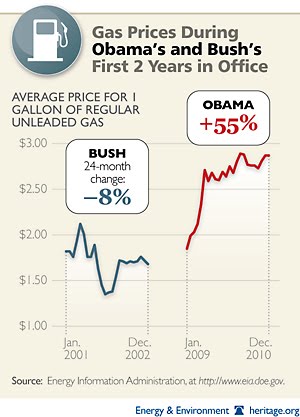
Gas Prices under Obama and Bush

We pay more for energy, that’s what. Because we shipped our energy sector jobs overseas.

From the Washington Examiner. (H/T JWF)

Excerpt:

At least $53 million in federal funds have gone to ACORN activists since 1994, and the controversial group could get up to $8.5 billion more tax dollars despite being under investigation for voter registration fraud in a dozen states.

The economic stimulus bill enacted in February contains $3 billion that the non-profit activist group known more formally as the Association for Community Organizations for Reform Now could receive, and 2010 federal budget contains another $5.5 billion that could also find its way into the group’s coffers.

An Examiner review of federal spending data found that ACORN has received at least $53 million in federal money since 1994.

Meanwhile, Obama gave $3 billion taxpayer dollars to ACORN, which has been indicted on voter fraud charges, and 0.35 billion taxpayer dollars to Planned Parenthood, which has been caught on film covering-up statutory rape. Why is it that organizations that support Democrats like ACORN and Planned Parenthood are below the radar, while Obama keeps complaining about oil companies? Does taxing oil companies make the price at the pump go down? Or rather, doesn’t taxing oil companies cause the price at the pump to go up? And if taxing companies is such a good idea, why did Obama’s favorite crony corporation GE make $14.2 billion in profits in 2010, but pay NOTHING in taxes?

UPDATE: This post linked by the Competitive Enterprise Institute.