Tag Archives: Egypt

Top Iranian official assisting Syria to crackdown on protestors

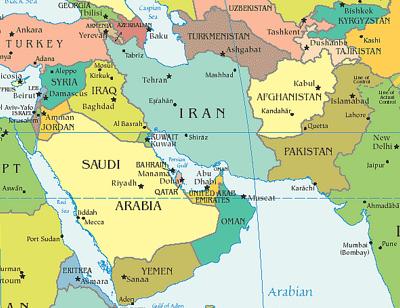
Map of the Middle East

From Haaretz.

Excerpt:

A top Iranian military official is activily aiding the regime of Syrian President Bashar Assad in suppressing popular unrest throughout the country, a top member of the National Syrian Council said on Monday.

According to the Syrian official, Kassam Salimani, commander of the Quds Force, the Iranian Revolutionary Guard special forces unit, has arrived in Syria recently and has taken up a spot in the war room which manages army maneuvers against opposition forces.

[…]The Quds Force includes 15,000 elite soldiers who operated, among other locations, in Iraq during the war, and the specialty of which is engaging in unconventional warfare on foreign soil. Among other duties, the Quds Force is in charge of traning and funding Hezbollah.

Salimani’s presence in Syria serves as an indication of the kind of battle that Assad is planning against opposition forces, with the Syrian army reportedly planning to wage all out war against the rebel city of Homs.

[…]The report also claimed that the Syrian army for the first time has been using rockets in order to target houses as well as mortars to hit populated areas. So far, 60 people were reportedly killed and hundreds wounded in this battle, as well as reports of the demolition of seven houses, residents and all.

[…]Syrian opposition organizations that are active internationally are currently trying to gain a political front bypassing the UN Security Council, where a resolution underwritten by the Arab League failed due to Russian and Chinese vetoes on Saturday.

At this stage, opposition leaders are trying to find a way forward, as it is clear that Turkey and the Arab states oppose military action against the Assad regime, and the imposing of economic sanctions will not stop Assad.

Facing Russia and Chinese opposition, and the Iranian threat to open a new front, there is doubt whether a western coalition will agree to act directly against Syria. The question is whether the Free Syrian Army will be able to get additional military assistance, and to arm itself with heavy artillery, tanks and shells so that it will be able to pose a real challenge to the Syrian army, and change the civilian resistance into a real military struggle, much like the rebel forces in Libya.

Where’s Obama? Why isn’t he supporting the civilians and the Syrian resistance?

Well, Obama only commits the US armed forces to wars that are likely to result in radical Islamist governments – as in Libya and Egypt. That’s “smart diplomacy”. America would benefit if the Assad regime were replaced in Syria – and that’s why Obama isn’t going to lift a finger to make that happen.

Ayaan Hirsi Ali talks about the war on Christians in Muslim countries

Map of Africa
Map of Africa

This story appeared in the radically left-wing Newsweek, of all places.

Excerpt:

From blasphemy laws to brutal murders to bombings to mutilations and the burning of holy sites, Christians in so many nations live in fear. In Nigeria many have suffered all of these forms of persecution. The nation has the largest Christian minority (40 percent) in proportion to its population (160 million) of any majority-Muslim country. For years, Muslims and Christians in Nigeria have lived on the edge of civil war. Islamist radicals provoke much if not most of the tension. The newest such organization is an outfit that calls itself Boko Haram, which means “Western education is sacrilege.” Its aim is to establish Sharia in Nigeria. To this end it has stated that it will kill all Christians in the country.

In the month of January 2012 alone, Boko Haram was responsible for 54 deaths. In 2011 its members killed at least 510 people and burned down or destroyed more than 350 churches in 10 northern states. They use guns, gasoline bombs, and even machetes, shouting “Allahu akbar” (“God is great”) while launching attacks on unsuspecting citizens. They have attacked churches, a Christmas Day gathering (killing 42 Catholics), beer parlors, a town hall, beauty salons, and banks. They have so far focused on killing Christian clerics, politicians, students, policemen, and soldiers, as well as Muslim clerics who condemn their mayhem. While they started out by using crude methods like hit-and-run assassinations from the back of motorbikes in 2009, the latest AP reports indicate that the group’s recent attacks show a new level of potency and sophistication.

The Christophobia that has plagued Sudan for years takes a very different form. The authoritarian government of the Sunni Muslim north of the country has for decades tormented Christian and animist minorities in the south. What has often been described as a civil war is in practice the Sudanese government’s sustained persecution of religious minorities. This persecution culminated in the infamous genocide in Darfur that began in 2003. Even though Sudan’s Muslim president, Omar al-Bashir, has been indicted by the International Criminal Court in The Hague, which charged him with three counts of genocide, and despite the euphoria that greeted the semi-independence he grant-ed to South Sudan in July of last year, the violence has not ended. In South Kordofan, Christians are still subject-ed to aerial bombardment, targeted killings, the kidnap-ping of children, and other atrocities. Reports from the United Nations indicate that between 53,000 and 75,000 innocent civilians have been displaced from their resi-dences and that houses and buildings have been looted and destroyed.

Both kinds of persecution—undertaken by extragovernmental groups as well as by agents of the state—have come together in Egypt in the aftermath of the Arab Spring. On Oct. 9 of last year in the Maspero area of Cairo, Coptic Christians (who make up roughly 11 percent of Egypt’s population of 81 million) marched in protest against a wave of attacks by Islamists—including church burnings, rapes, mutilations, and murders—that followed the overthrow of Hosni Mubarak’s dictatorship. During the protest, Egyptian security forces drove their trucks into the crowd and fired on protesters, crushing and killing at least 24 and wounding more than 300 people. By the end of the year more than 200,000 Copts had fled their homes in anticipation of more attacks. With Islamists poised to gain much greater power in the wake of recent elections, their fears appear to be justified.

Egypt is not the only Arab country that seems bent on wiping out its Christian minority. Since 2003 more than 900 Iraqi Christians (most of them Assyrians) have been killed by terrorist violence in Baghdad alone, and 70 churches have been burned, according to the Assyrian International News Agency (AINA). Thousands of Iraqi Christians have fled as a result of violence directed specifically at them, reducing the number of Christians in the country to fewer than half a million from just over a million before 2003. AINA understandably describes this as an “incipient genocide or ethnic cleansing of Assyrians in Iraq.”

The 2.8 million Christians who live in Pakistan make up only about 1.6 percent of the population of more than 170 million. As members of such a tiny minority, they live in perpetual fear not only of Islamist terrorists but also of Pakistan’s draconian blasphemy laws. There is, for example, the notorious case of a Christian woman who was sentenced to death for allegedly insulting the Prophet Muhammad. When international pressure persuaded Punjab Gov. Salman Taseer to explore ways of freeing her, he was killed by his bodyguard. The bodyguard was then celebrated by prominent Muslim clerics as a hero—and though he was sentenced to death late last year, the judge who imposed the sentence now lives in hiding, fearing for his life.

Such cases are not unusual in Pakistan. The nation’s blasphemy laws are routinely used by criminals and intolerant Pakistani Muslims to bully religious minorities. Simply to declare belief in the Christian Trinity is considered blasphemous, since it contradicts mainstream Muslim theological doctrines. When a Christian group is suspected of transgressing the blasphemy laws, the consequences can be brutal. Just ask the members of the Christian aid group World Vision. Its offices were attacked in the spring of 2010 by 10 gunmen armed with grenades, leaving six people dead and four wounded. A militant Muslim group claimed responsibility for the attack on the grounds that World Vision was working to subvert Islam. (In fact, it was helping the survivors of a major earthquake.)

Not even Indonesia—often touted as the world’s most tolerant, democratic, and modern majority-Muslim nation—has been immune to the fevers of Christophobia. According to data compiled by the Christian Post, the number of violent incidents committed against religious minorities (and at 7 percent of the population, Christians are the country’s largest minority) increased by nearly 40 percent, from 198 to 276, between 2010 and 2011.

The litany of suffering could be extended. In Iran dozens of Christians have been arrested and jailed for daring to worship outside of the officially sanctioned church system. Saudi Arabia, meanwhile, deserves to be placed in a category of its own. Despite the fact that more than a million Christians live in the country as foreign workers, churches and even private acts of Christian prayer are banned; to enforce these totalitarian restrictions, the religious police regularly raid the homes of Christians and bring them up on charges of blasphemy in courts where their testimony carries less legal weight than a Muslim’s. Even in Ethiopia, where Christians make up a majority of the population, church burnings by members of the Muslim minority have become a problem.

Please read the whole thing.

I am actually perplexed as to how this got published in Newsweek, a magazine that might as well be edited by George Soros. But there it is, so we need to read it and share it while it lasts. I would expect that this is the first that any of Newsweek’s readers have heard about how Christians are persecuted in the Middle East.

Should we legalize drugs and prostitution like Ron Paul wants?

The UK Telegraph explains how Ron Paul’s policies have been tried and they have failed.

Excerpt:

Amsterdam authorities say they are to halve the number of brothels and marijuana shops in the city’s “red light” district and surrounding area

The city announced plans to clean up the area a year ago and since then 109 sex “windows”, from which prostitutes attract customers, have been closed. The new measures aim to reduce the number of windows to 243 from 482 last year, a city spokesman said.

Amsterdam also wants to close half of the 76 cannabis shops in the city centre.

“Money laundering, extortion and human trafficking are things you do not see on the surface but they are hurting people and the city. We want to fight this,” deputy mayor of Amsterdam Lodewijk Asscher told Reuters.

“We can still have sex and drugs but in a way that shows the city is in control.”

Prostitution was legalised in the Netherlands in 2000 and its soft drug policy, one of the most liberal in Europe, allows the sale of marijuana and possession of less than 5 grams (0.18 oz).

But Amsterdam’s toughening line is part of a wider trend in Holland.

Two Dutch cities near the Belgian border want to close all their cannabis shops to combat drug tourism and crime.

The 800-year-old red light district needs to diversify and showcase the city’s history, Mr Asscher said.

“This is a nice, old part of town. We can attract different groups of tourists. You should be able to have a beer at the old church square, watch fashion, and visit Chinatown,” he added.

The Family Research Council explains how Ron Paul’s drug policies don’t actually work as advertised anywhere they’ve been tried.

Excerpt:

Legalizers believe most black market and organized syndicate involvement in the drug business would die and that drug-induced crime would decrease with drug legalization. But these assertions are not supported by the facts. The United States experimented with legalization and it failed. From 1919 to 1922, government-sponsored clinics handed out free drugs to addicts in hopes of controlling their behavior. The effort failed. Society’s revulsion against drugs, combined with enforcement, successfully eradicated the menace at that time.[32]

California decriminalized marijuana in 1976, and, within the first six months, arrests for driving under the influence of drugs rose 46 percent for adults and 71.4 percent for juveniles.[33] Decriminalizing marijuana in Alaska and Oregon in the 1970s resulted in the doubling of use.[34] Patrick Murphy, a court-appointed lawyer for 31,000 abused and neglected children in Chicago, says that more than 80 percent of the cases of physical and sexual abuse of children now involve drugs. There is no evidence that legalizing drugs will reduce these crimes, and there is evidence that suggests it would worsen the problem.[35]

Legalization would decrease drug distribution crime because most of those activities would become lawful. But would legalization necessarily reduce other drug-related crime like robbery, rape, and assault? Presumably legalization would reduce the cost of drugs and thus addicts might commit fewer crimes to pay for their habits. But less expensive drugs might also feed their habit better, and more drugs means more side effects like paranoia, irritability and violence. Suggestions that crime can somehow be eliminated by redefining it are spurious. Free drugs or legalizing bad drugs would not make criminal addicts into productive citizens. Dr. Mitchell S. Rosenthal, expert on drugs and adolescents and president of Phoenix House, a resident treatment center in New York, said, “If you give somebody free drugs you don’t turn him into a responsible employee, husband, or father.”[36] The Justice Department reports that most inmates (77.4 percent male and 83.6 percent female) have a drug history and the majority were under the influence of drugs or alcohol at the time of their current offense. And a surprisingly large number of convicted felons admit their crime motive was to get money for drugs. For example, 12 percent of all violent offenses and 24.4 percent of all property offenses were drug-money motivated.[37]

[…]The extent to which individuals commit “drug-related crimes only” is overstated. Most incarcerated “drug”offenders violated other laws as well. Princeton University professor John Dilulio found that only 2 percent — i.e., 700 — of those in federal prisons were convicted of pure drug possession. They generally committed other and violent crimes to earn a sentence.[40]

However, 70 percent of current inmates were on illegal drugs when arrested and, if drugs become cheaper, violent crime could reasonably be expected to increase.[41]

And more:

History provides evidence that legalization of drugs in foreign nations has not been successful. For example, opium was legalized in China earlier this century. That decision resulted in 90 million addicts and it took a half-century to repair the damage.[59]

Egypt allowed unrestricted trade of cocaine and heroin in the 1920s. An epidemic of addiction resulted. Even in Iran and Thailand, countries where drugs are readily available, the prevalence of addiction continues to soar.[60]

Modern-day Netherlands is often cited as a country which has successfully legalized drugs. Marijuana is sold over the counter and police seldom arrest cocaine and heroin users. But official tolerance has led to significant increases in addiction. Amsterdam’s officials blame the significant rise in crime on the liberal drug policy. The city’s 7,000 addicts are blamed for 80 percent of all property crime and Amsterdam’s rate of burglary is now twice that of Newark, New Jersey.[61] Drug problems have forced the city to increase the size of the police force and the city fathers are now rethinking the drug policy.[62]

Dr. K. F. Gunning, president of the Dutch National Committee on Drug Prevention, cites some revealing statistics about drug abuse and crime. Cannabis use among students increased 250 percent from 1984 to 1992. During the same period, shootings rose 40 percent, car thefts increased 62 percent, and hold-ups rose 69 percent.[63]

Sweden legalized doctor prescriptions of amphetamines in 1965. During the first year of legalization, the number of intravenous”speed” addicts rose 88.5 percent. A study of men arrested during the legalization period showed a high correlation between intravenous use and a variety of crimes.[64]

Dr. Nils Bejorot, director of the Swedish Carnegie Institute and professor of social medicine at the Karolinska Institute in Stockholm, believes the solution to the growing drug problem is consistent social and legal harassment of both users and dealers.[65]

Great Britain experimented with controlled distribution of heroin between 1959 and 1968. According to the British Medical Journal, the number of heroin addicts doubled every sixteen months and the increase in addicts was accompanied by an increase in criminal activity as well.[66] And British authorities found that heroin addicts have a very good chance of dying prematurely. On the crime front, Scotland Yard had to increase its narcotics squad 100 percent to combat the crime caused by the “legal” addicts.[67]

The Swiss opened a “legalized drug” area in Zurich seven years ago and local addicts were given drugs, clean needles, and emergency medical care. Unfortunately, the liberal policy backfired and the number of addicts surged to 3,500; violence surged, too. “Needle Park,” as it came to be known, was a place of open warfare among rival gangs, and even police faced gunfire. Their cars were attacked and overturned. In February 1995, officials ended the experiment, conceding that it had evolved into a grotesque spectacle.[68]

Why does legalizing drugs increase crime? Because drugs are addictive and they cost money to obtain. Addiction reduces the ability to hold down a job, which is a legal way of getting money. Therefore, addicts will resort to crime in order to get the money to buy their drugs, since their addiction impairs their ability to hold down a job.

Here is an article that takes a look at Ron Paul’s views on social policy and one that looks at Ron Paul’s views on foreign policy.