
Tag Archives: Birds

Remarkable: the Clark’s nutcracker can remember up to 20,000 maps

This gorgeous birdy is "The Clark's Nutcracker"
This handsome black and white bird is “The Clark’s Nutcracker”

Well, it’s time for me to celebrate birds again, my favorite creatures of all the creatures that God made. I’m going to use this article from National Geographic that Mackenzie (not McKenzie) found.

It says:

It weighs only four or five ounces, its brain practically nothing, and yet, oh my God, what this little bird can do. It’s astonishing.

Around now, as we begin December, the Clark’s nutcracker has, conservatively, 5,000 (and up to 20,000) treasure maps in its head. They’re accurate, detailed, and instantly retrievable.

It’s been burying seeds since August. It’s hidden so many (one study says almost 100,000 seeds) in the forest, meadows, and tree nooks that it can now fly up, look down, and see little x’s marking those spots—here, here, not there, but here—and do this for maybe a couple of miles around. It will remember these x’s for the next nine months.

It starts in high summer, when whitebark pine trees produce seeds in their cones—ripe for plucking. Nutcrackers dash from tree to tree, inspect, and, with their sharp beaks, tear into the cones, pulling seeds out one by one. They work fast.One study clocked a nutcracker harvesting “32 seeds per minute.”

These seeds are not for eating. They’re for hiding. Like a squirrel or chipmunk, the nutcracker clumps them into pouches located, in the bird’s case, under the tongue. It’s very expandable …

The pouch “can hold an average of 92.7 plus or minus 8.9 seeds,” wrote Stephen Vander Wall and Russell Balda. Biologist Diana Tomback thinks it’s less, but one time she saw a (bigger than usual) nutcracker haul 150 seeds in its mouth. “He was a champ,” she told me.

Next, they land. Sometimes they peck little holes in the topsoil or under the leaf litter. Sometimes they leave seeds in nooks high up on trees. Most deposits have two or three seeds, so that by the time November comes around, a single bird has created 5,000 to 20,000 hiding places. They don’t stop until it gets too cold. “They are cache-aholics,” says Tomback.

When December comes—like right around now—the trees go bare and it’s time to switch from hide to seek mode. Nobody knows exactly how the birds manage this, but the best guess is that when a nutcracker digs its hole, it will notice two or three permanent objects at the site: an irregular rock, a bush, a tree stump. The objects, or markers, will be at different angles from the hiding place.

Next, they measure. This seed cache, they note, “is a certain distance from object one, a certain distance from object two, a certain distance from object three,” says Tomback. “What they’re doing is triangulating. They’re kind of taking a photograph with their minds to find these objects” using reference points.

Behold the cuteness:

Monstrous!

I think now is the time to remind all my readers that birds have trouble finding food in the winter. Now is a good time to build or buy feeders for them, and a bag of seed. When things get very cold, it helps if they can find some comfortable trees to hide in, where there is not so much wind and snow. So, plant some trees, put up some feeders, and don’t let your cats out.
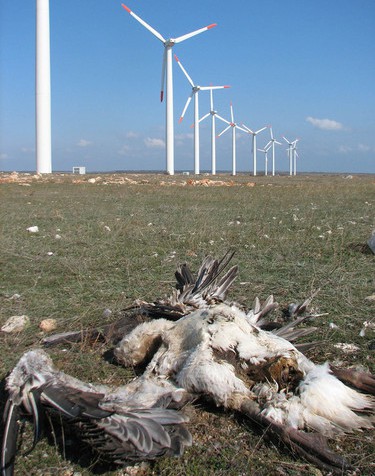
Federal court cripples Obama administration’s bird-killing green energy agenda

This is business as usual for the Democrat Party

So, one of the quirky things about me is that I am a huge bird lover.

Birds are my favorite creatures, and I oppose anything that harms them. Well, it turns out that green energy schemes harm a lot of birds, whether it be solar power or wind power.

To get around this fact, the Obama administration decided to to allow green energy producers to get licenses to kill rare, protected birds – including bald eagles and golden eagles. Green energy scams are a useful way for the Obama administration to pay off their campaign bundlers with taxpayer money, as a reward for helping Democrats get elected. And if huge numbers of rare, protected birds have to die to do that, well, it’s no big deal.

Here’s the story from Bird Watching Daily. (H/T ECM)

It says:

The U.S. District Court in San Jose, California, today ruled that the Department of the Interior violated federal laws when it created a final regulation allowing wind energy and some other companies to obtain 30-year permits to kill protected Bald and Golden Eagles without prosecution by the federal government. The court decision invalidates the rule.

American Bird Conservancy (ABC), a plaintiff in the lawsuit, hailed the decision. “We are pleased that the courts agreed with us that improper shortcuts were taken in the development of this rule,” said Michael Hutchins, director of ABC’s Bird Smart Wind Energy Program. “The court found that important laws meant to protect our nation’s wildlife were not properly followed by the U.S. Fish and Wildlife Service, putting Bald and Golden Eagles at greater risk.”

The court wrote: “… substantial questions are raised as to whether the Final 30-Year Rule may have a significant adverse effect on bald and golden eagle populations.”

By the way, in case you wanted a reference for my claim that solar power also harms birds, this Scientific American article explains how solar power kills endangered bird species.

You might never have seen an Yuma clapper rail. Fewer than 1,000 are thought to still be sloshing about in cattail-thick marshes from Mexico up to Utah and across to California. But if you were lucky enough to spot one, you might chuckle at its oversized toes.

When officials with the National Fish and Wildlife Forensics Laboratory saw one of these endangered birds last year, it was no laughing matter. It was dead. It was one of 233 birds recovered from the sites of three Californian desert solar power plants as part of a federal investigation. The laboratory’s wildlife equivalents of CSI stars concluded that many of the birds had been fatally singed, broken, or otherwise fatally crippled by the facilities.

233 doesn’t sound too bad, but the total death toll is much higher.

This Weather.com article puts the number of birds killed by solar power at thousands every year for just one solar power plant:

According to the Associated Press, up to 28,000 birds per year might be meeting an early death after burning up in the focused beams of sunlight, with birds dying at a rate of one bird every two minutes. The burned-up birds are being dubbed “streamers,” after the poof of smoke produced by the igniting birds.

A report by the USFWS states that most of the birds are dying from various levels of exposure to “solar flux” which causes “singeing of feathers.”

“Severe singeing of flight feathers caused catastrophic loss of flying ability, leading to death by impact with the ground or other objects,” the report states. “Less severe singeing led to impairment of flight capability, reducing ability to forage and evade predators, leading to starvation or predation.”

Solar power is actually worse than wind power, when it comes to killing birds, and that’s still going on, unchecked. When I look at the dead and injured birds in the pictures from these news stories, it just makes me sick.

New study: tiny songbirds fly over the Atlantic ocean and back each year

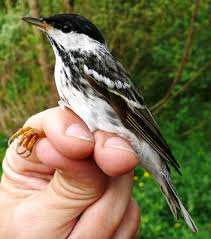
Blackpoll Warbler- so tiny and so cute!
Blackpoll Warbler- so cute!

I love birds! I really, really do! A lot!

So here is the latest study, reported in Science Daily about our amazing feathered friends.

They write:

For more than 50 years, scientists had tantalizing clues suggesting that a tiny, boreal forest songbird known as the blackpoll warbler departs each fall from New England and eastern Canada to migrate nonstop in a direct line over the Atlantic Ocean toward South America, but proof was hard to come by.

Now, for the first time an international team of biologists report “irrefutable evidence” that the birds complete a nonstop flight ranging from about 1,410 to 1,721 miles (2,270 to 2,770 km) in just two to three days, making landfall somewhere in Puerto Rico, Cuba and the islands known as the Greater Antilles, from there going on to northern Venezuela and Columbia. Details of their study, which used light-level, or solar, geolocators, appear in the current issue of Biology Letters.

First author Bill DeLuca, an environmental conservation research fellow at the University of Massachusetts Amherst, with colleagues at the University of Guelph, Ontario, the Vermont Center for Ecostudies and other institutions, says, “For small songbirds, we are only just now beginning to understand the migratory routes that connect temperate breeding grounds to tropical wintering areas. We’re really excited to report that this is one of the longest nonstop overwater flights ever recorded for a songbird, and finally confirms what has long been believed to be one of the most extraordinary migratory feats on the planet.”

While other birds, such as albatrosses, sandpipers and gulls are known for trans-oceanic flights, the blackpoll warbler is a forest dweller that migrates boldly where few of its relatives dare to travel. Most migratory songbirds that winter in South America take a less risky, continental route south through Mexico and Central America, the authors note. A water landing would be fatal to a warbler.

[…]For this work the scientists fitted geolocator packs on 20 birds in Vermont and 20 more in Nova Scotia. They were able to recapture three birds from the Vermont group and two from the Nova Scotia group for analyses.

So-called light-level geolocators use solar geolocation, a method used for centuries by mariners and explorers. It is based on the fact that day length varies with latitude while time of solar noon varies with longitude. So all the instrument needs to do is record the date and length of daylight, from which daily locations can then be inferred once the geolocator is recaptured. “When we accessed the locators, we saw the blackpolls’ journey was indeed directly over the Atlantic. The distances travelled ranged from 2,270 to 2,770 kilometers,” DeLuca says.

Evolution News has more on the discovery.

They write:

More record-breaking discoveries may be in store. Oskin says that some of the blackpoll warblers spend their summers in Alaska and Canada instead of New England. If they fly east before joining the southern route to Colombia and Venezuela, it would add three thousand more miles to their annual migration.

[…]But that’s not all. Lest we forget, there are the Monarch butterflies, much smaller and lighter than birds, that travel three thousand miles from Canada to Mexico each year, as detailed in Illustra’s film Metamorphosis. Even though butterflies don’t fly non-stop, that’s — well, we need an adjective beyond “extraordinary.” And more recently, British scientists found that another butterfly, the painted lady, flies triple that distance — nine thousand miles — in its annual migration from the UK to Africa.

Think of all the integrated systems that have to be in place to make these migrations possible. The birds or butterflies need elegant flight systems, with all the attendant muscles, nerves, and structural supports required. They require digestive systems to sustain them, circulatory systems, thermal systems, sensory systems, and protection from the elements. Most astonishing are the navigational systems, including sensing the stars or the earth’s magnetic field, to take them unerringly to their destination and back over routes of thousands of miles. To pack all that in a tiny animal is a masterpiece of miniaturization. Oh — and then there’s a reproductive system, and a battery of instincts to operate all the systems.

It seems fair to say these engineering marvels are beyond the reach of unguided Darwinian evolution. The birds don’t have to fly that far. Warblers could stay inland along the coast, and feed on the way, or learn to get by through the winter like other birds do. Butterflies, too, could stay with other species that don’t migrate. Natural selection would take the easy road, get rid of the wings, and let them grovel in the dirt to eke out a living. These migratory abilities are gratuitous and superfluous to the requirements of mere survival. Such over-design, right on the “brink of impossibility,” speaks of design so beyond our comprehension, we can only stand in awe.

Butterflies are OK, but birds are much better – you can actually make friends with birds. Anyway, if you like birds as much as I do… well, no one likes them as much as I do… but if you like birds a lot, then you should get Illustra’s documentary Flight: The Genius of Birds and watch it. And share it with your friends.