Tag Archives: Bible

Don’t let unmet needs block you from honoring your obligations to God

Theology that hits the spot

I’m still reading the devotional book (Paul Tripp’s “New Morning Mercies”) that Dina asked me to read. I will be reading it all year. I find that about one devotion a week is useful, the rest are fluff. However, because she is willing to keep asking me how I am doing with it, and also listen to me complain and criticize, I am keeping up with it.

I wanted to blog about the March 17th devotion.

Here it is:

If you put too many things in your need category, you will end up frustrated with life, hurt by others, and doubting God’s goodness.

It really is one of the sloppiest words used in human culture. If need means “essential for life,” then the vast majority of the things we say that we need we don’t actually need. You know this if you have children or are around children. Let’s say you’re a parent and you have taken your child to the mall (which is your first mistake). As you’re walking through the mall, your child sees the sneaker store and immediately makes a left-hand turn. Now, with nose pressed against the window of the store, he says, “Mom, I neeeeeeeed those sneakers.” You look down at his feet, which are encased in perfectly good shoes, and you say: “No, I’m not getting you those sneakers. You already have perfectly good shoes.” Now, when you say this, your child does not think: “What a wise mother I have been blessed with. She has seen through my distorted sense of need, has recognized selfish desire, and has lovingly rescued me from me.” No, your child lashes out against you: “You always say ‘no’ to me. I don’t know why I have to have the one mom who hates sneakers.” Then your child refuses to relate to you for the rest of the time that you are in the mall.

When you tell yourself that something is a need, three things folio’ First, you feel entitled to the thing, because, after all, it is a need. Second, because it is a need, you feel it’s your right to demand it. And third, you then judge the love of another person by his or her willingness to deliver the thing. This not only happens in our relationships with one another, but more important, it happens in our relationship with God. When you name something as a need and God doesn’t deliver it, you begin to doubt his goodness. What is deadly about this is that you simply don’t run for help to someone whose character you’ve come to doubt.

In Matthew 6:32, Jesus reminds us that we have a heavenly Father who knows exactly what we need. There is comfort and confrontation in Jesus’s words. The confrontation is this: the reason Jesus reminds us that we have a Father who has a clear understanding of our true needs is because we don’t have such an understanding. We constantly get needs and wants confused, and when we do, we are tempted to question the love of our heavenly Father. The comfort is that, by grace, we have been made to be the children of the wisest, most loving Father that the universe has ever known. He is never, ever confused. He knows our every need because he created us. We can rest in the grace that has made us his children, knowing that our place in his family guarantees that we will have what we need.

For further study and encouragement: Psalm 145

I’m posting this because it applies to me. I have a need for recognition and acknowledgement from Christian women, and for a very long time in my life, I had to do without it, despite making what I considered to be all the right moves. I don’t think anyone would say that I was not a successful person, and not a successful man. But I think something has changed in the culture that makes it harder to get appropriate recognition from women, even if you do all the right things. So I had to face this problem of having an unmet need for most of my life, until I started blogging and met tons and tons of women who recognized and acknowledged me. (My love language is words of encouragement)

I think the best thing I can say about this is that it hasn’t affected my willingness to serve God. I remember having a conversation with an atheist woman who expected God to meet all her needs. She expected him to appear to her and explain why she had certain bad experiences. And of course he didn’t appear, because it’s a suffering religion. The founder of the religion did everything right, and he still suffered. You can do everything right as a Christian, and still suffer. When you are suffering really badly from unmet needs, the best you can do is decide to keep faith with God and not let your unmet needs cause you to dump him.

So I guess my advice to all of you is to say that I am right with you having an unmet need. But if I can keep doing my job for God, then you can do it, too. You can have needs. You can ask for them to be met. You can talk to God about it. But it still may not be forthcoming. And then you have a decision to make. Make the decision I made, and resolve to keep serving regardless of whether your needs get met.

What if you only had four minutes to defend Israel’s attack on the Canaanites?

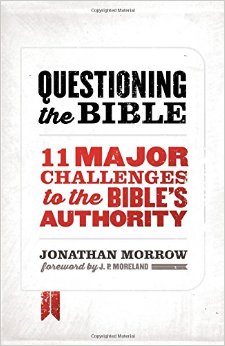
Questioning the Bible by Jonathan Morrow
“Questioning the Bible” by Jonathan Morrow

Jonathan Morrow is giving you just four minutes to respond to a well-known challenge to belief in the Christian God.

Can you handle it?

If not, here is a podcast to help you get ready.

Description:

Is the God of the Old Testament violent and bloodthirsty? Did God really command genocide? Why did Israel attack the Canaanites? These are just a few of the tough questions I tackle in this episode of the think Christianly podcast. Learn how to respond to one of the most challenging and emotional objections to Christianity in under 10 minutes.

Summary:

  • quotes Richard Dawkins to set up the objection
  • response: does God have the authority to give and take life?
  • response: after the Fall, things in the world are not the way they are supposed to be
  • response: Old Testament commands for the Jews to judge other nations are specific to them in that time
  • response: “genocide” and “ethnic cleansing” are not accurate descriptions of the attack on Canaan
  • response: the attack on the Cannanites takes place in the context of redeeming the whole world

Here is the Christian Post article he was interviewed for, where he had to answer:

Jonathan Morrow, author of Questioning the Bible: 11 Major Challenges to the Bible’s Authority, says readers are often perplexed by Old Testament scripture because “sometimes we just picture a God where anger and love can’t co-exist.” Yet he explains, “We all have seen people who have been taken advantage of and that makes us angry [because] we love them. So those emotions can co-exist.”

[…]Along that same line, Morrow clarifies that God’s instructions to the Israelite army in Deuteronomy 20 to destroy the people occupying the land of Canaan is “about judgment, not genocide.”

“The Bible teaches clearly that all people are sinful and in rebellion, kind of living in open rebellion against God, and God is just to judge anyone,” says Morrow. “But in this particular case with the Canaanites, there’s several things going on there, but one of those things was the wickedness of the people which was well documented – child sacrifices to Moloch and others, and bestiality and a lot wickedness.”

He says this judgment was necessary because “Israel’s national survival was crucial so that the Messiah – we would know Jesus as the Messiah – and God’s saving purposes of redemption to the world could one day be born because if the Messiah was supposed to come through the lineage of Israel and Israel co-mingled with this wicked people and was ultimately destroyed, that promise of hope and blessing to the whole world could not have been realized.”

[…]Morrow recognizes that Old Testament questions are particularly challenging. “We live in a sound bite culture and so this is one of those questions where it kind of gets thrown out for people, why does God command genocide, and that’s really easy to say and then it takes some time to respond to because there’s some context.”

Morrow says his sound bite answer is: “These passages are about judgment; they’re not about genocide.”

However, he encourages believers to find out the asker’s real interest in this question. “I would ask them, you know, it sounds like this is a pretty emotional question for you, why is that. Let them talk about it some so you can better understand because that’s the goal. We’re not just trying to win an argument; we’re trying to understand and help people.”

It the asker is after truth, Morrow advises Christians to “ask them … are you interested in kind of walking through and getting kind of messy about looking at the evidence for this because I’d love to share that with you, and sometimes they’ll go, ‘yeah, that’ll be great.'”

Other times, Morrow says, the asker is simply looking for “space and distance from God and this question allows them to put space between them and God.”

By the way, Morrow and McDowell’s basic apologetics book – “Is God Just a Human Invention?” – is my first pick when mentoring new people in apologetics.

UPDATE: J.W. Wartick has reviewed the 11 Questions book on his blog.

What do ancient non-Christian sources tell us about the historical Jesus?

The Annals, by Roman historian Tacitus

This article from Biblical Archaeology covers all the non-Christian historical sources that discuss Jesus.

About the author:

Lawrence Mykytiuk is associate professor of library science and the history librarian at Purdue University. He holds a Ph.D. in Hebrew and Semitic Studies and is the author of the book Identifying Biblical Persons in Northwest Semitic Inscriptions of 1200–539 B.C.E. (Atlanta: Society of Biblical Literature, 2004).

Here are the major sections:

  • Roman historian Tacitus
  • Jewish historian Josephus
  • Greek satirist Lucian of Samosata
  • Platonist philosopher Celsus
  • Roman governor Pliny the Younger
  • Roman historian Suetonius
  • Roman prisoner Mara bar Serapion

And this useful excerpt captures the broad facts about Jesus that we get from just the first two sources:

We can learn quite a bit about Jesus from Tacitus and Josephus, two famous historians who were not Christian. Almost all the following statements about Jesus, which are asserted in the New Testament, are corroborated or confirmed by the relevant passages in Tacitus and Josephus. These independent historical sources—one a non-Christian Roman and the other Jewish—confirm what we are told in the Gospels:31

1. He existed as a man. The historian Josephus grew up in a priestly family in first-century Palestine and wrote only decades after Jesus’ death. Jesus’ known associates, such as Jesus’ brother James, were his contemporaries. The historical and cultural context was second nature to Josephus. “If any Jewish writer were ever in a position to know about the non-existence of Jesus, it would have been Josephus. His implicit affirmation of the existence of Jesus has been, and still is, the most significant obstacle for those who argue that the extra-Biblical evidence is not probative on this point,” Robert Van Voorst observes.32 And Tacitus was careful enough not to report real executions of nonexistent people.

2. His personal name was Jesus, as Josephus informs us.

3. He was called Christos in Greek, which is a translation of the Hebrew word Messiah, both of which mean “anointed” or “(the) anointed one,” as Josephus states and Tacitus implies, unaware, by reporting, as Romans thought, that his name was Christus.

4. He had a brother named James (Jacob), as Josephus reports.

5. He won over both Jews and “Greeks” (i.e., Gentiles of Hellenistic culture), according to Josephus, although it is anachronistic to say that they were “many” at the end of his life. Large growth
in the number of Jesus’ actual followers came only after his death.

6. Jewish leaders of the day expressed unfavorable opinions about him, at least according to some versions of the Testimonium Flavianum.

7. Pilate rendered the decision that he should be executed, as both Tacitus and Josephus state.

8. His execution was specifically by crucifixion, according to Josephus.

9. He was executed during Pontius Pilate’s governorship over Judea (26–36 C.E.), as Josephus implies and Tacitus states, adding that it was during Tiberius’s reign.

Some of Jesus’ followers did not abandon their personal loyalty to him even after his crucifixion but submitted to his teaching. They believed that Jesus later appeared to them alive in accordance with prophecies, most likely those found in the Hebrew Bible. A well-attested link between Jesus and Christians is that Christ, as a term used to identify Jesus, became the basis of the term used to identify his followers: Christians. The Christian movement began in Judea, according to Tacitus. Josephus observes that it continued during the first century. Tacitus deplores the fact that during the second century it had spread as far as Rome.

I remember reading the 1996 book by Gary Habermas entitled “The Historical Jesus: Ancient Evidence for the Life of Christ“. This book is a little before the time of most of you young Christian apologists, but back before the time of Lee Strobel and J. Warner Wallace, this is the stuff we all read. Anyway, in the book he makes a list of all that can be known about Jesus from external sources. And fortunately for you, you don’t have to buy the book because you can read chapter 9 of it right on his web site.

From Tacitus he gets this:

From this report we can learn several facts, both explicit and implicit, concerning Christ and the Christians who lived in Rome in the 60s A.D. Chronologically, we may ascertain the following information.

(1) Christians were named for their founder, Christus (from the Latin), (2) who was put to death by the Roman procurator Pontius Pilatus (also Latin), (3) during the reign of emperor Tiberius (14 37 A.D.). (4) His death ended the “superstition” for a short time, (5) but it broke out again, (6) especially in Judaea, where the teaching had its origin.

(7) His followers carried his doctrine to Rome. (8) When the great fire destroyed a large part of the city during the reign of Nero (54 68 A.D.), the emperor placed the blame on the Christians who lived in Rome. (9) Tacitus reports that this group was hated for their abominations. (10) These Christians were arrested after pleading guilty, (11) and many were convicted for “hatred for mankind.” (12) They were mocked and (13) then tortured, including being “nailed to crosses” or burnt to death. (14) Because of these actions, the people had compassion on the Christians. (15) Tacitus therefore concluded that such punishments were not for the public good but were simply “to glut one man’s cruelty.”

And from Josephus he gets this:

(1) Jesus was known as a wise and virtuous man, one recognized for his good conduct. (2) He had many disciples, both Jews and Gentiles. (3) Pilate condemned him to die, (4) with crucifixion explicitly being mentioned as the mode. (5) The disciples reported that Jesus had risen from the dead and (6) that he had appeared to them on the third day after his crucifixion. (7) Consequently, the disciples continued to proclaim his teachings. (8) Perhaps Jesus was the Messiah concerning whom the Old Testament prophets spoke and predicted wonders. We would add here two facts from Josephus’ earlier quotation as well. (9) Jesus was the brother of James and (10) was called the messiah by some.

So when you are reading the New Testament, these facts are the framework that you read within. It’s a good starting point when dealing with people who have never looked into who Jesus was and what he taught and what his followers believed about him, right from the start.