Tag Archives: Bible

Bible study: Paul’s continuing effort to disciple the Thessalonians

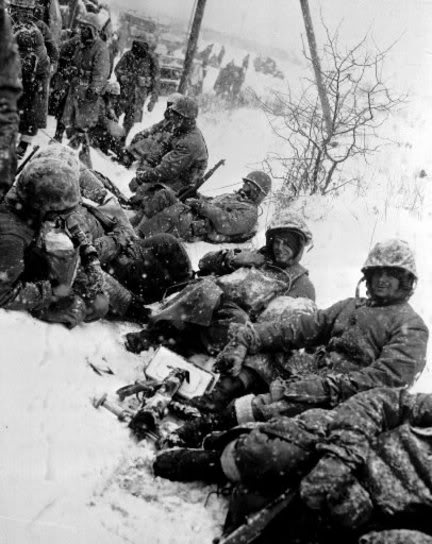
U.S. Marines "The Chosin Few", December 1950
U.S. Marines “The Chosin Few”, Dec. 1950 (Chosin Reservoir, North Korea)

I was asked by my friend Kevin to do more Bible study, and two of the books he asked me to do are 1 Thessalonians and 2 Thessalonians. He had  reason for asking this, and I found out after I sent him my reflections. So, I thought I’d better write these up so that you all get something out of this, too.

Background

You can read more about the author, background and dating of 1st Thessalonians.

You can read more about the author, background and dating of 2nd Thessalonians.

Obviously, go and read both letters. Why not, it’s the Bible. You’re supposed to be reading it anyway.

The relevant parts

See if you can guess the point I want to make from what I cite from each book before you read my conclusion.

1 Thessalonians 2:3-12:

3 For our exhortation does not come from error or impurity or by way of deceit;

4 but just as we have been approved by God to be entrusted with the gospel, so we speak, not as pleasing men, but God who examines our hearts.

5 For we never came with flattering speech, as you know, nor with a pretext for greed—God is witness—

6 nor did we seek glory from men, either from you or from others, even though as apostles of Christ we might have asserted our authority.

7 But we proved to be gentle among you,as a nursing mother tenderly cares for her own children.

8 Having so fond an affection for you, we were well-pleased to impart to you not only the gospel of God but also our own lives, because you had become very dear to us.

9 For you recall, brethren, our labor and hardship, how working night and day so as not to be a burden to any of you, we proclaimed to you the gospel of God.

10 You are witnesses, and so is God, how devoutly and uprightly and blamelessly we behaved toward you believers;

11 just as you know how we were exhorting and encouraging and imploring each one of you as a father would his own children,

12 so that you would walk in a manner worthy of the God who calls you into His own kingdom and glory.

1 Thessalonians 2:17-20:

17 But we, brethren, having been taken away from you for a short while—in person, not in spirit—were all the more eager with great desire to see your face.

18 For we wanted to come to you—I, Paul, more than once—and yet Satan hindered us.

19 For who is our hope or joy or crown of exultation? Is it not even you, in the presence of our Lord Jesus at His coming?

20 For you are our glory and joy.

1 Thessalonians 3:1-3,6-13:

1 Therefore when we could endure it no longer, we thought it best to be left behind at Athens alone,

2 and we sent Timothy, our brother and God’s fellow worker in the gospel of Christ, to strengthen and encourage you as to your faith,

3 so that no one would be disturbed by these afflictions; for you yourselves know that we have been destined for this.

6 But now that Timothy has come to us from you, and has brought us good news of your faith and love, and that you always think kindly of us, longing to see us just as we also long to see you,

7 for this reason, brethren, in all our distress and affliction we were comforted about you through your faith;

8 for now we really live, if you stand firm in the Lord.

9 For what thanks can we render to God for you in return for all the joy with which we rejoice before our God on your account,

10 as we night and day keep praying most earnestly that we may see your face, and may complete what is lacking in your faith?

11 Now may our God and Father Himself and Jesus our Lord direct our way to you;

12 and may the Lord cause you to increase and abound in love for one another, and for all people, just as we also do for you;

13 so that He may establish your hearts without blame in holiness before our God and Father at the coming of our Lord Jesus with all His saints.

2 Thessalonians 1:3-4:

3 We ought always to give thanks to God for you, brethren, as is only fitting, because your faith is greatly enlarged, and the love of each one of you toward one another grows ever greater;

4 therefore, we ourselves speak proudly of you among the churches of God for your perseverance and faith in the midst of all your persecutions and afflictions which you endure.

2 Thessalonians 3:6-13:

6 Now we command you, brethren, in the name of our Lord Jesus Christ, that you keep away from every brother who leads an unruly life and not according to the tradition which you received from us.

7 For you yourselves know how you ought to follow our example, because we did not act in an undisciplined manner among you,

8 nor did we eat anyone’s bread without paying for it, but with labor and hardship we kept working night and day so that we would not be a burden to any of you;

9 not because we do not have the right to this, but in order to offer ourselves as a model for you, so that you would follow our example.

10 For even when we were with you, we used to give you this order: if anyone is not willing to work, then he is not to eat, either.

11 For we hear that some among you are leading an undisciplined life, doing no work at all, but acting like busybodies.

12 Now such persons we command and exhort in the Lord Jesus Christ to work in quiet fashion and eat their own bread.

13 But as for you, brethren, do not grow weary of doing good.

OK that’s all I want to quote, but do read both letters. It’s good for you to read the Bible and to know what the priorities of Christians used to be. This is the real Christian deal, and you ought to be informed about it, so that you know how to make your own decisions that reflect the concerns and priorities of the first Christians.

My thoughts

I’m at the 1000-word limit now, so this one will go long. I don’t think that quoting the Bible should count anyway, you all should be reading that all the time. Anyway, what is the point?

Well, Kevin wanted me to read this because he thinks that I hover around young Christians a lot and fuss about whether they are going to church, whether they are reading apologetics, whether they are doing their homework, and passing their exams. You would not believe some of the things happening in the lives of my Christians friends! Every day, I hear new things:

  • my dog died
  • my professor is a liberal bully
  • I’m starting university
  • I got a new job
  • I am starting an internship
  • I got 95+ on all my exams
  • I opened an account with Fidelity
  • my grandmother died
  • I missed a final exam
  • I cried in class
  • I broke up with my boyfriend / girlfriend
  • I moved into a new house
  • my work hours are being reduced
  • my husband can’t find a job
  • I hate my job
  • I can study the Bible with you on Friday night
  • I got a new Beta fish and here’s a video of him swimming
  • my team members aren’t working on our course project

And more. I think Kevin wanted me to know that he was glad that I was meddling in the lives of all of these people, and that it was similar to what Paul does. Paul does not preach to people so that he will think that he is important or clever. He likes to debate and persuade, but he’s not a silver-tongued orator. Paul isn’t just swooping by to solicit donations or preen about how great he is and then leave. He actually has an interest in the lives of other Christians. He actually tries to live among them and set an example for them of how to live. He wants the people to follow his lead, not follow his words. He always says “do what I do” not “do what I say”. His emphasis is on doing as an example, and having ongoing relationships with the people he gave an example to. He doesn’t just do a big public event and then forget about the people that he spoke to. He’s not doing what he’s doing for himself – he has a genuine interest in the people he speaks to. He wants them to know God, and to do what God wants. And although he does want these people to love one another, that doesn’t mean that he is on board with affirming sins or sinful lifestyles – especially sexual sins. He really wants people to stop sexual sins, and other sensual sins like drunkenness.

So, my point in this is for you to read the two letters to the Thessalonians closely, and don’t be like these parents, pastors, apologists and celebrities who just speak and leave. Don’t look to the people you have influence over as a source of money or approval. Challenge those people to change, built them up, share with them, give them gifts. Instead of telling them how to live, tell them to follow your example. And watch out for their daily struggles and troubles. Make sure you know who else is influencing them, and have your say to persuade them that your Christian viewpoint is right. Don’t just talk. Don’t try to just sound pious. Don’t appear so perfect like you are high above the others. Instead, make your whole life an example of what you want to convince them of. Show them your plans and goals and sacrifices, don’t just pontificate piously. And be willing to let them tell you the really dirty details of what they are doing. Don’t be such a high-and-mighty pious fundamentalist that you are above getting down there with them and playing a video game or getting dirty with gardening or auto maintenance or upgrading a computer. Get involved in their lives and in their relationships with other people.

Paul Helm debates William Lane Craig on Calvinism and Molinism

Two horses fight it out, may the best horse win!

I listened to this excellent discussion between Dr. William Lane Craig and Oxford University Calvinist philosopher Dr. Paul Helm. I think this is a useful discussion in general because atheists often bring up problems with Calvinism as objections to Christianity in general, such as:

  • If God exists, then he controls everything and I don’t have free will
  • If God knows the future, then I don’t have free will
  • If God controls everything, then I am not responsible for my sinning
  • If God has to choose me to be saved, then I am not responsible for my damnation

Details:

If God ordains the future, can humans have free will? Are people predestined for salvation? And what does the Bible say on the matter? William Lane Craig is a Christian philosopher and leading proponent of Molinism, a view of divine sovereignty that seeks to reconcile God’s fore-ordination with human free will. Paul Helm is a leading Calvin Scholar. He defends the view that  God predestines the future, limiting human freedom.

MP3 of this show: http://cdnapi.kaltura.com/p/618072/sp/61807200/playManifest/entryId/1_jn0bdo52/flavorId/0_002f1k0d/protocol/http/format/url/a.mp3?clientTag=feed:1_jlj47tkv

For William Lane Craig: http://www.reasonablefaith.org

For Paul Helm: http://paulhelmsdeep.blogspot.co.uk/ 

I was surprised because my Calvinist friend Dina thought that Dr. Helm won this debate, but I thought that Dr. Craig won. So without further ado, here is the snark-free summary of the discussion. I also sent the summary to Dina to make sure that it was reasonably fair and accurate. She said it was biased, but she was predestined to say that. Anyway, there’s a commentary on the debate over at Michael’s Theology blog. And Calvinist Remington has a podcast review in parts. Part 1 is here.

Summary: 

JB: Has Lewis had any impact on your apologetics?

Craig: Not as a scholar, but more as a model of a scholar who leaves a legacy through his published work

JB: How did you become interested in Calvinism?

Helm: Starting from childhood, and lately writing more on Calvinism from a philosophical point of view

JB: How do you view God’s sovereignty?

Helm: Strong view of divine sovereignty, God is sovereign over all events, but that doesn’t mean that they are determined by him

JB: What is Calvin’s legacy?

Helm: He amplified an existing concept of predestination, and wrote on many other topics

JB: What is Molinism?

Craig: Molina affirms divine sovereignty as Paul Helm does, but he also affirms libertarian free will

Craig: Every event that occurs happens by God’s will or by God’s permission

JB: What about open theism?

Craig: Paul and I both oppose open theism

JB: How does Molinism reconcile human free will and divine sovereignty

Craig: God has knowledge of what would happen under any set of circumstances

Craig: God has knowledge of everything that COULD happen, and he has knowledge of everything that WILL happen

Craig: God knows what each person freely choose to do in any set of circumstances and he can place people in times and places where he is able to achieve his ends without violating creaturely freedom and creaturely responsibility

JB: How does this apply to the issue of salvation?

Craig: The circumstances in which God puts a person includes God leading people to him and he foreknows who will respond to his leading

Craig: God has ordered the world in such a way that he foreknows the exact people who will free respond to his leading if he puts them in certain circumstances

JB: Does God want to save the maximum of people?

Craig: My own view is that God does order the world in such a way that the maximum number of people will respond to God’s drawing them to himself

JB: Is the Molinist view gaining ground?

Craig: Yes, Calvinists and open theists are both moving towards it, and Molinism is the dominant view among philosophical theologians

JB: Why has Molinism not convinced you?

Helm: It’s an unnecessary theory, God’s natural knowledge and free knowledge covers what middle knowledge covers

Helm: Calvinism has a stronger view of sin, such that God has to act unilaterally and irrestibly to save them

JB: Are creatures free on your view?

Helm: My view of free will is weaker than Craig’s view of free will

Craig: For the Calvinist, grace is irresistible, but for the Molinist, grace is effective when it is met with a response from the creature

Craig: The Bible affirms the strong view of free will, when it says that in certain circumstances people can freely choose to do other than they do

Helm: But if a person is in circumstances X and they are free, then why don’t they choose something that isn’t what God can foresee

Craig: In identical circumstances, a person has the freedom to choose, and God doesn’t determine what they choose, he just foreknows what they choose

Helm: How can God foreknow what people will freely do if people have this strong view of freedom that allows them to do anything? God would not know what people can freely do if they really are free

Craig: God has knowledge of what his creatures would freely do in any set of circumstances, he has knowledge of subjunctive statements

Craig: The Scripture is filled with statements that show that God has this knowledge of what people would do in other circumstances (e.g. – 2 Cor 2:8)

Helm: I am not denying that the Bible is full of subjunctive statements, but if humans have real libertarian free will, then God cannot know what they will do

Craig: I think God does preordain everything, Molinism has a strong sense of divine sovereignty BUT the foreordaining is done with the knowledge of what humans would do in any circumstances, so that what God ordains achieves his ends, but without violating creaturely free will

Craig: I take at face value the passages of the Bible where it says that God wants all persons to be saved

Craig: When the Bible says that God wants ALL persons to be saved (2 Pet 3:9), the Bible means that God wants ALL persons to be saved

Craig: So either universalism is true OR there is something that stops all from being saved outside of God

Craig: the something that prevents all from being saved is creaturely free will

Helm: Most people don’t have the opportunity to hear the gospel, so God doesn’t want all to be saved

Helm: People can still be responsible for what God “fore-ordains”

JB: Can a person really be responsible for wickedness if they didn’t freely choose it?

Helm: Even though God is the only one who can act unilaterally to make save people, the people who act wickedly are still responsible

Craig: Molinism provides an answer to the problem of why not all people have heard the gospel, because by using middle knowledge he is able to know who would respond to the gospel if they heard it and he places those people in the times and places where they will hear it

Craig: That solution means that NO ONE is lost because they have not heard the gospel

Craig: There is Biblical support for (Acts 17:27) God choosing the times and places where people will live SO THAT they will be led by him and be able to respond to his leading

JB: Is God the author of sin, on Calvinism?

Craig: If Calvinists define providence to mean causal determinism, then he is the cause of every effect including human actions, and he is the one who causes people to sin

Craig: This view (determinism) impugns the character of God

Helm: I don’t think that sovereignty requires determinism

Helm: God has mysterious resources – which I cannot specify – that reconcile his sovereignty with human responsibility for wickedness

JB: But if God is the cause of people doing wrong things, then how can they be responsible for it?

Helm: Well, humans do cause their own actions

Craig: Helm is right to say that God has resources to reconcile God’s sovereignty with free will and human responsibility, and that resource is not an unknown mystery, it’s middle knowledge

Craig: I can affirm everything in the Westminster Confession except for the one clause where they expressly repudiate middle knowledge as the mechanism for reconciling divine sovereignty and free will

Helm: Well, Calvinists have a strong view of sin so that humans cannot respond to God’s leading

Craig: Yes, and that’s why humans need prevenient grace in order to respond to him

Craig: God has to take the initiative and draw people to himself or they cannot be saved, but that grace is resistible, and that’s what the Bible teaches (Acts 7:51), so humans are still responsible if they resist God

Helm: My view of grace is that it is monergistic and irrestible, it is a unilateral action on the part of God, like pulling someone out of an icy pond which they can’t get out of

JB: If humans freely choose to respond to God’s drawing and leading, does that diminish grace?

Helm: Many are called but few are chosen

Craig: Molinism does not require synergism – which is the idea that humans are partly responsible for their salvation

Craig: In Eph 2:8, Scripture is clear that faith opposite to works, and responding to God’s drawing is not meritorious

JB: So receiving a gift is not meritorious?

Craig: It’s the passive acceptance of what someone else has done for you

Helm: But doesn’t this mean that you can lose your salvation, because you can accept and resist the gift of salvation?

Craig: That’s a separate question that Christians can differ on, but if the Holy Spirit indwells a person and seals them, then that would argue for the view that salvation cannot be revoked

JB: Doesn’t Romans 8 teach Calvinism pretty clearly?

Helm: This is called the “golden chain”, and it does support Calvinism

Craig: Actually, this text is no problem for Molinists because the first link in the chain is foreknowledge, which, if it incorporates middle knowledge, is no problem for Molinists

Craig: What God is electing in Romans 8 is a specific group of people that he knows in advance of creating the universe will freely respond to his drawing them to him

Craig: In Acts 4:27-28, it is talking about God’s foreknowledge, which involves and incorporates knowledge of what any individual would freely choose if placed in those circumstances

JB: If God actualizes a set plan with set circumstances for everyone, isn’t that very similar to Calvinism?

Craig: Yes! It’s a strong statement of divine sovereignty

Helm: Foreknowledge doesn’t mean that God knows what people would do, it’s just refering to God “knowing his own mind” about what he wants to do

JB: How do you respond to the fairness of God unilaterally and specifically choosing some people for salvation and choosing other people for damnation (because he refuses to act unilaterally for them)?

Helm: God ordinarily bypasses other people in the Bible, like when he chooses the Jews as his chosen people

Craig: The problem with that is that the Bible clearly teaches that God has a genuine will that all will be saved and he makes a genuine offer of salvation to all people

Craig: Also, just being a Jew and a member of the chosen people doesn’t mean you were saved, because some Jews rebelled against God

Craig: And there were also people outside of the Jewish people who were righteous and in a relationship with God, like Job

Helm: “the fabric of our faith” depends on God’s choice and his not-choice, it is fundamental to the Bible and to God’s character, and choosing them “effectively” (irrestibly and unilaterally)

Helm: The idea of God considering “possible worlds”, some of which are feasible and not feasible, with conflicts between the wills of free creatures in different circumstances, and then actualizing one world that achieve these ends is very messy

Craig: Some worlds may not feasible for God to create, for example a world in which everyone is saved – it is logically possible, but may not be feasible

Craig: God will not exercise any divine coercion to force people to go to Heaven against their own will

Helm: If God chooses a world because it is feasible, then he doesn’t love me directly, he is choosing a world, not individuals

Craig: Well, when God actualizes a world, he specifically knows which individuals will be saved within that world, but without disrespecting free will

Craig: The world isn’t primary, the individuals are primary

Helm: I think that middle knowledge can he included in God’s natural knowledge and free knowledge

Craig: The knowledge of what people would do in different circumstances is based on the freedom of the individuals

JB: Make your conclusions!

Craig: Molinism is a Biblical model for reconciling divine sovereignty with human freedom

Helm: It is intellectually mystifying to introduce this strong view of human freedom and it is not Biblical

New study: literacy more widespread around ancient Israel than previously thought

Investigation in progress

Some skeptics like to attack the traditional authorship of the gospels by arguing that the gospels couldn’t have been written by anyone close to Jesus, because they were all illiterate. The impression I get from the skeptics is that they think that illiteracy was widespread in and around ancient Israel.

But then, in the radically leftist New York Times, of all places, there is news about a new peer-reviewed study:

Eliashib, the quartermaster of the remote desert fortress, received his instructions in writing — notes inscribed in ink on pottery asking for provisions to be sent to forces in the ancient kingdom of Judah.

The requests for wine, flour and oil read like mundane, if ancient, shopping lists. But a new analysis of the handwriting suggests that literacy may have been far more widespread than previously known in the Holy Land around 600 B.C., toward the end of the First Temple period. The findings, according to the researchers from Tel Aviv University, could have some bearing on a century-old debate about when the main body of biblical texts was composed.

[…]The new study, published on Monday in the Proceedings of the National Academy of Sciences, combined archaeology, Jewish history and applied mathematics, and involved computerized image processing and the development of an algorithm to distinguish between the various authors issuing the commands.

Based on a statistical analysis of the results, and taking into account the content of the texts that were chosen for the sample, the researchers concluded that at least six different hands had written the 18 missives at around the same time. Even soldiers in the lower ranks of the Judahite army, it appears, could read and write.

[…]The study was based on a trove of about 100 letters inscribed in ink on pieces of pottery, known as ostracons, that were unearthed near the Dead Sea in an excavation of the Arad fort decades ago and dated from about 600 B.C. That was shortly before Nebuchadnezzar’s destruction of Jerusalem and the kingdom of Judah, and the exile of its elite to Babylon — and before many scholars believe the major part of the biblical texts, including the five books of Moses, also known as the Pentateuch, were written down in any cohesive form.

The Arad citadel was small, far-flung and on an active front, close to the border with the rival kingdom of Edom. The fort itself was only about half an acre in size, and probably would have accommodated about 30 soldiers. The wealth of texts found there, recording troop movements, provisions and other daily activities, were created within a short time, making them a valuable sample for looking at how many different hands wrote them.

[…]One of the longstanding arguments for why the main body of biblical literature was not written down in anything like its present form until after the destruction and exile of 586 B.C. is that before then there was not enough literacy or enough scribes to support such a huge undertaking.

But if the literacy rates in the Arad fortress were repeated across the kingdom of Judah, which had about 100,000 people, there would have been hundreds of literate people, the Tel Aviv research team suggests.

That could have provided the infrastructure for the composition of biblical works that constitute the basis of Judahite history and theology including early versions of the books of Deuteronomy to II Kings, according to the researchers.

I just heard a debate on the weekend in which atheist historian Bart Ehrman made the argument that around the time of Jesus, almost no one was literate. Therefore, it’s unlikely that anyone who was an eyewitness to Jesus’ would have been able to write anything down about it.

I think this evidence does have some bearing on that question, because it shows that literacy of at least Hebrew was more widespread in the area than previously thought. That means that the people around Jesus are more likely to be able to keep their own notes, and then pass those notes off to a writer of Greek. Instead of having stories being circulated for the 30-35 years between the death of Jesus and the writing of Mark (note: I think Mark was written much earlier than that), you would have written notes by the eyewitnesses that could then be translated into Greek.

But there’s more interesting stuff about Bart Ehrman’s charge of widespread illiteracy. Consider this post that I found on Catholic apologist Jimmy Akin’s blog, where he makes the case that Bart Ehrman is even wrong about his estimate of illiteracy. And when I say wrong, I mean it looks like Ehrman deliberately misrepresents a primary source that he quotes in order to make his point. Maybe that will be fixed in a future edition of his book, but it wasn’t fixed in the debate on Saturday – he used the same botched quote then.