

Tag Archives: Bible Study

Two kinds of people who have tried to shame me away from Christianity

A conflict of worldviews

In my last job, I had two interesting encounters, first with a secular Jewish leftist man and second with a New Age prosperity gospel feminist Christian woman.

So let’s talk about the two people.

The man who thinks that conservative Christians are stupid

The first kind of person who tried to shame me for being a Christian is the person who thinks that Christianity is stupid. This kind of person invokes things that he hears in secular leftist pop culture as if it is common knowledge that theism generally, and Christianity in particular, is false. He’s watched a documentary on the Discovery channel which said that the eternally oscillating cosmology was true. Or maybe he watched a documentary on the History Channel that said that Jesus never presented himself as God stepping into history. He presents these things that he reads in the New York Times, or sees on MSNBC or hears on NPR with the authority tone that Ben Carson might take when explaining modern medicine to a witch doctor.

Here is how things usually go with him:

  • Me: here are two arguments against naturalistic evolution, the origin of life and the Cambrian explosion.
  • Him: but you don’t believe in a young-Earth do you? I mean, you believe in evolution don’t you?
  • Me: let’s talk about how proteins and DNA is sequenced, and the sudden origin of Cambrian body plans
  • Him: (shouting) Do you believe in evolution? Do you believe in evolution?

And this:

  • Me: there hasn’t been any global warming for 18 years, and temperatures were warmer in the Medieval Warming Period
  • Him: but you don’t deny climate change, do you? everyone on NPR agrees that climate change is real
  • Me: let’s talk about the last 18 years of no warming, and the temperatures during the Medieval Warming Period
  • Him: (shouting) Do you believe in climate change? Do you believe in climate change?

He asks these questions so he can either label me as a nut, without having to weigh the evidence I’m presenting, or have me agree with him, without having to weigh the evidence I’m presenting. It’s all about ignoring the evidence, so he can get back to his busy, busy practical life – and get back to feeling smug about being smarter than others. I think a lot of men are like this – they don’t want to waste their valuable time studying, they just want to jump to the right conclusion, then get back to doing whatever they want – like running marathons, or driving their kids to hockey practice, etc.

So how do you respond to a man who gets his entire worldview from the culture, but never deals with peer-reviewed evidence? Well, I think you just defeat his arguments with evidence and then present your own (peer-reviewed) evidence, and then leave it at that. If the person just wants to jump to the conclusion that all the “smart” people hold to, without doing any of the work, then you can’t win. There are atheists out there who believe in the eternal oscillating universe they saw Carl Sagan talking about in their elementary school. You might try to argue for an origin of the universe by citing new evidence like the CMB and light element abundances. But sometimes, they won’t care. Carl Sagan said it 50 years ago, and that settles it. It doesn’t matter that the new evidence overturns the old theories, they don’t care.

Do you think that Christianity will make non-Christians like you?

Consider 2 Tim 4:1-5:

I charge you in the presence of God and of Christ Jesus, who is to judge the living and the dead, and by his appearing and his kingdom:

preach the word; be ready in season and out of season; reprove, rebuke, and exhort, with complete patience and teaching.

For the time is coming when people will not endure sound teaching, but having itching ears they will accumulate for themselves teachers to suit their own passions,

and will turn away from listening to the truth and wander off into myths.

As for you, always be sober-minded, endure suffering, do the work of an evangelist, fulfill your ministry.

And 1 Peter 3:15-16:

15 but in your hearts honor Christ the Lord as holy, always being prepared to make a defense to anyone who asks you for a reason for the hope that is in you; yet do it with gentleness and respect,

16 having a good conscience, so that, when you are slandered, those who revile your good behavior in Christ may be put to shame.

If you have orthodox theological beliefs in this day and age then you are going to be shamed, humiliated and reviled by people. And it’s not just having an orthodox view of who Jesus is that annoys them (e.g. – deity, exclusivity of salvation, morality, etc.). No, their disapproval spreads on into politics, especially abortion and gay marriage – basically any kind of rules around sexuality. That’s what’s really bugging these people, I think.

The woman who thinks Christianity is life-enhancement

This one is especially difficult when you are a young man, because we naturally look to women for approval and respect. You find yourself sitting in church or youth group, hoping for the approval and respect from the Christian women for your sound theology and effective apologetics. Little do you know that many Christian women understand Christianity as life-enhancement, designed to produce happy feelings. God is their cosmic butler whose main responsibility is to meet their needs and make their plans work out. Although you might be keen on sound theology and good apologetics arguments, she doesn’t think that’s important.

So how to deal with this unmet need for approval and respect from women in the church?

First thing, be careful that you don’t attend a church where the pastor in preaching and picking hymns that give you the idea that God is your cosmic butler. Second, read the Bible very carefully, and understand that with respect to God’s purposes for you in this world, your happiness is expendable. You cannot be looking to attractive Christian women that you happen to meet in church to support you, as many of them have long-since sold out to the culture. They are not interested in learning evidential apologetics to defend God’s reputation, or in defending the unborn, or in defending natural marriage, or in defending the free enterprise system that supports family autonomy from the state, etc. Those things are hard and unpopular, especially for those women who were raised to think that Christianity is about life enhancement and peer-approval.

Here’s 1 Cor 4:1-5 to make the point:

This is how one should regard us, as servants of Christ and stewards of the mysteries of God.

Moreover, it is required of stewards that they be found faithful.

But with me it is a very small thing that I should be judged by you or by any human court. In fact, I do not even judge myself.

For I am not aware of anything against myself, but I am not thereby acquitted. It is the Lord who judges me.

Therefore do not pronounce judgment before the time, before the Lord comes, who will bring to light the things now hidden in darkness and will disclose the purposes of the heart. Then each one will receive his commendation from God.

And 2 Tim 2:4:

No soldier gets entangled in civilian pursuits, since his aim is to please the one who enlisted him.

Or, since I like Ronald Speirs from Band of Brothers so much:

This is the situation in which we find ourselves, so get used to it. And believe me, I have to deal with this, too. So I have all the sympathy in the world for you. Resign yourself to the fact that no one is going to approve of you for being faithful to the gospel of Jesus Christ; not secular men, not Christian women. There is no cavalry coming to rescue you.

Paul Helm debates William Lane Craig on Calvinism and Reformed theology

Two tough rams butt heads, and may the best ram win!

I listened to this excellent discussion between Dr. William Lane Craig and Oxford University Calvinist philosopher Dr. Paul Helm. I think this is a useful discussion in general because atheists often bring up problems with Calvinism as objections to Christianity in general, such as:

  • If God knows the future, then I don’t have free will
  • If God controls everything, then I am not responsible for my sinning
  • If God has to override my free will to be saved, then I am not responsible for being damned if God doesn’t choose me

Details:

If God ordains the future, can humans have free will? Are people predestined for salvation? And what does the Bible say on the matter? William Lane Craig is a Christian philosopher and leading proponent of Molinism, a view of divine sovereignty that seeks to reconcile God’s fore-ordination with human free will. Paul Helm is a leading Calvin Scholar. He defends the view that  God predestines the future, limiting human freedom.

MP3 of this show

Or listen on YouTube:

I was surprised because my Calvinist friend Dina thought that Dr. Helm won this debate, but I thought that Dr. Craig won. So without further ado, here is the snark-free summary of the discussion. I also sent the summary to Dina to make sure that it was reasonably fair and accurate. She said it was biased, but she was predestined to say that.

Summary: 

JB: Has Lewis had any impact on your apologetics?

Craig: Not as a scholar, but more as a model of a scholar who leaves a legacy through his published work

JB: How did you become interested in Calvinism?

Helm: Starting from childhood, and lately writing more on Calvinism from a philosophical point of view

JB: How do you view God’s sovereignty?

Helm: Strong view of divine sovereignty, God is sovereign over all events, but that doesn’t mean that they are determined by him

JB: What is Calvin’s legacy?

Helm: He amplified an existing concept of predestination, and wrote on many other topics

JB: What is Molinism?

Craig: Molina affirms divine sovereignty as Paul Helm does, but he also affirms libertarian free will

Craig: Every event that occurs happens by God’s will or by God’s permission

JB: What about open theism?

Craig: Paul and I both oppose open theism

JB: How does Molinism reconcile human free will and divine sovereignty

Craig: God has knowledge of what would happen under any set of circumstances

Craig: God has knowledge of everything that COULD happen, and he has knowledge of everything that WILL happen

Craig: God knows what each person freely choose to do in any set of circumstances and he can place people in times and places where he is able to achieve his ends without violating creaturely freedom and creaturely responsibility

JB: How does this apply to the issue of salvation?

Craig: The circumstances in which God puts a person includes God leading people to him and he foreknows who will respond to his leading

Craig: God has ordered the world in such a way that he foreknows the exact people who will free respond to his leading if he puts them in certain circumstances

JB: Does God want to save the maximum of people?

Craig: My own view is that God does order the world in such a way that the maximum number of people will respond to God’s drawing them to himself

JB: Is the Molinist view gaining ground?

Craig: Yes, Calvinists and open theists are both moving towards it, and Molinism is the dominant view among philosophical theologians

JB: Why has Molinism not convinced you?

Helm: It’s an unnecessary theory, God’s natural knowledge and free knowledge covers what middle knowledge covers

Helm: Calvinism has a stronger view of sin, such that God has to act unilaterally and irrestibly to save them

JB: Are creatures free on your view?

Helm: My view of free will is weaker than Craig’s view of free will

Craig: For the Calvinist, grace is irresistible, but for the Molinist, grace is effective when it is met with a response from the creature

Craig: The Bible affirms the strong view of free will, when it says that in certain circumstances people can freely choose to do other than they do

Helm: But if a person is in circumstances X and they are free, then why don’t they choose something that isn’t what God can foresee

Craig: In identical circumstances, a person has the freedom to choose, and God doesn’t determine what they choose, he just foreknows what they choose

Helm: How can God foreknow what people will freely do if people have this strong view of freedom that allows them to do anything? God would not know what people can freely do if they really are free

Craig: God has knowledge of what his creatures would freely do in any set of circumstances, he has knowledge of subjunctive statements

Craig: The Scripture is filled with statements that show that God has this knowledge of what people would do in other circumstances (e.g. – 2 Cor 2:8)

Helm: I am not denying that the Bible is full of subjunctive statements, but if humans have real libertarian free will, then God cannot know what they will do

Craig: I think God does preordain everything, Molinism has a strong sense of divine sovereignty BUT the foreordaining is done with the knowledge of what humans would do in any circumstances, so that what God ordains achieves his ends, but without violating creaturely free will

Craig: I take at face value the passages of the Bible where it says that God wants all persons to be saved

Craig: When the Bible says that God wants ALL persons to be saved (2 Pet 3:9), the Bible means that God wants ALL persons to be saved

Craig: So either universalism is true OR there is something that stops all from being saved outside of God

Craig: the something that prevents all from being saved is creaturely free will

Helm: Most people don’t have the opportunity to hear the gospel, so God doesn’t want all to be saved

Helm: People can still be responsible for what God “fore-ordains”

JB: Can a person really be responsible for wickedness if they didn’t freely choose it?

Helm: Even though God is the only one who can act unilaterally to make save people, the people who act wickedly are still responsible

Craig: Molinism provides an answer to the problem of why not all people have heard the gospel, because by using middle knowledge he is able to know who would respond to the gospel if they heard it and he places those people in the times and places where they will hear it

Craig: That solution means that NO ONE is lost because they have not heard the gospel

Craig: There is Biblical support for (Acts 17:27) God choosing the times and places where people will live SO THAT they will be led by him and be able to respond to his leading

JB: Is God the author of sin, on Calvinism?

Craig: If Calvinists define providence to mean causal determinism, then he is the cause of every effect including human actions, and he is the one who causes people to sin

Craig: This view (determinism) impugns the character of God

Helm: I don’t think that sovereignty requires determinism

Helm: God has mysterious resources – which I cannot specify – that reconcile his sovereignty with human responsibility for wickedness

JB: But if God is the cause of people doing wrong things, then how can they be responsible for it?

Helm: Well, humans do cause their own actions

Craig: Helm is right to say that God has resources to reconcile God’s sovereignty with free will and human responsibility, and that resource is not an unknown mystery, it’s middle knowledge

Craig: I can affirm everything in the Westminster Confession except for the one clause where they expressly repudiate middle knowledge as the mechanism for reconciling divine sovereignty and free will

Helm: Well, Calvinists have a strong view of sin so that humans cannot respond to God’s leading

Craig: Yes, and that’s why humans need prevenient grace in order to respond to him

Craig: God has to take the initiative and draw people to himself or they cannot be saved, but that grace is resistible, and that’s what the Bible teaches (Acts 7:51), so humans are still responsible if they resist God

Helm: My view of grace is that it is monergistic and irrestible, it is a unilateral action on the part of God, like pulling someone out of an icy pond which they can’t get out of

JB: If humans freely choose to respond to God’s drawing and leading, does that diminish grace?

Helm: Many are called but few are chosen

Craig: Molinism does not require synergism – which is the idea that humans are partly responsible for their salvation

Craig: In Eph 2:8, Scripture is clear that faith opposite to works, and responding to God’s drawing is not meritorious

JB: So receiving a gift is not meritorious?

Craig: It’s the passive acceptance of what someone else has done for you

Helm: But doesn’t this mean that you can lose your salvation, because you can accept and resist the gift of salvation?

Craig: That’s a separate question that Christians can differ on, but if the Holy Spirit indwells a person and seals them, then that would argue for the view that salvation cannot be revoked

JB: Doesn’t Romans 8 teach Calvinism pretty clearly?

Helm: This is called the “golden chain”, and it does support Calvinism

Craig: Actually, this text is no problem for Molinists because the first link in the chain is foreknowledge, which, if it incorporates middle knowledge, is no problem for Molinists

Craig: What God is electing in Romans 8 is a specific group of people that he knows in advance of creating the universe will freely respond to his drawing them to him

Craig: In Acts 4:27-28, it is talking about God’s foreknowledge, which involves and incorporates knowledge of what any individual would freely choose if placed in those circumstances

JB: If God actualizes a set plan with set circumstances for everyone, isn’t that very similar to Calvinism?

Craig: Yes! It’s a strong statement of divine sovereignty

Helm: Foreknowledge doesn’t mean that God knows what people would do, it’s just refering to God “knowing his own mind” about what he wants to do

JB: How do you respond to the fairness of God unilaterally and specifically choosing some people for salvation and choosing other people for damnation (because he refuses to act unilaterally for them)?

Helm: God ordinarily bypasses other people in the Bible, like when he chooses the Jews as his chosen people

Craig: The problem with that is that the Bible clearly teaches that God has a genuine will that all will be saved and he makes a genuine offer of salvation to all people

Craig: Also, just being a Jew and a member of the chosen people doesn’t mean you were saved, because some Jews rebelled against God

Craig: And there were also people outside of the Jewish people who were righteous and in a relationship with God, like Job

Helm: “the fabric of our faith” depends on God’s choice and his not-choice, it is fundamental to the Bible and to God’s character, and choosing them “effectively” (irrestibly and unilaterally)

Helm: The idea of God considering “possible worlds”, some of which are feasible and not feasible, with conflicts between the wills of free creatures in different circumstances, and then actualizing one world that achieve these ends is very messy

Craig: Some worlds may not feasible for God to create, for example a world in which everyone is saved – it is logically possible, but may not be feasible

Craig: God will not exercise any divine coercion to force people to go to Heaven against their own will

Helm: If God chooses a world because it is feasible, then he doesn’t love me directly, he is choosing a world, not individuals

Craig: Well, when God actualizes a world, he specifically knows which individuals will be saved within that world, but without disrespecting free will

Craig: The world isn’t primary, the individuals are primary

Helm: I think that middle knowledge can he included in God’s natural knowledge and free knowledge

Craig: The knowledge of what people would do in different circumstances is based on the freedom of the individuals

JB: Make your conclusions!

Craig: Molinism is a Biblical model for reconciling divine sovereignty with human freedom

Helm: It is intellectually mystifying to introduce this strong view of human freedom and it is not Biblical

What are undesigned coincidences, and how are they used in apologetics?

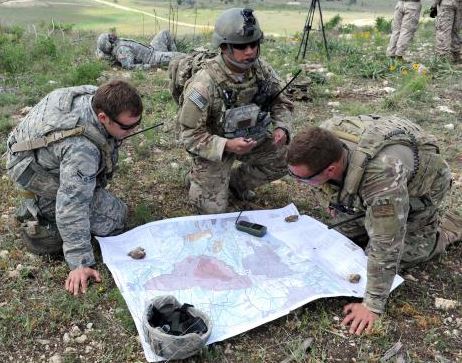
Air Force TACPs confirm target locations with their map

When you’re reading the Bible, you may find passages in one book that are mysterious on their own, but then they make sense if you add missing details from a parallel account from a different source inside or even outside the Bible. I think these “undesigned coincidences” are helpful for answering the question of that skeptics often ask: “is the Bible history or myth?” Let’s see some examples.

So, there are two kinds of undersigned coincidences. In the “internal” kind, the clearing up is done by another source in the same book. In the external kind, the clearing up is done by a source outside the same book.

Here’s an article from Apologetics UK with some internal examples:

In John 6:1-7, we are told:

Some time after this, Jesus crossed to the far shore of the Sea of Galilee (that is, the Sea of Tiberias), and a great crowd of people followed him because they saw the signs he had performed by healing the sick. Then Jesus went up on a mountainside and sat down with his disciples. The Jewish Passover Festival was near.When Jesus looked up and saw a great crowd coming toward him, he said to Philip, “Where shall we buy bread for these people to eat?” He asked this only to test him, for he already had in mind what he was going to do.Philip answered him, “It would take more than half a year’s wages to buy enough bread for each one to have a bite!”

Now, Philip is a fairly minor character in the New Testament. And one might, naturally, be inclined to wonder why Jesus hasn’t turned to someone a little higher in the pecking order (such as Peter or John). A partial clue is provided in John 1:44: “Philip, like Andrew and Peter, was from the town of Bethsaida.” Likewise, John 12:21 refers to “Philip, who was from Bethsaida in Galilee”

And what is so significant about Philip being from the town of Bethsaida? We don’t learn this until we read the parallel account in Luke’s gospel (9:10-17). At the opening of the account (verses 10-11) we are told, “When the apostles returned, they reported to Jesus what they had done. Then he took them with him and they withdrew by themselves to a town called Bethsaida, but the crowds learned about it and followed him. He welcomed them and spoke to them about the kingdom of God, and healed those who needed healing.”

And so, we are informed by Luke that the event was actually taking place in Bethsaida — the town from which Philip was from! Jesus thus turns to Philip, whom, he believed, would be familiar with the area. Notice too that Luke does not tell us that Jesus turned to Philip.

But it gets even more interesting still. In Matthew 11, Jesus denounces the unrepentant cities, saying, “Woe to you, Chorazin! Woe to you, Bethsaida! For if the miracles that were performed in you had been performed in Tyre and Sidon, they would have repented long ago in sackcloth and ashes.” The reader is left wondering what miracles were performed in these cities. We are not told in Matthew’s gospel. It is only in light of Luke’s account of the feeding of the five thousand (chapter 9), in which we are told of the event’s occurrence in Bethsaida, that this statement begins to make sense!

This one is pretty clever:

In Matthew 2 6:67-68, we read, “Then they spat in His face and beat Him; and others struck Him with the palms of their hands, saying, “Prophesy to us, Christ! Who is the one who struck You?”” This raises the natural question, why are they asking “Who hit you?” It is not until we read the parallel account in Luke’s gospel (22:64) that we learn that they had blindfolded him, thereby making sense of their taunts “Who hit you?”

Another one:

In Luke 23:1-4, w e read,
Then the whole assembly rose and led him off to Pilate. And they began to accuse him, saying, “We have found this man subverting our nation. He opposes payment of taxes to Caesar and claims to be Messiah, a king.”

So Pilate asked Jesus, “Are you the king of the Jews?”

“You have said so,” Jesus replied.

Then Pilate announced to the chief priests and the crowd, “I find no basis for a charge against this man.”
On the surface, this seems to be a rather strange declaration to make. Jesus has just declared Himself to be a King, and has been charged with subverting the nation and opposing paying taxes to Caesar. Why has Pilate found no basis for a charge against him?

The answer lies in the parallel account in John’s gospel (18:33-38):

Pilate then went back inside the palace, summoned Jesus and asked him, “Are you the king of the Jews?”

“Is that your own idea,” Jesus asked, “or did others talk to you about me?”
“Am I a Jew?” Pilate replied. “Your own people and chief priests handed you over to me. What is it you have done?”

Jesus said, “My kingdom is not of this world. If it were, my servants would fight to prevent my arrest by the Jewish leaders. But now my kingdom is from another place.”

“You are a king, then!” said Pilate.

Jesus answered, “You say that I am a king. In fact, the reason I was born and came into the world is to testify to the truth. Everyone on the side of truth listens to me.”

“What is truth?” retorted Pilate. With this he went out again to the Jews gathered there and said, “I find no basis for a charge against him.

It is only when you read John’s account that you learn that Jesus had told Pilate that “My kingdom is not of this world. If it were, my servants would fight to prevent my arrest by the Jewish leaders. But now my kingdom is from another place.”

And the same article has some external undesigned coincidences:

In Matthew 2:22, we are told:

But when [Joseph] heard that Archelaus was reigning in Judea in place of his father Herod, he was afraid to go there. Then after being waned by God in an dream, he left for the regions of Galilee…

Josephus’ Antiquities 17.3.1 tells us that the domain of Herod the Great was divided among his sons, with Archelaus having authority in Judea but not in Galilee, which was governed by his younger brother, Herod Antipas.

We also know that Archelaus had acquired quite a bloody reputation (e.g. Antiquities 17.13.1-2 and 17.9.3). The latter of these references describes how Archelaus slaughtered 3,000 Jews at Passover. Thus, Joseph decides not to return to Judea and, instead, goes further north to the regions of Galilee, governed by Herod Antipas.

And another one:

In Matthew 2:22, Archeleaus is reigning as king in Judea; in Matthew 27:2, Pilate is governor of Judea; in Acts 12:1, Herod is king of Judea; and in Acts 23:33, Felix is governor of Judea. This becomes extremely confusing.

But here’s the thing: Josephus attests to the accuracy of every one of these titles. Herod the Great was made King of Judea by Mark Anthony. Archelaus was deposed in the year 6 A.D., after only a ten-year reign, and a series of procurators ruled over Judea (of whom Pilate was fifth). The Herod of Acts 12 is Agrippa I. He was made king by Claudius Caesar. After his death, Judea was, once again, placed under the government of procurators (one of them being Felix).

And another one:

When Luke tells us of the riot in Ephesus, he reports that the city clerk tells the crowd that “There are proconsuls”. A proconsul is a Roman authority to whom a complaint may be taken. Normally, there was only one proconsul. Just at that particular time, however, there seems to have been two as a result of the assassination of Silanus (the previous proconsul) by poisoning in the Fall of AD 54, by the two imperial stewards at the urging of Nero’s mother. This event is independently documented by Tacitus in his Annals (13.1). Indeed, Luke’s accuracy has allowed historians to date the event which Luke narrates with incredible precision since we know when Silanus was poisoned.

If you think that these are clever, then share this post, and encourage your non-Christian friends and family to consider one of the many reasons why so many scholars have considered the New Testament books to be so reliable.

I wish that Christian parents and pastors were more thoughtful about how they present the Bible to young people. Instead of just saying “the Bible says” and praising blind faith acceptance of the Bible, why don’t we think a little harder, and look for some confirmation of the Bible from historical methods like undesigned coincidences, and from non-Biblical authors, and from archaeology, etc.? Surely adding more evidence for taking the Bible seriously is the right approach, if the goal is to be persuasive? It’s not like we’re see good results from the current “blind faith” approach to raising Christian children, right?