Recently there was a news story about a porn star actress who refused to act with men who were known to have sex with men, claiming there was a higher risk of getting STDs.
Fox News reports on what happened next:
A porn star relentlessly bullied on Twitter after saying she did not want to have sex with someone who had shot gay porn committed suicide by hanging.
August Ames, a 23-year-old rising star in the adult film industry, died Tuesday in California. The Ventura County Medical Examiner confirmed to The Blast that Ames died of asphyxiation due to hanging.
“She was the kindest person I ever knew and she meant the world to me,” her husband, Kevin Moore, told industry trade magazine Adult Video News (AVN), which first reported the news.
[…]Close friends told The Blast that they suspect her social media presence and recent harassment may have contributed to her death.
In recent days, Ames’ Twitter feed has been littered with cyberbullies accusing her of being homophobic after she publicly chose to not work with an unidentified actor who had previously shot gay porn.
So, the gay rights bullies basically killed her with bullying. Very interesting considering the bullying of Christian businesses also being conducted by gay rights fascists today. But was she right about her claims that men who have sex with men are more likely to catch sexually transmitted diseases?
This is from the far-left CNN, of all places.
Excerpt:
There were more reported cases of sexually transmitted diseases last year than ever before in the United States, according to the latest STD surveillance report by the Centers for Disease Control and Prevention.
The annual report, which was released on Wednesday, showed that the rates of chlamydia, gonorrhea, and syphilis — the three most commonly reported STDs in the nation — increased between 2014 and 2015, reaching an all-time high.
Reported cases of primary and secondary syphilis rose by 19%, gonorrhea cases rose by 12.8%, and chlamydia cases rose by 5.9%, from 2014. All three STDs are curable with antibiotics, but most infections go undiagnosed and untreated, according to the CDC.
What is interesting is how overspending by bureaucrats on social welfare, amnesty, refugees, etc. has left less money to combat sexually-transmitted diseases:
In a foreword to the new report, Bolan wrote that some 21 health department STD clinics across the country have closed due to many state and local programs experiencing budget cuts. Therefore, fewer people have access to the testing and treatment resources provided by such clinics.
Meanwhile, as more STD cases emerge, treating infections costs the country nearly $16 billion annually.
With the national debt doubled from 10 to 20 trillion under Obama, Obama’s free-spirited supporters can look forward to not having access to the “health care” they now need.
Not surprisingly, the reckless young people who voted for Obama are the most reckless with sex. And so they are the most affected by STDs:
Young people, 15 to 24 years old, accounted for nearly two-thirds of last year’s chlamydia diagnoses — and half of the gonorrhea diagnoses.
Not only are there more STD infections, but the diseases have adapted to beat our antibiotics.
The Center for Disease Control reports:
Gonorrhea has progressively developed resistance to the antibiotic drugs prescribed to treat it. Following the spread of gonococcal fluoroquinolone resistance, the cephalosporin antibiotics have been the foundation of recommended treatment for gonorrhea. The emergence of cephalosporin-resistant gonorrhea would significantly complicate the ability of providers to treat gonorrhea successfully, since we have few antibiotic options left that are simple, well-studied, well-tolerated and highly effective. It is critical to continuously monitor antibiotic resistance in Neisseria gonorrhoeae and encourage research and development of new treatment regimens.
Gonorrhea is the second most prominent STD, right behind chlamydia.
One reason for the upsurge in STDs might be society’s growing celebration of male homosexuality.
The Center for Disease Control explains:
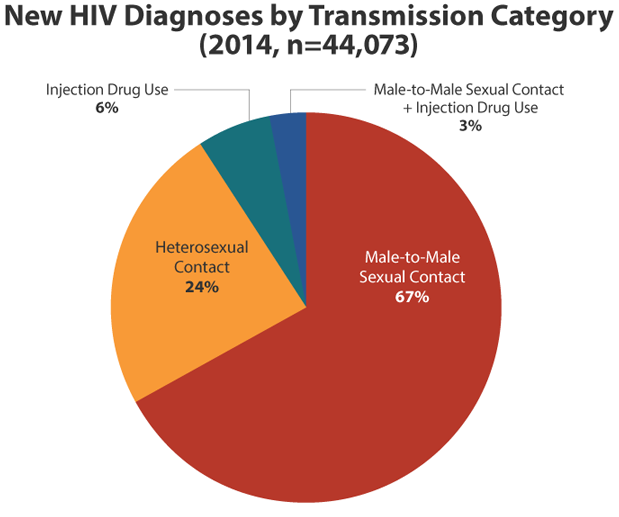
P&S syphilis among men who have sex with men (MSM) has been increasing since at least 2000. In 2014, rates of P&S syphilis increased among MSM, who account for 83 percent of reported cases among men when the sex of the partner is known. Also concerning is that more than half of MSM (51 percent) diagnosed with syphilis in 2014 were also HIV-positive. Infection with syphilis can cause sores on the genitals, which make it easier to transmit and acquire HIV.
Syphilis is currently the only STD for which information on the sex of the sex partner is reported. However, a growing body of evidence indicates that MSM are experiencing similar increases in gonorrhea and chlamydia infections– underscoring the need to further understand what is contributing to the rise.
Gay and bisexual men face a combination of social, epidemiologic, and individual risk factors that can fuel high levels of STDs. Higher prevalence of infection within sexual networks increases the likelihood of acquiring an STD with each sexual encounter.
And on a different CDC page:
Gay, bisexual, and other men who have sex with men made up an estimated 2% of the population but 55% of people living with HIV in the United States in 2013. If current diagnosis rates continue, 1 in 6 gay and bisexual men will be diagnosed with HIV in their lifetime, including 1 in 2 black/African American gay and bisexual men, 1 in 4 Hispanic/Latino gay and bisexual men, and 1 in 11 white gay and bisexual men.
The CDC’s solution to this disparity is to ask for more taxpayer money, of course. No disapproval here, just take the money from the moral people and pay for the choices of the reckless people.
Right now, many people are freely choosing to engage in these behaviors, and to celebrate the lifestyles of those who engage in these behaviors, because they think that the government has unlimited taxpayer money to pay for all the costs of these decisions. Little do they know about the national debt, and what happens to “government-provided” health care when the interest rates on that debt increases. As a society, we have decided that it is better to be forgiving and compassionate when people make reckless, risky decisions. “Oh, we can just make the prudent people pay for the mess – they have money”, the progressives say. And that works fine, until the money runs out, and people realize that the mean, judgmental, controlling bullies who were defending chastity, fidelity, marriage, moral standards and personal responsibility were right all along.