I found this essay on After All, but it looks like their site is not working well, so I’m just going to steal it and post it here, in case it disappears completely. This is one of my favorite short essays on utilitarianism, and it’s a wonder that the thing can’t stay up somewhere. Well, it will have a home here now. I’d be surprised to see anyone else be this awesome in a measly 1000 words as Dr. Moreland is below.
—-
Utilitarianism and the Moral Life
What Is Utilitarianism?
Utilitarianism (also called consequentialism) is a moral theory developed and refined in the modern world by Jeremy Bentham (1748-1832) and John Stuart Mill (1806-1873). It can be defined as follows:
An action or moral rule is right if and only if it maximizes the amount of nonmoral good produced in the consequences that result from doing that act or following that rule compared with other acts or rules open to the agent.
By focusing on three features of utilitarianism, we can clarify this definition.
(1) Utilitarian theories of value.
What is a nonmoral good? Utilitarians deny that there are any moral actions or rules that are intrinsically right or wrong. But they do believe in objective values that are nonmoral.
Hedonistic utilitarians say that the only intrinsic good is pleasure and the avoidance of pain. Quantitative hedonists (Bentham) say that the amount of pleasure and pain is the only thing that matters in deciding between two courses of action, I should do the one that produces the greatest amount of pleasure and the least amount of pain (measured by factors like the duration and intensity of the pleasure). Qualitative hedonists (Mill) say that pleasure is the only intrinsic good, but the type of pleasure is what is important, not the amount. They would rank pleasures that come from reading, art, and friendship as more valuable than those that come from, say, a full stomach.
Pluralistic utilitarians say there are a number of things that have intrinsic, nonmoral value: pleasure, friendship, health, knowledge, freedom, peace, security, and so forth. For pluralists, it is not just the pleasure that comes from friendship that has value but also friendship itself.
Currently, the most popular utilitarian view of value is subjective preference utilitarianism. This position says it is presumptuous and impossible to specify things that have intrinsic nonmoral worth. So, they claim, intrinsic value ought to be defined as that which each individual subjectively desires or wants, provided these do not harm others. Unfortunately, this view collapses into moral relativism.
(2) Utilitarians and maximizing utility.
Utilitarians use the term utility to stand for whatever good they are seeking to produce as consequences of a moral action (e.g., “pleasure” for the hedonist, “satisfaction of subjective preference” for others). They see morality in a means-to-ends way. The sole value of a moral action or rule is the utility of its consequences. Moral action should maximize utility. This can be interpreted in different ways, but many utilitarians embrace the following: the correct moral action or rule is the one that produces the greatest amount of utility for the greatest number of people.
(3) Two forms of utilitarianism: act utilitarianism and rule utilitarianism.
According to act utilitarianism, an act is right if and only if no other act available maximizes utility more than the act in question. Here, each new moral situation is evaluated on its own, and moral rules like “don’t steal” or “don’t break promises” are secondary The moral agent must weigh available alternatives and choose the one that produces the best consequences. Rule utilitarianism says that correct moral actions are done in keeping with correct moral rules, However, no moral rule is intrinsically right or wrong. Rather, a correct moral rule is one that would maximize utility if most people followed it as opposed to following an alternative rule. Here, alternative rules (e.g., “don’t lie” vs. “don’t lie unless doing so would enhance friendship”) are compared for their consequences, not specific actions.
What Is Wrong with Utilitarianism?
Several objections show the inadequacy of utilitarianism as a normative moral theory.
First, utilitarianism can be used to justify actions that are clearly immoral. Consider the case of a severely deformed fetus. The child is certain to live a brief, albeit painless life. He or she will make no contribution to society. Society, however, will bear great expense. Doctors and other caregivers will invest time, emotion, and effort in adding mere hours to the baby’s life. The parents will know and love the child only long enough to be heartbroken at the inevitable loss. An abortion negates all those “utility” losses. There is no positive utility lost. Many of the same costs are involved in the care of the terminally ill elderly. They too may suffer no pain, but they may offer no benefit to society. In balancing positives and negatives, and excluding from the equation the objective sacredness of all human life, we arrive at morally repugnant decisions. Here deontological and virtue ethics steer us clear of what is easier to what is right.
Second, in a similar way, utilitarianism denies the existence of supererogatory acts. These are acts of moral heroism that are not morally obligatory but are still praiseworthy. Examples would be giving 75 percent of your income to the poor or throwing yourself on a bomb to save a stranger. Consider the bomb example. You have two choices — throwing yourself on the bomb or not doing so. Each choice would have consequences and, according to utilitarianism, you are morally obligated to do one or the other depending on which option maximized utility. Thus, there is no room for acts that go beyond the call of morality.
Third, utilitarianism has an inadequate view of human rights and human dignity. If enslaving a minority of people, say by a lottery, would produce the greatest good for the greatest number, or if conceiving children only to harvest their parts would do the same, then these could he justified in a utilitarian scheme. But enslavement and abortion violate individual rights and treat people as a means to an end, not as creatures with intrinsic dignity as human beings. If acts of abortion, active euthanasia, physician-assisted suicide, and so forth maximize utility, then they are morally obligatory for the utilitarian. But any moral system that makes abortion and suicide morally obligatory is surely flawed.
Finally, utilitarianism has an inadequate view of motives and character. We should praise good motives and seek good character because such motives and character are intrinsically valuable. But utilitarianism implies that the only reason we should praise good motives instead of bad ones, or seek good character instead of bad character, is because such acts would maximize utility. But this has the cart before the horse. We should praise good motives and blame bad ones because they are good or bad, not because such acts of praising and blaming produce good consequences.
In sum, it should be clear that utilitarianism is an inadequate moral theory. Unfortunately, ours is a pragmatic culture and utilitarianism is on the rise. But for those of us who follow Christ, a combination of virtue and deontological ethics is a more adequate view of common sense morality found in natural law and of the moral vision contained in the Bible.
Welcome to episode 9 of the Knight and Rose podcast! In this episode, we talk about Black Lives Matter, drawing on WK’s experience of being a black legal immigrant to America (by merit). If you like this episode, please subscribe to the podcast, and subscribe to our Youtube channel. We would appreciate it if you left us a 5-star review on Apple Podcasts or Spotify.
Podcast description:
Christian apologists Wintery Knight and Desert Rose discuss apologetics, policy, culture, relationships, and more. Each episode equips you with evidence you can use to boldly engage anyone, anywhere. We train our listeners to become Christian secret agents. Action and adventure guaranteed. 30-45 minutes per episode. New episode every week.
Episode 9:
Episode Summary:
Wintery Knight and Desert Rose discuss the Black Lives Matter movement, their grievances and proposed solutions. WK talks about his ethnic / family background, his immigration story, and how Christianity impacted his decision-making. We discussed police bias and defunding the police. We discussed fatherlessness, crime and educational outcomes. We discussed Marxism. We discussed the experiences of other non-white racial groups in America. We discussed what the Bible says about the problems raised by BLM.
Speaker biographies
Wintery Knight is a black legal immigrant. He is a senior software engineer by day, and an amateur Christian apologist by night. He has been blogging at winteryknight.com since January of 2009, covering news, policy and Christian worldview issues.
Desert Rose did her undergraduate degree in public policy, and then worked for a conservative Washington lobbyist organization. She also has a graduate degree from a prestigious evangelical seminary. She is active in Christian apologetics as a speaker, author, and teacher.
Notes
When I (WK) am talking about the 6 unarmed black men who were shot by police, I of course mean the 6 unarmed blacks who were shot and killed by police.
When I (WK) are talking about my roadster, I was so excited I jumbled some details together. The car is a triple black convertible with black rims, black exterior and black interior. She has 50/50 weight distribution, a torque-sensing limited slip differential, is rear wheel drive with a standard transmission, and she has some other after market add-ons. The car is named “Copenhagen”, after the mount used by the Duke of Wellington at the Battle of Waterloo. I normally never splurge on luxuries, but this car is 22 years old, and was bought new the first month I arrived in America. I used to keep a stock photo of the vehicle in my binder during college to remind me what was waiting for me after I graduated. It was a promise I made to myself that if I made it to America, I would buy the car. I thought it was a good way to avoid the drinking and the sex that was going on in college – if I avoided all that, and focused on my studies, then I could have the car as a reward. She is still sitting in my garage, 22 years later. $24,000 after taxes, and I got her at 0% interest for 5 years. To knights, horses are important.
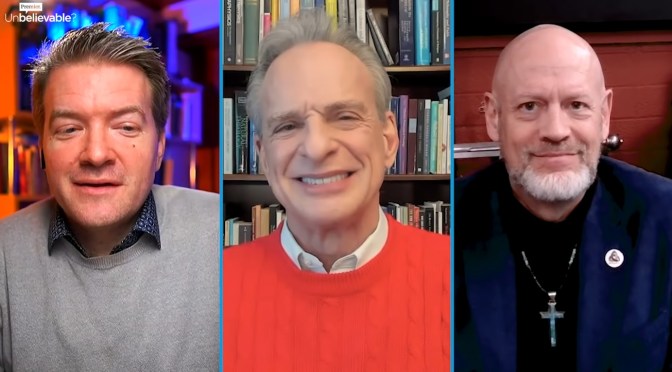
In a recent episode of the Unbelievable show, Calvinist pastor / theologian James White discussed middle knowledge (a.k.a. Molinism) with philosopher / theologian William Lane Craig. In this post, you’ll find a link to the audio, the YouTube video, and my comments on the debate. My comments were quoted in an episode of William Lane Craig’s Reasonable Faith podcast.
Here is a link to the details from Unbelievable: (with MP3 download link)
Calvinism and Molinism are two very different ways of understanding God’s sovereignty. But which one best addresses the problem of evil?
James White argues that Calvinism – God foreordaining all human behaviour both good and evil – is the more Biblical and coherent view. William (Bill) Lane Craig argues that Molinism – a view which reconciles human freedom and divine sovereignty – is Biblically consistent without making God the author of evil.
And the video:
Summary:
JB: Why is there evil?
JW: Natural and moral evil are the results of God’s divine decree to create the world.
WLC: God has knowledge of what individual humans would do in different circumstances prior to his divine decree to create the world. God’s decree takes into account the free decisions of people in different situations. With regard to natural evil, Calvinists and Molinists do not differ much – they are permitted to achieve a greater good. But for moral evil, there is a difference. Moral evil is the result of free decisions by individual humans. They are not God’s will. God permits people to perform evil actions, because those free actions will lead to him achieving his ultimate purposes. God does not override human free will. He achieves his ultimate purposes through the actions of his free creatures. On the Calvinist view, God moves the will of creatures to do evil. God is the cause of their evil acts.
JB: God sees all of the possible worlds and instantiates a world where he is able to achieve his ultimate purposes while respecting the free decisions of his creatures.
WLC: God does not see what humans WILL do, and decree based on that. He sees what they WOULD do in different circumstances, and articulates a world where the free decisions they make in the circumstances he decrees lead to his ultimate purposes being fulfilled.
JB: And this view achieves God’s sovereignty (God gets the result he wants) with human freedom (God is not responsible for moral evil)
JB: James, isn’t it better for God to get what he wants while respecting free will, rather than micromanaging every thought and action of the people?
JW: There’s micromanaging on both sides. On Molinism, God micromanages the circumstances. On Calvinism, God micromanages everything. But how could God have that knowledge of what people would do, prior to actually creating those people? The Bible teaches Calvinism, and so we should go with that. Calvinists are concerned when Craig says that God does not determine the truth value of these subjunctive conditionals (i.e. – what free individuals would do in different circumstances) The individuals determine what they will do in different circumstances. And Calvinists would prefer that God determine (i.e. – exhaustive determinism) what individuals do in different circumstances. WLC, would you agree that the knowledge of these subjunctive conditionals are the essence of what middle knowledge is? (WK note: micromanaging circumstances doesn’t violate free will, micromanaging everything does violate free will)
WLC: No, but it is an essential aspect of it. According to Molinism, God does not determine what free individuals would do in different situations in which they find themselves. The Calvinist view is that in any situation, God actually moves the will of the creature, so God is the author of moral evil. On the Molinist view, creatures are responsible for moral evil, not God.
JW: So you’re saying that these subjunctive conditionals are not under God’s control. How can they be under the control of the creatures, since prior to God’s creative decree, the creatures do not exist yet? Where do these truth values come from.
WLC: This objection to Molinism is called the “grounding objection”. The counterfactuals of creaturely freedom are true without having to be grounded by the created individuals. This objection presupposes a view of truth called “truth-maker” theory. This theory says that in addition to propositions that are true, there are things that make propositions true. There are many counterexamples to this view. For example, if you deny the existence of something that does not exist, then there is no truth maker that makes that claim true. (WK note: E.g. – a unicorn does not exist) Another example is “If WLC were rich, WLC would buy a Mercedes” but there is no truth-maker situation that makes that true, except maybe if he were rich. (WK note: I think that the created individual WLC would be the truth-maker in that case?)
JW: The decisions that I make are caused by God’s decree of what gifts I have or don’t have. He has freedom to decree those gifts, and then that has an effect of what I am free to do. E.g. – I am not 6’11” so I am not free to be a center in the NBA. So on the Molinist view, what is the basis for these subjunctive counterfactuals that limit what God can do?
WLC: The grounding objection presupposes the truth-maker theory, and a particular strain of that theory called truth-maker maximalism, and counterfactuals of creaturely of creaturely freedom would be prime candidates to be exceptions to the truth-maker theory.
WLC: Regarding the point about how people don’t exist in a vacuum but have a whole history, background, characteristics, etc. to shape their decisions. That’s right. But the counterfactuals of creaturely freedom factor all that in. The key point that divides us is that God doesn’t determine what creatures decide, he decides the circumstances. And so the creature is responsible for moral evil, not God. And so God doesn’t cause people to commit moral evils, then punish them for it.
WLC: We should guide our views based on what is in the Bible. But even Calvinist theologians affirm things about God that are not taught explicitly in the Bible, such as God’s spacelessness and timelessness. And Molinism makes the best sense of divine sovereignty and human freedom. On the Calvinist view, God determines how anyone would act in any situation God might place him in, so God is responsible for the moral evil committed by his creatures.
JW: (repeats) If God is limited in what he can do by counterfactuals of creaturely freedom, then we have to know where these counterfactuals come from. (WK note: the counterfactuals of creaturely freedom come from… creaturely freedom.)
JW: Genesis 50:20 says that God used the moral evil committed by some creatures to achieve the good purposes he intended. (WK note: that’s exactly what the Molinist view is, God permits moral evil by his creatures, as long as it achieves his ultimate good purposes)
JW: Molinism is unknown in the church for 1500 years. (WK note: Molinism is in Acts 17:24-27, and also, Calvin and Luther were unknown in the church for 1500 years)
JB: Is Genesis 50:20 a good example of Calvinism?
WLC: (very excited) NO!!!!!! It’s a great example of Molinism!!!! The text says that God didn’t move the bad actors to perform sinful actions – that would make God the author of evil. But God knew that if they were in this situation, they would behave in these evil ways, but ultimately it would lead to good results that God wanted. There is a chain of people partially articulating the middle knowledge view prior to Molina.
JW: You shouldn’t believe Molinism, because it comes from Jesuits. (WK Note: this is the genetic fallacy)
JW: The Bible has examples where God “hardens hearts”, e.g. Pharaoh.
WLC: It’s not that the Bible authors had Molinism in mind. It’s that this theory is consistent with what the Bible teaches.
JW: Ephesians 1 teaches that God unilaterally determines who the elect are. Calvinism emerges from the text. But in Genesis 50:20, Molinism doesn’t emerge from it.
WLC: We’re both trying to make sense of the data of Scripture. Scripture doesn’t teach the universal divine determinism of every human act, especially evil acts. The Bible says thate God is not evil, and cannot even be tempted with evil, but on the Calvinist view, God is causing the evil actions of his creatures, and then he punishes them for it. If it’s evil to cause someone to do evil, it makes God himself evil.
JW: In Isaiah 10, God uses the Assyrians to punish Israel, then he punishes the Assyrians for the haughty attitude of their heart.
WLC: The Molinist view of Ephesians 1 is that part of God’s good pleasure is to respect human freedom, and not to unilaterally divinely determine them to sin. Regarding Isaiah 10, you’re asking how God can punish the Assyrians for something he causes them to do? No, God knows that the Assyrians are going to do this moral evil and he uses that for his purposes, and he is free to punish their immoral act, because they did it of their own free will.
JW: But if you need Molinism to understand these texts, then what did the authors intend for people to think before Molinism.
WLC: People understand from Genesis 50:20 that people do evil things, but God gets a good outcome out of it.
JW: As a Calvinist, I do not believe that God respects human freedom.
JW: I don’t think that individuals have control of the circumstances in which they are born or where they live that limits God’s sovereignty. (WK note: he doesn’t understand Molinism or Acts 17:24-27. Individuals control their own decisions. But God controls the circumstances – i.e. – everything else). There is no essence of James White that determines where I am born, my physical characteristics, my siblings, etc. God decrees everything about who I am.
WLC: “That’s because you’re a determinist, James, and I’m not”
JW: “Yes. Yes. OK.”
WLC: There are number of possible worlds where James White could exist. Different country, different education, different language, different family. God decides the circumstances for James White. James White makes the decisions. God doesn’t cause James White’s moral evil. James White does. The counterfactuals of creaturely freedom must exist prior to the divine decree in order for humans to be responsible for their evil actions.
JW: You’re using philosophy. But your view should come from the Bible. (WK note: look at Acts 17:24-27)
WLC: Universal divine determinism isn’t taught in the Bible.
JW: Yes, in Ephesians 1.
WLC: The Molinist affirms Ephesians 1.
JW: It doesn’t mention respecting free will there, it’s teaching universal divine determinism.
WLC: The Bible teaches that God does have knowledge of counterfactuals of creaturely freedom, e.g. 2 Cor 2:8. So the question is whether God has this knowledge logically prior the decree (Molinism requires this), or is it logically after. If it is logically after, then it makes God the cause of human moral evil.
JW: The verses raised by Craig can be subsumed under God’s natural knowledge and free knowledge.
JW: Some Molinists believe that the only people who are lost in this world are people who cannot freely respond to God’s saving initiative in any circumstances (WK note: this is called trans-world damnation (TD), and I hold this view). Does anyone in the Bible know about this idea? That changes God’s expression from universal divine determinism to accepting human free will and human responsibility for sin (which Calvinism denies).
WLC: Yes, there are two different views. The one view takes human free will, and human responsibility for sin, seriously. The other view makes God the cause of human sin, and therefore makes God evil for being the author of evil.
JW: On Molinism, God knew that if he actualized this world, then he knew the evil that would result, but he didn’t do it for some purpose, like revealing his own character?
WLC: No, he didn’t bring the evil into the world. He actualized a set of circumstances, and a set of free creatures. And he knew that in those circumstances, he knew that the creatures would choose to do evil. His absolute will is for all his creatures to always do the right thing. But he knows that often they will do evil. He permits that to happen, but in the end he achieves the good purposes. E.g. – achieving the redemption of mankind through Jesus through the evil decisions of the rulers at that time.
WLC: I love the Westminster Confession. But without middle knowledge, that Confession is incoherent. Middle knowledge explains how things work, so that the Westminster Confession’s affirmations are logically coherent.
JW: What you’re saying is that God respects human free will and human responsibility.
WLC: Molinism is extremely fruitful theologically. I have applied to the problem of exclusivity of salvation, to the perseverance of the saints, to the inspiration of Scripture… but the focus of the discussion today is on moral evil. Who is the cause of human evil?
JW: Only universal divine determinism and the denial of human free will and human responsibility are consistent with Scripture.
WLC: Scripture alone is my authority, not church tradition. But Reformed theology is permeated with concepts that are not described in Scripture, but are consistent with Scripture, e.g. – timelessness, spacelessness, simplicity.
JW: I disagree, ALL the concepts in Calvinism emerge directly from the text. Isaiah 40-48 clearly teaches divine necessity, that God exists necessarily, in every possible world. (WK note: Calvinist thought emerges 1500 years after the Bible was written)
JW: Middle knowledge is a Catholic dogma, which is why even the Catholics rejected it.
WLC: (holds up 2 volumes of a 4 volume, 2144 page set of books on Reformed theology) Anyone who thinks that Reformed Dogmatics are simply read out of Scripture “doesn’t know the history of Reformed theology”. These volumes are permeated with theological constructs, philosophical models, philosophical principles. The necessity of God’s existence, timelessness, spacelessness, etc. are all affirmed by Reformed theologians, and were inherited from medieval scholastics (Catholics).
JW: The central claim of middle knowledge, that counterfactuals of creaturely freedom are known by God, are not in the Bible. (WK note: Craig gave an example of counterfactuals of creaturely freedom in the Bible. There are lots of them.)
Four volume 2144-page book set on Reformed dogmatics
My thoughts:
I think that it was a good debate. Well worth watching. I don’t promise that my summary is 100% accurate. Please leave room for a little snark, and watch the debate yourself. I like to take the spin off of people’s words, when I feel that they are trying to weasel out of the conclusions of their own views. It’s 2 AM on Monday morning now, and I don’t want to proof-read. Please point out errors in the comments.
If I could boil down the mistake that James White makes to one sentence, it would be to say that he comes to the text with a philosophical presupposition (determinism), and this causes him to misinterpret the plain meaning of the text as a whole. And this misinterpretation isn’t about peripheral teachings of the Bible. His embrace of God as the cause of moral evil means that he denies the goodness of God – a basic Christian doctrine. (This is compounded by his embrace of double-predestination, although that was not the topic of the debate). Christians shouldn’t let a philosophy – determinism – override the plain meaning of Scripture. Determinism is man’s philosophy – it’s a Greek philosophy that existed centuries before Christ.
White also was clearly unfamiliar with the philosophy of religion of his own Reformed tradition, and especially with the history of the development of Reformed theology. Craig was able to correct him, by showing him the books on Reformed Dogmatics and explain the historical antecedents of Reformed thought.
James White is not a “hyper-Calvinist”. He is a normal Calvinist. Calvinism teaches universal divine determinism. Calvinism teaches that where each individual goes after the judgment is decided unilaterally by God. Calvinism teaches that human moral evil is caused by God. Calvinism teaches that God punishes people for this moral evil. Calvinism teaches intentional double-predestination.
I wrote about the problems with Calvinism, citing Calvinist D.A. Carson and William Lane Craig, in a previous post. Determinism denies free will, and therefore undermines all meaning in life. That’s not consistent with the Bible’s clear teaching that God issues commands to his creatures, because he expects (free will) obedience. That is how we develop our relationship with God after becoming Christians (sanctification), and those relationships have ultimate significance.
Note: I link to James White’s work on this blog. He does a great job of fighting cultural and political enemies. I really appreciate his conservative perspective on issues like abortion, and his sensitivity to the totalitarian impulses of the secular left. His work on KJV-only and and debating Catholics is excellent. I don’t always agree with Craig. I recently posted disagreement with Craig on his latest work on the historical Adam and evolution. I have other minor disagreements with him as well, in substance and method. The only theology books in my house are by R. C. Sproul, Wayne Grudem, D.A. Carson, Millard Erickson, John MacArthur, etc. – all Calvinists.
If you missed Craig’s debate with Paul Helm, which is mentioned in the debate, I blogged about that previously, as well.



 WINTERY KNIGHT