The term for a person who believes in fully naturalistic evolution but who also believes in God is “theistic evolutionist”.
Terrell Clemmons takes a look at one organization of theistic evolutionists “Biologos”, and makes a distinction between their public statements and the real implications of their public statements.
Here is the PR / spin definition of theistic evolution:
Evolutionary creation is “the view that all life on earth came about by the God-ordained process of evolution with common descent. Evolution is a means by which God providentially achieves his purposes in creation.” This view, also called theistic evolution, has been around since the late nineteenth century, and BioLogos promotes it today in a variety of religious and educational settings.
And here is the no-spin definition of theistic evolution:
As Dr. Stephen Meyer explains it, the central issue dividing Bio-Logos writers from intelligent design theorists is BioLogos’s commitment to methodological naturalism (MN), which is not a scientific theory or empirical finding, but an arbitrary rule excluding non-material causation from the outset. “Unfortunately,” Meyer writes,
methodological naturalism is a demanding doctrine. The rule does not say “try finding a materialistic cause but keep intelligent design in the mix of live possibilities, in light of what the evidence might show.” Rather, MN tells you that you simply must posit a material or physical cause, whatever the evidence.
What this means, according to BioLogos’s own epistemology, is that God is objectively undiscoverable and unknowable—a tenet that sits squarely at odds with Christian orthodoxy, which has for centuries held that God is clearly discernible in the natural world (e.g., Romans 1:20). Obviously, this is theologically problematic, but Meyer also points out that theistic evolution faces problems from a scientific standpoint as well, as the technical literature among evolutionary biologists is moving away from the Darwinian mechanism.
Whenever I talk to theistic evolutionists, I try to stop them from talking about the Bible or their faith, because that’s not what is interesting to me. I don’t really care about their history as a religious person, or where they go to church, or who their pastor is. When I talk about origins and evolution, I only care about the science. What the ordinary process of scientific inquiry tells us about nature? Does nature have the capacity to create all of the varieties of life without any intelligent agency playing a role? Or, are there parts of nature that are similar to computer programs, blog posts, and term papers, where the best explanation of the effect is an intelligent agent choosing how to arrange the parts to achieve functionality?
I don’t accept molecules-to-man unguided evolution. This is not because I start with faith and let faith override the findings of science. It’s because I think that if you look at specific areas of natural history, there is clear evidence of intelligent agency, such as in the origin of life, or the Cambrian explosion. These effects in nature are well-studied and well-understood, and they look much more like the code that a computer scientist (like me) writes than the simplistic “order” created by wind erosion or crystalline patterns or anything the blind forces of nature could produce. Blind forces are observed to make small changes – short or long finch beaks, fruit flies with 4 wings and no balancers, bacterial resistances.
What’s also interesting is how often theistic evolutionists drop the theism but keep the evolution.
Consider this article about Stephen Matheson from Evolution News:
Biologist Stephen Matheson is a longtime critic of the theory of intelligent design. His extensive attacks on Stephen Meyer’s Signature in the Cell, for one, ranged from the substantive to the trivial and personal. The tone was frequently…abrasive, and we responded at the time. With Arthur Hunt, Dr. Matheson has debated Dr. Meyer in a forum at Biola University. Formerly a professor at an Evangelical Christian school, Calvin College, Matheson is still listed as a Blog Author at the theistic evolutionary website BioLogos, where it notes that he enjoys “explor[ing] issues of science and Christian faith.”
Well, his theistic evolutionary explorations have now terminated. As he reports on his personal blog page, where he took a hiatus of more than five years along with a break from his teaching, he is “happily” no longer a Christian.
OK. Now that’s just one case, but what about Howard Van Till, also of Calvin College?
Salvo magazine takes a look at what he wrote in a recent book:
In what follows I shall use the term “naturalism,” when unqualified, to represent neither more nor less than the rejection of supernaturalism. Stated positively, naturalism is committed to the belief that all events that occur within this Universe are consistent with and adequately explained by the system of natural causes. This commitment necessarily entails the additional belief that the system of natural causes is fully adequate to account for all events that transpire. Focusing on the issue of the Universe’s formational economy, we can say that naturalism—as here defined -entails the RFEP.
Now, for the big three Western monotheistic religions: Christianity, Judaism and Islam. To deny supernaturalism IS to deny the robust theism present in the world’s big three monotheistic religions. Van Till denies theism as commonly understood now. And again, this isn’t because of the science. His heavy handed naturalistic assumption squashed out any kind of serious inquiry into areas like the origin of the universe, the cosmic fine tuning, the origin or life, the Cambrian explosion, biological convergence, so-called junk DNA, deleterious mutations, and so on. Places where you can see that naturalistic forces cannot do the creating that Van Till has faith that they can.
I don’t accept any kind of macro-evolution – evolution of body plans or organ types. My problem with evolution is not Bible-based, it’s science-based. If the science shows the need for intelligent causes, and I think it does, then I think that the naturalists need to adjust their assumptions and pre-suppositions to match the evidence. On the Internet have ball sorts of programs written in different computer languages. They are evidence for programmers. In nature, we have DNA and proteins and sudden origin of body plans, that’s evidence for a programmer, too.
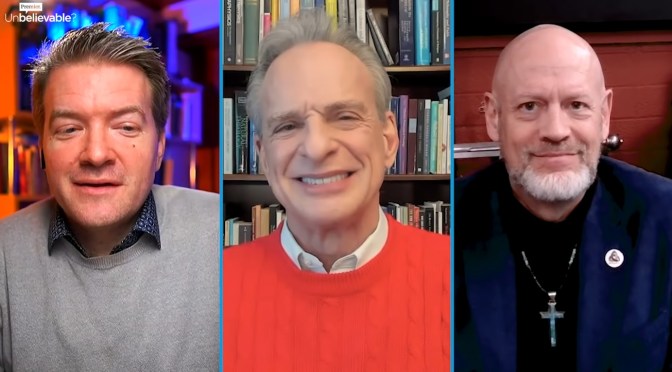
In a recent episode of the Unbelievable show, Calvinist pastor / theologian James White discussed middle knowledge (a.k.a. Molinism) with philosopher / theologian William Lane Craig. In this post, you’ll find a link to the audio, the YouTube video, and my comments on the debate. My comments were quoted in an episode of William Lane Craig’s Reasonable Faith podcast.
Here is a link to the details from Unbelievable: (with MP3 download link)
Calvinism and Molinism are two very different ways of understanding God’s sovereignty. But which one best addresses the problem of evil?
James White argues that Calvinism – God foreordaining all human behaviour both good and evil – is the more Biblical and coherent view. William (Bill) Lane Craig argues that Molinism – a view which reconciles human freedom and divine sovereignty – is Biblically consistent without making God the author of evil.
And the video:
Summary:
JB: Why is there evil?
JW: Natural and moral evil are the results of God’s divine decree to create the world.
WLC: God has knowledge of what individual humans would do in different circumstances prior to his divine decree to create the world. God’s decree takes into account the free decisions of people in different situations. With regard to natural evil, Calvinists and Molinists do not differ much – they are permitted to achieve a greater good. But for moral evil, there is a difference. Moral evil is the result of free decisions by individual humans. They are not God’s will. God permits people to perform evil actions, because those free actions will lead to him achieving his ultimate purposes. God does not override human free will. He achieves his ultimate purposes through the actions of his free creatures. On the Calvinist view, God moves the will of creatures to do evil. God is the cause of their evil acts.
JB: God sees all of the possible worlds and instantiates a world where he is able to achieve his ultimate purposes while respecting the free decisions of his creatures.
WLC: God does not see what humans WILL do, and decree based on that. He sees what they WOULD do in different circumstances, and articulates a world where the free decisions they make in the circumstances he decrees lead to his ultimate purposes being fulfilled.
JB: And this view achieves God’s sovereignty (God gets the result he wants) with human freedom (God is not responsible for moral evil)
JB: James, isn’t it better for God to get what he wants while respecting free will, rather than micromanaging every thought and action of the people?
JW: There’s micromanaging on both sides. On Molinism, God micromanages the circumstances. On Calvinism, God micromanages everything. But how could God have that knowledge of what people would do, prior to actually creating those people? The Bible teaches Calvinism, and so we should go with that. Calvinists are concerned when Craig says that God does not determine the truth value of these subjunctive conditionals (i.e. – what free individuals would do in different circumstances) The individuals determine what they will do in different circumstances. And Calvinists would prefer that God determine (i.e. – exhaustive determinism) what individuals do in different circumstances. WLC, would you agree that the knowledge of these subjunctive conditionals are the essence of what middle knowledge is? (WK note: micromanaging circumstances doesn’t violate free will, micromanaging everything does violate free will)
WLC: No, but it is an essential aspect of it. According to Molinism, God does not determine what free individuals would do in different situations in which they find themselves. The Calvinist view is that in any situation, God actually moves the will of the creature, so God is the author of moral evil. On the Molinist view, creatures are responsible for moral evil, not God.
JW: So you’re saying that these subjunctive conditionals are not under God’s control. How can they be under the control of the creatures, since prior to God’s creative decree, the creatures do not exist yet? Where do these truth values come from.
WLC: This objection to Molinism is called the “grounding objection”. The counterfactuals of creaturely freedom are true without having to be grounded by the created individuals. This objection presupposes a view of truth called “truth-maker” theory. This theory says that in addition to propositions that are true, there are things that make propositions true. There are many counterexamples to this view. For example, if you deny the existence of something that does not exist, then there is no truth maker that makes that claim true. (WK note: E.g. – a unicorn does not exist) Another example is “If WLC were rich, WLC would buy a Mercedes” but there is no truth-maker situation that makes that true, except maybe if he were rich. (WK note: I think that the created individual WLC would be the truth-maker in that case?)
JW: The decisions that I make are caused by God’s decree of what gifts I have or don’t have. He has freedom to decree those gifts, and then that has an effect of what I am free to do. E.g. – I am not 6’11” so I am not free to be a center in the NBA. So on the Molinist view, what is the basis for these subjunctive counterfactuals that limit what God can do?
WLC: The grounding objection presupposes the truth-maker theory, and a particular strain of that theory called truth-maker maximalism, and counterfactuals of creaturely of creaturely freedom would be prime candidates to be exceptions to the truth-maker theory.
WLC: Regarding the point about how people don’t exist in a vacuum but have a whole history, background, characteristics, etc. to shape their decisions. That’s right. But the counterfactuals of creaturely freedom factor all that in. The key point that divides us is that God doesn’t determine what creatures decide, he decides the circumstances. And so the creature is responsible for moral evil, not God. And so God doesn’t cause people to commit moral evils, then punish them for it.
WLC: We should guide our views based on what is in the Bible. But even Calvinist theologians affirm things about God that are not taught explicitly in the Bible, such as God’s spacelessness and timelessness. And Molinism makes the best sense of divine sovereignty and human freedom. On the Calvinist view, God determines how anyone would act in any situation God might place him in, so God is responsible for the moral evil committed by his creatures.
JW: (repeats) If God is limited in what he can do by counterfactuals of creaturely freedom, then we have to know where these counterfactuals come from. (WK note: the counterfactuals of creaturely freedom come from… creaturely freedom.)
JW: Genesis 50:20 says that God used the moral evil committed by some creatures to achieve the good purposes he intended. (WK note: that’s exactly what the Molinist view is, God permits moral evil by his creatures, as long as it achieves his ultimate good purposes)
JW: Molinism is unknown in the church for 1500 years. (WK note: Molinism is in Acts 17:24-27, and also, Calvin and Luther were unknown in the church for 1500 years)
JB: Is Genesis 50:20 a good example of Calvinism?
WLC: (very excited) NO!!!!!! It’s a great example of Molinism!!!! The text says that God didn’t move the bad actors to perform sinful actions – that would make God the author of evil. But God knew that if they were in this situation, they would behave in these evil ways, but ultimately it would lead to good results that God wanted. There is a chain of people partially articulating the middle knowledge view prior to Molina.
JW: You shouldn’t believe Molinism, because it comes from Jesuits. (WK Note: this is the genetic fallacy)
JW: The Bible has examples where God “hardens hearts”, e.g. Pharaoh.
WLC: It’s not that the Bible authors had Molinism in mind. It’s that this theory is consistent with what the Bible teaches.
JW: Ephesians 1 teaches that God unilaterally determines who the elect are. Calvinism emerges from the text. But in Genesis 50:20, Molinism doesn’t emerge from it.
WLC: We’re both trying to make sense of the data of Scripture. Scripture doesn’t teach the universal divine determinism of every human act, especially evil acts. The Bible says thate God is not evil, and cannot even be tempted with evil, but on the Calvinist view, God is causing the evil actions of his creatures, and then he punishes them for it. If it’s evil to cause someone to do evil, it makes God himself evil.
JW: In Isaiah 10, God uses the Assyrians to punish Israel, then he punishes the Assyrians for the haughty attitude of their heart.
WLC: The Molinist view of Ephesians 1 is that part of God’s good pleasure is to respect human freedom, and not to unilaterally divinely determine them to sin. Regarding Isaiah 10, you’re asking how God can punish the Assyrians for something he causes them to do? No, God knows that the Assyrians are going to do this moral evil and he uses that for his purposes, and he is free to punish their immoral act, because they did it of their own free will.
JW: But if you need Molinism to understand these texts, then what did the authors intend for people to think before Molinism.
WLC: People understand from Genesis 50:20 that people do evil things, but God gets a good outcome out of it.
JW: As a Calvinist, I do not believe that God respects human freedom.
JW: I don’t think that individuals have control of the circumstances in which they are born or where they live that limits God’s sovereignty. (WK note: he doesn’t understand Molinism or Acts 17:24-27. Individuals control their own decisions. But God controls the circumstances – i.e. – everything else). There is no essence of James White that determines where I am born, my physical characteristics, my siblings, etc. God decrees everything about who I am.
WLC: “That’s because you’re a determinist, James, and I’m not”
JW: “Yes. Yes. OK.”
WLC: There are number of possible worlds where James White could exist. Different country, different education, different language, different family. God decides the circumstances for James White. James White makes the decisions. God doesn’t cause James White’s moral evil. James White does. The counterfactuals of creaturely freedom must exist prior to the divine decree in order for humans to be responsible for their evil actions.
JW: You’re using philosophy. But your view should come from the Bible. (WK note: look at Acts 17:24-27)
WLC: Universal divine determinism isn’t taught in the Bible.
JW: Yes, in Ephesians 1.
WLC: The Molinist affirms Ephesians 1.
JW: It doesn’t mention respecting free will there, it’s teaching universal divine determinism.
WLC: The Bible teaches that God does have knowledge of counterfactuals of creaturely freedom, e.g. 2 Cor 2:8. So the question is whether God has this knowledge logically prior the decree (Molinism requires this), or is it logically after. If it is logically after, then it makes God the cause of human moral evil.
JW: The verses raised by Craig can be subsumed under God’s natural knowledge and free knowledge.
JW: Some Molinists believe that the only people who are lost in this world are people who cannot freely respond to God’s saving initiative in any circumstances (WK note: this is called trans-world damnation (TD), and I hold this view). Does anyone in the Bible know about this idea? That changes God’s expression from universal divine determinism to accepting human free will and human responsibility for sin (which Calvinism denies).
WLC: Yes, there are two different views. The one view takes human free will, and human responsibility for sin, seriously. The other view makes God the cause of human sin, and therefore makes God evil for being the author of evil.
JW: On Molinism, God knew that if he actualized this world, then he knew the evil that would result, but he didn’t do it for some purpose, like revealing his own character?
WLC: No, he didn’t bring the evil into the world. He actualized a set of circumstances, and a set of free creatures. And he knew that in those circumstances, he knew that the creatures would choose to do evil. His absolute will is for all his creatures to always do the right thing. But he knows that often they will do evil. He permits that to happen, but in the end he achieves the good purposes. E.g. – achieving the redemption of mankind through Jesus through the evil decisions of the rulers at that time.
WLC: I love the Westminster Confession. But without middle knowledge, that Confession is incoherent. Middle knowledge explains how things work, so that the Westminster Confession’s affirmations are logically coherent.
JW: What you’re saying is that God respects human free will and human responsibility.
WLC: Molinism is extremely fruitful theologically. I have applied to the problem of exclusivity of salvation, to the perseverance of the saints, to the inspiration of Scripture… but the focus of the discussion today is on moral evil. Who is the cause of human evil?
JW: Only universal divine determinism and the denial of human free will and human responsibility are consistent with Scripture.
WLC: Scripture alone is my authority, not church tradition. But Reformed theology is permeated with concepts that are not described in Scripture, but are consistent with Scripture, e.g. – timelessness, spacelessness, simplicity.
JW: I disagree, ALL the concepts in Calvinism emerge directly from the text. Isaiah 40-48 clearly teaches divine necessity, that God exists necessarily, in every possible world. (WK note: Calvinist thought emerges 1500 years after the Bible was written)
JW: Middle knowledge is a Catholic dogma, which is why even the Catholics rejected it.
WLC: (holds up 2 volumes of a 4 volume, 2144 page set of books on Reformed theology) Anyone who thinks that Reformed Dogmatics are simply read out of Scripture “doesn’t know the history of Reformed theology”. These volumes are permeated with theological constructs, philosophical models, philosophical principles. The necessity of God’s existence, timelessness, spacelessness, etc. are all affirmed by Reformed theologians, and were inherited from medieval scholastics (Catholics).
JW: The central claim of middle knowledge, that counterfactuals of creaturely freedom are known by God, are not in the Bible. (WK note: Craig gave an example of counterfactuals of creaturely freedom in the Bible. There are lots of them.)
Four volume 2144-page book set on Reformed dogmatics
My thoughts:
I think that it was a good debate. Well worth watching. I don’t promise that my summary is 100% accurate. Please leave room for a little snark, and watch the debate yourself. I like to take the spin off of people’s words, when I feel that they are trying to weasel out of the conclusions of their own views. It’s 2 AM on Monday morning now, and I don’t want to proof-read. Please point out errors in the comments.
If I could boil down the mistake that James White makes to one sentence, it would be to say that he comes to the text with a philosophical presupposition (determinism), and this causes him to misinterpret the plain meaning of the text as a whole. And this misinterpretation isn’t about peripheral teachings of the Bible. His embrace of God as the cause of moral evil means that he denies the goodness of God – a basic Christian doctrine. (This is compounded by his embrace of double-predestination, although that was not the topic of the debate). Christians shouldn’t let a philosophy – determinism – override the plain meaning of Scripture. Determinism is man’s philosophy – it’s a Greek philosophy that existed centuries before Christ.
White also was clearly unfamiliar with the philosophy of religion of his own Reformed tradition, and especially with the history of the development of Reformed theology. Craig was able to correct him, by showing him the books on Reformed Dogmatics and explain the historical antecedents of Reformed thought.
James White is not a “hyper-Calvinist”. He is a normal Calvinist. Calvinism teaches universal divine determinism. Calvinism teaches that where each individual goes after the judgment is decided unilaterally by God. Calvinism teaches that human moral evil is caused by God. Calvinism teaches that God punishes people for this moral evil. Calvinism teaches intentional double-predestination.
I wrote about the problems with Calvinism, citing Calvinist D.A. Carson and William Lane Craig, in a previous post. Determinism denies free will, and therefore undermines all meaning in life. That’s not consistent with the Bible’s clear teaching that God issues commands to his creatures, because he expects (free will) obedience. That is how we develop our relationship with God after becoming Christians (sanctification), and those relationships have ultimate significance.
Note: I link to James White’s work on this blog. He does a great job of fighting cultural and political enemies. I really appreciate his conservative perspective on issues like abortion, and his sensitivity to the totalitarian impulses of the secular left. His work on KJV-only and and debating Catholics is excellent. I don’t always agree with Craig. I recently posted disagreement with Craig on his latest work on the historical Adam and evolution. I have other minor disagreements with him as well, in substance and method. The only theology books in my house are by R. C. Sproul, Wayne Grudem, D.A. Carson, Millard Erickson, John MacArthur, etc. – all Calvinists.
If you missed Craig’s debate with Paul Helm, which is mentioned in the debate, I blogged about that previously, as well.
Most of my friends from Canada are economically-literate and good at evidential apologetics. So when I make fun of Canada, I’m not making fun of them. However, Canada as a whole is just a trash country. And what I mean by that is that no one there understands economics. They don’t believe in religious liberty. In fact, it’s pretty much a third world country with a few conservatives in it.
Let’s take a look at the data, starting with this recent article from Toronto Sun – which shows what kind of prison sentence you can get for organizing a peaceful protest against medical mandates:
Crown prosecutor Siobhain Wetscher said Wednesday she is seeking stiff sentences for convoy leaders Tamara Lich and Chris Barber because of the broad community harm caused by the three-week 2022 protest in Ottawa’s downtown core.
[…]Lich and Barber were both found guilty of mischief in April for their key roles in the convoy protest, which filled downtown Ottawa for three weeks beginning in late January 2022 to protest vaccine mandates and other pandemic measures.
The Crown is seeking a prison sentence of seven years for Lich and eight years for Barber, who was also found guilty of counselling others to disobey a court order.
The article notes that Barber has no previous criminal record.
Keep in mind that Canada gives extremely light sentences to real criminals, provide they are members of certain groups favored by the secular left.
Here is an example from July 15th, reported in Juno News:
An Indian foreign national, Akashkumar Narendrakumar Khant, who admitted to trying to buy sex from what he thought was a 15-year-old girl, was given a conditional discharge by an Ontario judge to help him and his wife with their immigration statuses.
In a decision released on June 25, Ontario Court Justice Paul Thomas O’Marra provided Khant with a conditional discharge on the basis that “a conviction would lead to severe collateral consequences, such as jeopardizing his immigration status, delaying his citizenship, and preventing him from sponsoring his wife, which would likely result in their separation.”
That’s what the entire justice system of Canada is like. 8 years in prison for organizing a protest to disagree with the government, and conditional discharge for trying to have s*x with a 15-year-old girl. And Canadians vote for this, they like this, they approve of this.
Soldiers with guns. In Canadian Cities. In Canada.
Corporations in Canada are allied with the government, because the country is essentially communist. And these corporations are not afraid to enforce the policies of the secular left fascist regime. For example, banks in Canada regularly freeze or close accounts of people who disagree with the government – and not just for peaceful protests, but for disagreeing with the government’s policies.
First article from Western Standard talks about what happened with the bank accounts of people protested against the governments medical mandates:
Lawyers for Evan Blackman are demanding that the RCMP and Toronto Dominion Bank hand over records detailing why his personal bank accounts were frozen following the 2022 Freedom Convoy protest.
The Justice Centre for Constitutional Freedoms announced Thursday it would argue that the freezing violated Mr. Blackman’s constitutional rights.
Blackman was arrested on February 18, 2022, during police action after the federal government invoked the Emergencies Act. Although he was released the same day, he later discovered that three of his bank accounts had been frozen without warning.
You might remember that Toronto Dominion bank was in the news recently for criminal activities. That link goes to the Department of Justice web site, by the way.
Automatic weapons and armored vehicles to break up peaceful protests in Canada
Next article, very recent, from Western Standard. Canadian corporations freeze and terminate bank accounts willy-nilly. All it takes is that you disagree with the government, then corporations stomp all over you:
Eva Chipiuk, a lawyer known for her involvement in the Freedom Convoy and vocal criticism of Canadian institutions, has been blindsided after the Royal Bank of Canada (RBC) terminated its banking relationship with her, citing risk-related concerns.
According to an official letter the banking institution sent to Chipiuk, her “recent activity was outside of RBC’s client risk appetite,” and it would “no longer be in a position to continue serving her.”
So what do we learn from this? Well, we learn that Americans should never, ever set foot in a secular left fascist bleephole like Canada. Most Canadians don’t believe in basic freedoms, like freedom of speech, freedom of association, and peaceful protest. If you try to exercise those rights in Canada, then it’s very likely that you will be arrested and imprisoned. Unless you belong to one of the government’s favored groups, e.g. – child abusers. There are many safer countries to visit, countries that respect human rights. Go spend your money there. You wouldn’t vacation in North Korea, so don’t vacation in Canada. They’re the same thing.






 WINTERY KNIGHT