Welcome to episode 39 of the Knight and Rose podcast! In this episode, Wintery Knight and Desert Rose continue discussing how to debate Islam with famous former Muslim, Hatun Tash. If you like this episode, please subscribe to the podcast, and subscribe to our YouTube channel. We would appreciate it if you left us a 5-star review on Apple Podcasts or Spotify.
Podcast description:
Christian apologists Wintery Knight and Desert Rose discuss apologetics, policy, culture, relationships, and more. Each episode equips you with evidence you can use to boldly engage anyone, anywhere. We train our listeners to become Christian secret agents. Action and adventure guaranteed. 30-45 minutes per episode. New episode every week.
Episode 39:
Episode Summary:
Wintery Knight and Desert Rose continue our discussion with former Muslim Hatun Tash. We talk about whether deception is permitted in Islam. We discuss what the Qur’an says about women, and what women can expect in the afterlife. We discuss Andrew Tate and whether he is a real Muslim. Finally, we ask Hatun about persevering through challenges to her ministry. This is the second episode in a two part series.
Speaker biographies
Wintery Knight is a black legal immigrant. He is a senior software engineer by day, and an amateur Christian apologist by night. He has been blogging at winteryknight.com since January of 2009, covering news, policy and Christian worldview issues.
Desert Rose did her undergraduate degree in public policy, and then worked for a conservative Washington lobbyist organization. She also has a graduate degree from a prestigious evangelical seminary. She is active in Christian apologetics as a speaker, author, and teacher.
Hatun Tash is is a well-known Christian preacher who regularly debates Islam and the Koran. An ex-Muslim and convert to Christianity, she is director of the ministry Defend Christ Critique Islam. She has faced threats to her life on multiple occasions and was attacked and stabbed on 25 July 2021 while preaching at Speakers’ Corner in Hyde Park. You can find her collection of very popular and entertaining videos on YouTube in the Hatun Tash DCCI Ministries channel.
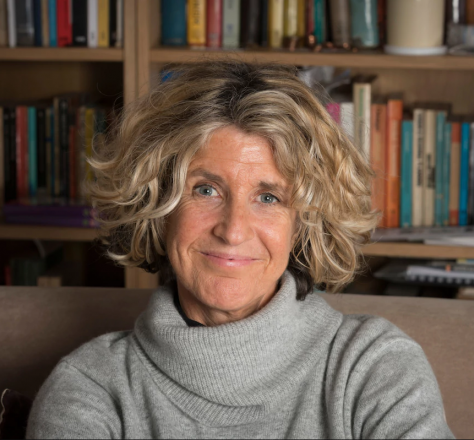
Kate Mulvey at age 53 expects that rich men will want to marry her
A little while ago, I blogged about a 47-year-old mother of three who sued a dating agency for failing to find her a rich husband. That was pretty bad, but I found something even worse. A 54-year-old woman who spend all her savings on a dating agency. She expected them to find her loads of rich men who want to marry her – despite her never having invested anything in them.
Glass of wine in hand, the man sitting opposite me in the restaurant was in full flow. While he was droning on about his work commitments, I zoned in and out trying to work out how on earth I was going to get to through this first date. I had expected to meet an eligible bachelor, but he had turned out to be so boring that he made me want to stick asparagus up my nostrils.
This memory came flooding back when I read about, Tereza Burki, a City financier who, last week, successfully sued a Knightsbridge-based elite matchmaking service, for the return of her £12,600 annual fee after they failed to find her the man of her dreams.
A couple of years ago, I too joined an expensive matchmaking agency. I had just come out of a seven year relationship, and was on the wrong side of 50.
I soon tired of online dating and receiving messages from over weight baldies who peppered their emails with childish emojis. I hankered to find Mr Right-for-me, a man who was suitably educated and a successful professional.
And so this is how I found myself, throwing money (my entire savings to be precise) to an upmarket matchmaking agency in central London. The agency claimed to filter out the undesirables, the mediocre and give clients the personal touch, so I handed over the hefty sum of £6,000.
As I waited to be matched with someone from their ‘extensive database’, I idly imagined my handsome date, cashmere polo neck, a bit academic and kind. We’d eat steak tartare and swap notes on our latest clever box-set find and favourite novels.
The first indication that all was not as I had expected came when I met personal matchmaker at a Park Lane hotel for ‘tea and an interview’… told her how I loved folk music, my favourite film was The Deer Hunter, and enjoyed weekends in the countryside.
[…]A few days later she emailed me with the details of W, “a successful entrepreneur who had travelled extensively and also liked folk music”. When I met him at a pub in Richmond, I was shocked. I was expecting a cultured and dynamic man, instead I got a man in a pair of jeans, a moth eaten jumper and the table manners of a modern day Baldrick.
And therein lies the rub. These agencies trade on their exclusivity, yet the men I met were far from the international super elite they promised.
Isn’t this terrible? Clearly the dating agency is to blame. It should be easy for a penniless, feminist hedonist to find rich men who want to spend all their money taking care of a 54-year-old woman who had literally nothing to do with the process by which they earned all that money.
One thing we know about her for sure is that she is impractical. She is 54 years old and has just spent her last savings on a dating agency. From her other comments about the type of men she is looking for, we can infer that she wasted a lot of money on travel, fine dining, and other frivolous experiences designed to produce feelings of sophistication without any practical plan for preparing for the financial demands of old age. What’s the point of having fun “in the moment” if you don’t have any plan to allow sustainable recreation in the future, when you’re too old to work?
I spent some time reading articles by Kate Mulvey, and here is what I was able to determine:
she has no useful degrees – she paid for useless degrees in Italian and French, instead of studying something useful, like computer science or nursing or petroleum engineering. Her “writing” is all about fashion, dating and “lifestyles”
her opinion on children: “uppity children take your time, emotions and energy” – she sees children as a detriment to her highest priority (her career). She says “I, however, have lived a life of unfettered freedom to take on projects, write books and travel”
her book is called “Accidental Singleton” because she thinks that her approach to life – anti-marriage hedonism – has “accidentally” left her single and penniless at age 54 (as if it wasn’t her fault!)
Although she talks a lot about being intelligent, it seems to me that an intelligent woman would have practical degrees, savings and an awareness of what men actually want from a woman – and WHEN they want it. Men want a woman to support them in their most difficult period, just after they graduate and hit the job market. Starting out in a career is hard because the man doesn’t have savings or a resume or references. The support of a young, attractive, virtuous woman means everything during those difficult years. This is when a wife has the most impact on her husband’s ability to earn and save, on his mental health, on his physical health, etc.
Somehow, this narcissist thinks that she can just show up in a man’s life, after he has done all his earning alone, and grab hold of the things that she never helped build. She wasted all her youth and beauty chasing experiences with attractive bad boys, but she thinks that it’s reasonable for a man to invest all his wealth in her. A woman has value to a man at the time when he is attempting to do difficult things, but lacks support.
What exactly is it that a woman like Kate has to offer a man, given her life choices? Does anyone think that this woman has marriage-character? Does anyone think that her life of selfishness and hedonism has prepared her to be a good wife? What kind of conversation about moral obligations could you have with someone who has only ever done what felt good to her in the moment? Has her string of failed relationships with hot bad boys prepared her to be trusting and unselfish? How about to be faithful? Or even to be content? What is it that she thinks that she is offering that would justify the heavy investment that she is asking for, especially in an age of no-fault-divorce and anti-male divorce courts?
I think people really underestimate how much goes into making a good wife. The character she has to develop. The skills that she has to develop. The way she treats her husband, which often comes from carefully cultivating virtues like chastity and sobriety. Her worldview, which affects whether she has practical abilities like love, forgiveness and self-control. Her ability to be good with money. Her ability to nurture others and make social connections consistent with marriage and homemaking. Her ability to bear children, and then nurture them during the critical first 5 years after – not to mention homeschooling, which is increasingly valuable in a time when underperforming government-run schools seek to indoctrinate, rather than educate, children.
Nothing about this woman makes me think that she has any marriage-related character traits or abilities. Any idiot can spend someone else’s money on their own feelings, fun and thrills. But it takes a carefully crafted woman to really do the work of a wife. Marriage isn’t there so that women can be happy. Marriage is an enterprise. Being selfish – doing what is easy, and what feels good moment by moment – doesn’t prepare a woman for the enterprise.
The Federalist reports on what researchers have found about the nature of same-sex attraction. Is it fixed? Or does it change over time? I think that gay activists would like everyone to believe that same-sex attraction is fixed, but to learn the truth, we should look at what the scientific research says.
Excerpt:
There is not only no scientific evidence that sexual orientation is immutable, there is conclusive scientific evidence that most people who experience exclusive same-sex attraction end up developing an interest in the opposite sex over time.
This is so well established by now that scholars are busy publishing methods to measure frequency of sexual orientation change in massive longitudinal studies of youth and young adults. (I.e., How many times in nine years can we expect a homosexual sexual orientation to change? Is the change associated with lifestyle habits? Who changes more frequently: males or females?)
That basic fact was already settled science when Obergefell came before the Supreme Court. Half a dozen rigorous studies could be cited from the late 1990s and early 2000s, but the most noteworthy probably remains a Cornell-led study published in 2007.
In this study, Dr. Rich Savin-Williams examined a representative sample of more than 12,000 American youth, following each from the age of 16 to 22. Rather than rely on an individual’s reconstruction of his or her past based on current identity, researchers met with subjects three times throughout the six-year period. Each time, they asked individuals (via a computer, to protect privacy) whether they had had a romantic attraction to a member of the opposite or same sex since their last interview.
For instance, 17-year-old males were asked if, in the past year, they had had a romantic attraction to another male or female. About 1.5 percent reported only having a romantic attraction to other males. Five years later, when that 1.5 percent were asked about their romantic attractions since last interview, the overwhelming majority (70 percent) reported a 180-degree flip in their sexual orientation—they only had romantic feelings for women.
Similarly, among females, about 40 percent switched from exclusive same-sex attraction to exclusive opposite-sex attraction. Most of the rest (45 percent of the total) reported they had feelings for both men and women. Only 1 percent of women who, at 17, reported a full year of exclusive same-sex attraction reported a similar experience in the five years that followed.
This research is in agreement with previous research on identical twin studies reported by the prestigious science journal Nature:
When one identical twin is gay, there is about a 20% chance that the other will be as well. But because this rate is not 100%, it is thought that environmental factors play a role as well. One of the best characterized is the ‘older brother effect’: the chance of a man being gay increases by 33% for each older brother he has. The reason is not clear, although one hypothesis holds that the mother’s immune system begins to react against male antigens and alter the fetus’s development.
So, it turns out that homosexual behavior is a lot more related to free choices than it is to innate, fixed dispositions. That’s what the science says. It’s not what the politicians say. It’s not what the Supreme Court says. It’s not what Hollywood says. It’s not what journalists say. But it is what science has found to be true about the universe. We are in control of our behaviors, and we have to choose things that are likely to work out in the long-term – not just what feels good to us in the moment.
Whenever I hear gay activists complaining that they have no choice but to give in to their “innate, fixed, biological” sexual attractions, I always think about how I’ve never been married and have had to deal with sexual attraction to the opposite sex. As a Christian, there is simply no Biblical support for sex outside of marriage. So, that means that I’ve had to just live with not being allowed to act on my desires. In fact, this is the normal Christian life. There was a time when people had more skepticism about their feelings and desires, and they knew that self-control was a good thing. But now it seems as if everyone is so desperate to be liked that we tell everyone yes to everything that they feel like doing. We now consider every moral viewpoint as equal to any other – all the better to do what makes us feel happy. The important goal is that we all feel good right now, and who cares about the damage that our selfishness will cause down the road? We can just act surprised when that happens and pretend that there is no such thing as cause and effect. I can remember a time when Christians in particular had some suspicion about following your heart, because the heart was deceitful and selfish. I guess those days are over, and suddenly feelings are ruling over reason and self-control.
It’s pretty clear that not everything that a person feels like doing is good for them. A lot of decisions that people make to feel good right now lead to outcomes where they or the people who are depending on them will be harmed. For example, lots of people feel like staying home from a school exam, or staying home from their jobs, or drinking alcohol all night, or taking drugs. We used to have more confidence about telling people that not everything they wanted was good for them, and to have more self-control, and to think of how their decisions would harm others. Today, society has drifted away from objective moral boundaries and self-control toward subjective feelings and moral relativism, we are all finding it more difficult to tell people that they should choose to adhere to moral standards. We always seem to be looking to big government to make our irresponsible, reckless choices to be happy in the moment “work out” somehow.
Today, when people make poor decisions that wreck their families, hurt their kids, damage their health, etc. we are more likely to tax the people who haven’t been selfish and reckless in order to pay for government programs that “fix” the outcomes of the selfish, reckless people. In some countries, you can get free single mother welfare, free taxpayer-funded abortions, free sex-changes, free treatment for sexually-transmitted diseases, free rounds of IVF, and so on. Just do whatever you want and someone else who had more self-control than you did will pay for it for you. That’s why we have a twenty-trillion dollar debt, which we never had during the time when we still had the courage to tell people not to do things that were risky, and would be expensive to fix when they blew up.
When did it become normal to think that cause and effect were so unpredictable that people shouldn’t be blamed and held accountable for making bad decisions? When did it become normal to think that doing what feels good for ourselves should be rewarded with other people’s money, through big government programs? When did it become normal to take people to court to force them to celebrate your self-centeredness, just because their disagreement with what you were doing made you feel bad?



 WINTERY KNIGHT