The Obama administration, more interested in pleasing its LGBT supporters than in protecting the health of the general public, is proposing “new rules” through the FDA that would terminate the 32-year-old ban on blood donations from gay and bisexual men.
Hilariously, the FDA would still ban gay men from donating if they confess to having sex with a man within a year before donating blood.
The FDA did admit that “some individuals knowingly donate despite the deferral.”
[…]The FDA decided that the MSM group (men who have sex with men) was much less of a risk than those in the commercial sex work (CSW) and injection drug use (IDU) groups, even though the agency reported, “In 2010, male-to-male sexual contact accounted for 63% of newly diagnosed HIV infections among adults, and 78% of newly diagnosed HIV infections in men, indicating that male-to-male sexual contact remains associated with high risk of HIV exposure.” Further, the FDA allowed that “the available epidemiologic data in the published literature do not support the concept that MSM who report mutual monogamy with a partner or who report routine use of safe sex practices are at low risk for HIV.”
So why make the change? The FDA admits, “Although not making a change would maintain the current level of safety of the blood supply, as noted above… there is evidence that the deferral policy is becoming less effective over time. In addition, the policy is perceived by some as discriminatory.”
Recent statistics from the Centers for Disease Control and Prevention (CDC) on HIV infection in the United States reveal some disturbing trends concerning gay males or, in CDC terminology, “men who have sex with men” (MSM). In recent data the CDC estimated that 61 percent of the 48,079 HIV infections diagnosed in 2010 occurred through male to male sexual contact.(1) According to the CDC data, sexual contact and injection drug use are the predominant means by which HIV is transmitted.
The CDC data on HIV diagnoses came from forty-six states and five U.S. dependent areas. Some 29,194 new HIV diagnoses in 2010 were linked to male homosexual contact where no injection drug use took place. There were approximately 4550 HIV male diagnoses linked to heterosexual contact. Injection drug use was involved in 5481 cases. Women contracting the HIV virus through heterosexual contact accounted for approximately 8,800 cases. Another 47 HIV cases came from sources other than the four listed. Included in the other 47 cases were blood transfusions and prenatal exposure.(2) When CDC statistics are analyzed using the estimate of the MSM population at 4 percent of the American male population and assuming the other 96 percent who do not have sex with men are heterosexual, the risk of HIV infection from sexual contact for MSM was approximately 150 times greater than the heterosexual male population in 2010.(3)
Did Obama make a good decision by lifting the ban?
I was born in the U.S., but grew up in Canada. My parents were socialists and political activists who thought British Columbia would be a better place for us to live, since it had the only socialist government in North America at the time. My parents were also atheists, though they eschewed that label in favor of “agnostic.” They were kind, loving, and moral, but religion played no part in my life. Instead, my childhood revolved around education, particularly science. I remember how important it was to my parents that my brother and I did well in school.
I just want to point out that I hope that all you Christian parents are taking seriously the obligation to make your kids do well in school, because even if they start out as atheists when they are young, they can still find their way back to God through study, as Sarah did.
She had a bad start, that’s for sure:
I grew up in the 1970s and 1980s, a time when science fiction was enjoying a renaissance, thanks largely to the popularity of Star Wars. I remember how fascinated I was by the original Star Wars trilogy. It had almost nothing to do with science—it’s more properly characterized as space opera—but it got me thinking about space in a big way. I also loved the original Star Trek, which was more science fiction. The stoic and logical character of Mr. Spock was particularly appealing to me. Popular science was also experiencing a renaissance at that time, which had a lot to do with Carl Sagan’s television show, Cosmos, which I adored. The combination of these influences led to such an intense wonder about outer space and the universe, that by the time I was nine years old I knew I would be a space scientist someday.
Canada was already post-Christian by the 1970s, so I grew up with no religion. In retrospect, it’s amazing that for the first 25 years of my life, I met only three people who identified as Christian. My view of Christianity was negative from an early age, and by the time I was in my twenties, I was actively hostile toward Christianity. Looking back, I realized a lot of this was the unconscious absorption of the general hostility toward Christianity that is common in places like Canada and Europe; my hostility certainly wasn’t based on actually knowing anything about Christianity. I had come to believe that Christianity made people weak and foolish; I thought it was philosophically trivial. I was ignorant not only of the Bible, but also of the deep philosophy of Christianity and the scientific discoveries that shed new light on the origins of the universe and life on Earth.
She documents a phase of following Ayn Rand and embracing “Objectivism”, but eventually she rejects it for failing to answer the big questions of life.
More:
I began to focus all of my energy on my studies, and became very dedicated to my physics and math courses. I joined campus clubs, started to make friends, and, for the first time in my life, I was meeting Christians. They weren’t like Objectivists—they were joyous and content. And, they were smart, too. I was astonished to find that my physics professors, whom I admired, were Christian. Their personal example began to have an influence on me, and I found myself growing less hostile to Christianity.
This is why I think it is so important for Christian parents to raise their children to get advanced degrees… either to become professors themselves, or to finance others (e.g. – our own children) to do advanced degrees. It is so important for university students to see Christian professors on campus. And failing that, it’s important that we bring Christian speakers in to debate non-Christian speakers on the important issues. This will not happen unless we recognize how important it is, and then make a plan to achieve it.
More:
I had joined a group in the Center for Astrophysics and Space Sciences (CASS) that was researching evidence for the big bang. The cosmic background radiation—the leftover radiation from the big bang—provides the strongest evidence for the theory, but cosmologists need other, independent lines of evidence to confirm it. My group was studying deuterium abundances in the early universe. Deuterium is an isotope of hydrogen, and its abundance in the early universe is sensitive to the amount of ordinary mass contained in the entire universe. Believe it or not, this one measurement tells us whether the big bang model is correct.
If anyone is interested in how this works, I’ll describe it, but for now I’ll spare you the gruesome details. Suffice it to say that an amazing convergence of physical properties is necessary in order to study deuterium abundances in the early universe, and yet this convergence is exactly what we get. I remember being astounded by this, blown away, completely and utterly awed. It seemed incredible to me that there was a way to find the answer to this question we had about the universe. In fact, it seems that every question we have about the universe is answerable. There’s no reason it has to be this way, and it made me think of Einstein’s observation that the most incomprehensible thing about the world is that it’s comprehensible. I started to sense an underlying order to the universe. Without knowing it, I was awakening to what Psalm 19 tells us so clearly, “The heavens declare the glory of God; the skies proclaim the work of his hands.”
That summer, I’d picked up a copy of The Count of Monte Cristo by Alexandre Dumas and was reading it in my off hours. Previous to this, I’d only known it as an exciting story of revenge, since that’s what the countless movie and TV adaptations always focused on. But it’s more than just a revenge story, it’s a philosophically deep examination of forgiveness and God’s role in giving justice. I was surprised by this, and was starting to realize that the concept of God and religion was not as philosophically trivial as I had thought.
All of this culminated one day, as I was walking across that beautiful La Jolla campus. I stopped in my tracks when it hit me—I believed in God! I was so happy; it was like a weight had been lifted from my heart. I realized that most of the pain I’d experienced in my life was of my own making, but that God had used it to make me wiser and more compassionate. It was a great relief to discover that there was a reason for suffering, and that it was because God was loving and just. God could not be perfectly just unless I—just like everyone else—was made to suffer for the bad things I’d done.
The Count of Monte Cristo is one of my favorite, favorite books as well, and had the same impact on me as it did on her.
OK, that’s enough for this post. Go read the rest, and please share it. This woman is an expert Christian apologist and her life will have an influence. Are you going to be like her? Will you mentor others to be like her? Will you marry someone like her? Will you raise children who are like her (which is my plan)? We really need everyone to pull their weight now, because everywhere you look, the truth of Christianity is under attack.
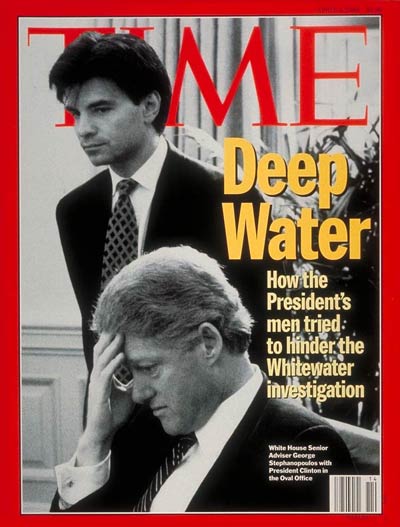
The text at the bottom of the April 4, 1994 Time Magazine cover says: “White House Senior Advisor George Stephanopolous with President Clinton in the Oval Office”.
Breitbart News has more news on the ABC News defense of the Clinton Foundation by former Clinton administration top aide George Stephanopolous.
Excerpt:
George Stephanopoulos’ connections to the Clinton Foundation may be more substantial than he has so far admitted.
An archived page of the Clinton Global Initiative website lists George Stephanopoulos as a “notable member” for the years 2010 and 2011. ABC News has confirmed Mr. Stephanopoulos was a member during both years.
Blogger Jeryl Bier first noticed Stephanopoulos’ name on a CGI list of “notable past members.” The site did not specify when each individual listed had been a member. However, the Internet archive shows that Stephanopoulos was listed as a notable member in 2010 and 2011 along with a list of other well-known media members like Matt Lauer and Anderson Cooper.
[…]Breitbart News contacted ABC News and was told that Mr. Stephanopoulos did not pay a membership fee in either 2010 or 2011. According to a spokesperson, he was listed as a member because he moderated a panel for CGI events both of those years.
The Internet archive does not have a cache of the notable CGI members prior to 2010, but according to publicly available sources, Stephanopoulos also participated in CGI events in 2005, in 2006, in 2007 and in 2009. Therefore, it’s possible he was considered a member for every year between 2005-2011, with the possible exception of 2008, when he does not appear to have taken part in any CGI event.
On Wednesday of this week, the Washington Free Beacon discovered that ABC’s Stephanopoulos was listed on the Clinton Foundation website as a donor. WFB reporter Andrew Stiles contacted ABC News to confirm those donations. Rather than respond to the WFB, the spokesperson for ABC News appears to have leaked the story on the donations to Politico.
Politico is a left-wing organization, and they would have spun the story to protect the Clintons and ABC News. It amazes me that anyone looks to the mainstream media for news. Why would you trust people to tell you the truth about Clinton when they donated to the Clinton Foundation, did events for the Clinton Global Initiative, helped to get Bill Clinton elected President as a top aide, then worked in Bill Clinton’s administration as White House Communications Director?
Remember what Stephanopoulos did to Romney during the last Republican primary debate?
The radically leftist New York Times summarizes the clip above:
In 2012 advisers in the Romney campaign actively lobbied to exclude Mr. Stephanopoulos from the primary debates to no avail. Conservatives say their fears were borne out during the ABC News debate in New Hampshire that year. Mr. Stephanopoulos repeatedly asked Mr. Romney if he believed that states could outlaw birth control — a question that the Romney campaign saw as off-point and far afield of the issues that concerned voters. Mr. Stephanopoulos pressed repeatedly, asking six follow-up questions.
That’s right. He asked 7 questions about a topic that as relevant to the campaign as Clinton’s affairs with Monica Lewinsky. He did it in order to smear Republicans.


 WINTERY KNIGHT