Are illegal immigrants less likely to commit crimes?

I have discussed this topic of whether illegal immigrants have a lower crime rate than natural born Americans and legal immigrants (the latter are deported if they commit a crime) many times. Even many Christians like to say that illegal immigrants commit fewer crimes than legal residents and citizens. I thought it might be a good idea to link to some evidence from RealClearInvestigations.

It says:

An analysis of the available statistics by RealClearInvestigations suggests that the crime rate of noncitizens is vastly understated. A separate RCI analysis based on estimates developed by the U.S. Department of Justice’s National Institute of Justice (NIJ) suggests that crime by illegal aliens who entered the U.S. by July 21, 2024 cost the country some $166.5 billion. These criminals disproportionately entered the U.S. during the Biden administration.

Even if you are not the victim of a crime by an illegal immigrant, we all have to pay for law enforcement and property damage. We all have to pay for higher insurance rates. We all have to pay for criminal courts and prisons.

Here are two more ways that the numbers of offenses are not counted accurately.

Numbers of past offenses not being counted:

The data on migrants who have been processed also understates the problem. Criminals rarely commit just one crime. For example, from 1990 to 2002, in the 75 most populous U.S. counties, 70% of those convicted of a violent felony had a prior arrest, and 56% had a prior criminal conviction. In 2023 in Washington, D.C., the average homicide suspect had been arrested 11 times before committing a homicide. Data for 30 states shows that 60.1% of criminals released from prison in 2005 had been arrested again within two years, and 73.5% had been arrested within four years. The ICE data set provides a single entry for each individual.

Numbers of people who are not arrested / convicted not being counted:

Most violent crimes don’t result in an arrest, so looking at arrests or convictions in these other countries will underestimate whether illegal aliens are criminals. Across all U.S. cities in 2022, only 35.2% of violent crimes resulted in an arrest. While 50.6% of murders resulted in an arrest, just 24.1% of rapes produced an arrest, 22.7% of robberies, and 39.9% of aggravated assaults.

On Tuesday night, I watched a video of a TikTok that had gone viral, in which a white leftist young woman was talking about the murder of Laken Riley. She was complaining about why the news had to report that the accused murderer was an illegal immigrant. And she went on to say that white males were the most dangerous people in America, because they committed the most crimes. I just thought it was interesting to think that many people are voting for lax border security, thinking that it will not make them less safe. This is even after we’ve seen young women like Laken Riley, Lizbeth Medina, Jocelyn Nungaray and Rachel Morin suffer violence and even death at the hands of illegal immigrants.

I can understand that saying things like what this young leftist woman was saying is a good way to virtue signal. But the real-world effect of open borders is that a lot of innocent people – people who pay taxes in order to fund law enforcement – will get hurt, raped and even killed. Young women who vote for leftist policies are actually causing harm to other young women, even as they drone on about the patriarchy and how much they fear toxic masculinity. You really have to wonder whether they learn anything at all about how the world really works in college.

What are undesigned coincidences, and how are they used in apologetics?

When you’re reading the Bible, you may find passages in one book that are mysterious on their own, but then they make sense if you add missing details from a parallel account from a different source inside or even outside the Bible. I think these “undesigned coincidences” are helpful for answering the question of that skeptics often ask: “is the Bible history or myth?” Let’s see some examples.

So, there are two kinds of undersigned coincidences. In the “internal” kind, the clearing up is done by another source in the same book. In the external kind, the clearing up is done by a source outside the same book.

Here’s an article from Apologetics UK with some internal examples:

In John 6:1-7, we are told:

Some time after this, Jesus crossed to the far shore of the Sea of Galilee (that is, the Sea of Tiberias), and a great crowd of people followed him because they saw the signs he had performed by healing the sick. Then Jesus went up on a mountainside and sat down with his disciples. The Jewish Passover Festival was near.When Jesus looked up and saw a great crowd coming toward him, he said to Philip, “Where shall we buy bread for these people to eat?” He asked this only to test him, for he already had in mind what he was going to do.Philip answered him, “It would take more than half a year’s wages to buy enough bread for each one to have a bite!”

Now, Philip is a fairly minor character in the New Testament. And one might, naturally, be inclined to wonder why Jesus hasn’t turned to someone a little higher in the pecking order (such as Peter or John). A partial clue is provided in John 1:44: “Philip, like Andrew and Peter, was from the town of Bethsaida.” Likewise, John 12:21 refers to “Philip, who was from Bethsaida in Galilee”

And what is so significant about Philip being from the town of Bethsaida? We don’t learn this until we read the parallel account in Luke’s gospel (9:10-17). At the opening of the account (verses 10-11) we are told, “When the apostles returned, they reported to Jesus what they had done. Then he took them with him and they withdrew by themselves to a town called Bethsaida, but the crowds learned about it and followed him. He welcomed them and spoke to them about the kingdom of God, and healed those who needed healing.”

And so, we are informed by Luke that the event was actually taking place in Bethsaida — the town from which Philip was from! Jesus thus turns to Philip, whom, he believed, would be familiar with the area. Notice too that Luke does not tell us that Jesus turned to Philip.

But it gets even more interesting still. In Matthew 11, Jesus denounces the unrepentant cities, saying, “Woe to you, Chorazin! Woe to you, Bethsaida! For if the miracles that were performed in you had been performed in Tyre and Sidon, they would have repented long ago in sackcloth and ashes.” The reader is left wondering what miracles were performed in these cities. We are not told in Matthew’s gospel. It is only in light of Luke’s account of the feeding of the five thousand (chapter 9), in which we are told of the event’s occurrence in Bethsaida, that this statement begins to make sense!

This one is pretty clever:

In Matthew 2 6:67-68, we read, “Then they spat in His face and beat Him; and others struck Him with the palms of their hands, saying, “Prophesy to us, Christ! Who is the one who struck You?”” This raises the natural question, why are they asking “Who hit you?” It is not until we read the parallel account in Luke’s gospel (22:64) that we learn that they had blindfolded him, thereby making sense of their taunts “Who hit you?”

Another one:

In Luke 23:1-4, w e read,
Then the whole assembly rose and led him off to Pilate. And they began to accuse him, saying, “We have found this man subverting our nation. He opposes payment of taxes to Caesar and claims to be Messiah, a king.”

So Pilate asked Jesus, “Are you the king of the Jews?”

“You have said so,” Jesus replied.

Then Pilate announced to the chief priests and the crowd, “I find no basis for a charge against this man.”
On the surface, this seems to be a rather strange declaration to make. Jesus has just declared Himself to be a King, and has been charged with subverting the nation and opposing paying taxes to Caesar. Why has Pilate found no basis for a charge against him?

The answer lies in the parallel account in John’s gospel (18:33-38):

Pilate then went back inside the palace, summoned Jesus and asked him, “Are you the king of the Jews?”

“Is that your own idea,” Jesus asked, “or did others talk to you about me?”
“Am I a Jew?” Pilate replied. “Your own people and chief priests handed you over to me. What is it you have done?”

Jesus said, “My kingdom is not of this world. If it were, my servants would fight to prevent my arrest by the Jewish leaders. But now my kingdom is from another place.”

“You are a king, then!” said Pilate.

Jesus answered, “You say that I am a king. In fact, the reason I was born and came into the world is to testify to the truth. Everyone on the side of truth listens to me.”

“What is truth?” retorted Pilate. With this he went out again to the Jews gathered there and said, “I find no basis for a charge against him.

It is only when you read John’s account that you learn that Jesus had told Pilate that “My kingdom is not of this world. If it were, my servants would fight to prevent my arrest by the Jewish leaders. But now my kingdom is from another place.”

And the same article has some external undesigned coincidences:

In Matthew 2:22, we are told:

But when [Joseph] heard that Archelaus was reigning in Judea in place of his father Herod, he was afraid to go there. Then after being waned by God in an dream, he left for the regions of Galilee…

Josephus’ Antiquities 17.3.1 tells us that the domain of Herod the Great was divided among his sons, with Archelaus having authority in Judea but not in Galilee, which was governed by his younger brother, Herod Antipas.

We also know that Archelaus had acquired quite a bloody reputation (e.g. Antiquities 17.13.1-2 and 17.9.3). The latter of these references describes how Archelaus slaughtered 3,000 Jews at Passover. Thus, Joseph decides not to return to Judea and, instead, goes further north to the regions of Galilee, governed by Herod Antipas.

And another one:

In Matthew 2:22, Archeleaus is reigning as king in Judea; in Matthew 27:2, Pilate is governor of Judea; in Acts 12:1, Herod is king of Judea; and in Acts 23:33, Felix is governor of Judea. This becomes extremely confusing.

But here’s the thing: Josephus attests to the accuracy of every one of these titles. Herod the Great was made King of Judea by Mark Anthony. Archelaus was deposed in the year 6 A.D., after only a ten-year reign, and a series of procurators ruled over Judea (of whom Pilate was fifth). The Herod of Acts 12 is Agrippa I. He was made king by Claudius Caesar. After his death, Judea was, once again, placed under the government of procurators (one of them being Felix).

And another one:

When Luke tells us of the riot in Ephesus, he reports that the city clerk tells the crowd that “There are proconsuls”. A proconsul is a Roman authority to whom a complaint may be taken. Normally, there was only one proconsul. Just at that particular time, however, there seems to have been two as a result of the assassination of Silanus (the previous proconsul) by poisoning in the Fall of AD 54, by the two imperial stewards at the urging of Nero’s mother. This event is independently documented by Tacitus in his Annals (13.1). Indeed, Luke’s accuracy has allowed historians to date the event which Luke narrates with incredible precision since we know when Silanus was poisoned.

If you think that these are clever, then share this post, and encourage your non-Christian friends and family to consider one of the many reasons why so many scholars have considered the New Testament books to be so reliable.

I wish that Christian parents and pastors were more thoughtful about how they present the Bible to young people. Instead of just saying “the Bible says” and praising blind faith acceptance of the Bible, why don’t we think a little harder, and look for some confirmation of the Bible from historical methods like undesigned coincidences, and from non-Biblical authors, and from archaeology, etc.? Surely adding more evidence for taking the Bible seriously is the right approach, if the goal is to be persuasive? It’s not like we’re see good results from the current “blind faith” approach to raising Christian children, right?

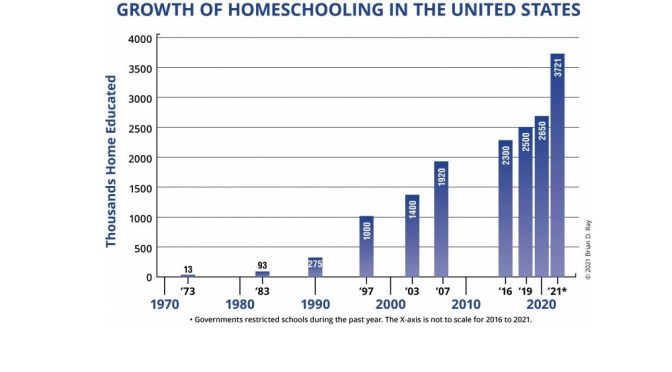
New study: homeschool produces healthier, happier and more virtuous kids

So, I’ve noticed that lately, many Christian, conservatives express Christian and conservative convictions when they are in a Christian, conservative audience. But when they are in the company of secularists, feminists and socialists, they keep quiet. In this post, I’ll explain why I think that using evidence from studies helps us to be bolder, then we’ll see a study about homeschooling.

Well, I can only explain why I am so inclined to fight. Just because I have an alias online, that doesn’t mean that I don’t fight for what I believe in under my real name in person. I take every opportunity to push for authentic Christian (not woke) truth claims and values in person. It’s especially important for Christians and conservatives of color to do this, in the current culture.

But how can you fight with people? I recently faced off against a bully in my company at a large company meeting. I had heard that this guy was a yeller, and had previously yelled at other employees. And that he was extremely progressive, and in a liberal echo chamber where he never heard any intellectual conservatives or Christians. I attacked him on two issues: socialized medicine and gun control. By using studies to explain how I changed my mind, I was able to escape his caricature of Christian conservatives as stupid fundamentalists who don’t think critically.

With that said, here is a report from the Wall Street Journal about a new study that you might be able to use to be bold with people who oppose homeschooling. (Full text of the article here)

It says:

Elizabeth Bartholet, a Harvard Law School professor, sparked debate in May 2020 by calling for a presumptive ban on home schooling. Home-schooled children, Ms. Bartholet asserted, are less likely than their school-attending peers to receive a “meaningful education” and more likely to be subject to physical abuse or indoctrination by “extreme religious ideologues.”

[…]Ms. Bartholet criticized home schooling for both diminishing children’s educational attainment and undermining their physical and mental health. One of us (Ms. Chen) recently examined how school type affected adolescents on a range of long-term outcomes into young adulthood, including educational attainment, mental health and social integration. Looking at data on more than 12,000 children of nurses (mostly white and mostly well-off) surveyed from 1999 to 2010, we estimated the effects of school type independently from other factors such as socioeconomic status, race and region.

To the extent that college graduation is a fair proxy for having received a “meaningful education,” Ms. Bartholet was right to point to a disadvantage for home schooling: The home-schoolers in our sample were 23% less likely to attend college than public-school students. This may reflect lower attainment in learning or less interest in attending college, but it may also be a result of admissions policies at some U.S. universities that disadvantage home-schooled students.

Parents want their kids to be well-educated and professionally successful, but they also want them to be healthy, happy and virtuous. By this broader measure of success, home schooling has advantages. Among the students we examined, home-schoolers were 33% more likely to volunteer, 31% more forgiving and 51% more likely to attend religious services in young adulthood than those who attended public school. (“Levels of forgiveness” were measured on a self-reported four-point scale, which other research has shown predicts some subsequent health and well-being outcomes.) The difference in religious participation has public-health implications, since those who attend services regularly have substantially lower risks of alcohol and drug abuse, depression and suicide. They also have a lower risk of premature death for any reason than those who never attend.

The picture of the home-schooled student that emerges from the data doesn’t resemble the socially awkward and ignorant stereotype to which Ms. Bartholet and others appeal. Rather, home-schooled children generally develop into well-adjusted, responsible and socially engaged young adults.

The libertarians at the Foundation for Economic Education (FEE) reached out to the researchers, and they got more information about that concern about lower rates of university attendance:

I reached out to Case and Chen for additional comments on their study’s findings, including how they think the homeschooling data and outcomes might have changed since 2010, when their data set ended.

“We are also glad to see that some colleges, including some top-tier colleges, have become more flexible in their admission policies for homeschoolers over the past years,” Chen responded.

Indeed, more colleges and universities have implemented clearer guidelines and policies for homeschooled students in recent years, and many are now eager to attract homeschooled applicants. In 2015, Business Insider noted that homeschooling is the “new path to Harvard,” and in 2018 the university profiled several of its homeschooled students.

The researchers also suspect that the well-being gap between homeschoolers and public school students has widened over the past decade, with homeschoolers faring even better.

“For instance, social media apps have come to smartphones over the past few years, leading to their widespread adoption by teenagers and even younger children,” Chen told me this week. “Some prior studies suggested that such increasing smartphone use may have contributed to the recent huge spikes in adolescent depression, anxiety, and school loneliness. Cyberbullying, sexting and ‘phubbing’ have also become more common in children’s daily lives, especially in school settings. We might expect that these issues may be less common among homeschoolers than their public school peers.”

I think if you are going to do homeschooling, it will have to be very practical. I think the world is too dangerous right now. We need to focus on learning practical skills that pay. So, don’t focus on things classics and Latin early on. I love the classics, but only the classics that teach something practical should be relied on. Instead, math and computer science should be the most important subjects, along with economics. Or choose the hard sciences like biology, chemistry, physics, etc. Get your STEM degrees, get your private sector work experience, then homeschool your kids with a focus on STEM.

I do think that after you get a job, then you should go back and work on the classics, literature and philosophy. But the financial situation we are in – with so much government debt, so many people in debt, and so many people on welfare – suggests that we should make sure that we are independent of the government and debt-free as quickly as possible.

(Image source: NHERI.org)