Category Archives: News

How same-sex marriage will be used as a weapon against religious conservatives

Gay activist vandalizes pro-marriage sign

This Public Discourse article talks about the new “Equality Act” proposed by Democrats who are anxious to destroy Judeo-Christian values by using the government as a weapon against faith-based organizations, and individuals.

Excerpt:

So, in concrete terms, what would the proposed law do? Here are just a few of the potential areas of impact, given how the Equality Act would amend various provisions of the Civil Rights Act:

– Employment: would amend Title VII to create new protected classes for “sexual orientation” and “gender identity,” with no countervailing exemptions for faith-based organizations that maintain internal standards of sexual conduct rooted in longstanding religious tenets.

– Federal Programs: would amend Title VI, historically limited to race, color, and national origin, to create new protected classes for “sex, sexual orientation, gender identity,” with no countervailing protections for faith-based providers who willingly serve every program-eligible person but maintain internal standards of sexual conduct rooted in longstanding religious tenets.

– Public Accommodation: would drastically expand the Title II definition of “public accommodation” to cover “gatherings” and facilities historically owned and operated by churches or religious organizations—“shelters,” “food banks,” and “care centers”—extending far beyond the categories at issue during the Civil Rights Movement: common carriers (bus, taxi, train, and air lines), public utilities, hotels, restaurants, and entertainment venues.

– Public Education: would amend Title IV definitions of “desegregation” to include new protected classes for “sexual orientation” and “gender identity,” placing in the litigation crosshairs all sex-restricted facilities like dormitories, restrooms, or locker rooms.

– Religious Freedom Restoration Act: would omit exemptions for religious organizations contained in prior drafts of the Employment Non-Discrimination Act (ENDA), and expressly state that the Religious Freedom Restoration Act (RFRA) may not be used as a defense or a basis for challenging the Equality Act.

– Sex: would enter a congressional finding that “federal agencies and courts have correctly interpreted [] prohibitions on sex discrimination to include discrimination based on sexual orientation, gender identity, and sex stereotypes,” thereby adopting the EEOC’s most aggressively extra-textual recent rulings.

– Bona Fide Occupational Qualifications: would amend Title VII exemptions for employers who have sex-based “bona fide occupational qualifications” (BFOQ) for specialized jobs—for example, male security guards in a maximum security prison or female undercover officers in a sex-trafficking sting operation—to require recognition of persons “in accordance with their gender identity.”

Unlike ENDA, the Equality Act does not even feign an equal balancing of sexual liberty and religious liberty. Like some voracious legal Pac-Man, the Obergefell-fueled Equality Act devours any preexisting constitutional rights that might impede absolute victory in the march for “marriage equality”: speech, association, assembly, and the free exercise of religion. The Equality Act boldly declares that some constitutional rights are “more equal than others.”

It seems like every day I am getting a messages from some Christian friend about how his or her co-workers, family or friends are attacking the traditional definition of marriage. And I tell them not to respond directly, but to instead write about it under an alias. It seems like we can no longer even speak in defense of traditional marriage without running into all kinds of legal problems from people who are “offended”. Somehow, their offending us with their view doesn’t draw any ire from the law. But the reverse is not true – it’s open season on pre-sexual-revolution views of dating, sex and marriage.

Marriage is something I really believe in, and have always believed in. And I don’t mean the new post-sexual-revolution definition of marriage. I mean the traditional view of marriage: chastity, courting, commitment, fidelity, parenting. It seems really obvious to me that marriage is something beautiful, something that is above our selfish desires, something that helps us to grow and love someone of a complementary nature self-sacrificially. There is a mystery in the way that a man and woman come together to make children and then raise them, balancing out their different male and female natures for a common purpose. But if I say anything like that in public under my real name in so many places where the topic comes up, then suddenly I would get into so much trouble.

We really need to be focused about restoring our freedom to express our support for traditional marriage, and the natural family in public.
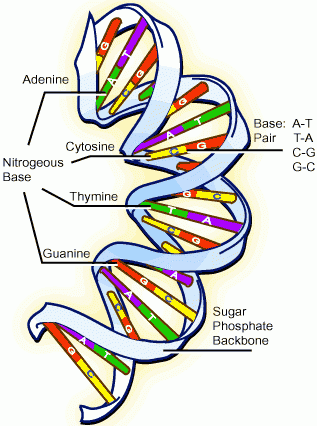
How similar are human DNA and chimpanzee DNA?

How did life begin?
How did life begin?

Now, I’m not an expert in DNA sequencing similarities, here is paper from Nature which argued for more distance between human and chimp genomes than the 98% similarity commonly asserted by Darwinists.

Evolution News covered that one:

A Nature paper from January, 2010 titled, “Chimpanzee and human Y chromosomes are remarkably divergent in structure and gene content,” found that Y chromosomes in humans and chimps “differ radically in sequence structure and gene content,” showing “extraordinary divergence” where “wholesale renovation is the paramount theme.” Of course, the paper attributes these dramatic genetic changes to “rapid evolution during the past 6 million years.”

One of the scientists behind the study was quoted in a Nature news article stating, “It looks like there’s been a dramatic renovation or reinvention of the Y chromosome in the chimpanzee and human lineages.” The news article states that “many of the stark changes between the chimp and human Y chromosomes are due to gene loss in the chimp and gene gain in the human” since “the chimp Y chromosome has only two-thirds as many distinct genes or gene families as the human Y chromosome and only 47% as many protein-coding elements as humans.” According to the news piece, “Even more striking than the gene loss is the rearrangement of large portions of the chromosome. More than 30% of the chimp Y chromosome lacks an alignable counterpart on the human Y chromosome, and vice versa, whereas this is true for less than 2% of the remainder of the genome.”

But not wishing to offend the “myth of 1%”, the Nature news article carefully adds, “The remainder of the chimp and human genomes are thought to differ in gene number by less than 1%.”

A more recent paper (PDF) from PNAS (edited by arch-evolutionist Francisco Ayala, no less) has more.

Here’s the abstract:

The rise of comparative genomics and related technologies has added important new dimensions to the study of human evolution. Our knowledge of the genes that underwent expression changes or were targets of positive selection in human evolution is rapidly increasing, as is our knowledge of gene duplications, translocations, and deletions. It is now clear that the genetic differences between humans and chimpanzees are far more extensive than previously thought; their genomes are not 98% or 99% identical. Despite the rapid growth in our understanding of the evolution of the human genome, our understanding of the relationship be-tween genetic changes and phenotypic changes is tenuous. This is true even for the most intensively studied gene, FOXP2, which underwent positive selection in the human terminal lineage and is thought to have played an important role in the evolution of human speech and language. In part, the difficulty of connecting genes to phenotypes reflects our generally poor knowledge of human phenotypic specializations, as well as the difficulty of interpreting the consequences of genetic changes in species that are not amenable to invasive research. On the positive side, investigations of FOXP2, along with genomewide surveys of gene-expression changes and selection-driven sequence changes, offer the opportunity for “phenotype discovery,” providing clues to human phenotypic specializations that were previously unsuspected. What is more, at least some of the specializations that have been proposed are amenable to testing with noninvasive experimental techniques appropriate for the study of humans and apes.

Again, I’m not sure what the exact numbers are, this is not my area, but I think it’s interesting. I know that ICR is doing some work on computing the average level of difference across both genomes.

New study: parents of four or more kids are happiest

Marriage and family
Marriage and family

When I was planning out my life, I did some research on how many kids I wanted to have. I love to plan and budget things out way in advance, because even if things don’t go as planned, the planning phase helps you to improvise. According to my research, four was the right number. Of course, you can never be sure how many you’ll get, but it doesn’t hurt to make a budget for the number of kids you want and a plan to make them.

Anyway, here’s a new study that says that four or more makes parents the most happy. Now, happiness may not be the goal of a relationship, but it definitely helps the spouses to apply themselves to the real goal of serving God. You can’t get miserable people to achieve anything for God, and you have to be serious about what people need to engage.

Anyway, The Daily Signal reports:

The happiest parents are—drumroll, please—parents with four or more kids.

Parents of large families were found to have the most life satisfaction, according to a study by Australia’s Edith Cowan University. Dr. Bronwyn Harman, of the psychology and social science school at the university, spent five years studying what types of families are most content.

“[The parents] usually say they always wanted a large family, it was planned that way, and it was a lifestyle they’d chosen,” Harman told The Sydney Morning Herald.

During her five-year study, Harman interviewed hundreds of parents from different family makeups. Her findings are based on resilience, social support, self-esteem, and life satisfaction.

Her research points out that parental happiness relates to how much effort has been put into growing the family.

“What is important for kids are things like consistency, boundaries and [to] know that they are loved, no matter what,” Harman tells ABC Australia.

Prior to the study, Harman thought parents with more children would be less happy.

Though larger families may have more chaos and expenses than a smaller family, Harman’s research shows that these issues are balanced by the amount of joy received from having more children.

Her findings show that children who grow up in large families learn independence at a young age and always have someone to play with.

I often get a lot of flak from single women who want to delay marriage, and/or not have so many children. Although many of the “rules” I have about where relationships should be headed seem arbitrary, there is actually data to back it up. I’m not trying to rush into marriage and four children for no reason, but because this is what makes people happiest in the long run. It makes for a better environment for achieving other things for God. I never do anything or ask others for anything without some evidence to back it up.

I think people tend to worry a lot about having kids, and that’s because having kids is expensive. But that can easily be planned out if you earn and save to prepare. My plan was to raise the kids in the country and have a capable homeschooling mom teach them and build their resumes up. Having lots of kids is not a problem if you take care of the money requirement, and don’t let them be spoiled all the time. Sometimes, they will just have to be patient and do things on their own and not be the center of attention. That’s probably good for them in any case.