
All posts by Wintery Knight

https://winteryknight.com/

Does archaeological evidence confirm names, dates and places in the Bible?

I spotted this post on Be Thinking by UK apologist Peter S. Williams. (H/T Eric Chabot at Think Apologetics)

So let me pick the ones I liked most for this post.

Here’s a good one:

Jerusalem and The Pool of Bethesda

John 5:1-15 describes a pool in Jerusalem, near the Sheep Gate, called Bethesda, surrounded by five covered colonnades. Until the 19th century, there was no evidence outside of John for the existence of this pool and John’s unusual description “caused bible scholars to doubt the reliability of John’s account, but the pool was duly uncovered in the 1930s – with four colonnades around its edges and one across its middle.”[38] Ian Wilson reports: “Exhaustive excavations by Israeli archaeologist Professor Joachim Jeremias have brought to light precisely such a building, still including two huge, deep-cut cisterns, in the environs of Jerusalem’s Crusader Church of St Anne.”[39]

And this one:

Jerusalem and The Pool of Siloam

In the 400s AD, a church was built above a pool attached to Hezekiah’s water tunnel to commemorate the healing of a blind man reported in John 9:1-7. Until recently, this was considered to be the Pool of Siloam from the time of Christ. However, during sewerage works in June 2004 engineers stumbled upon a 1stcentury ritual pool when they uncovered some ancient steps during pipe maintenance near the mouth of Hezekiah’s tunnel. By the summer of 2005, archaeologists had revealed what was “without doubt the missing pool of Siloam.”[40] Mark D. Roberts reports that: “In the plaster of this pool were found coins that establish the date of the pool to the years before and after Jesus. There is little question that this is in fact the pool of Siloam, to which Jesus sent the blind man in John 9.”[41]

I just read this one because I am working my way through John. In case you haven’t read John, you really should it’s my favorite gospel.

Here’s another one:

Herod the Great

We have a bronze coin minted by Herod the Great. On the obverse side (i.e. the bottom) is a tripod and ceremonial bowl with the inscription ‘Herod king’ and the year the coin was struck, ‘year 3’ (of Herod’s reign), or 37 BC.

In 1996 Israeli Professor of Archaeology Ehud Netzer discovered in Masada a piece of broken pottery with an inscription, called an ostracon. This piece had Herod’s name on it and was part of an amphora used for transportation (probably wine), dated to c. 19 BC. The inscription is in Latin and reads, “Herod the Great King of the Jews (or Judea)”, the first such that mentions the full title of King Herod.

Herodium is a man-made mountain in the Judean wilderness rising over 2,475 feet above sea level. In 23 BC Herod the Great built a palace fortress here on top of a natural hill. Seven stories of living rooms, storage areas, cisterns, a bathhouse, and a courtyard filled with bushes and flowering plants were constructed. The whole complex was surrounded and partly buried by a sloping fill of earth and gravel. Herod’s tomb and sarcophagus were discovered at the base of Herodium by archaeologist Ehud Netzer in 2007.

And one more:

The ‘James, son of Joseph, brother of Jesus’ Ossuary

James, the brother of Jesus, was martyred in AD 62. A mid-1st century AD chalk ossuary discovered in 2002 bears the inscription “James, son of Joseph, brother of Jesus” ( ‘Ya’akov bar Yosef akhui di Yeshua’). Historian Paul L. Maier states that“there is strong (though not absolutely conclusive) evidence that, yes, the ossuary and its inscription are not only authentic, but that the inscribed names are the New Testament personalities.“[68] New Testament scholar Ben Witherington states that:“If, as seems probable, the ossuary found in the vicinity of Jerusalem and dated to about AD 63 is indeed the burial box of James, the brother of Jesus, this inscription is the most important extra-biblical evidence of its kind.”[69] According to Hershel Shanks, editor in chief of the Biblical Archaeological Review: “this box is [more] likely the ossuary of James, the brother of Jesus of Nazareth, than not. In my opinion … it is likely that this inscription does mention the James and Joseph and Jesus of the New Testament.”

And finally one short one:

Tiberius Caesar

The Denarius coin, 14-37 AD, is commonly referred to as the ‘Tribute Penny’ from the Bible. The coin shows a portrait of Tiberius Caesar. Craig L. Blomberg comments: “Jesus’ famous saying about giving to Caesar what was his and to God what his (Mark 12:17 and parallels) makes even more sense when one discovers that most of the Roman coins in use at the time had images of Caesar on them.”[48]

This is a good article to bookmark in case you are ever looking for a quick, searchable reference on archaeology and the Bible. There are many more examples in that post.

Now some people might be wondering why archaeology doesn’t confirm every detail in the New Testament. And here’s what J. Warner Wallace has to say about that:

But what are we to say to those who argue the Biblical archeological record is incomplete? The answer is best delivered by another expert witness in the field, Dr. Edwin Yamauchi, historian and Professor Emeritus at Miami University. Yamauchi wrote a book entitled, The Stones and the Scripture, where he rightly noted that archaeological evidence is a matter of “fractions”:

Only a fraction of the world’s archaeological evidence still survives in the ground.

Only a fraction of the possible archaeological sites have been discovered.

Only a fraction have been excavated, and those only partially.

Only a fraction of those partial excavations have been thoroughly examined and published.

Only a fraction of what has been examined and published has anything to do with the claims of the Bible!

See the problem? In spite of these limits, we still have a robust collection of archaeological evidences confirming the narratives of the New Testament (both in the gospel accounts and in the Book of Acts). We shouldn’t hesitate to use what we do know archaeologically in combination with other lines of evidence. Archaeology may not be able to tell us everything, but it can help us fill in the circumstantial case as we corroborate the gospel record.

I think you can form an opinion about the whole New Testament based on the record of confirmations. The verdict is in: the New Testament should be presumed trustworthy.
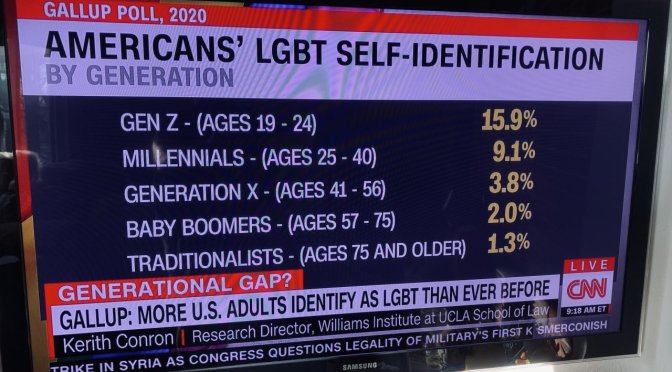
What are the consequences of voting for “compassion” and “non-judgment”?

Many people who vote for big-government Democrat policies do so because they feel that not judging others is a worth goal. Although the practice of not making moral judgements (“tolerance”) has become “morally good” in our culture, it does cause trouble for some people. In this case, the people who vote against moral standards (“judging”) actually do more harm than good.

So, one group that votes for the Democrat party because of “tolerance” and “compassion” is young, unmarried women. In my experience, most young, unmarried women form their beliefs by adapting to the people around them. They enter a social situation, they find out what the “smart” people believe, then they believe that too. They aren’t trying to bound their beliefs by truth. They feel that the social environment determines “truth”. If you’ve ever known a perfect Christian girl who prayed, sang and read her Bible at home, but then turned into a secular left radical in college, you’ll know what I am talking about.

Transgenderism opponent Abigail Shrier writes:

Today, before any of us decides what it is we want, we open our phones and participate in our own manipulation at the hands of those who actively want us to think, and see, and vote differently than our own wills would have us do.

[…]Spotify presses us to like the same music; Amazon pushes us to purchase specific books and away from others. If you’re under the impression that the books Amazon recommends to you are based solely on a content-neutral algorithm, I can disabuse you of that fiction right now. I once asked one of my sources at Amazon, who was concerned about the ways the search results were being manipulated, whether he’d ever seen a book deliberately boosted. Yes, he said. Becoming by Michelle Obama. When that book came out – he told me – virtually every search you did led to the recommendation to buy the former First Lady’s book. And the opposite is also true. There are books that are never recommended by the Amazon algorithm, irrespective of how well they’ve sold or how likely a specific shopper is to buy them.

[…]None of you will be shocked to hear that Google promotes certain search results in order to lead us to a certain perspective. But did you know that, for contested entries, Wikipedia assigns editors, some of whom are ideologically committed activists, many of whom have very particular views they want you to walk away with.

This is a much bigger problem for young, unmarried women – especially the ones who do non-STEM degrees in college. When you’re in the computer lab, you’re not being graded on your political views. You learn to write code that compiles and runs and produces value for a customer. But in the English classroom, you are taught “correct beliefs”, like “compassion” and “tolerance”. Women tend to gravitate into non-STEM fields. Men – being more combative – tend to look for ideas that win arguments. In my experience, men are more likely to catch on to ideas from William Lane Craig, Thomas Sowell, Stephen Meyer, etc. Men just don’t care what people think of them. We do our own thing. We form our own views. We make our own plans. We believe what works and what wins. We make sure that our actions are taking us down the path to our goals. We don’t like to read fiction, romance and self-help books. We want to solve problems. We don’t want people to think of us a certain way.

Normally, the votes of these young, unmarried women don’t harm them. But now those votes ARE coming back to haunt them. Their feminist views (“all sex differences are social customs”) have led directly to the explosion of transgenderism. And all the benefits that feminists fought for – athletic scholarships, preferential treatment, affirmative action, lenience in the courts, etc. – are now available to biological men who identify as women.

Here’s a story from the Washington Times:

“Jeopardy!” contestant Amy Schneider was born a man, but she’s being toasted as the highest-earning woman in the show’s history, much to the chagrin of those decrying the accolade as an example of stolen female glory.

The transgender trivia whiz hit $706,800 in total earnings with her Friday win, prompting NBC News and NBC OUT to declare her the show’s “top female earner,” surpassing Larissa Kelly, who won $655,930 during her run in 2008-09.

For all we know, Larissa Kelly is a Democrat voter, and voted for the policies and culture that achieved this result. Her voting was out of line with her goals.

Here’s another story from The Federalist:

President Joe Biden is preparing to give every rapist and molester in federal prison a get-out-of-jail-free card. Specifically, Biden is offering to transfer any and all male criminals to women’s prisons. All the men will have to do is say that they feel like a woman, and the Biden administration will take them at their word.

[…][U]nder this executive order, the federal government will house criminals based on subjective, self-declared “gender identity” rather than biological sex. Male rapists, child molesters, and other sexual criminals will be allowed to live in women’s prisons, and because the transgender ideology embraced by the Biden administration claims gender identity is purely internal, they will be allowed in regardless of whether they still possess fully functional male genitalia.

This move toward co-ed prisons will result in male sexual predators exploiting the system in order to abuse and rape female prisoners. We know this because it has already happened in places these proposals have been enacted.

I can guarantee you that 100% of the women who are now in prison voted for the Democrat party when they still could vote. They voted for policies that went against their long-term goals.

Here’s another recent case, reported by Fox News:

A transgender swimmer’s record-breaking wins at the University of Pennsylvania have renewed concern over the future of women’s sports.

Lia Thomas, a transgender student at the Ivy League university, dominated the 500-yard freestyle preliminaries and finals at the Zippy Invitational at the University of Akron this month. Thomas earned a winning time of 4:34.06 in the finals, breaking the Ivy League record, and set new school records in the 1,650-yard freestyle and 200-yard freestyle competitions.

Thomas previously competed as a man for three years on the school’s men’s team. Thomas’ success on the women’s team has renewed criticism over allowing transgender women to compete against biological females.

Some of Lia’s teammates are very angry about this, because they worked their whole lives to compete in women’s sports, but in all likelihood, they voted to cause the effect that is now happening to them. They attend a prestigious university, they’ve probably absorbed the values of their secular left professors. Most women who go to college do. It’s just easier to adapt and fit in.

One more example – the declining marriage rate.

The Democrat party has enacted higher taxes, more control of taxpayer freedom by secular left elites, no-fault divorce laws, and biased divorce courts that award custody to women, along with alimony and child support. This all causes men to lose the desire and the ability to get married. The marriage rate is in a death spiral, and the only “solutions” proposed by pro-marriage people on the left and the right is to blame and shame men, and favor women even more. But this just means that fewer and fewer women will find husbands.

I would like to see parents and pastors teach women to think carefully about their goals, and vote for policies that help them to achieve those goals. If women insist on adopting an ideology like feminism, then they’ll have to live with the consequences. And there won’t be any husband around to blame for the results they caused.

Does the Bible teach that all judging of other people is wrong?

Today, most people seem to think that the most wonderful thing is to not judge anyone else. We’re told that morality is like personal preference… you just choose what you like. There is no standard of morality that exists objectively, in the same way as mathematics or logic exists. And besides, even if there were, the only reason to judge someone else would be to hurt them. Right?

I found an interesting article about judging from Christian apologist Timothy Fox, on the Freethinking Ministries web site. He starts out right away with one very good reason for judging – judging allows people who have experience and demonstrated ability to help those who are making mistakes to get better.

Timothy writes:

When you study to be an educator, you have to spend a certain number of hours as a student teacher, under the guidance of a veteran teacher. I remember my cooperating teacher telling me one of my strengths was that I took criticism well and was very open to it. I was shocked to hear this! I wanted to tell him he was crazy and that I hate criticism! But I was also well aware that he was the master and I was the apprentice and that it was his responsibility to help me to be the best teacher I could be. So I needed his criticism. (And I received a lot of it!) Whenever he gave me feedback, positive or negative, it wasn’t intended to stroke my ego or hurt my feelings. It was so I can learn and improve, to keep doing the good and to change the bad.

The same goes for many other things, such as sports. Athletes have coaches that train and guide. But what about normal, everyday life? That’s when we want people to leave us alone. Don’t tell me how to live. Don’t judge me.

In my life, I’ve been able to have success at a few things. Education for sure – I have a BS and MS in computer science which has allowed me to earn a good living. Finances… well, I’ve made a lot of mistakes with investing, but I was able to succeed (eventually!) just by maxing out my 401K and Roth IRA contributions every year. And I’m just starting on my 23rd year of full time work. So when I give people advice, it’s usually in those areas, or maybe in apologetics.

But that advice is not always well-received. Usually, the people I’m advising just find themselves some nice yes-men and yes-women who will agree with them that having fun “in the moment” won’t close any doors down the road. It doesn’t work, but that’s how judging is received. Cut off the judge, and find yourself some yes-men and yes-women. And when your plan doesn’t work, just say that it wasn’t your fault. Blame other people for the predictable consequences of your own actions.

People often cite a passage in the Bible about not making judgments, Matthew 7:1-6. But does it really say that?

1“Do not judge so that you will not be judged.

2 For in the way you judge, you will be judged; and by your standard of measure, it will be measured to you.

3 Why do you look at the speck that is in your brother’s eye, but do not notice the log that is in your own eye?

4 Or how can you say to your brother, ‘Let me take the speck out of your eye,’ and behold, the log is in your own eye?

5 You hypocrite, first take the log out of your own eye, and then you will see clearly to take the speck out of your brother’s eye.

6 “Do not give what is holy to dogs, and do not throw your pearls before swine, or they will trample them under their feet, and turn and tear you to pieces.

Here’s what Timothy Fox had to say about those verses:

Jesus’ point is not not to judge (note the double negative). It’s “Don’t be a hypocrite!” Verse 5 commands us to clean up our own junk, then to help clean up your friends’. He’s stating the obvious, that when you criticize people, they will turn around and criticize you back. So make sure your closet is clean first! And how do you know who the “dogs” and “pigs” are (v. 6)? Wouldn’t you have to judge them?

And then there is John 7:24: “Do not judge by appearances, but judge with right judgment.” Here Jesus is differentiating between proper and improper judgement. But he still commands to judge!

The reason for many of Paul’s letters is to correct some kind of nonsense going on in a church. In 1 Corinthians 5, he writes angrily that the church is not judging sin in their midst (and it’s quite the sin – go read it!). In verse 12, he rhetorically asks “Are you not to judge those inside [the church]?” And in the following verse, he plainly states to remove the “wicked person” from their midst. Here Paul is criticizing the church for not judging when they should have, even to the extent of excommunicating an unrepentant church member.

He concludes:

More often than not, the ones who cry “Don’t judge me!” the loudest are the ones who need it the most, whether it’s due to insecurity, pride, or flat-out rebellion. But let us not forget that Jesus was full of truth and grace. We desperately need both in our dealings with our brothers and sisters in Christ, when we give correction as well as when we receive it. It’s never pleasant to hear some hard (but loving) truth, but remember the first half of Proverbs 27:6: “Faithful are the wounds of a friend.” Do we like it? Of course not. But we need it. And more than that, the Bible commands it.

Obviously, it doesn’t feel good to admit you’re wrong, but if you want to achieve results, then the quickest way to do that is to listen to people who have already achieved results. The world isn’t as “random” as many people want to believe. You get to make choices, and there are best practices. When you see someone failing to achieve their goals, it doesn’t do them any good to tell them to follow their hearts and it’s not their fault when they fail. The best thing to do is to show them what to do differently, and help them to do it.