
All posts by Wintery Knight

https://winteryknight.com/

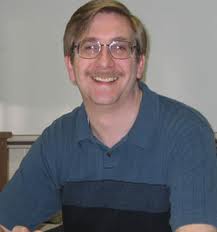
Tim McGrew explains how undesigned coincidences affect textual reliability

Tim McGrew
Tim McGrew

UPDATE: This post has been linked by Denyse O’Leary at the famous ID blog Uncommon Descent! Denyse’s blog is the Post-Darwinist.

I found this lecture from philosopher Tim McGrew at MandM. Tim teaches at Western Michigan University.

The MP3 file is here.

Tim’s wife Lydia explains the concept of undesigned coincidences on her blog:

Undesigned coincidences in the Gospels … is an argument that was well-known in the nineteenth century but has, for no really clear reason, simply been forgotten as time has gone on. It is a cumulative case argument that the Gospels reflect, to an important extent, independent knowledge of actual events. Please note that this argument is quite independent of one’s preferred answer to the synoptic question. That is to say, even if, e.g., Mark was the first Gospel and others had access to Mark and show signs of literary dependence on Mark, the argument from undesigned coincidences provides evidence for independent knowledge of real events among the Gospel writers. There are many more of such coincidences beyond those given in the talk.

Basically, this argument finds cases where the same story is in two sources, but where some important detail is left out of one account so that something about the story seems out of place. But the other source has the missing detail that unlocks the mystery. This makes the sources appear to be independent, especially as more of these coincidences pile up. If this happens a lot, it argues for independent sources, which means that the story is multiply attested, which it is it less likely to have been made up.

My favorite example was the Philip example from John 6.

Lydia explains that example here:

As I was listening to Tim’s examples, I was struck by all the reasons there might be for a real eyewitness not to fill out the explanation for a detail. Think for example how tedious it is to listen to someone who goes back to explain every little detail he mentions in a story.

[…]Similarly, as John is telling the story about the feeding of the five thousand, it would be quite natural for him to say that Jesus asked Philip where they could buy bread if he were really an eyewitness–that is, because he remembered that Jesus did ask Philip. (Tim talks about why it was Philip in the interview.) But John himself might have had to stop and think for a moment if someone had asked him, “Why did Jesus ask Philip rather than any of the other disciples?” Presumably when John told the story, he wasn’t particularly thinking about some special reason for Jesus to select Philip for the question. But if someone were forging the story as fiction, he would have a reason for choosing to use a given disciple as a character at that point in his fictional narrative, and therefore he would be unlikely to choose that character without making the reason clearer to his readers.

All sorts of such things can happen when one is telling a true story, especially a story one has witnessed. One gets caught up in what one actually remembers and drops in incidental references to small facts, which facts are to some extent selected randomly by the memory as one brings the scene back to memory. This is typical of real memoirs but not of elaborate forgeries.

Lydia is also a philosopher, and her Ph.D is from Vanderbilt University. She’s put together a nice list of resources on historical apologetics. She is a homeschooling mom – I LOVE THAT!!!

Indiana Governor Mitch Daniels signs bill to defund Planned Parenthood

From Fox News. (H/T Dad)

Excerpt:

Republican Gov. Mitch Daniels said Friday he will sign restrictive abortion legislation, making Indiana the first state to cut off all government funding for Planned Parenthood and boosting Daniels’ credentials among social conservatives as he considers whether to run for president.

Daniels said he supported the abortion restrictions from the outset and that the provision added to defund abortion providers did not change his mind. He said women’s health, family planning and other services will remain available.

“The principle involved commands the support of an overwhelming majority of Hoosiers,” Daniels said in a statement announcing his intention to sign the bill when it arrives on his desk in about a week.

[…]State Rep. Linda Lawson, a Democrat from Hammond who opposes the bill, said the legislation wouldn’t win Daniels any friends among independents and women.

I thought he was only a fiscal conservative. Oh well, I guess this is fiscally conservative.

Related posts

What is the best explanation for the Cambrian fossil record?

i found an interesting video that explores a mystery in the Cambrian fossil record.

Richard Dawkins explains the mystery in his famous book “The Blind Watchmaker”.

Excerpt:

“Eldredge and Gould certainly would agree that some very important gaps really are due to imperfections in the fossil record. Very big gaps, too. For example the Cambrian strata of rocks, vintage about 600 million years, are the oldest ones in which we find most of the major invertebrate groups. And we find many of them already in an advanced state of evolution, the very first time they appear. It is as though they were just planted there, without any evolutionary history.” (Dawkins, Richard [zoologist and Professor for the Public Understanding of Science, Oxford University], “The Blind Watchmaker,” [1986], Penguin: London, 1991, reprint, p.229)

He’s referring to prominent paleontologists Niles Eldredge and Stephen Jay Gould.

Now let’s watch the video.

Part 1 of 2: (41 minutes)

Part 2 of 2: (33 minutes)

This documentary has a mix of scholars who accept the standard naturalistic explanation for the Cambrian explosion, and some who are skeptical of the standard explanation. The first three scholars in the list below are considered to be world-renown experts in the Cambrian era fossils.

List of scholars:

Simon Conway Morris is Professor of Palaeobiology at the University of Cambridge and one of the world’s leading evolutionary paleontologists. He is noted in particular for his contributions to the understanding of the Cambrian Explosion and the fossils found in the Burgess Shale. Elected as a Fellow of the Royal Society (United Kingdom) in 1990, he also has been awarded the Walcott Medal of the National Academy of Sciences (United States). Dr. Conway Morris is author of the noted books The Crucible of Creation: The Burgess Shale and the Rise of Animals (1998) and Life’s Solution: Inevitable Humans in a Lonely Universe (2003). His views about the extent as well as the limits of Neo-Darwinism can be found in his article “Darwin was right. Up to a point.”

James Valentine is Emeritus Professor in the Department of Integrative Biology at the University of California, Berkeley, where he is also affiliated with the Museum of Paleontology and the Center for Integrative Genomics. He is one of the world’s leading experts on the Cambrian Explosion, and is the author of numerous technical articles on the subject, as well as author of the books On the Origin of Phyla and Evolutionary Paleoecology of the Marine Biosphere, co-author of Evolution and Evolving, and editor of Phanerozoic Diversity Patterns: Profiles in Macroevolution.

Paul Chien is a Professor in the Department of Biology at the University of San Francisco. A marine biologist, Dr. Chien received his Ph.D. in Biology from the University of California at Irvine, and he was a postdoctoral fellow at the California Institute of Technology (Caltech). Dr. Chien’s work has been published in over fifty technical journals, and he has spoken internationally, and on numerous occasions, from Brazil to mainland China—where he has also been involved in cooperative research programs. Dr. Chien has done research in the renowned fossil beds of Chengjiang, China.

Jonathan Wells is currently a Senior Research Biologist at the Discovery Institute. He holds two Ph.D.s, one in Molecular and Cell Biology from the University of California at Berkeley, and one in Religious Studies from Yale University. He has worked as a postdoctoral research biologist at the University of California at Berkeley and the supervisor of a medical laboratory in Fairfield, California, and he has taught biology at California State University in Hayward. Dr. Wells has published articles in numerous journals, and he is author of Icons of Evolution: Why much of what we teach about evolution is wrong and The Politically-Incorrect Guide to Darwinism and Intelligent Design, and co-author of The Design of Life.

Richard Sternberg is a Research Scientist at the Biologic Institute and a Research Collaborator at the Smithsonian’s National Museum of Natural History. He is an evolutionary biologist with interests in the relation between genes and morphological homologies, and the nature of genomic “information.” He holds a Ph.D. in Biology (Molecular Evolution) from Florida International University and a Ph.D. in Systems Science (Theoretical Biology) from Binghamton University. From 2001-2007, he served as a staff scientist at the National Center for Biotechnology Information, and from 2001-2007 he was a Research Associate at the Smithsonian’s National Museum of Natural History. Dr. Sternberg’s website can be visited here.

Douglas Axe is Director of Biologic Institute. His research uses both experiments and computer simulations to examine the functional and structural constraints on the evolution of proteins and protein systems. After earning his Ph.D. at the California Institute of Technology, Dr. Axe held postdoctoral and research scientist positions at the University of Cambridge, the Cambridge Medical Research Council Centre, and the Babraham Institute in Cambridge. His work has been reviewed in Nature and featured in a number of books, magazines and newspaper articles, including Life’s Solution by Simon Conway Morris, The Edge of Evolution by Michael Behe, and Signature in the Cell by Stephen Meyer.

Paul Nelson is a philosopher of biology, specializing in evolutionary developmental biology (evo-devo). He earned his Ph.D. from the University of Chicago in 1998, and he is presently an Adjunct Professor in the M.A. Program in Science & Religion at Biola University. He has published articles in such journals as Biology & Philosophy and Zygon and has contributed essays to numerous anthologies.

Stephen Meyer is Director of the Center for Science and Culture at Discovery Institute. Formerly a geophysicist with Atlantic Richfield Company (ARCO), Dr. Meyer earned his Ph.D. in the history and philosophy of science at Cambridge University as a Rotary International Scholar. From 1990-2002, he was on the faculty of Whitworth College. Dr. Meyer is author of peer-reviewed publications in technical, scientific, philosophical and other books and journals. His latest book is Signature in the Cell: DNA and the Evidence for Intelligent Design. His other books include Darwinism, Design and Public Education and Explore Evolution. Dr. Meyer’s website can be visited here.

If you like the video, you can buy the DVD here.

Related videos