Is Barack Obama focused on protecting the American people?
Consider this article from the Wall Street Journal, which discusses the latest CBO (Congressional Budget Office) report.
Massive budget deficits:
One lesson is that the days of easy deficit reduction are over. The annual deficit in 2016 rose for the first time in three years—by $148 billion to $587 billion. That’s 3.2% of GDP, up sharply from 2.5% last year. Mr. Obama has been able to ride falling defense spending from reduced military deployments overseas, but Pentagon outlays were flat in 2016. Military spending will probably have to increase in future years, no matter who wins Tuesday, to meet the growing challenges from Russia, China and Iran.
Looming entitlement crisis:
Mr. Obama will also leave town having failed over eight years to do anything to slow the booming burden of Social Security, Medicare and Medicaid. Outlays for those three programs grew by $75 billion last year, or about 4.2%. They now account for 10% of the entire U.S. economy, the highest level ever, and rising.
More spending on welfare programs:
The President’s main contribution has been to put Medicaid on hyperspeed by expanding its coverage through ObamaCare. CBO’s budget gnomes report that Medicaid spending has climbed by nearly 40% in a mere three years—to $368 billion in 2016. That doesn’t include what the states are obliged to chip in.
Higher taxes and more regulations (e.g. – Dodd-Frank) killed economic growth:
Another lesson is that faster economic growth is essential to a healthier fisc. One reason for the deficit rebound in 2016 is that federal revenues increased by a mere $18 billion or less than 1%. Individual income-tax receipts were flat, while corporate income taxes fell by $44 billion or 13% as business profits sagged. This is what happens when the economy sputters at about a 1% growth rate for most of a year.
Massive spending:
Growth that slow couldn’t keep up with spending that increased 4.5% or $166 billion in 2016. Federal outlays were 20.9% of the economy for the year, up from 20.4% in 2014. A Republican Congress has kept that figure down from the heights of the Obama-Nancy Pelosi stimulus, but it is now set to take off again as more Baby Boomers start collecting Social Security and Medicare. (Millennials, get ready to pay even higher taxes throughout your working life.)
Looming crisis caused by rising interest rates:
This era may be ending as a new President takes office. The Fed may raise rates in December, and bond yields have been rising. Outlays for net interest on the debt increased by $23 billion or 9% in 2016, largely due to faster inflation. But inflation is still tame. If it begins to rise, the debt-financing burden will explode with more than $14 trillion of Treasury debt outstanding, much of it short-term. In January CBO said that if interest rates are 100 basis points above their projections each year for the next decade, the Treasury will have to pay an average of more than $160 billion per year.
And it’s not just fiscal matters. Investors Business Daily adds to the list of problems that Obama will pass on to Trump.
Low wages, high unemployment:
Obama, like every Democrat running for office, claimed to be the champion of the middle class, and that instead of “trickle down” economics, he’d growth the economy from the “middle out.” Instead, middle class wages stagnated throughout Obama’s term in office, with real median household income today exactly where it was when Obama took office.
And despite Obama’s constant bragging about the “longest” stretch of private sector job growth, the 15.5 million private sector jobs added since February 2010 hasn’t even kept pace with population growth — which climbed 17.5 million over that time. As a result, more than 14 million people have dropped out of the labor force since Obama took office. In fact, without the huge decline in labor force participation under Obama, the unemployment rate would be more like 10%, rather than the official 4.9%.
Higher health care costs and more health care regulations on businesses:
ObamaCare was supposed to be Obama’s grand legacy, showing how government could be a force for good. Instead, it’s become an epic failure that will have to dealt with by the next president. The reforms Obama said would repair a “broken” health system have themselves broken it. Premiums in the newly government-run individual market are up an average 22% nationwide, and at rates of 50%, 60%, even 113% in some states — increases unheard of before ObamaCare. Insurance markets that were once vibrantly competitive are now dominated by one or two carriers. ObamaCare has made Medicaid, an already terrible health program, worse by dumping millions more into it. ObamaCare’s taxes, mandates, and regulations are suffocating businesses.
Foreign policy disasters:
A list of Obama’s foreign policy failures would fill a volume, but here are just a few: Obama in 2011 prematurely removed troops from Iraq, creating a power vacuum later filled by ISIS; he let Iran’s covert nuclear weapons program continue, starting a nuclear arms race in the Mideast; after Obama called ISIS a “jayvee team,” it grew in clout and territory as a result of Obama’s neglect; Obama’s intervention in Libya during that country’s civil war led to the country becoming a terrorist haven, with no real government; he and Hillary Clinton pushed the “reset button” with Russia’s Vladimir Putin, and Russia launched hostile actions against its neighbors in Crimea and Ukraine, and threats to the Baltic states; Obama has signaled ambivalence over protecting traditional allies in Asia, leading to China arming up and bullying it neighbors. With massive defense cuts Obama put in place, it’s safe to say the U.S. hasn’t been this weak since the nadir of the Carter years.
Another Democrat-caused mortgage lending crisis is on the horizon
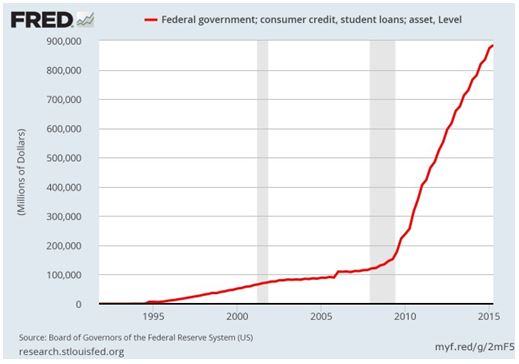
Democrats are always in favor of making it easy for people to borrow money, and leaving taxpayers on the hook to cover it. Are there enough people working to cover these debts? Has Obama been focused on helping to lower taxes and reduce regulations for job creators, so they can create new jobs? How will the millennials respond to being forced to pay for all the debt incurred by the man they voted for?
Economist Thomas Sowell changed the minds of a generation of young people, including me
I had written enough posts to carry me through the Christmas and New Year’s vacation. But then something happened that caused me to come off vacation and postpone today’s scheduled post in order to write about the retirement of a man who influenced my worldview as much as anyone has. And I am not exaggerating when I say that this man contributed the most of anyone to the economic views of libertarians and conservatives. (Although his views on social and foreign policy issues were largely conservative, as well). I never disagreed with his views, or maybe it’s just that he always convinced me to change to agree with him. He’s that kind of man – if you liked having a friend who knew how to think through just about anything, then this was the guy for you.
But now he has announced his retirement. Here is his farewell column. (H/T Mary)
Excerpt:
After enjoying a quarter of a century of writing this column for Creators Syndicate, I have decided to stop. Age 86 is well past the usual retirement age, so the question is not why I am quitting, but why I kept at it so long.
[…]Looking back over the years, as old-timers are apt to do, I see huge changes, both for the better and for the worse.
In material things, there has been almost unbelievable progress. Most Americans did not have refrigerators back in 1930, when I was born. Television was little more than an experiment, and such things as air-conditioning or air travel were only for the very rich.
My own family did not have electricity or hot running water, in my early childhood, which was not unusual for blacks in the South in those days.
It is hard to convey to today’s generation the fear that the paralyzing disease of polio inspired, until vaccines put an abrupt end to its long reign of terror in the 1950s.
[…]Most people living in officially defined poverty in the 21st century have things like cable television, microwave ovens and air-conditioning. Most Americans did not have such things, as late as the 1980s. People whom the intelligentsia continue to call the “have-nots” today have things that the “haves” did not have, just a generation ago.
[…]With all the advances of blacks over the years, nothing so brought home to me the social degeneration in black ghettoes like a visit to a Harlem high school some years ago.
When I looked out the window at the park across the street, I mentioned that, as a child, I used to walk my dog in that park. Looks of horror came over the students’ faces, at the thought of a kid going into the hell hole which that park had become in their time.
When I have mentioned sleeping out on a fire escape in Harlem during hot summer nights, before most people could afford air-conditioning, young people have looked at me like I was a man from Mars. But blacks and whites alike had been sleeping out on fire escapes in New York since the 19th century. They did not have to contend with gunshots flying around during the night.
We cannot return to the past, even if we wanted to, but let us hope that we can learn something from the past to make for a better present and future.
It’s a tragedy that Thomas Sowell is not more recognized in our culture. Thomas Sowell makes public appearances, but mostly to conservatives. Although I am not a Rush Limbaugh listener, I once heard Thomas Sowell sitting in for Rush, and he had another conservative black economist Walter Williams on with him. Rank-and-file conservatives bought Sowell’s books by the bushel and we went through them one after another. The first girl I ever dated went though 6 Thomas Sowell books in 2 months, then enrolled in university to study economics. That’s the kind of effect that Thomas Sowell had on people – you couldn’t read just one of his books. You read as many as you get from the public library, then you read all could afford to buy. Then you asked for them on birthdays and Christmases from your dumbfounded liberal relatives. It was fresh air – you read Thomas Sowell to get the lies and dishonesty of the progressive culture out of your mind.
But most people on the left have never heard of Thomas Sowell. Despite Sowell’s splendid scholarly credentials and academic publications, the leftist gatekeepers don’t want their liberal followers to know that the real intellect behind economic conservative is a black economist. Instead of fighting against Sowell’s ideas, their response has been to ignore him.
Let’s take a quick look at some of the institutions who are recognizing the great man’s retirement.
In my opinion, there is no economist alive today who has done more to eloquently, articulately, and persuasively advance the principles of economic freedom, limited government, individual liberty, and a free society than Thomas Sowell. In terms of both his quantity of work (at least 40 books and several thousand newspaper columns) and the consistently excellent and crystal-clear quality of his writing, I don’t think any living free-market economist even comes close to matching Sowell’s prolific record of writing about economics. And I don’t think there is any writer today, economist or non-economist, who can match Thomas Sowell’s “idea density” and his ability to consistently pack so much profound economic wisdom into a single sentence and a single paragraph.
Even at 86 years old, Thomas Sowell has remained intellectually active with his syndicated newspaper columns and the publication last year of his 40th book — Wealth, Poverty and Politics: An International Perspective — which was, amazingly, his 13th book in the last decade! To honor Thomas Sowell’s well-deserved retirement from writing his invaluable weekly column for the last quarter century, I present below some of my favorite quotations from Dr. Thomas Sowell (most were featured on a CD post in June on Sowell’s birthday) and a bonus video of the great economist:
I had to choose just a few of these, so here goes:
6. Politicians as Santa Claus. The big question that seldom— if ever— gets asked in the mainstream media is whether these are a net increase in jobs. Since the only resources that the government has are the resources it takes from the private sector, using those resources to create jobs means reducing the resources available to create jobs in the private sector.
So long as most people do not look beyond superficial appearances, politicians can get away with playing Santa Claus on all sorts of issues, while leaving havoc in their wake— such as growing unemployment, despite all the jobs being “created.”
If you show or read the quote below to anyone who is a serious conservative, they will immediately tell you that the author is Thomas Sowell, or someone summarizing Sowell’s work:
10. The Anointed Ones. In their haste to be wiser and nobler than others, the anointed have misconceived two basic issues. They seem to assume: 1) that they have more knowledge than the average member of the benighted, and 2) that this is the relevant comparison. The real comparison, however, is not between the knowledge possessed by the average member of the educated elite versus the average member of the general public, but rather the total direct knowledge brought to bear through social processes (the competition of the marketplace, social sorting, etc.), involving millions of people, versus the secondhand knowledge of generalities possessed by a smaller elite group.
The vision of the anointed is one in which ills as poverty, irresponsible sex, and crime derive primarily from ‘society,’ rather than from individual choices and behavior. To believe in personal responsibility would be to destroy the whole special role of the anointed, whose vision casts them in the role of rescuers of people treated unfairly by ‘society.’
Celebrating entrepreneurs:
12. Helping the Poor. It was Thomas Edison who brought us electricity, not the Sierra Club. It was the Wright brothers who got us off the ground, not the Federal Aviation Administration. It was Henry Ford who ended the isolation of millions of Americans by making the automobile affordable, not Ralph Nader.
Those who have helped the poor the most have not been those who have gone around loudly expressing “compassion” for the poor, but those who found ways to make industry more productive and distribution more efficient, so that the poor of today can afford things that the affluent of yesterday could only dream about.
Distinctions like this is what gave so many ordinary people the desire to read more and more of Thomas Sowell to clean popular culture socialist pablum out of their minds:
13. Income Mobility. Only by focusing on the income brackets, instead of the actual people moving between those brackets, have the intelligentsia been able to verbally create a “problem” for which a “solution” is necessary. They have created a powerful vision of “classes” with “disparities” and “inequities” in income, caused by “barriers” created by “society.” But the routine rise of millions of people out of the lowest quintile over time makes a mockery of the “barriers” assumed by many, if not most, of the intelligentsia.
Everything becomes clear – as spiderwebs – with a little Thomas Sowell. And for evidence, he used the best studies from all over the world, from across all different times and places, so that you always had the evidence at your fingertips. His books are filled with footnotes for further study.
The Weekly Standard
The Weekly Standard has an article entitled “Thomas Sowell, America’s Greatest Public Intellectual, Says ‘Farewell'” by Fred Barnes.
Excerpt:
Thomas Sowell is giving up his column. I can think of lots of columnists whose writing we wouldn’t miss. Sowell isn’t one of them. Every column he wrote in a quarter-century career as a columnist was eminently worth reading. I say this having read nearly every one of them.
What made his columns so good? He wrote with sparkling clarity. He relied on facts. He didn’t showcase his scholarship, but his range of subjects was impressive. He understood his readers and didn’t write down to them. He was prolific. He wrote two columns a week and, when he had more to say, sometimes three or four. Best of all, he analyzed things from conservative—and somewhat libertarian—perspective better than anyone else and in fewer words.
If you wanted more words, you could always look to his books, and that’s what my friends and I did.
National Review
National Review has an article entitled “Thank You, Professor Sowell” by Michelle Malkin. They also re-posted an article from 2011, entitled “A Lion in High Summer”.
One quote from Michelle Malkin:
I first read Thomas Sowell in college — no thanks to my college.
At the majority of America’s institutions of “higher learning,” reading Thomas Sowell was a subversive act in the early 1990s when I was a student. It remains so today. Why? Because the prolific libertarian economist’s vast body of work is a clarion rejection of all that the liberal intelligentsia hold dear.
[…]The former leftist playwright David Mamet, in his 2008 manifesto “Why I Am No Longer a Brain-Dead Liberal,” cited his exposure to Sowell, whom he dubbed “our greatest contemporary philosopher,” as a critical factor in his conversion. Whether tackling the “bait and switch media,” the “organized noisemakers,” or the lawless enablers of “social disintegration,” Thomas Sowell’s dozens of academic books and thousands of newspaper columns have sparked generations of his readers across the political spectrum to think independently and challenge imposed visions.
Asked once how he would like to be remembered, Sowell responded: “Oh, heavens, I’m not sure I want to be particularly remembered. I would like the ideas that I’ve put out there to be remembered.” Mission accomplished. Though it has been decades since he taught in a formal classroom, his students are legion.
This is where today’s conservatives came from – we read the Thomas Sowell. Many conservatives (e.g. – Michelle and myself) came from non-white families and cultures, just like Sowell. We were convinced to give up on the socialism popular in our families and cultures by his writing. He convinced himself, then he convinced us. In contrast, there isn’t much convincing on the secular left – most people just accept secular leftism in order to be liked – it’s not cognitive, it’s just virtue signaling. Conservatives are convinced by Thomas Sowell’s writing, whereas liberals blindly follow Hollywood celebrities. It’s just tribalism.
Ben Shapiro
Jewish conservative Ben Shapiro wrote an article in The Daily Wire entitled “Farewell to Thomas Sowell, Dean of Conservative Columnists”.
One excerpt:
In what we can only hope is the final heartbreak of 2016, Senior Fellow at the Hoover Institution Thomas Sowell announced his retirement from his syndicated column. Sowell isn’t just one of the great thinkers of our time. He’s a genuine voice of decency and truth in a time when screaming and hysterics gain headlines. His voice will be missed every week.
[…]For years, I’ve named Sowell as the man I’d most love to see as president. That doesn’t end just because his column has.
At the end, he lists his favorite Thomas Sowell books.
That’s to show you how real conservatives like Ben Shapiro who are having a real influence (his podcast is the #1 conservative podcast, it has exploded in popularity) were influenced by Thomas Sowell. Shapiro always says that people new to conservatism should always start with a study of basic economics, e.g. – books by Thomas Sowell. No one in my own family started out conservative. I read Thomas Sowell, then they read Thomas Sowell. That’s how we became conservatives.
Wintery Knight
I’m busy cleaning stuff out of my parents basement this holiday season. This trip, I am taking some of my books back with me. I made the choices about what to take before I saw Sowell’s retirement. Without any sentiment at all, I chose:
Basic Economics, 4th edition
Applied Economics, 2nd edition
Economics Facts and Fallacies, 2nd edition
Intellectuals and Society, 2nd edition
The Housing Boom and Bust, 2nd edition
Inside American Education
A Personal Odyssey
A Conflict of Visions
The Vision of the Anointed (best book for beginners)
Barbarians Inside the Gates
Black Rednecks and White Liberals
I am leaving my second edition of Basic Economics for my Dad. I understand that a new 5th edition is now out, and I might get that. I have many, many more on audio books – I buy all the audio books editions that I can get, and listen to them over and over. This is where my worldview on economic issues (not to mention marriage, gun rights, education, war, etc.) came from.
It is written by the naturalist co-author of the new Cambridge University Press book “A Fortunate Universe: Life in a Finely-Tuned Cosmos”.
Excerpt:
As a cosmologist, I can use [the] immutable laws of physics to evolve synthetic universes on supercomputers, watching matter flow in the clutches of gravity, pooling into galaxies, and forming stars. Simulations such as these allow me to test ideas about the universe – particularly to try to understand the mystery of dark energy (more on this later).
[…]So now, I invite you to join me in imagining a universe, a universe slightly different to our own. Let’s just play with one number and see what happens: the mass of the down-quark. Currently, it is set to be slightly heavier than the up-quark.
[…]If we start to ratchet up the mass of the down-quark, eventually something drastic takes place. Instead of the proton being the lightest member of the family, a particle made of three up-quarks usurps its position. It’s known as the Δ++. It has only been seen in the rubble of particle colliders and exists only fleetingly before decaying. But in a heavy down-quark universe, it is Δ++that is stable while the proton decays! In this alternative cosmos, the Big Bang generates a sea of Δ++ particles rather than a sea of protons. This might not seem like too much of an issue, except that this usurper carries an electric charge twice that of the proton since each up-quark carries a positive charge of two-thirds.
As a result, the Δ++ holds on to two electrons and so the simplest element behaves not like reactive hydrogen, but inert helium.
This situation is devastating for the possibility of complex life, as in a heavy down-quark universe, the simplest atoms will not join and form molecules. Such a universe is destined to be inert and sterile over its entire history. And how much would we need to increase the down-quark mass to realise such a catastrophe? More than 70 times heavier and there would be no life. While this may not seem too finely tuned, physics suggests that the down-quark could have been many trillions of times heavier. So we are actually left with the question: why does the down-quark appear so light?
Things get worse when we fiddle with forces. Make the strength of gravity stronger or weaker by a factor of 100 or so, and you get universes where stars refuse to shine, or they burn so fast they exhaust their nuclear fuel in a moment. Messing with the strong or weak forces delivers elements that fall apart in the blink of an eye, or are too robust to transmute through radioactive decay into other elements,
Examining the huge number of potential universes, each with their own unique laws of physics, leads to a startling conclusion: most of the universes that result from fiddling with the fundamental constants would lack physical properties needed to support complex life.
Here’s another one a bit later:
And there is another structural issue to consider – our universe is flying apart. Two things affect the rate of expansion: the amount of matter which acts as a brake, and dark energy which acts as an accelerator. Dark energy is winning so our universe is expanding at an accelerating rate.
What this means is that in the early days of the universe, the rate of expansion was slower, slow enough to allow matter to condense into stars, planets and people. But if the universe had been born with only a touch less matter, it would have rapidly expanded, thinning out to less than one hydrogen atom per universe.
On the other hand, if the universe had been born with only a touch more matter, that would have caused it to re-collapse before the first stars could form. In short, the early universe was on a knife-edge, poised between these possible outcomes. What emerged was the Goldilocks expansion rate: not too fast, not too slow.
Later on in the article, the skeptical naturalist astrophysicist evaluates the most popular rebuttal to the scientific evidence: the multiverse.
He concludes:
To some, the picture of the multiverse is comforting, naturally explaining the puzzle of our own fine-tuning. But at present, we have no idea whether this immense sea of universes exists, and they may always be beyond the reach of experiment and observation; if this is the case, is the multiverse more philosophical musing than robust science?
Now, in my experience talking to atheists, especially to the computer science atheists in my office, they simply don’t care that the multiverse cannot be tested or observed. They would rather believe in something that cannot be tested or observed than to go along with the scientific evidence that can be tested and observed. When I try to ask them why they are not interested in conforming their worldview to scientific evidence, they hold up their Star Trek mugs, and their Star Wars DVDs, and say “science will figure it out”. But Star Trek and Star Wars are science fiction, not science – more like fantasy, really.
I have been able to dig down into the worldviews of the naturalists I know who seem to prefer science fiction to science. And at the very core of their worldview I find two things: 1) a desire to dispense with external reality (including science) as a constraint on their seeking of pleasure in this life, and 2) a desire to feel smug about not believing in myths and legends. Unfortunately, I have never met an atheist who did not prefer speculation and fantasy to experimental science, when confronted with scientific evidence that falsifies naturalism. I think that’s a lesson for us all – just because a person is capable at programming a computer (which is good), it doesn’t make a science-fiction / fantasy worldview true.