
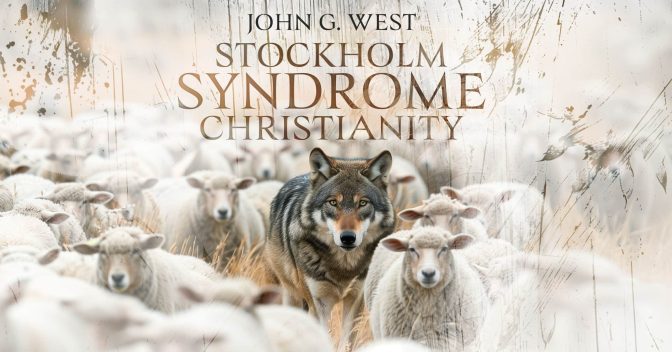
The message of many Christian elites about evolution is that Christians should go ahead and believe it. After all, it doesn’t make any difference. Science tells you how the heavens go, they say. And religion tells you how to go to Heaven, they say. But is it true? Or does Darwinism have implications that are are hostile to believe in Christian theism? Let’s see.
First of all, it’s important to understand that Darwinian evolution is fully naturalistic evolution. There is no room in Darwinian evolution for a Designer, or a design. Nature does it’s own gradual creating, and there is no room for jumps in biological complexity.
And what is the implication of a “clockwork” universe? Let the Darwinists tell you themselves.
William Provine says atheists have no free will, no moral accountability and no moral significance:
Let me summarize my views on what modern evolutionary biology tells us loud and clear — and these are basically Darwin’s views. There are no gods, no purposes, and no goal-directed forces of any kind. There is no life after death. When I die, I am absolutely certain that I am going to be dead. That’s the end of me. There is no ultimate foundation for ethics, no ultimate meaning in life, and no free will for humans, either.
Richard Dawkins says atheists have no objective moral standards:
In a universe of blind physical forces and genetic replication, some people are going to get hurt, other people are going to get lucky, and you won’t find any rhyme or reason in it, or any justice. The universe that we observe has precisely the properties we should expect if there is, at bottom, no design, no purpose, no evil and no good, nothing but blind, pitiless indifference… DNA neither knows nor cares. DNA just is. And we dance to its music. (Richard Dawkins, River Out of Eden: A Darwinian View of Life (1995))
Well, some people might point to prominent Christians like Howard Van Till and Karl Giberson as examples of people who believe in Darwinian evolution, but profess a belief in Christianity.
Here’s Dr. John G. West to discuss Howard Van Till, over at Evolution News:
In the early years of the intelligent design movement, one of the most significant critics of ID among evangelical Christian academics was Howard Van Till (1938-2024).
A physics professor at Calvin College (the campus chapel is pictured above), Van Till was the pre-eminent example of an evangelical Christian scientist in the 1990s who defended Darwinian evolution. Van Till still ends up being cited by some as an example of how an orthodox Christian can embrace Darwin.
The problem is that after retiring from Calvin, Van Till evolved well beyond Christianity. Indeed, he eventually evolved beyond theism.
By 2006, Van Till was declaring himself a freethinker. By 2016, he was identifying with what he called “a comprehensively naturalistic worldview,” which he described as a belief “that the physical universe is the only reality… and that it is not dependent on a non-corporeal, person-like Agent (the Abrahamic God, for example) to give it being or to guide its evolution.”
And here’s Karl Giberson:
One of the Christian scientists who liked to cite Van Till as a model for integrating Christianity with evolution was Karl Giberson. Also a physicist, Giberson has been a longtime associate of geneticist Francis Collins, with whom he coauthored a book. For many years, Giberson was a professor at Eastern Nazarene University, an explicitly evangelical Christian institution. He helped Francis Collins start the BioLogos Foundation to promote theistic evolution.
Giberson hasn’t yet slid as far down the slope as Van Till. But, sadly, he appears to be on the same trajectory.
In his book Saving Darwin (endorsed by Collins), Giberson denied the historic Christian teaching that humans were originally created good. In Giberson’s view, that can’t be true because it conflicts with Darwinian evolution. According to him, evolution is driven by selfishness, so humans must have been selfish and evil from the start. Giberson nevertheless maintained that he was a committed Christian.
But reading between the lines, his reasons for staying a Christian were rather shaky. He acknowledged poignantly: “my belief in God is tinged with doubts and, in my more reflective moments, I sometimes wonder if I am perhaps simply continuing along the trajectory of a childhood faith that should be abandoned.”
This part is scary. When you marry a theistic evolutionist, they might come to church with you. But they could just as easily be faking it to keep up appearances. Their commitment to Darwinian evolution is absolute, but the Christian theism is just acting:
So why did he stay a Christian? “As a purely practical matter, I have compelling reasons to believe in God. My parents are deeply committed Christians and would be devastated were I to reject my faith. My wife and children believe in God, and we attend church together regularly. Most of my friends are believers. I have a job I love at a Christian college that would be forced to dismiss me if I were to reject the faith that underpins the mission of the college. Abandoning belief in God would be disruptive, sending my life completely off the rails.” Note that Dr. Giberson’s “compelling reasons” to believe in God were sociological. They weren’t about whether Christianity is actually true.
Within a few years of writing Saving Darwin, Giberson resigned his post at the Christian university where he taught. In a book following his departure, Saving the Original Sinner (2015), Giberson made fairly clear that he now regards the Bible as a mish-mash of divergent stories from one particular tribe rather than a divinely inspired text featuring God’s authoritative message. He thinks if Christianity wants to survive it needs to evolve: “Christianity emerged in a different time and must be prepared to evolve like everything else.”
So, if you meet a Christian who believes in Darwinian evolution, make sure they understand the implications of Darwinian evolution, and what it means for the Christian worldview. The conflicts between Darwinian evolution and Christian theism are much more severe than just disagreeing with Bible stories.
 WINTERY KNIGHT
In 2017, I spent two solid months going to BioLogos (founded by Francis Collins) daily seeking anyone who could explain to me how the Bible and evolution could be reconciled. After all, it was a fundamental premise of that site that the two could be reconciled, and I had previously spent a long time trying to reconcile them by myself…unsuccessfully. However, while I was able to find numerous people on that site who claimed that reconciliation was possible, no one ever able to demonstrate how. In fact, the reality was that every single person who opened up turned out to be subordinating their reliance on the Bible to their reliance on evolution. It truly was a case of no one being able to serve two masters.
LikeLike