
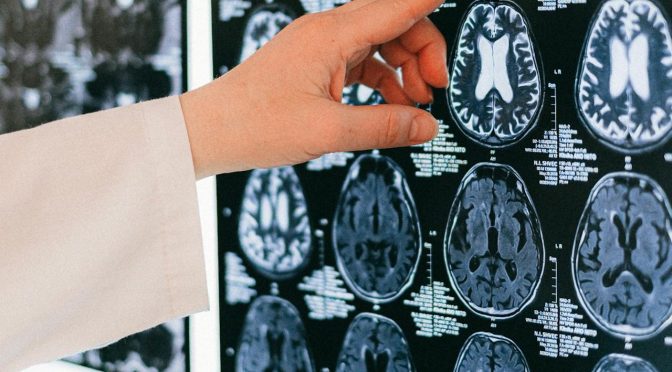
When it comes to the problem of mind, there are some people who maintain that the mind is just reducible to the physical brain. Those are physicalists, also known as materialists. And then there are those who defend dualism, which is the idea that you are a non-material soul, and you have a body (which includes your brain). Who is right? Well, let’s take a look at the science and see.
This post is from Mind Matters, and it’s written by Dr. Michael Egnor.
He says:
Neurosurgeon Wilder Penfield (1891‒1976), who pioneered epilepsy surgery at the Montreal Neurological Institute in the mid-20th century, asked this very question: What does the brain do? He explored the question during eleven hundred “awake” brain operations over four decades. He needed patients to be awake so that he could communicate with them, to be sure that he was not damaging vital tissue while removing the tissue that was prone to epileptic seizures.
Penfield could do brain surgery while a patient is awake because the brain has no pain sensors. A local anesthetic (similar to the novocaine used in dentists’ offices) ensures that there is no pain in the scalp either during the surgery. Neurosurgeons still do this type of surgery today.
While epilepsy patients were awake and their responses to brain stimulation could be observed, he mapped their brains using electrical probes to find and remove seizure foci but also to determine which parts of the patients’ brains did what. He could answer questions like “What part of the brain makes us move our muscles?”, “What part of the brain enables us to see?” and “What part of the brain enables us to have memories and emotions?”
What fascinated Penfield is not so much what he found—i.e., which parts of the brain caused movement, perception, memory and emotions—but what he didn’t find.
Penfield could find no part of the brain that, when stimulated, caused patients to think abstractly—to reason, think logically, do mathematics or philosophy or exercise free will.
He noticed the same thing about epileptic seizures as about stimulation during surgery. Patients who were having seizures did all sorts of things—they jerked their muscles, they saw flashes of light or had unusual sensations on their skin. They even occasionally had specific memories and emotions. Then they fell unconscious.
But patients never had intellectual seizures. That is, they never had seizures that caused them to reason, think logically, or do mathematics or philosophy. There are no “calculus seizures” that cause them to uncontrollably take first derivatives. There are no philosophical seizures that cause them to uncontrollably contemplate Plato’s Republic.
Penfield asked the obvious question: why did brain stimulation only cause certain mental operations, like movement, perception, memory and emotion to happen, but not other ones, like abstract thought and free will?
It sounds like the brain is responsible for low-level interactions with the body itself. It reminds me of “device driver” software, which allows higher software to interact with hardware devices, like graphics cards and hard drives. What the progress of neuroscience seems to show is that the brain is doing device driver work, but something else is doing higher operations. And that something else is what substance dualists like me would call a “mind”.
There are lots of good philosophical arguments for minds, such as consciousness, direct first-person access to your thoughts, persistent identity over time that does not depend on your (changing) physical body, the intentionality problem (thinking about something else is not something that a material system can do), as well as free will. And there are more of those, too.
But it’s nice to see that there are scientific arguments as well. By doing the neuroscience, we can find out what the brain controls, and what it doesn’t control.
I thought this part of the article was interesting:
Penfield started out as a materialist, like most scientists do, but, as he learned more about the mind and the brain he became a dualist. He concluded in his book Mystery of the Mind (1975) that the mind is something separate from the brain, and that there are aspects of the mind that don’t come from the brain but are spiritual in nature. As he put it, “The mind must be viewed as a basic element in itself . . . That is to say, it has a continuing existence.” (p. xxi.)
The article mentions a new book coming out in June 2025, entitled “The Immortal Mind”. And I’ve already contact one of the authors of the book to see if we can get them to come on the Knight and Rose Show to tell us about all of this scientific research. I hope that will help our listeners to be able to have good evidence-based conversations about this fascinating area of disagreement between theists and atheists.
 WINTERY KNIGHT
That is interesting.
LikeLike