How many people have signed up for Obamacare?

The Weekly Standard reports.

Excerpt:

Treasury Secretary Jack Lew refused to answer Fox host Chris Wallace’s simple question this morning: How many people have signed up for Obamacare?

“I’m going to ask you one last time,” said Wallace, “because, forgive me sir, you haven’t answered it: do you not know how many people signed up, which would seem to indicate another major software glitch, or is it that the numbers are embarrassingly small?”

“Chris, our metric for this week was, could people get online, get the information they need to make an informed,” said Lew, sidestepping the straightforward question. “They have been getting that information. We are confident that they are going to make the decision — they have 6 months to make the decision.”

Wallace tried again: “So do you not know or is that the number is –”

“Well, it’s obviously not my primary area of responsibility,” said the treasury secretary.

I have a more important question. Why did we elect a community organizer to make health care policy?

Reuters says that the IT architecture for the web application stinks.

Excerpt:

Days after the launch of the federal government’s Obamacare website, millions of Americans looking for information on new health insurance plans were still locked out of the system even though its designers scrambled to add capacity.

[…]Five outside technology experts interviewed by Reuters, however, say they believe flaws in system architecture, not traffic alone, contributed to the problems.

[…]”Adding capacity sounds great until you realize that if you didn’t design it right that won’t help,” said Bill Curtis, chief scientist at CAST, a software quality analysis firm, and director of the Consortium for IT Software Quality. “The architecture of the software may limit how much you can add on to it. I suspect they’ll have to reconfigure a lot of it.”

[…]One possible cause of the problems is that hitting “apply” on HealthCare.gov causes 92 separate files, plug-ins and other mammoth swarms of data to stream between the user’s computer and the servers powering the government website, said Matthew Hancock, an independent expert in website design. He was able to track the files being requested through a feature in the Firefox browser.

[…]”They set up the website in such a way that too many requests to the server arrived at the same time,” Hancock said.

He said because so much traffic was going back and forth between the users’ computers and the server hosting the government website, it was as if the system was attacking itself.

Hancock described the situation as similar to what happens when hackers conduct a distributed denial of service, or DDOS, attack on a website: they get large numbers of computers to simultaneously request information from the server that runs a website, overwhelming it and causing it to crash or otherwise stumble. “The site basically DDOS’d itself,” he said.

[…]The government official blamed the glitch on massive traffic, but outside experts said it likely reflected programming choices as well.

Obama doesn’t know anything about software engineering. And all his appointees are radical leftist political hacks. Obama’s administration has the least private sector experience of any recent administration. These people have no idea how to design large-scale web applications. They outsourced the whole thing and it blew up in their faces.

But do you know who does understand information technology? Someone with a Bachelor’s degree in mathematics and a Master’s degree in computer science from Purdue University would.
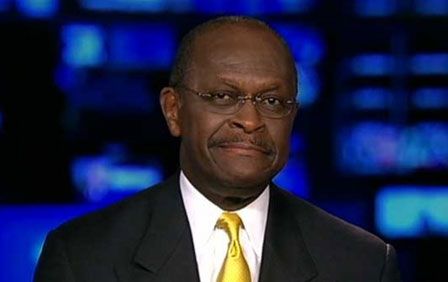
Presidential candidate Herman Cain

A while back, we had an opportunity to elect a software engineer who is also one of the country’s most successful businessmen – Herman Cain. His massive company had a huge IT infrastructure. But we didn’t vote for Herman Cain, we voted for Obama. If we had voted for Herman Cain, then IT would be leveraged successfully to support whatever government involvement in health care was appropriate. If you want software done right, then elect a software engineer. If you want to run the country like a successful business, elect a successful businessman.

What Christians can learn about morality from “Breaking Bad”

I found this post about the TV series “Breaking Bad” through J.W. Wartick’s “Really Recommended Posts“.

The author of the post argues that most of what you see in the arts and entertainment field tries to give us the idea that there is a dichotomy between small choices and big choices. But Breaking Bad rejects this by trying to show how small choices add up to your character.

Take a look:

I think Breaking Bad is a great show because it rejects this line of thinking [small vs big choices], because its running time is a five-season rebuttal to the idea that there are choices that matter and choices that don’t. Walt’s pride at a dinner table is ultimately as important to the villain he becomes as his murder, his lying as corruptive as his violence. In Gilligan’s eyes, there’s no differentiating between Walt’s pride and his rage and his enviousness and his determination to succeed at all costs, to be the Kingpin, the only one. Telling the story of how Walt chose to become the villain takes every minute of all 67 episodes aired so far.

You do not accidentally end up a drug kingpin, says the show. And the story is a five season long a fortiori argument whose conclusion is that you, viewer, also have a choice, in what to watch, or say, in how to treat people, in who to be. To echo James K.A. Smith, there are very few, if any, “morally neutral” practices. We get shaped by the things we do, or don’t do, even unintentionally, even if you’re not paying attention.

Breaking Bad echoes that not only in content, but in form. In the critical importance of little decisions (Walt’s wined-up boasting in front of Hank; his lying to his wife, Skyler; Marie’s shoplifting; Hank’s pride and arrogance affecting his job) that all compound in the direction of calamity.

“I just feel like I never had a choice in any of this,” Walt argues early on in season one, after he’s declined cancer treatment. “I want a say, for once.” When you first watch the scene, not knowing the kind of person Walt is going to choose to be, it’s a poignant moment. Walt wants to spend his last months with his wife on his own terms, rather than as a powerless and weak and hollowed out shell of who he used to be.

But as flashbacks inform the choices Walt made in the past, and as time and time again Walt refuses to stop cooking meth, to stop feeding his own pride, the scene is recontextualized as an ironic echo—as just another excuse for Walt’s behavior. The paradox central to Walt’s nature is that if you deny him a choice, he becomes furious. Because of this, most every conflict in the show stems from the interplay of Walt’s staggering intelligence and his equally impressive capacity for stupid, pride-motivated decisions.

But if you empower Walt, when he comes into real responsibility, he shirks it, he self-sabotages; he pretends he doesn’t have a choice, or never did have a choice. He becomes paranoid, and self-aggrandizing, and manipulative, until he’s relaxed from the tension of having responsibility—and as soon as that happens, he’s out looking for it again.

When all Walt has are choices, he demands a CHOICE; and as soon as it is presented to him, as soon as the danger of responsibility is there and real and able to hurt him, he denies it, labels it meaningless, and continues to victimize himself.

Walter is us. And that is a dangerous message, and it hurts. It hurts to be awakened to choices you didn’t know you were failing to make, or making poorly. It is always, always easier to deny choice than to accept it, to want to brush things off until it’s really important, until it’s a choice, and then perform well, and go back to the status quo of being a-volitional. We want to be fully ourselves already, and for our actions to be extrinsic, non-reflective. To keep separate who we are, our identities, and what we do in our everyday life.

But that’s not what it means to have character. And it’s not what it means to be a human being, created to shift and change dynamically. The tragedy of Walter White makes for a great narrative, and for really compelling TV. But the lesson of Breaking Bad is invaluable, especially in a culture like ours, that’s so allergic to prescriptive statements, to generalizations that aren’t platitudes, to Truth Claims about the nature of humanity. Breaking Bad doesn’t just make those claims—it does it with gusto. It confronts you with the ugliness of humanity like a Flannery O’Connor story, begging you to look and to look away, to see the outer extreme of an idea so that you’ll kick back and respond and fight with it, because engaging is just as much of a choice as anything else.

That reminds me of this well-known saying:

Sow a thought, reap an action; sow an action; reap a habit; sow a habit, reap a character; sow a character reap a destiny

Something to think about when we are making the decisions about “how far is too far?”. The best way to avoid becoming a bad person is by not trying to walk on a dramatic line, but by making a million decisions every day to consciously get away from evil.

I find that in the church there is this strange and ridiculous idea everywhere that you can just do whatever you want and that God will give you the strength to be courageous and effective in these dramatic moments when you are tested – perhaps by being asked to deny Jesus or die. That will probably never happen for most of us. We overestimate how much an “act of God” can really do compared to the long, slow hum-drum day-to-day work towards a goal. A person has to die a million little deaths in order to achieve big things, like marry well and raise Christian kids, or keep a job to support a home, to get an MS or a PhD, etc. It’s the million little sacrifices that lead to making a big impact in the end.

Think abut it another way. How do the Armed Forces train soldiers in order to fight as a team and be brave? Do they just say “go about your lives, and when the time comes God will tell you what to do”? Hell, no. They drill and train and prepare for war because they know that this is what works. They have obstacle courses with live-fire machine guns and explosions to get soldiers used to making decisions under fire. They have classroom instruction and reading lists to share knowledge that will be useful in battle. All of this is to get the soldiers into the habit of making tiny brave decisions under controlled conditions. God doesn’t throw ordinary Christians out in a university auditorium and say “now perform like Bill Craig”. Bill Craig is Bill Craig because he chose to pass over fun things a million times and to instead focus on hard things like advanced degrees, reading advanced books and practicing debate. He isn’t debating in front of thousands of people because he made one “big” choice, but because he has a million little choices.

This lie about service being something that God has to lead you to is one of the biggest lies in the church today. That you don’t have to build the kind of life that honors God one self-sacrificial decision at a time. That you don’t have to have a long-term plan to be effective, but instead just do what you “feel led” to do moment by moment. That you can have as much impact as a Jim Demint or a William Lane Craig or a Ryan Anderson without having to train and prepare for it. It’s a lie to think that making an impact is a one-decision affair. We over-spiritualize the idea of serving God to give ourselves maximum autonomy and tell ourselves that “if it comes to that, I’ll be faithful”, while living ordinary lives the rest of the time. It’s probably never going to come to that, so shouldn’t you have some sort of day-to-day long-term self-sacrificial plan to achieve something for God instead?

Are House Republicans doing anything wrong by refusing to fund Obamacare?

Economist Thomas Sowell

Thomas Sowell explains separation of powers.

Excerpt:

The Republican-controlled House of Representatives voted all the money required to keep all government activities going — except for ObamaCare.

This is not a matter of opinion. You can check the Congressional Record.

As for the House of Representatives’ right to grant or withhold money, that is not a matter of opinion either. You can check the Constitution of the United States. All spending bills must originate in the House of Representatives, which means that Congressmen there have a right to decide whether or not they want to spend money on a particular government activity.

Whether ObamaCare is good, bad or indifferent is a matter of opinion. But it is a matter of fact that members of the House of Representatives have a right to make spending decisions based on their opinion.

ObamaCare is indeed “the law of the land,” as its supporters keep saying, and the Supreme Court has upheld its Constitutionality.

But the whole point of having a division of powers within the federal government is that each branch can decide independently what it wants to do or not do, regardless of what the other branches do, when exercising the powers specifically granted to that branch by the Constitution.

[…]When Barack Obama keeps claiming that it is some new outrage for those who control the money to try to change government policy by granting or withholding money, that is simply a bald-faced lie. You can check the history of other examples of “legislation by appropriation” as it used to be called.

Whether legislation by appropriation is a good idea or a bad idea is a matter of opinion. But whether it is both legal and not unprecedented is a matter of fact.

Perhaps the biggest of the big lies is that the government will not be able to pay what it owes on the national debt, creating a danger of default. Tax money keeps coming into the Treasury during the shutdown, and it vastly exceeds the interest that has to be paid on the national debt.

Even if the debt ceiling is not lifted, that only means that government is not allowed to run up new debt. But that does not mean that it is unable to pay the interest on existing debt.

The House Republicans have been passing bill after bill in order to fund essential responsibilities of government. It’s their decision to fund whatever they want, because that’s what the House does. But the Senate has been rejecting most of these bills. If parts of the government are “shut down” it’s the fault of the Senate Democrats. But then again, they are no more obligated to approve whatever the House wants than the House is obligated to approve what the Senate wants. Or what the President wants. That’s why there is a separation of powers: checks and balances.