
Let’s see what everyone thinks about Obama’s decision withdraw 40,000 troops from Iraq, effectively handing control of much of the Middle East to Iran.
Disregards the advice of his own generals
From the Wall Street Journal.
Excerpt:
No doubt this will be politically popular—at least in the short-term. Mr. Obama can say he honored a campaign pledge, Congress will move to spend the money on domestic programs, and a war-weary American public will be relieved to carry fewer overseas burdens. Or at least Americans will feel such relief as long as this total withdrawal doesn’t cost the hard-fought political and strategic gains that our intervention has won.
There are serious risks in this complete withdrawal. Iraq has made great progress in providing its own security, with some 600,000 Iraqi troops gradually taking the handoff from U.S. forces. But the Iraqis still lack vital military assets in intelligence and logistics, not to mention naval and air power. Mr. Obama said the U.S. will continue to discuss “how we might help Iraq train and equip its forces,” but this is no substitute for a more robust, long-term presence of the kind we retain in South Korea and Japan 60 years after the end of the Korean War.
The U.S. commander in Iraq, General Lloyd Austin, had requested between 15,000 and 18,000 troops, before reducing it to 10,000 under pressure. Such a U.S. presence would reassure Iraq and its neighbors of our continuing commitment to the region. It would help play the role of honest broker among Iraq’s ethnic factions as it continues to build a more durable political system.
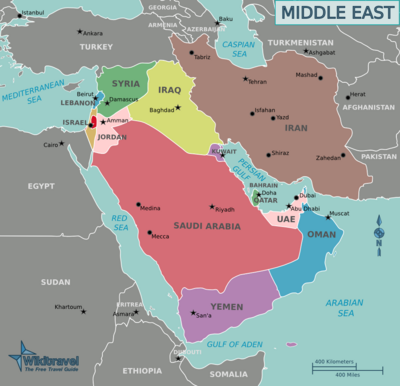
And above all it would reduce Iran’s ability to meddle in Iraq, building local militias on the Hezbollah model with a goal of making its neighbor a Shiite vassal state. Iran’s Quds force—the same outfit that wanted to assassinate a Saudi ambassador on U.S. soil—is the biggest winner from Mr. Obama’s pullout.
Bungled negotiations
From Foreign Policy magazine. (H/T The Washington Post)
Excerpt:
“Iraq is not a normal country, the security environment is not normal, the embassy is not a normal embassy,” said Marisa Cochrane Sullivan, managing director at the Institute for the Study of War, who traveled to Iraq this summer and has been sounding the alarm about what she saw as the mishandling of the negotiations ever since.
For more evidence that the administration actually wanted to extend the troop presence in Iraq, despite today’s words by Obama and McDonough, one only has to look at the statements of Defense Secretary Leon Panetta.
In July, Panetta urged Iraqi leaders to, “Dammit, make a decision” about the U.S. troop extension. In August, he told reporters that, “My view is that they finally did say, ‘Yes.'” On Oct. 17, he was still pushing for the extension and said, “At the present time I’m not discouraged because we’re still in negotiations with the Iraqis.”
Sullivan was one of 40 conservative foreign policy professionals who wrote to Obama in September to warn that even a residual force of 4,000 troops would “leave the country more vulnerable to internal and external threats, thus imperiling the hard-fought gains in security and governance made in recent years at significant cost to the United States.”
She said that the administration’s negotiating strategy was flawed for a number of reasons: it failed to take into account Iraqi politics, failed to reach out to a broad enough group of Iraqi political leaders, and sent contradictory messages on the troop extension throughout the process.
“From the beginning, the talks unfolded in a way where they largely driven by domestic political concerns, both in Washington and Baghdad. Both sides let politics drive the process, rather than security concerns,” said Sullivan.
Emboldens Syria and their puppet-master, Iran
From National Review.
Excerpt:
The announcement of our total withdrawal comes just weeks after the revelation of an Iranian plot to execute the Saudi ambassador to the U.S. on our soil. It comes as Iran’s key Arab ally, the Assad regime in Syria, is rocked by a revolt. Just as Tehran’s dangerousness is put in stark relief and as events in Syria threaten to deal it a strategic setback, it gets this windfall.
[…][Obama’s] commanders on the ground wanted to keep more than 20,000 troops in Iraq (the administration had bid this number down to several thousand, perhaps convincing Iraqi political players that cutting a painful deal on immunity wouldn’t have enough of a corresponding upside). Such a force would have enhanced our political leverage in Baghdad, checked Iran’s already considerable influence, ensured against a return of al-Qaeda, and helped keep a lid on Arab–Kurdish tensions in the north. Now, we’ll simply have to hope for the best. Deputy National Security Advisor Dennis McDonough said Iraq is “secure, stable, and self-reliant.” It is none of these things. Its government is still inchoate and it is not capable of defending itself from Iran in the air or on the ground.
Our pullout is a bonanza for Tehran. Its militias were already active in Iraq. Now, it can use Iraq for bases for its proxy forces to spread its tentacles in the rest of the Persian Gulf. Independent ayotollahs in Iraq will have an incentive to keep their heads down. Political decisions of the Iranian-influenced Shiite bloc running the country are sure to begin to tilt more and more Iran’s way. Our diplomatic leverage will diminish, even as maintain our largest embassy in the world in Baghdad. The Iranians will crow in Iraq and throughout the region that they were right that the Americans would eventually leave.
We expended a great deal of blood and treasure to topple Saddam Hussein, and then to establish enough order so that George W. Bush’s successor would only have to consolidate our gains. President Obama is careless enough to risk throwing it all away, and shameless enough to call it success.
For those who are not aware of the looming storm in the Middle East, you should read in full this article from the Washington Times. It is authored by Frank Gaffney, the President of the Center for Security Policy. He covers several troubling data points in Libya, Egypt, Afghanistan, Iraq, China, Russia and Mexico. As if that were not bad enough, it looks as if the debt limit super-committee is now deadlocked in negotiations, which will trigger automatic cuts to our defense budget, at the worst possible moment.
 WINTERY KNIGHT