Tag Archives: Thomas Sowell

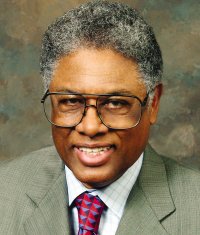
Thomas Sowell explains how liberal pacifism causes wars

Thomas Sowell

I just finished reading Thomas Sowell’s “Intellectuals and Society” and I really recommend it. I mean – this is the book of the year from 2010. If you have no interest at all in economics and politics, you should definitely buy this book and read it. If you have never read anything about conservative economics and policy, then this is the place to start. It covers a little bit of economics, a little bit of jurisprudence, a little bit of education, a little bit of foreign policy… you name it – it’s in there. And in plain English. Thomas Sowell is my favorite economist, and the economist favored most by all conservatives. I own about a DOZEN of his books. He’s that good.

I wanted to talk to you about what was in chapter 7 “Intellectuals and War” and chapter 8 “Intellectuals and War: Repeating History”. So I searched and searched and found a summary of Sowell’s arguments in those chapters.

Here’s an article from Townhall.

Excerpt:

On the international scene, trying to assuage aggressors’ feelings and look at the world from their point of view has had an even more catastrophic track record. A typical sample of this kind of thinking can be found in a speech to the British Parliament by Prime Minister Neville Chamberlain in 1938: “It has always seemed to me that in dealing with foreign countries we do not give ourselves a chance of success unless we try to understand their mentality, which is not always the same as our own, and it really is astonishing to contemplate how the identically same facts are regarded from two different angles.”

Like our former ambassador from the Carter era, Chamberlain sought to “remove the causes of strife or war.” He wanted “a general settlement of the grievances of the world without war.” In other words, the British prime minister approached Hitler with the attitude of someone negotiating a labor contract, where each side gives a little and everything gets worked out in the end. What Chamberlain did not understand was that all his concessions simply led to new demands from Hitler — and contempt for him by Hitler.

What Winston Churchill understood at the time, and Chamberlain did not, was that Hitler was driven by what Churchill called “currents of hatred so intense as to sear the souls of those who swim upon them.” That was also what drove the men who drove the planes into the World Trade Center.

Pacifists of the 20th century had a lot of blood on their hands for weakening the Western democracies in the face of rising belligerence and military might in aggressor nations like Nazi Germany and imperial Japan. In Britain during the 1930s, Labor Party members of Parliament voted repeatedly against military spending, while Hitler built up the most powerful military machine in Europe. Students at leading British universities signed pledges to refuse to fight in the event of war.

All of this encouraged the Nazis and the Japanese toward war against countries that they knew had greater military potential than their own. Military potential only counts when there is the will to develop it and use it, and the fortitude to continue with a bloody war when it comes. This is what they did not believe the West had. And it was Western pacifists who led them to that belief.

Then as now, pacifism was a “statement” about one’s ideals that paid little attention to actual consequences. At a Labor Party rally where Britain was being urged to disarm “as an example to others,” economist Roy Harrod asked one of the pacifists: “You think our example will cause Hitler and Mussolini to disarm?”

The reply was: “Oh, Roy, have you lost all your idealism?” In other words, the issue was about making a “statement” — that is, posturing on the edge of a volcano, with World War II threatening to erupt at any time. When disarmament advocate George Bernard Shaw was asked what Britons should do if the Nazis crossed the channel into Britain, the playwright replied, “Welcome them as tourists.”

That was explained even more in the book with more examples from history.

Most people think that Thomas Sowell is a libertarian, but he isn’t a full libertarian. He just reports the evidence. If the evidence is pro-war, then he’s pro-war. Ronald Reagan and Margaret Thatcher called this view “peace through strength”. There is only one reason why evil people do not attack – because they think that good people have the firepower tomake them pay dearly for their aggression, and – and this is very important – the will to use it. In the book, Sowell explains how the the left responded to the horror of world war one by undermining the will of the people to fight. They minimized patriotism and heroism, and emphasized charges of “imperialism”, moral equivalence, and lots of sob stories about victims.

Here’s an article that explains it more.

Excerpt:

In France, after the First World War, the teachers’ unions launched a systematic purge of textbooks, in order to promote internationalism and pacifism.

Books that depicted the courage and self-sacrifice of soldiers who had defended France against the German invaders were called “bellicose” books to be banished from the schools.

Textbook publishers caved in to the power of the teachers’ unions, rather than lose a large market for their books. History books were sharply revised to conform to internationalism and pacifism.

The once epic story of the French soldiers’ heroic defense against the German invaders at Verdun, despite the massive casualties suffered by the French, was now transformed into a story of horrible suffering by all soldiers at Verdun— French and German alike.

In short, soldiers once depicted as national heroes were now depicted as victims— and just like victims in other nations’ armies.

[…]France, where pacifism and internationalism were strongest, became a classic example of how much it can matter.

During the First World War, France fought on against the German invaders for four long years, despite having more of its soldiers killed than all the American soldiers killed in all the wars in the history of the United States, put together.

But during the Second World War, France collapsed after just six weeks of fighting and surrendered to Nazi Germany.

At the bitter moment of defeat the head of the French teachers’ union was told, “You are partially responsible for the defeat.”

Charles de Gaulle, Francois Mauriac, and other Frenchmen blamed a lack of national will or general moral decay, for the sudden and humiliating collapse of France in 1940.

At the outset of the invasion, both German and French generals assessed French military forces as more likely to gain victory, and virtually no one expected France to collapse like a house of cards — except Adolf Hitler, who had studied French society instead of French military forces.

Did patriotism matter? It mattered more than superior French tanks and planes.

Everybody wants peace. Everyone – on both sides of the issue. The problem is that one side – the leftists – call their opponents names like “imperialist” and talk “disarmament” and “dialog” as if they have have the answer to peace. That doesn’t work and it has never worked. Pacifism only “works” in the classroom, where naive children are forced to parrot the opinions of their secular leftist teachers who have no expertise in war or history. What has actually worked in history is peace through strength. Strength deters wars, strength deters violence. Strength – and the will to use that strength to restrain evil.

Read this to learn more about the doctrine of peace through strength, and read this to compare terrorist attacks under Bush and under Obama.

A good book to read on this topic is Frank Gaffney’s “War Footing“.
Thomas Sowell on the root causes of the mortgage lending crisis

Here’s a 33-minute video of Thomas Sowell explaining what caused the current recession.

He blames everybody, but Barney Frank and Chris Dodd most of all.

For those who cannot watch a big long video, here’s an article from Reason magazine.

Here’s a summary from the article:

Now, in The Housing Boom and Bust (Basic Books), Sowell contemplates the greatest expansion of government power in a generation, which was itself occasioned by the greatest economic crisis in as long. A quick but thorough guide to the causes of the crises, Sowell’s book shows how government policies led to a huge increase in highly risky housing loans. As he notes, the immense local variability in housing prices and failed loans reveals that the government mistook a set of local problems for a national one, and then imposed a single troublesome national solution. Sowell argues that while foolish decisions to indulge in complicated investment vehicles affected the specifics of how the financial contagion spread, at its root the housing problem is one of bad mortgages. And those came from bad decisions by government and by borrowers themselves.

And an excerpt:

reason: You parcel out some share of responsibility for the specific way the housing bust broke down to borrowers, lenders, financial markets, and the government. What was the borrowers’ share?

Sowell: There are those who borrowed to buy a place to live and speculators who borrowed to speculate, and did enormously well for a number of years. Then there were people who simply don’t understand complex mortgages, particularly people who never owned a home before and whose educations were limited. But the people I would blame the most in the sense that without their interference other problems would have been within manageable means are the politicians—people in Congress and the president and regulators—who pushed the lenders and the banks and Fannie Mae and Freddie Mac into lending and buying mortgages based on people who didn’t meet standards that evolved in the marketplace and which had worked. Those politicians, in addition to that initial mistake, ignored all sorts of warnings from all sorts of sources. As I list in the book, the Economist in London, Fortune, Barron’s, people at the American Enterprise Institute, all over the map, saw that this policy of encouraging homeownership at all costs was leading to trouble.

But the politicians clearly had as their political goal homeownership as “a good thing” and persisted—and for that matter persist to this moment in pushing it. The Federal Housing Administration last I checked was promoting supporting mortgages that have less than 4 percent down payment. We all make mistakes, but politicians have persisted in their mistakes, and in the pointing of fingers in other directions.

“Affordable housing” covers a number of things. There was this sense in Washington that the cost of buying a house had become a nationwide major problem which would require a federal answer as opposed to a local answer. All the data say that was not true. People weren’t paying a higher percent of their income nationwide for housing than they had a decade earlier. In fact, it was a somewhat lower percentage in some areas. Now in some areas, including California—coastal California—people were paying half their family income to put a roof over their head. That in turn was a result of local political people putting all sorts of restrictions on building.

Implicit in the idea of “affordable housing” is the notion that third parties know what people can afford better than those people know themselves. If you spell it out it sounds so absurd you wonder how anyone could have believed it. But for politicians the question is not, is it absurd? The question is whether or not the public will buy it.

reason: How much weight do you place on the notion that Federal Reserve expansionary money and credit policies primed the bubble, and bust, in housing?

Sowell: I find it hard to accept. I’m sure if the interest rates had been at 8 percent the boom would not have gone as far and the bust would not have been as big. I’m not saying monetary policy had no effect. But I am struck by the fact that Federal Reserve policy is nationwide, and in places like Dallas the increase in housing prices was in single digits and the decrease has been in single digits. So while Fed policy undoubtedly aggravated circumstances, it can’t be the fundamental cause because the defaults were so heavily concentrated. 60 percent of all defaults nationwide were in five states, and I suspect if you broke down the data even more you’d find specific regions in those five states very heavily implicated in defaults.

For more on the specific laws that caused the prices of homes to skyrocket in those 5 states, read this article.

Excerpt:

Let us go back to square one to consider the empirical consequences of policies in the housing market. Politicians in Washington set out to solve a national problem that did not exist — a nationwide shortage of “affordable housing” — and have now left us with a problem whose existence is as undeniable as it is painful. When the political crusade for affordable housing took off and built up steam during the 1990s, the share of their incomes that Americans were spending on housing in 1998 was 17 percent, compared to 30 percent in the early 1980s. Even during the housing boom of 2005, the median home took just 22 percent of the median American income.

What created the illusion of a nationwide problem was that, in particular localities around the country, housing prices had skyrocketed to the point where people had to pay half their income to buy a modest-sized home and often resorted to very risky ways of financing the purchase. In Tucson, for example, “roughly 60% of first-time home buyers make no down payment and instead now use 100% financing to get into the market,” according to the Wall Street Journal. Almost invariably, these locally extreme housing prices have been a result of local political crusades in the name of locally attractive slogans about the environment, open space, “smart growth,” or whatever other phrases had political resonance at the particular time and place.

Where housing markets have been more or less left alone — in places like Houston or Dallas, for example — housing did not take even half as big a share of family incomes as did comparable housing in places like the San Francisco Bay Area, where heavily hyped political crusades had led to severe restrictions on building. It was in precisely these extremely high housing-cost enclaves that the kind of people for whom the national housing crusade expressed much concern — minorities, low-income people and families with children — were forced out disproportionately.

Few things blind human beings to the actual consequences of what they are doing like a heady feeling of self-righteousness during a crusade to smite the wicked and rescue the downtrodden. Statistical studies about disparities between blacks and whites in mortgage loan approval rates might be said to have “jump-started” the housing crusades that began in the 1990s. Politicians and the media led this crusade, with many community activists following in their wake, much like scavengers, able to extract large sums of money from banks and other institutions by raising claims of discrimination, whose power to delay government approval of bank mergers and other business decisions made pay-offs to these activists the only prudent course for those accused.

I’m pretty sure that the San Francisco Bay area is run by leftists. And not moderate leftists – radical leftists. And I’m pretty sure that Dallas and Houston are not run by radical leftists. This crisis was local to areas that were dominated by Democrats who were passing all kinds of regulations and restrictions on the real estate market in order to drive up the price of their own properties and keep the “undesirable” minorities out.

I really recommend that everyone buy Thomas Sowell books and read them. I just finished “The Housing Boom and Bust” and am now working on “Economic Facts and Fallacies” and next up is “Intellectuals and Society”.

Related posts

Why are Egyptians wealthier in America than they are in Egypt?

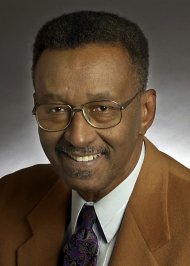
Walter Williams
Walter Williams

This is from Walter Williams, my second most favorite economist after Thomas Sowell.

Excerpt:

Why is it that Egyptians do well in the U.S. but not Egypt? We could make that same observation and pose that same question about Nigerians, Cambodians, Jamaicans and others of the underdeveloped world who migrate to the U.S. Until recently, we could make the same observation about Indians in India, and the Chinese citizens of the People’s Republic of China, but not Chinese citizens of Hong Kong and Taiwan.

[…]Much of Egypt’s economic problems are directly related to government interference and control that have resulted in weak institutions vital to prosperity. Hernando De Soto, president of Peru’s Institute for Liberty and Democracy (www.ild.org.pe), laid out much of Egypt’s problem in his Wall Street Journal article (Feb. 3, 2011), “Egypt’s Economic Apartheid.” More than 90 percent of Egyptians hold their property without legal title.

De Soto says, “Without clear legal title to their assets and real estate, in short, these entrepreneurs own what I have called ‘dead capital’ — property that cannot be leveraged as collateral for loans, to obtain investment capital, or as security for long-term contractual deals. And so the majority of these Egyptian enterprises remain small and relatively poor.”

Egypt’s legal private sector employs 6.8 million people and the public sector 5.9 million. More than 9 million people work in the extralegal sector, making Egypt’s underground economy the nation’s biggest employer.

Why are so many Egyptians in the underground economy? De Soto, who’s done extensive study of hampered entrepreneurship, gives a typical example: “To open a small bakery, our investigators found, would take more than 500 days. To get legal title to a vacant piece of land would take more than 10 years of dealing with red tape. To do business in Egypt, an aspiring poor entrepreneur would have to deal with 56 government agencies and repetitive government inspections.”

Poverty in Egypt, or anywhere else, is not very difficult to explain. There are three basic causes: People are poor because they cannot produce anything highly valued by others. They can produce things highly valued by others but are hampered or prevented from doing so. Or, they volunteer to be poor.

Some people use the excuse of colonialism to explain Third World poverty, but that’s nonsense. Some the world’s richest countries are former colonies: United States, Canada, Australia, New Zealand and Hong Kong. Some of the world’s poorest countries were never colonies, at least for not long, such as Ethiopia, Liberia, Tibet and Nepal. Pointing to the U.S., some say that it’s bountiful natural resources that explain wealth. Again nonsense. The two natural resources richest continents, Africa and South America, are home to the world’s most miserably poor. Hong Kong, Great Britain and Japan, poor in natural resources, are among the world’s richest nations.

What is necessary for wealth is a capitalist economy, that emphasizes the rule of law, private property, judicial restraint, limited government, etc. Egypt has none of those, and that’s why Egypt is poor. India and Chile used to be like Egypt, but then they revamped their societies to be more like America. Now India and Chile are more prosperous. Economics is not rocket science.

Capitalism creates wealth, and raises the standard of living of the poor and the wealthy. It doesn’t matter what rung of the social ladder someone is on – as long as they can keep what they earn, instead of having it redistributed by socialists, then they will work hard to create something of value to share with others. Poverty is caused by economic ignorance.

More Walter Williams stuff here, and more Thomas Sowell stuff here. These are the clearest-thinking economists operating today.