Tag Archives: Marxism

What happens in places that adopt Green New Deal Democrat energy policies?

What green energy policies did to electricity costs in California

The secular leftist approach to politics is to suggest policies that make them feel good and look good to others. It doesn’t matter if the policies work for people. Conservatives believe in looking at what has worked in other times and places, and doing what works. After all, a wise man learns from successes and failures of other people. We can’t try everything ourselves, we should just do what works.

Let’s start with California. California has long been at the forefront of converting their energy production to “green” sources.

Here’s an article from Forbes that talks about their results:

At the Democratic National Convention this week, presidential and vice-presidential candidates Joe Biden and Kamala Harris will make the case for spending $2 trillion, or $500 billion per year, to transition the U.S. away from fossil fuels toward renewables like solar and wind.

[…]California’s big bet on renewables, and shunning of natural gas and nuclear, is directly responsible for the state’s blackouts and high electricity prices.

“We will be forced today to ask utilities to cut off power to millions today, and tomorrow, and beyond,” said Stephen Berberich, the President and CEO of California’s Independent System Operator, CAISO, on a Monday morning conference call. “Demand will greatly exceed supply.”

The immediate cause of California’s blackouts is a mismatch between electricity supply and demand.

[…]The underlying reason blackouts are occurring is because California lacks reliable, in-state supply. And the reason for that is California has been closing both natural gas and nuclear power plants.

[…]Despite these capacity shortfalls, the state is moving ahead with plans to remove 2,200-MW of reliable electricity from the grid.  That’s the amount of power produced by Diablo Canyon nuclear power plant, which will be closed in stages in 2024 and 2025.

So, Green New Deal works great… if your goal is to feel good about yourself, and make emotion-driven people like you. But it isn’t very good at generating an abundance of low-cost electricity to power businesses. And it isn’t very good for poor people, who prefer to pay less for their electricity.

Well, how about Germany? They closed down their nuclear power plants in favor of wind and solar. It didn’t work.

Daily Caller explains:

Germany’s power grid almost collapsed in January due to poor performance from wind turbines and solar panels, according to data from a major trade union.

Wind and solar power plants under-performed in January, 2017, because of cloudy weather with little or no wind, setting the stage for massive blackouts.

[…]Green energy approaches failed to meet Germany’s stated energy goals, even after spending over $1.1 trillion. The country’s “Energiewende” plan to boost wind and solar production to fight global warming hasn’t significantly reduced carbon dioxide (CO2) emissions and may have actually caused them to go up.

[…]Due to the inherent unreliable performance of wind power and political opposition to nuclear power plants, Germany has been forced to return to coal to generate electricity. Coal now provides 44 percent of  Germany’s power,  This shift caused Germany’s carbon dioxide (CO2) emissions to actually rise by 28 million tons each year following the policy shift.

All of Germany’s subsidies and support for green energy have sharply increased power prices, with the average German paying 39 cents per kilowatt-hour for electricity. The average American only spends 10.4 cents per kilowatt-hour by comparison.

So, you get less electricity produced, more emissions, and elctricity prices go up. Just like in California.

Well, third try is the charm. How about Canada? They’ve gone Green New Deal for more than a decade. How is that working for them?

The National Post reported this in 2016:

Back in 2010, deep green environmentalist Rick Smith, then head of Environmental Defence Canada, hailed Ontario’s Green Energy and Green Economy Act regime as a cost-free operation that would catapult the province into the big leagues of renewable energy. Through fat subsidies and high prices offered to wind, solar and other renewable industry players, jobs and growth would boom and Ontario would be free of its dirty coal plants. It was the End of Coal, the government said. The birth of a renewable miracle.

Now, Canadians are paying more:

The doubling of electricity prices since 2005 is big politically, but it is just the top-line item on a long list of problems, misconceptions and outright fabrications that lurk within the Liberal government’s decade-long pursuit of radical greenism.

Because they didn’t listened to engineers… they listened to their hearts:

Ontario’s Society of Professional Engineers has issued more than half a dozen critical reports on the Liberals’ tendency to let green talk and politics override sound policy. Instead of following the expert advice of engineers and people who understand the intricacies of electricity production and distribution, the government took to issuing directives right out the Premier’s office.

Now, I know some people on the secular left are going to disagree with these facts. But they don’t have facts to counter these facts. There isn’t a single country that has gone Green New Deal that has lower electricity prices and a net increase in jobs.

We have to do what works. What works is more natural gas (fracking) and more nuclear power.

How a small, poor country became the top economy in Latin America

South America Map
South America Map

One way to learn about whether specific economic policies work or not is to look at different countries that have tried them. Believe it or not, patterns do emerge about what works and what doesn’t work, as you look across different times and places. I’ve been reading a book called “Money, Greed and God” with my friend Carla, which talks about what has worked to reduce poverty.

The author basically outlined two approaches. In the first approach, the government 1) confiscates the wealth of the most productive workers, 2) nationalizes (takes control of) the businesses of the most successful entrepreneurs, 3) restricts trading between citizens and with other countries, with minimum wage, price controls and tariffs. In the second approach, the government does the opposite: 1) lowers taxes on the most productive workers, and 2) lets entrepreneurs compete to provide goods and services to consumers, and 3) lowers restrictions on internal trading and trading with other countries, e.g. – eliminating minimum wage, tariffs and price controls.

Let’s take a look at two Latin American countries that went in opposite directions. Venezuela and Chile. Then we can finally find out which policies actually achieve results for the people.

Here is how Chile started out in 1973.

PROBLEM: Price controls and tariffs:

Prices for the majority of basic goods were fixed by the government in 1973. Even though Chile was and still is a small economy, the level of protection­ism was high. By the end of 1973, the nominal average tariff for imports was 105 percent, with a maximum of 750 percent. Non-tariff barriers also impeded the import of more than 3,000 out of 5,125 registered goods. Just as economic theory predicts, large queues in front of stores were usual in Santiago and other cities in Chile as a result of the scarcity caused by price controls.

PROBLEM: Government taking over private businesses:

The decline in GDP during 1973 reflected a shrinking productive sector in which the main assets were gradually falling under government control or ownership through expropriations and other government interventions in the economy.

PROBLEM: Deficit spending and government printing money:

The fiscal situation was chaotic. The deficit reached 55 percent of expenditures and 20 percent of GDP and was the main cause of inflation because the Central Bank was issuing money to finance the government deficit.

SOLUTION: lower or eliminate restrictions on trade:

The most important economic reform in Chile was to open trade, primarily through a flat, low tar­iff on imports. Much of the credit for Chilean eco­nomic reforms in the following 30 years should be given to the decision to open our economy to the rest of the world. The strength of Chilean firms, productive sectors, and institutions grew up thanks to that fundamental change.

SOLUTION: let competing entrepreneurs in the private sector provide goods and services to consumers:

A second fundamental reform was to allow the private sector to recover, adding dynamism to the economy. In fact, important sectors such as elec­tricity generation and distribution and telecommu­nications were still managed by state companies. After we implemented a massive privatization plan that included more than 50,000 new direct share­holders and several million indirect (through pen­sion funds) shareholders, these companies were managed by private entrepreneurs that carried out important expansion plans.

SOLUTION: let people take responsibility for their own lives instead of depending on government:

The 1981 reform of the Chilean pension fund system deserves special mention. Under the leader­ship of Minister José Piñera, an individual capitali­zation account program was designed with specific contributions, administered by private institutions selected by the workers. The Chilean Administra­doras de Fondos de Pension (Pension Fund Administrators or AFP) has been replicated in more than 20 countries, and more than 100 million workers in different parts of the world use these accounts to save for retirement.

SOLUTION: allow parents to choose the school that fits their needs from competing education providers, and push school administration down from the federal government to the municipal level, where it would be more responsive to voter’s needs:

In 1981, Chile introduced a universal educational voucher system for students in both its elementary and secondary schools. At the same time, the central government transferred the administration of public schools to municipal governments…  The financial value of the voucher did not depend on family income.

RESULTS: And I was able to find a nice short, description of how all that worked out for them on the far-left Wikipedia, of all places:

The economy of Chile is a high-income economy as ranked by the World Bank, and is considered one of South America’s most stable and prosperous nations, leading Latin American nations in competitiveness, income per capita, globalization, economic freedom, and low perception of corruption.

In 2006, Chile became the country with the highest nominal GDP per capita in Latin America. In May 2010 Chile became the first South American country to join the OECD. Tax revenues, all together 20.2% of GDP in 2013, were the second lowest among the 34 OECD countries, and the lowest in 2010. In 2017, only 0.7% of the population lived on less than US$1.90 a day.

According to the Heritage Foundation, Chile is ranked as the 18th freest economy in the world. The World Bank ranked Chile as the 50th highest GDP per capita for 2018, just below Hungary and above Poland.

Now, you can contrast those results with Venezuela. I have been blogging about Venezuela for years on this blog, and documenting how they raised taxes, banned guns, nationalized private sector companies, raised tariffs, and increased regulations. They are now ranked JUST ABOVE NORTH KOREA for economic freedom – #179 out of 180 countries measured. Basically, they did the opposite of everything that Chile did – transferring power away from parents, workers, business owners, churches and municipal governments to the powerful centralized federal government.

Wikipedia explains how Hugo Chavez took over in 1999 and enacted a communist revolution.

More:

Since the Bolivarian Revolution half-dismantled its PDVSA oil giant corporation in 2002 by firing most of its 20,000-strong dissident professional human capital and imposed stringent currency controls in 2003 in an attempt to prevent capital flight, there has been a steady decline in oil production and exports. Further yet, price controls, expropriation of numerous farmlands and various industries, among other government authoritarian policies… have resulted in severe shortages in Venezuela and steep price rises of all common goods, including food, water, household products, spare parts, tools and medical supplies; forcing many manufacturers to either cut production or close down, with many ultimately abandoning the country as has been the case with several technological firms and most automobile makers.

They confiscated private property, took over private sector businesses, implemented tariffs and price controls, redistributed wealth via massive welfare programs, and pushed all decision-making out of families and municipal governments up to the federal government. By depriving the producers of their earnings, the country caused massive shortages of goods and services, to the point where people are fleeing the country, consuming zoo animals, and selling their bodies as prostitutes in order to get food and water.

Application

In the next election, we are not picking a tribe because of how they make us feel about ourselves. We are not choosing in order to see ourselves as “nice” and “not nice”. We need to look at specific policies being proposed, and see what works and what doesn’t work. The examples of Chile (rags-to-riches) and Venezuela (riches-to-rags) are helpful for voters who want to get RESULTS instead of FEELINGS.

I’ll leave you with a list of links from previous posts so you can see how communism worked out for Venezuela.

Related posts

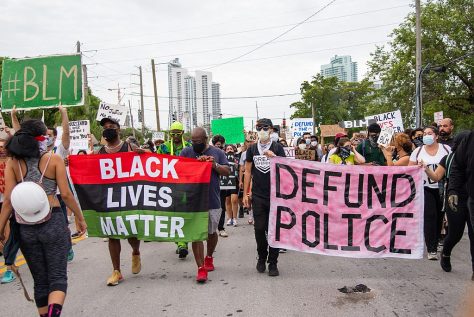
Violent crime surges in large cities as Democrat leaders defund police

How do Democrats respond to riots, vandalism and arson?

We can already see how Democrats respond to criminals by looking at what is happening now in major Democrat-run cities. Criminals are defacing monuments, vandalizing businesses and assaulting law-abiding citizens. The response of the Demoncrats in power has been to order the police to stand down – then cut the police budget in order to fund social workers.

Here’s a report from The Daily Wire:

Homicide rates are hitting decades-long highs in many of the largest cities across the United States as local officials struggle with the fallout of a pandemic and massive anti-police protests.

Homicide rates have increased by double-digits in 36 of the 50 biggest U.S. cities, according to The Wall Street Journal. The spike in killings comes as other forms of violent crime, such as robberies and rapes, are appearing to decrease.

[…]Chicago police say gang violence lead to at least 15 people injured during a July 21 shootout at the funeral for a young man and gang member. At least 60 shell casings were recovered from the scene after a group of men opened fire on people gathered for the funeral and some in the crowd fired back.

Aside from the pandemic, a wave of protests against police brutality has driven a secondary wave of anti-police sentiment as activists push local officials to defund and abolish police departments.

It’s much easier for Democrats to do their rioting and looting and arson if there are no police to stop them.

The police do have some advice for the taxpayers who pay the Democrat leaders to protect them from criminals:

Minneapolis Police informed residents of the city’s embattled 3rd Precinct to prepare for the giving up of their personal belongings to potential robbers and advised them to do as criminals say for their own safety.

According to a July 28 email provided to Alpha News MN that was also forwarded to The Daily Wire, the Minneapolis Police Department offered “prevention tips” to residents hoping to avoid being a victim of the skyrocketing cases of robbery and carjacking that have plagued the city since George Floyd’s death in May.

“Robberies and Carjacking’s [sic] have increased in our Precinct,” the email begins. “Cell phones, purses, and vehicles are being targeted. Some victims have been maced, dragged, assaulted, and some threatened with a gun. Most of these crimes have occurred north of 42nd St. E. 100 Robberies and 20 Carjackings have been reported to 3rd Precinct Police in July alone. Downtown and Southwest Minneapolis have seen an increase as well. We want those who live and work here to be safe!”

The e-mail tells residents of the Democrat stronghold to: “Be prepared to give up your cell phone and purse/wallet.” And when confronted by criminals, to “do as they say.” Not surprising, since the police were previously ordered to vacate a precinct, so that the rioters could set it on fire.

If Joe Biden wins in November, he’ll confiscate your firearms and tell you to do as the criminals say, and hand over your property to them. Let them rape you. Let them kill you. Let them kill your family. And he’ll be protected by armed security. Paid for by you.