Tag Archives: Libya

John Bolton assesses Obama’s Syrian foreign policy

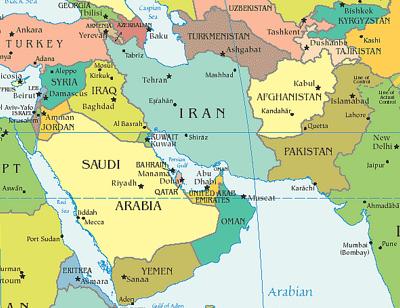
Political map of the Middle East

From the NY Post, an editorial former UN ambassador John Bolton.

Excerpt:

The end of the Khadafy regime in Libya has focused new attention on the rebels in Syria — as has last week’s belated call by President Obama for the ouster of Bashar al-Assad. But it will take a more radical Obama course correction to make a real difference. After six months of bloodshed, with thousands dead, and only mild White House responses earlier, this belated pronouncement is likely too little too late.

Here’s one of the five reasons why Obama has failed in Syria:

Third, Obama has never understood Iran’s domineering role in Syria. Beyond the Ba’ath Party’s historical propensity for brutality and repression, long ago perfected by Bashar’s father, Iran’s increasingly hegemonic position has virtually ensured that he will not contravene Tehran’s will.

Given Iran’s use of Syria to fund and arm Hezbollah, Hamas and other terrorist groups, and its likely use of Syria to hide aspects of its nuclear-weapons program, Iran was never going to permit “reform.”

Indeed, the administration needs to face Iran’s influence across the region. Syria’s and Hezbollah’s murderous intervention has rendered Lebanon virtually prostrate yet again. Hamas’s indiscriminate terrorism against Israel has destroyed the prospects for Palestinian unity and a responsible path to statehood and representative government. Now, with Mubarak’s fall in Egypt, Hamas can conspire in public with its parent organization, the Muslim Brotherhood, to radicalize Egyptians as well as Palestinians.

Obama either didn’t comprehend this relationship, or was simply unwilling to cross the Iranians because of his ethereal hopes to negotiate with Tehran to end its nuclear-weapons program. White House mistakes continue to allow Iran to prevail in Syria.

I wrote before that I thought that we should not be fighting in Libya, but that Syria was a much better place for non-violent actions to de-stabilize the Assad regime.

I hope that John Bolton will be the Secretary of State or Secretary of Defense in 2012.

Government troops shooting protesters in Syria

Now that violence has broken out in Jordan and Syria, countries where we have much more vital strategic interests, will Obama open up a fourth and a fifth military front as well?

Excerpt:

Even as the Obama administration defends the NATO-led air war in Libya, the latest violent clashes in Syria and Jordan are raising new alarm among senior officials who view those countries, in the heartland of the Arab world, as far more vital to American interests.

Deepening chaos in Syria, in particular, could dash any remaining hopes for a Middle East peace agreement, several analysts said. It could also alter the American rivalry with Iran for influence in the region and pose challenges to the United States’ greatest ally in the region, Israel.

In interviews, administration officials said the uprising appeared to be widespread, involving different religious groups in southern and coastal regions of Syria, including Sunni Muslims usually loyal to President Bashar al-Assad. The new American ambassador in Damascus, Robert Ford, has been quietly reaching out to Mr. Assad to urge him to stop firing on his people.

As American officials confront the upheaval in Syria, a country with which the United States has icy relations, they say they are pulled between fears that its problems could destabilize neighbors like Lebanon and Israel, and the hope that it could weaken one of Iran’s key allies.

The Syrian unrest continued on Saturday, with government troops reported to have killed more protesters.With 61 people confirmed killed by security forces, the country’s status as an island of stability amid the Middle East storm seemed irretrievably lost.

For two years, the United States has tried to coax Damascus into negotiating a peace deal with Israel and to moving away from Iran — a fruitless effort that has left President Obama open to criticism on Capitol Hill that he is bolstering one of the most repressive regimes in the Arab world.

[…]Indeed, the crackdown calls into question the entire American engagement with Syria. Last June, the State Department organized a delegation from Microsoft, Dell and Cisco Systems to visit Mr. Assad with the message that he could attract more investment if he stopped censoring Facebook and Twitter. While the administration renewed economic sanctions against Syria, it approved export licenses for some civilian aircraft parts.

The Bush administration, by contrast, largely shunned Damascus, recalling its ambassador in February 2005 after the assassination of a former Lebanese prime minister, Rafik Hariri. Many Lebanese accuse Syria of involvement in the assassination, a charge it denies.

When Mr. Obama named Mr. Ford as his envoy last year, Republicans in the Senate held up the appointment for months, arguing that the United States should not reward Syria with closer ties. The administration said it would have more influence by restoring an ambassador.

Diplomacy only works when it is backed by the CREDIBLE threat of FORCE. For two years, Obama didn’t show that he was willing to use force, and it emboldened the Iran-backed Syrian government to behave violently. Look at how Obama fumbled the Iranian election, where civilians were being shot down in the streets. That’s what causes violence – appeasement of evil. If evil people thought that they were going to have to pay a price for being evil, then they wouldn’t be evil. Obama made friends with bad people – he emboldened them to do bad things.

What is the strategic advantage of war in Libya?

From ABC News.

Excerpt:

Secretary of Defense Robert Gates said that Libya did not pose a threat to the United States before the U.S. began its military campaign against the North African country.

On “This Week,” ABC News’ Senior White House Correspondent Jake Tapper asked Gates, “Do you think Libya posed an actual or imminent threat to the United States?”

“No, no,” Gates said in a joint appearance with Secretary of State Hillary Clinton. “It was not — it was not a vital national interest to the United States, but it was an interest and it was an interest for all of the reasons Secretary Clinton talked about.  The engagement of the Arabs, the engagement of the Europeans, the general humanitarian question that was at stake,” he said.

Why didn’t the Obama administration go to Congress before engaging in military action in oil-rich Libya?

During his campaign for the Presidency, in December, 2007, Barack Obama told The Boston Globe that “The President does not have power under the Constitution to unilaterally authorize a military attack in a situation that does not involve stopping an actual or imminent threat to the nation.”

Earlier in 2007, then-Senator Hillary Clinton said in a speech on the Senate floor that, “If the administration believes that any — any — use of force against Iran is necessary, the President must come to Congress to seek that authority.”

Bush debated the war in Iraq for 6 months and got permission from Congress before going in. Why couldn’t Obama do it? Why does Obama have to rush to war?

Libyan opposition forces linked to Al-Quaeda

From the UK Telegraph. (H/T Gateway Pundit)

Excerpt:

Abdel-Hakim al-Hasidi, the Libyan rebel leader, has said jihadists who fought against allied troops in Iraq are on the front lines of the battle against Muammar Gaddafi’s regime.

In an interview with the Italian newspaper Il Sole 24 Ore, Mr al-Hasidi admitted that he had recruited “around 25″ men from the Derna area in eastern Libya to fight against coalition troops in Iraq. Some of them, he said, are “today are on the front lines in Adjabiya”.

Mr al-Hasidi insisted his fighters “are patriots and good Muslims, not terrorists,” but added that the “members of al-Qaeda are also good Muslims and are fighting against the invader”.

His revelations came even as Idriss Deby Itno, Chad’s president, said al-Qaeda had managed to pillage military arsenals in the Libyan rebel zone and acquired arms, “including surface-to-air missiles, which were then smuggled into their sanctuaries”.

Mr al-Hasidi admitted he had earlier fought against “the foreign invasion” in Afghanistan, before being “captured in 2002 in Peshwar, in Pakistan”. He was later handed over to the US, and then held in Libya before being released in 2008.

Columnist Charles Krauthammer is not happy with the way Obama is handling Libya.

Excerpt:

And as for the United States, who knows what American policy is. Administration officials insist we are not trying to bring down Qaddafi, even as the president insists that he must go. Although on Tuesday Obama did add “unless he changes his approach.” Approach, mind you.

In any case, for Obama, military objectives take a back seat to diplomatic appearances. The president is obsessed with pretending that we are not running the operation — a dismaying expression of Obama’s view that his country is so tainted by its various sins that it lacks the moral legitimacy to . . . what? Save Third World people from massacre?

Obama seems equally obsessed with handing off the lead role. Hand off to whom? NATO? Quarreling amid Turkish resistance (see above), NATO still can’t agree on taking over command of the airstrike campaign, which is what has kept the Libyan rebels alive.

This confusion is purely the result of Obama’s decision to get America into the war and then immediately relinquish American command. Never modest about himself, Obama is supremely modest about his country. America should be merely “one of the partners among many,” he said Monday. No primus inter pares for him. Even the Clinton administration spoke of America as the indispensable nation. And it remains so. Yet at a time when the world is hungry for America to lead — no one has anything near our capabilities, experience, and resources — America is led by a man determined that it should not.

A man who dithers over parchment. Who starts a war from which he wants out right away. Good God. If you go to take Vienna, take Vienna. If you’re not prepared to do so, better then to stay home and do nothing.

I am as much a warmonger as anyone could be, but I do think it is important to do your homework first. The first question to ask before going to war is “what is the objective?” I am still not sure what to make of this Libyan action – why is it good for the United States to risk our blood and treasure in Libya? The Telegraph story makes me think that it is a bad idea for us to get involved in Libya, unless we intended to occupy it and build it up, like we did with Iraq. But conquering Iraq and building it back up made sense strategically. What is the point of getting involved in Libya?