This article from Biblical Archaeology covers all the non-Christian historical sources that discuss Jesus.
About the author:
Lawrence Mykytiuk is associate professor of library science and the history librarian at Purdue University. He holds a Ph.D. in Hebrew and Semitic Studies and is the author of the book Identifying Biblical Persons in Northwest Semitic Inscriptions of 1200–539 B.C.E. (Atlanta: Society of Biblical Literature, 2004).
Here are the major sections:
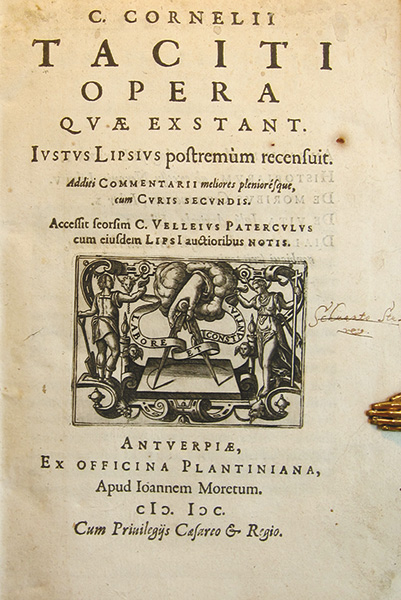
Roman historian Tacitus
Jewish historian Josephus
Greek satirist Lucian of Samosata
Platonist philosopher Celsus
Roman governor Pliny the Younger
Roman historian Suetonius
Roman prisoner Mara bar Serapion
And this useful excerpt captures the broad facts about Jesus that we get from just the first two sources:
We can learn quite a bit about Jesus from Tacitus and Josephus, two famous historians who were not Christian. Almost all the following statements about Jesus, which are asserted in the New Testament, are corroborated or confirmed by the relevant passages in Tacitus and Josephus. These independent historical sources—one a non-Christian Roman and the other Jewish—confirm what we are told in the Gospels:31
1. He existed as a man. The historian Josephus grew up in a priestly family in first-century Palestine and wrote only decades after Jesus’ death. Jesus’ known associates, such as Jesus’ brother James, were his contemporaries. The historical and cultural context was second nature to Josephus. “If any Jewish writer were ever in a position to know about the non-existence of Jesus, it would have been Josephus. His implicit affirmation of the existence of Jesus has been, and still is, the most significant obstacle for those who argue that the extra-Biblical evidence is not probative on this point,” Robert Van Voorst observes.32 And Tacitus was careful enough not to report real executions of nonexistent people.
2. His personal name was Jesus, as Josephus informs us.
3. He was called Christos in Greek, which is a translation of the Hebrew word Messiah, both of which mean “anointed” or “(the) anointed one,” as Josephus states and Tacitus implies, unaware, by reporting, as Romans thought, that his name was Christus.
4. He had a brother named James (Jacob), as Josephus reports.
5. He won over both Jews and “Greeks” (i.e., Gentiles of Hellenistic culture), according to Josephus, although it is anachronistic to say that they were “many” at the end of his life. Large growth
in the number of Jesus’ actual followers came only after his death.
6. Jewish leaders of the day expressed unfavorable opinions about him, at least according to some versions of the Testimonium Flavianum.
7. Pilate rendered the decision that he should be executed, as both Tacitus and Josephus state.
8. His execution was specifically by crucifixion, according to Josephus.
9. He was executed during Pontius Pilate’s governorship over Judea (26–36 C.E.), as Josephus implies and Tacitus states, adding that it was during Tiberius’s reign.
Some of Jesus’ followers did not abandon their personal loyalty to him even after his crucifixion but submitted to his teaching. They believed that Jesus later appeared to them alive in accordance with prophecies, most likely those found in the Hebrew Bible. A well-attested link between Jesus and Christians is that Christ, as a term used to identify Jesus, became the basis of the term used to identify his followers: Christians. The Christian movement began in Judea, according to Tacitus. Josephus observes that it continued during the first century. Tacitus deplores the fact that during the second century it had spread as far as Rome.
I remember reading the 1996 book by Gary Habermas entitled “The Historical Jesus: Ancient Evidence for the Life of Christ“. This book is a little before the time of most of you young Christian apologists, but back before the time of Lee Strobel and J. Warner Wallace, this is the stuff we all read. Anyway, in the book he makes a list of all that can be known about Jesus from external sources. And fortunately for you, you don’t have to buy the book because you can read chapter 9 of it right on his web site.
From Tacitus he gets this:
From this report we can learn several facts, both explicit and implicit, concerning Christ and the Christians who lived in Rome in the 60s A.D. Chronologically, we may ascertain the following information.
(1) Christians were named for their founder, Christus (from the Latin), (2) who was put to death by the Roman procurator Pontius Pilatus (also Latin), (3) during the reign of emperor Tiberius (14 37 A.D.). (4) His death ended the “superstition” for a short time, (5) but it broke out again, (6) especially in Judaea, where the teaching had its origin.
(7) His followers carried his doctrine to Rome. (8) When the great fire destroyed a large part of the city during the reign of Nero (54 68 A.D.), the emperor placed the blame on the Christians who lived in Rome. (9) Tacitus reports that this group was hated for their abominations. (10) These Christians were arrested after pleading guilty, (11) and many were convicted for “hatred for mankind.” (12) They were mocked and (13) then tortured, including being “nailed to crosses” or burnt to death. (14) Because of these actions, the people had compassion on the Christians. (15) Tacitus therefore concluded that such punishments were not for the public good but were simply “to glut one man’s cruelty.”
And from Josephus he gets this:
(1) Jesus was known as a wise and virtuous man, one recognized for his good conduct. (2) He had many disciples, both Jews and Gentiles. (3) Pilate condemned him to die, (4) with crucifixion explicitly being mentioned as the mode. (5) The disciples reported that Jesus had risen from the dead and (6) that he had appeared to them on the third day after his crucifixion. (7) Consequently, the disciples continued to proclaim his teachings. (8) Perhaps Jesus was the Messiah concerning whom the Old Testament prophets spoke and predicted wonders. We would add here two facts from Josephus’ earlier quotation as well. (9) Jesus was the brother of James and (10) was called the messiah by some.
So when you are reading the New Testament, these facts are the framework that you read within. It’s a good starting point when dealing with people who have never looked into who Jesus was and what he taught and what his followers believed about him, right from the start.
J. Warner Wallace tweeted this article from the UK Daily Mail featuring comments by atheist historian James Crossley. The article responds to a sensational story that came out in the past week about an alleged conspiracy by ancient Romans to “invent” Jesus. Naturally, this was reported far and wide in the press. But this article by Dr. Crossley offers a more sober assessment.
Here’s the introduction:
An American scholar claims to have made a controversial discovery that proves the entire story of Jesus was made up by Roman aristocrats.
Joseph Atwill asserts that Christianity did not start as a religion, but was instead created as a sophisticated propaganda tool to pacify subjects of the Roman Empire.
He says he noticed a pattern forming when he was studying the only surviving account of first-century Judea, which he claims contains dozens of parallels between the life of a Roman emperor and that of Jesus in the New Testament.
Mr Atwill argues that these ancient ‘confessions’ provide ‘clear evidence’ that the biography of Jesus is ‘actually constructed, tip to stern, on prior stories, but especially on the biography of a Roman Caesar’.
The theory itself seems to be based on finding parallels between the New Testament sources and other ancient sources:
[Atwill] says he stumbled upon his discovery while studying War of the Jews by Josephus – the only remain first-person account of first-century Judea – alongside the New Testament.
He said: ‘I started to notice a sequence of parallels between the two texts.
‘Although it’s been recognised by Christian scholars for centuries that the prophesies of Jesus appear to be fulfilled by what Josephus wrote about in the First Jewish-Roman war, I was seeing dozens more.
‘What seems to have eluded many scholars is that the sequence of events and locations of Jesus ministry are more or less the same as the sequence of events and locations of the military campaign of [Emperor] Titus Flavius as described by Josephus.’
[…]Atwill maintains he can demonstrate that ‘the Roman Caesars left us a kind of puzzle literature that was meant to be solved by future generations, and that the solution to that puzzle is “We invented Jesus Christ and we’re proud of it”.’
I’m not very optimistic about these Jesus-parallels approaches to history, but maybe there is something to it this time.
But Dr. Crossley doesn’t think that there is:
But bible academic Professor James Crossley, from the University of Sheffield, compared Mr Atwill’s theory to a Dan Brown fiction book.
He told Mail Online: ‘These types of theories are very common outside the academic world and are usually reserved for sensationalist literature.
‘They are virtually non-existent in the academic world.’
He also suggested the theories are not taken seriously by experts.
Mr Crossley said: ‘People do debate about how much we can know about Jesus, but the idea that Romans invented stories about Jesus is outside of the academic world.’
He added that this sort of theory can be ‘irritating’ to religion academics.
Dr. Crossley has debated against evangelical scholars, in particular Dr. Michael Bird and Dr. William Lane Craig. Although he is on the other side, he is aware of the reasons why people believe in a more traditional picture of the historical Jesus. It’s good to see experts on the other side weighing in on these sensational stories.
Because I am leaving the country today and must attend to last minute preparations, brevity is required. I am grateful to Dr. Mohler for his kind remarks pertaining to both me and my book, which has recently raised quite a bit of controversy in certain evangelical circles. Although I disagree with much of what he has asserted pertaining to my treatment of the raised saints in Matthew 27:52-53, one should not doubt my respect for him and gratitude for the contributions he has made for the cause of Christ and to the Southern Baptist Convention.
An accurate interpretation of a particular biblical text is assisted by an accurate understanding of the cultural milieu in which it was written. It is unfortunate that this does not appear to be a practice of my detractors Drs. Mohler and Geisler. Their judgment that an incompatibility exists between the doctrine of biblical inerrancy and interpreting Matthew’s raised saints at Jesus’ -death as apocalyptic symbols—or even to consider this interpretation as a viable way of understanding what Matthew was communicating (which is my present position)—without engaging in a thorough and sophisticated discussion of the milieu in which Matthew wrote is quite premature.
Dr. Mohler asks, “What could one possibly find in the Greco-Roman literature that would either validate or invalidate the status of this report as historical fact?” This is the wrong question. For it presupposes that Matthew intends the report of the raised saints to be understood as a historical event. So, the first question one should ask is how Matthew intended for his readers to understand this text. If he intended for us to regard the raised saints as apocalyptic symbols, then Drs. Mohler and Geisler are mistaken when regarding them as “historical fact.” It is only IF one can determine after an exhaustive study that Matthew intended for us to regard the raised saints as an event that occurred in space-time that Dr. Mohler could legitimately claim that the Greco-Roman literature offers nothing to assist us toward a correct interpretation of the text. Instead, Drs. Mohler and Geisler have pre-determined what the text means. But it is Scripture that is inerrant. Thus, we must be careful not to canonize our interpretation of Scripture so that we come to believe that it, too, is inerrant.
Article XX of the Chicago Statement on Biblical Hermeneutics states,
“We affirm that since God is the author of all truth, all truths, biblical and extrabiblical, are consistent and cohere, and that the Bible speaks truth when it touches on matters pertaining to nature, history, or anything else.WE FURTHER AFFIRM THAT IN SOME CASES EXTRABIBLICAL DATA HAVE VALUE FOR CLARIFYING WHAT SCRIPTURE TEACHES, AND FOR PROMPTING CORRECTION OF FAULTY INTERPRETATIONS [emphasis mine]. We deny that extrabiblical views ever disprove the teaching of Scripture or hold priority over it.”
Thus, the Chicago Statement on Biblical Hermeneutics asserts that extrabiblical data can assist us in clarifying what Matthew is teaching and correct faulty interpretations.
We find a similar statement in the Chicago Statement on Biblical Inerrancy:
“We affirm that canonical Scripture should always be interpreted on the basis that it is infallible and inerrant. However, in determining what the God-taught writer is asserting in each passage, we must pay the most careful attention to its claims and character as a human production. In inspiration, GOD UTILIZED THE CULTURE AND CONVENTIONS OF HIS PENMAN’S MILIEU, A MILIEU THAT GOD CONTROLS IN HIS SOVERIGN PROVIDENCE; IT IS MISINTERPRETATION TO IMAGINE OTHERWISE [emphasis mine].
“So history must be treated as history, poetry as poetry, hyperbole and metaphor as hyperbole and metaphor, generalization and approximation as what they are, and so forth. DIFFERENCES BETWEEN LITERARY CONVENTIONS IN BIBLE TIMES AND IN OURS MUST ALSO BE OBSERVED” [emphasis mine].
Thus, the Chicago Statement on Biblical Inerrancy asserts that an inattention to the culture and literary conventions in Bible times could lead to a misinterpretation of the biblical text.
Examples in the extrabiblical literature of phenomena similar to the raised saints in Matthew 27 may provide insights pertaining to how Matthew intended for us to interpret his raised saints. When we study the literary conventions in Bible times, we identify specific language in the Greco-Roman (Virgil, Dio Cassius, Plutarch), Jewish (Josephus) and biblical (Matthew 24, Acts 2) literature that may be employed to accent an event believed to have cosmic or even divine significance. Thus, when I noticed what might be similar language in Matthew 27:52-53, the interpretive possibility I proposed in my book emerged. Couldn’t the same be said 2,000 years from now pertaining to a proper interpretation of a text in which it was asserted that “the events of 9/11 were earth-shaking” while others may wrongly interpret the statement “Hell will freeze over before Ahmadinejad converts to Christianity” as a prophecy of two events rather than as a statement of enormous improbability?
The charge that I have “dehistoricized” the text is also problematic, since it likewise presupposes that Matthew intended the raised saints to be understood as historical. But what if he intended for them to be understood as apocalyptic symbols? It would then be misguided to “historicize” them. This would be little different than regarding as historical the seven-headed great red dragon in Revelation 12:3-4 whose tail sweeps up a third of the stars and casts them to earth. I regard this description as entirely symbolic and that to regard it as a real space monster would be to “historicize” the text.
The text in Matthew 27:52-53 has puzzled many New Testament scholars for years and will continue to do so. I remain puzzled but continue to seek a better understanding of what Matthew intended to communicate here. The calls of Drs. Geisler and Mohler for me to retract my opinion that it is possible Matthew intended for his readers to understand the raised saints in Matthew 27:52-53 as apocalyptic symbols is not helpful. Instead, such premature calls stifle scholarship and authentic quests for truth. I will be happy to retract my opinion once I am convinced that Matthew’s authorial intent was to communicate that the raised saints are to be understood as an event that occurred in space-time. So far, I have found the arguments offered by Drs. Geisler and Mohler to be unpersuasive and misguided.
I am grateful to the Southeastern Theological Review for their invitation to participate in a roundtable discussion on the meaning of this text and whether the solution I proposed in my recent book is compatible with the doctrine of biblical inerrancy. It is their desire to publish that discussion within the next 60 days. I will reserve my defense and further criticisms for that discussion and want to express my gratitude to the many who have sent words of support and to those who have written in my defense on the web. It is sad—and perhaps telling—that they have been ignored by Drs. Mohler and Geisler, since some of their arguments are quite good.
Below, I outline some problems I have with Al Mohler attacking anyone about anything.
Opinions not confirmed by evidence
There are degrees of understanding topics based on what sort of learning you have done to understand them. Reading about how to replace an engine is one thing, but replacing an engine is a completely different level of knowledge. Michael Licona has actually had to read a lot of history that he disagrees with, and to write papers that were peer-reviewed, and to defend his views with opposing scholars in formal academic debates. Al Mohler hasn’t done nearly as much of that, especially the debating. And that tells me something about Al Mohler. You see, the danger with not having to prepare for debates with your opponents is that you don’t really know whether what you say you believe is actually true. Everything sounds good to a person before they are cross-examined.
For example, take the existence of God. Al Mohler believes in a Creator, but he is a young-Earth creationist. Young-Earth creationism is completely unsupported by scientific evidence, although evidence could emerge to support it in the future. However, the cosmology that most scientists support today, the Big Bang cosmology, supports the existence of God as Creator, because it requires that a non-material agent outside of time brings space, matter, energy and time into being out of nothing. Now, Mohler can write column after column assuming that God exists – we all agree on that – but he will never know that God exists from cosmology, because he doesn’t believe that cosmology provides us with reliable evidence. He couldn’t make an argument for his view that God created the universe out of nothing using science. So he has a belief in a Creator, but not knowledge.
On the other hand, Christian scholars make a case for God’s existence based on mainstream cosmology that confounds atheists in public debates. I submit that people who understand mainstream cosmology and use it in debates have gone beyond mere opinion about God’s existence and into knowledge of God’s existence, based on scientific evidence from experiments. Mohler is in the opinion stage – he doesn’t know that God created the universe, based on scientific evidence. And similarly with history. When involved in disputers with historians who have studied and debated, he is at a disadvantage. He may have beliefs, but those beliefs might be in conflict with the evidence. It doesn’t bother him that he is in conflict with the evidence, but it shows us that it is at least possible that he makes claims without knowing whether they are true or not.
Preaching to the choir instead of persuading opponents
When you take a look at Al Mohler’s writings, it seems to me that he just compares his views to other people who disagree with him, and then he shuns the other people, and urges people who have the same preferences as he does to shun them, too. He doesn’t make factual arguments against the people with whom he disagrees. Let’s see some specific posts.
In this column, Mohler argues that a church should sanction an atheist pastor. We agree on that. Atheists should not be pastors. But does Al Mohler know how to argue against atheists? His response to the atheist pastor problem is to urge churches to expel him by force. He doesn’t urge them to get better at debating with atheists, and he doesn’t suggest that they try to persuade the atheist. He doesn’t mention any arguments to defend theism, or to defeat atheism. He has an opinion, and when he finds someone with a different view, he just shuns that person and urges others to shun them as well. He doesn’t seem to know how to use evidence one way or the other to decide what is true.
In this column, he disagrees with abortion. We agree on that. But again, in this column, he doesn’t try to make a case against abortion, or to urge his readers to learn how to make a case against abortion. He just shuns the bad abortionists without arguing against the pro-abortion view. He has nothing to say to persuade those who disagree with him. He just shuns them, and urges people who have the same preferences as he does to shun them too.
In another column, he disagrees with same-sex marriage. We agree on that. But he doesn’t discuss why same-sex marriage is wrong. He just expects that everyone reading will agree with his opinions. He just wants to say that it’s not OUR thing, it’s THEIR thing, and then shun it. He doesn’t talk about the purpose of marriage, or the needs of children for mothers and fathers, or the demographic crisis, or the dangers of the gay lifestyle, or anything. He just stays at the surface level of mere disagreement without reasons.
And in this column, he surveys the opinions of theistic evolutionists. Again, I agree with him on that. But he presents no positive, evidence-based case evolution is false, or that there was a literal Adam and Eve. He doesn’t talk about mitochondrial Eve or Y-chromosome Adam, or intelligent design, or fossils or any evidence at all. He talks about how theistic evolution is troubling, without giving any scientific arguments against it.
I call his writing style “fundamentalist hand-wringing”. I AM a fundamentalist, but I don’t whine and wring my hands and complain that things are changing and urge retreat and shunning of other views. His columns are always addressed to Christians, urging us to shun the other, and providing us with no reasons or evidence to buttress our own views as being true, or providing us with neutral arguments and evidence to show our opponents why their views are false.
In case you are wondering what my posts look like compared to his, here is a post against atheism, a post against abortion, a post against same-sex marriage, and a post against theistic evolution. And I write lots of posts like those ones, filled with new studies, new research, new evidence, debates and arguments – all the time! With evidence like this, you don’t have to shun your opponent – you can take them out to lunch and try to persuade them that you are right. I try to write about issues using evidence that NON-CHRISTIANS would find persuasive. I don’t just wring my hands and say “woe is us! woe is us!”. Even though I agree with Mohler on his conclusions practically across the board, I wish he would try to be more convincing to people who don’t agree with him by using actual evidence. One thing is for sure – he isn’t qualified to make statements about the way the world is, because all he has is opinions without reasons.
His disagreement with Licona is just his opinion
So we’ve seen that Mohler basically does the same thing over and over. He expresses an opinion. He has not studied anything in detail. He doesn’t do debates with other scholars. He just wants to disagree with others and then shun them – without explaining why he is right or why they are wrong.
Here are some words that Mohler uses to describe Licona’s argument:
shocking
disastrous
greatest concern
deeply troubling
very troubling
disappointing in the extreme
That’s it. That’s his entire argument against Licona. He has nothing persuasive to say, except “Oh noes! Oh noes!” like some sort of low-self-esteem spook worried about becoming irrelevant. If Mohler wants people to take him seriously, then maybe he should do some research of his own and publish a rebuttal to Licona, instead of using scare quotes and smear tactics (the Robert Gundry story he trots out). A threat is not an argument. A smear is not a refutation.
And by the way, I have very conservative views on things like God creating the animals directly, non-material souls, a literal, eternal Hell with active tormenting and real flames, and a literal Adam and Eve, and so on. I’m sure Licona does, too. Conservatism is not the issue. The issue is what the author of Matthew meant to convey in that passage. If what Matthew intended to convey is apocalyptic imagery, then that is the literal, conservative interpretation.
Finally, consider a different scenario. Gary Habermas is at least as conservative as Al Mohler, but I do think that if HE disagreed with Licona then that would be worth listening to – and they could even have a debate about whether Matthew was using the styles of the authors of his time, which allow for this apocalyptic imagery. Because that would be a debate about historical concerns, not opinions.
Learn more about Dr. Licona
Here is Dr. Licona’s web site. I have an autographed copy of Mike’s new book, and I bought another one for reading. I highly, highly recommend this book, but for students who have read an introductory book on the resurrection first. Here is the best introductory book on the resurrection of Jesus, authored by Michael Licona and Gary Habermas. Both books I would say are essential for anyone who claims to be a mature Christian. These are required reading.
If you would like to hear Michael in a debate with skeptical scholar Bart Ehrman, click here for the playlist. This is their 2nd debate, and Michael pwns Bart.


 WINTERY KNIGHT