
Tag Archives: Jesus Christ

What is the meaning of Christmas? Why Celebrate Christmas?

I thought that I would try to write a post to explain Christmas as I understand it to everyone who is foggy on what it is all about. I hope I am not making any theological errors here, after all, I am just a software engineer.

Basically, we know from a variety of scientific arguments that the universe was created and fine-tuned for life by an intelligent agent that existed causally prior to the beginning of the universe, because this agent brought the universe into being. Our purpose as humans is to enter into a two-way loving relationship with this Creator/Designer of the universe. This is the only way that we can ultimately be happy and fulfilled.

The mess we were in

Now, when you look at human experience, none of us is interested in finding out about the character of this Creator/Designer, because we are afraid that if we find out too much about him then we will have our freedom to do as we please constrained by the demands of a relationship with an all-powerful, all-good being. Just knowing that such a person exists and has a character distinct from our own is enough to cause us to flee from him so that we can stay autonomous from the obligations of the moral law that he expects us to follow.

Christians believe that this universal desire to avoid an all-powerful, all-good God who will judge us is a result of bad behaviors inherited by us from the very first rebellion against God by our ancestors. Ever since that rebellion, the capability for relating to God has been lost, because we no longer have the ability to stop our rebellion against God. Christians call the first rebellion of our ancestors “The Fall of Man”.

What does this rebellion look like for us today? Well, we want to do whatever we want, in order to be happy, and to ignore God’s demands. We want to have happy feelings, including security, community and being morally good, all without a relationship with God. We want to acquire and rearrange matter for our selfish ends without acknowledging and honoring the Creator/Designer of that matter. And, of course, we would like other people to affirm, voluntarily or involuntarily, that our rebellion against God is really the height of moral goodness.

Additionally, some people imagine that God, if he exists at all, must desire our happiness. And of course when their needs are not met by this invented God, then they become even more bitter at God, and eventually decide that God could not really exist since their selfish needs are not being met by him. It never seems to occur to us humans that some pain and suffering may be permitted by God in order to turn our attention away from pleasure and security in this life, and back towards a relationship with him.

This is the mess we find ourselves in. This propensity for turning away from God and trying to pursue selfish happiness and security apart from a relationship with God is what the Bible calls “sin”. Every single one of us deserves severe punishment for refusing to pursue a genuine two-way love relationship with the God who is there. That is the mess we are in before Jesus appears to address this problem.

The birth of Jesus

I cannot say much about how Jesus solves the problem of rebellion against God, because that is really the story of Easter, and today we are dealing with the story of Christmas. But I can say that the solution to the problem requires that God step into history to communicate with his creatures and to perform actions in order to be reconciled with them. That is the message of Christmas: God is stepping into history to do something to end our rebellion. Easter is the story of what he does.

This is talked about in the Bible in John 1, for example.

John 1:1-5:

1In the beginning was the Word, and the Word was with God, and the Word was God.

2He was with God in the beginning.

3Through him all things were made; without him nothing was made that has been made.

4In him was life, and that life was the light of men.

5The light shines in the darkness, but the darkness has not understood it.

You can substitute the word “Word” there for Logos, which really means logic or reason or wisdom. This is a person with a divine nature, identified with the eternal being of God, who exists causally prior to the creation of the universe, who is going to take on an additional human nature, including a human body. (Christians believe that there is one divine “what” being and three divine “who” persons). Software engineers, you can think of Jesus having two natures as multiple inheritance in C++.

And it continues in John 1:10-14:

10He was in the world, and though the world was made through him, the world did not recognize him.

11He came to that which was his own, but his own did not receive him.

12Yet to all who received him, to those who believed in his name, he gave the right to become children of God—

13children born not of natural descent, nor of human decision or a husband’s will, but born of God.

14The Word became flesh and made his dwelling among us. We have seen his glory, the glory of the One and Only, who came from the Father, full of grace and truth.

Here the word grace doesn’t mean like a graceful ballet dancer. It means an instance of mercy received from a superior. A person (a “who”) identified with the divine being (a “what”) has decided to make us a top-down offer of mercy.

The same message of God stepping into history is found in the Christmas carols that people sing at Christmas.

Christmas carols

Here’s the best one, “O, Holy Night“, and it says:

O holy night! The stars are brightly shining.
It is the night of the dear Savior’s birth.
Long lay the world in sin and error pining,
Till He appeared and the soul felt its worth.

When we were in rebellion, we had lost our most valuable capacity – the capacity of being in a direct relationship with God. And if Jesus can accomplish his mission, then we are going to regain that capacity for a direct relationship with God.

Now look at “Hark! The Herald Angels Sing“, which one of my favorites:

Hark! The herald angels sing,
“Glory to the newborn King!
Peace on earth and mercy mild,
God and sinners reconciled.”

Basically, as I often say, there are only two kinds of people in the world. There are people who are willing to respond to the offer of a relationship with God, with all the little sacrifices and compromises that a relationship entails, and then there are people who are not willing to respond. For the people who are willing to respond, the appearance of Jesus is the best thing that could possibly happen, because now we are finally going to have a chance to deal directly with God, face-to-face, to find out what he is like, and change ourselves to be more like him, with his help.

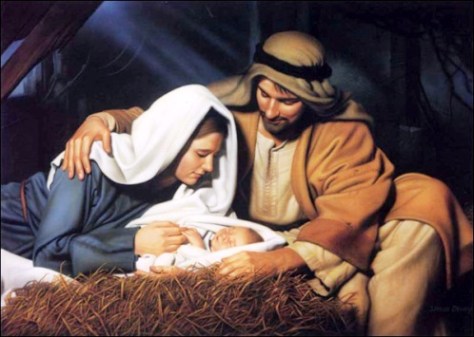
And that is why people celebrate Christmas. It’s the anniversary of the birth of Jesus. It is the story of God stepping into history to be reconciled with his rebellious creatures. It’s the story of the divine Logos divesting himself of his glory and subjecting himself to the life of a creature in order to rescue us from our sinful, self-destructive rebellion. This love for undeserving creatures is above and beyond the call of duty. We didn’t love him, but instead he loved us first, and he loved us enough to come down here and suffer with us so that we could be reconciled with God.

MERRY CHRISTMAS!

Greg Koukl lists 6 things you have to believe to be a Christian

Here is the article on the Stand to Reason web site.

Excerpt:

The six essential doctrines would be: the Trinity, the deity and humanity of Christ, the bodily resurrection, man’s fallenness and guilt, salvation by grace through faith by the substitutionary atonement of Jesus Christ, and belief that Jesus is the Messiah. And you have a seventh doctrine that strikes me as a functional necessity, that is the ultimate authority of Scripture without which none of the other truths can be affirmed or asserted with confidence.

By the way, it’s really important that people know these doctrines because many Christians are quite kind-hearted and they end up not being very careful about drawing distinctions between truth and falsity because they don’t want to disagree. I understand that. But if you were really kind-hearted then you would be honest and straight-forward with people about the demands of the gospel on their lives. The demand of the gospel is that you believe particular things to be true. It’s not just a matter of mere belief, as if these are just some incidental details of theology that you might happen to be mistaken about. And if you just happen to be mistaken, why should you go to hell because of that?

You don’t go to hell because you just happen to mistake a doctrine. You go to hell because you have broken God’s law. It is very critical to understand that. God only judges guilty people. People get judged by God not because they mess up on their theology but because they are guilty. People who are guilty get condemned. That’s it. There is a way to get around that but you’ve to know a couple of particular things that are true before you can take advantage of the forgiveness God offers. That’s where the essential doctrines come in.

He’s writing from a Calvinist perspective, which I don’t entirely agree with. But I don’t see anything wrong in that minimal list. I get very annoyed with theologians who are not philosophically trained and good at apologetics. You can trust Greg, he has to argue about these things all the time, so he isn’t stuck in a bubble like most pastors and ministers.

By the way, I’ve met him several times, and I’ve chastised him about his Calvinism all the way through the standard rebuttals and objections, so don’t e-mail him and chastise him again, because I’ve already done it, and thoroughly.

Mary explains how sinful humans can be rightly related to a holy God

I recently wrote a post about the Bible’s teaching on why having correct beliefs about who Jesus was and what he did in history is necessary in order to be considered righteous by the God of the universe.

Mary wrote a comment in response that I am reproducing below.

Take it away, Mary.


Really good post, WK! This is an important question. And to be a good friend you need to answer it for your friend – gently, but clearly and honestly – because truth is more important to your friend’s wellbeing than their comfort. You’ve done this very ably here.

A few things I’d like to add:

Firstly, the questioner is coming with the assumption that there actually are such things as truly good people. This is a common assumption. The problem with it is that it makes light of the depravity of man and undervalues the holiness of God. We need to understand how perfect and pure God is. We need to understand how sinful and impure we are. The Bible tells us that all have sinned and fallen short of the glory of God. This is confirmed for each of us by experience. Not only that, but our good works are as filthy rags to God. That sounds harsh, but we need to understand to what extent even our best actions are marred by depravity, by selfish motives. We have fallen not just a little bit short of God’s standard, but a lot. There is a vast chasm between us and God. The only thing we are deserving of is God’s judgment, God’s wrath. This is true of EVERYONE.

So the real question is really this: why does God let ANYONE into Heaven at all, rather than sending all of us to Hell? If it’s not because of our good works, then what is it?

The answer is that we go to Heaven because of Jesus’ good works. He is the only Person throughout the whole of history to live perfectly, to meet God’s standard. Because God loves these depraved, rebellious creatures that we are, Jesus comes to Earth, lives the perfect life which we don’t and then (astoundingly!) He takes the punishment which we deserve and gives us His righteousness. This is a magnificent gift with no equal. The Bible tells us that the wages of sin is death (so we’re in a bad way because all we’ve earned is death), BUT the gift of God is eternal life through Jesus Christ (so God has offered us something we totally don’t deserve). Like any other gift it is offered but has to be accepted for it to be owned by the recipient. This is what is meant by “believing” – it is taking up that gift and placing one’s trust in Jesus’ work and not in our own work. It’s not about mere intellectual belief (although that is necessary), but about a relational belief. It’s about saying, “Jesus, I reject my own ability to be good enough and instead I accept Your gift of being good enough in my place. I place my trust in You. You have bought me with your own life and I belong to You”.

Does this mean that good works are unimportant? No. Here’s what is possibly one of the most well-known 2 verses in the Bible, Ephesians 2:8-9: “For it is by grace you have been saved, through faith—and this not from yourselves, it is the gift of God — not by works, so that no one can boast.” So it’s clear that salvation is by grace (God’s unmerited favour), NOT by works. But here’s the next verse, Ephesians 2:10: “For we are God’s workmanship, created in Christ Jesus to do good works, which God prepared in advance for us to do.” So our new selves are GOD’S work, not ours, but the purpose for which He has recreated us is to do good works. Good works are not what saves us (only Jesus is truly good), but good works are the purpose for which God saves us. What are those good works? 1) Love God and 2) Love your neighbour. (WK referenced this in his post.) Loving God is something we can only do if we acknowledge God’s existence and once we are redeemed by God (i.e. have accepted the gift) and have His Holy Spirit in us, changing our desires and motivations. Loving our neighbour is also something we can do only to a limited extent before we are redeemed. This is because we need to have Christ-centred motives in our intentions towards that person in order to truly love them as we should. We can only have Christ-centred motives once we have been saved by Christ.

So what does this mean when we hear good, solid advice from respectable, decent non-christians. Firstly, we acknowledge that non-christians can indeed be correct about the right behaviour. What they can’t be correct about are the central correct motivations for that behaviour. They can’t be Christ-centred in their motivations. And there are also necessarily aspects of behaviour which are fundamentally affected by being Christ-centred.

Let’s take the example of marriage, seeing as that was raised. A non-christian can give good advice on marriage and how to build a better marriage. They can teach love, respect, fidelity, unselfishness, responsibility, etc. These are all good things. However, they won’t teach a Christ-centred marriage. They won’t teach that marriage is meant to be a picture of Christ’s relationship with the Church. They won’t teach how the husband is supposed to model Christ in serving his wife as her leader. They won’t teach how the wife is supposed to model the Church as it should be in submitting to her husband’s leadership. The won’t teach how marriage is a picture of the Gospel, of God’s unconditional love for us and our response to Him. This means that even though non-christians may give excellent advice, their advice is inherently lacking because it is not Christ-centred.