
Tag Archives: Israel

Iran, the Zetas drug cartel and our porous Southern border

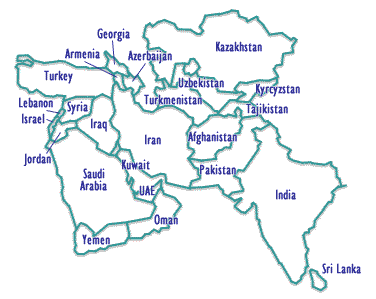
Map of the Middle East

Here’s an excellent assessment of the threat from the American Enterprise Institute.

Excerpt:

The revelation that the Iranian Revolutionary Guards Corps and its Quds Force had plotted to kill Saudi Arabia’s ambassador to the United States–by blowing him up as he dined at a Washington restaurant–is a stark reminder of the nature of the Tehran regime and its ambitions. But perhaps the most disturbing aspect of the story is that Iran’s thugs are developing a strategic partnership with Mexico’s most violent thugs: Los Zetas may only be the second-largest drug cartel in the Drug Enforcement Administration’s rankings, but they’re probably the most lethal. The gang is said to have formed around a platoon’s worth of deserters from Mexico’s special operations forces, and became the elite troops of another Mexican drug organization, the Gulf Cartel. The leader of that cartel got himself arrested, and the Zetas moved out on their own.

[…]The alliance with the Zetas is only the tip of the Iranian iceberg in Latin America. As Roger Noriega and Jose Cardenas have recently written, “Iran has made the Western Hemisphere a priority….The real game changer has been the alliance developed between Iran’s Mahmoud Ahmedinejad and Venezuela’s Hugo Chavez.” In addition to the Quds Force, Iran often operates through Hezbollah, which has established networks in the Lebanese communities that have long-standing enclaves in the trading and port cities of South America. In addition to Chavez, Iran has established closer ties to the Bolivian government of Evo Morales’s and Rafael Correa’s regime in Ecuador.

[…]We underestimate the Quds-Zeta partnership at our peril. The distinction between law enforcement and warfare is increasingly blurred; the Mexican government claims it had a hand in exposing the plot and it was a DEA agent who foiled the attack. While the Obama administration was right to bring charges against the operatives who plotted to kill the Saudi ambassador, this is a response to symptoms, not the disease. The larger problem is the maturing anti-America coalition governments and extremely rich, powerful, and violent groups; thinking of these organizations simply as criminals obscures their political interests–in keeping governments like Mexico’s or Colombia’s weak, in securing sanctuary, in access to the “international commons,” and the like. An appropriate response demands an integrated strategy. The biggest danger is not “militarizing” U.S. policy but in failing to address the fundamental security issues at stake.

The Obama administration’s lack of concern about border security is very disturbing, but they don’t dare to offend their open-borders constituency for a little thing like national security. Even so, the best defense might be a good offense – but is Obama willing to go on the offensive? Not so much. Instead, Obama seems to be resigned to letting Iran have nuclear weapons.

Excerpt:

Khamenei probably approved a strike in Washington because he no longer fears American military might. Iran’s advancing nuclear-weapons program has undoubtedly fortified his spine, as American presidents have called it “unacceptable” yet done nothing about it. And neither George W. Bush nor Barack Obama retaliated against Iran’s murderous missions in Iraq and Afghanistan.

President Obama has clearly shown he wants no part—or any Israeli part—in a preventive military strike against Iran’s nuclear sites. And Mr. Obama has pulled almost all U.S. troops out of Iraq and clearly wants to do the same in Afghanistan. Many Americans may view that as a blessing, but it is also clearly a sign that Washington no longer has the desire to maintain hegemony in the Middle East.

That’s an invitation to someone like Khamenei to push further, to attack both America and Iran’s most detested Middle Eastern rival, the virulently anti-Shiite Saudi Arabia. In the Islamic Republic’s conspiracy-laden world, the Saudis are part of the anti-Iranian American Arab realm, which is currently trying to down Iran’s close ally, Bashar al-Assad’s Syria, and squash the Shiites of Bahrain. Blowing up the Saudi ambassador in Washington would be an appealing counterstroke against the two foreign forces that Khamenei detests most.

The Obama administration will be tempted to respond against Iran with further unilateral and multilateral sanctions. More sanctions aren’t a bad idea—targeted sanctions against the Revolutionary Guards and the sale of gasoline made from Iranian crude can hurt Tehran financially. But they will not scare it. The White House needs to respond militarily to this outrage. If we don’t, we are asking for it.

The longer Obama leaves this, the worse the eventual war in the Middle East is going to be. We should at the very least be pursuing aggressive covert operations against Syrian and Iranian targets. I hope everyone remembers the slap on the wrist that Obama is giving Iran now, so that when we get attacked more and more, with more dangerous weapons, the correct people get the blame.
Which countries have the worst ratings for religious freedom?

From CNS News.

Excerpt:

Muslim-majority countries score worst across a range of measures in a comprehensive new study tracking government restrictions on religion as well as social hostilities involving religion around the world.

The study by the Pew Research Center’s Forum on Religion & Public Life, released Tuesday, found that nearly one-third of the world’s population lives in countries where religion-related government restrictions or social hostilities rose significantly between mid-2006 and mid-2009.

[…]A separate index in the Pew report graded countries according to levels of social hostility involving religion. Eight of the top ten countries in that index were Muslim-majority states – Iraq, Pakistan, Afghanistan, Somalia, Indonesia, Nigeria, Bangladesh and Egypt. The other two, India and Israel, have Hindu and Jewish majorities respectively, and large Muslim minorities.

In an index measuring official interference with religious practice, 18 out of 26 countries (69 percent) whose government “prohibits worship or religious practices of one or more religious groups as a general policy,” were OIC members – Brunei, Chad, Egypt, Indonesia, Iran, Iraq, Libya, Malaysia, Maldives, Mauritania, Pakistan, Saudi Arabia, Somalia, Syria, Tajikistan, Turkey, Turkmenistan and Uzbekistan.

The other eight were Burma, China, Eritrea, Laos, Madagascar, Monaco, Tuvalu and Vietnam.

A grading of countries where conversion from one religion to another is restricted was also dominated by Islamic states, accounting for 25 out of 29 countries listed (86 percent). They were Afghanistan, Algeria, Bangladesh, Comoros, Egypt, Indonesia, Iran, Jordan, Kuwait, Libya, Malaysia, Maldives, Mauritania, Oman, Pakistan, Qatar, Saudi Arabia, Somalia, Sudan, Syria, Tajikistan, Turkey, United Arab Emirates, Uzbekistan and Yemen.

The four non-Muslim countries were Eritrea, India, Israel and Vietnam.

Taking the conversion issue a step further, among 13 countries where there were incidents of physical violence over conversions from one religion to another, 10 (77 percent) were Muslim – Afghanistan, Bahrain, Bangladesh, Comoros, Egypt, Jordan, Nigeria, Pakistan, Somalia and Syria. The other three were India, Mongolia and Nepal.

I found it interesting that the tolerant religious pluralists in India are actually not very tolerant of conversions at all. You’ll recall that there are many Hindus who push for anti-conversion laws. That doesn’t sound like pluralism to me – it sounds like totalitarianism.

And more:

The Pew report also examined the issue of “defamation” of religion, tracking countries where various penalties are enforced for apostasy, blasphemy or criticism of religions.

“While such laws are sometimes promoted as a way to protect religion, in practice they often serve to punish religious minorities whose beliefs are deemed unorthodox or heretical,” it said.

It found 21 Muslim countries in that category – Afghanistan, Algeria, Bahrain, Brunei, Egypt, Indonesia, Iran, Iraq, Jordan, Kuwait, Maldives, Morocco, Pakistan, Qatar, Saudi Arabia, Somalia, Sudan, Tajikistan, Turkey, Western Sahara and Yemen.

The study also found 23 non-Muslim countries where penalties are enforced for such criticism of religion – Austria, Brazil, Burma, El Salvador, Ethiopia, France, Germany, Greece, Honduras, Iceland, India, Italy, Malta, Mauritius, Netherlands, Poland, Romania, Russia, Samoa, Singapore, Spain, Sweden and the United Kingdom.

This whole article is worth reading. Religious liberty is not as common as you might think if you are an American.

John Bolton assesses Obama’s Syrian foreign policy

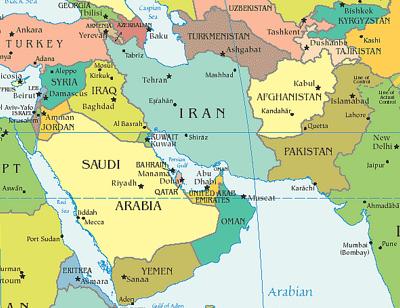
Political map of the Middle East

From the NY Post, an editorial former UN ambassador John Bolton.

Excerpt:

The end of the Khadafy regime in Libya has focused new attention on the rebels in Syria — as has last week’s belated call by President Obama for the ouster of Bashar al-Assad. But it will take a more radical Obama course correction to make a real difference. After six months of bloodshed, with thousands dead, and only mild White House responses earlier, this belated pronouncement is likely too little too late.

Here’s one of the five reasons why Obama has failed in Syria:

Third, Obama has never understood Iran’s domineering role in Syria. Beyond the Ba’ath Party’s historical propensity for brutality and repression, long ago perfected by Bashar’s father, Iran’s increasingly hegemonic position has virtually ensured that he will not contravene Tehran’s will.

Given Iran’s use of Syria to fund and arm Hezbollah, Hamas and other terrorist groups, and its likely use of Syria to hide aspects of its nuclear-weapons program, Iran was never going to permit “reform.”

Indeed, the administration needs to face Iran’s influence across the region. Syria’s and Hezbollah’s murderous intervention has rendered Lebanon virtually prostrate yet again. Hamas’s indiscriminate terrorism against Israel has destroyed the prospects for Palestinian unity and a responsible path to statehood and representative government. Now, with Mubarak’s fall in Egypt, Hamas can conspire in public with its parent organization, the Muslim Brotherhood, to radicalize Egyptians as well as Palestinians.

Obama either didn’t comprehend this relationship, or was simply unwilling to cross the Iranians because of his ethereal hopes to negotiate with Tehran to end its nuclear-weapons program. White House mistakes continue to allow Iran to prevail in Syria.

I wrote before that I thought that we should not be fighting in Libya, but that Syria was a much better place for non-violent actions to de-stabilize the Assad regime.

I hope that John Bolton will be the Secretary of State or Secretary of Defense in 2012.