
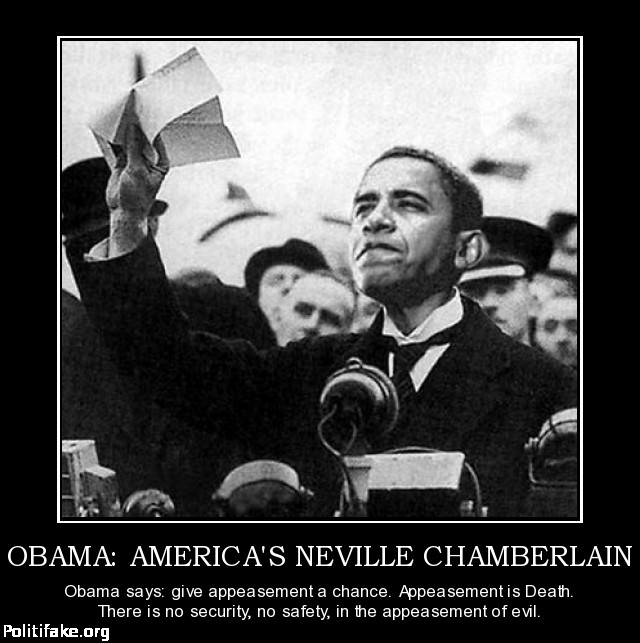
The Weekly Standard featured a column by foreign policy heavyweight John Bolton.
Excerpt:
Negotiations for an “interim” arrangement over Iran’s nuclear weapons program finally succeeded this past weekend, as Security Council foreign ministers (plus Germany) flew to Geneva to meet their Iranian counterpart. After raising expectations of a deal by first convening on November 8-10, it would have been beyond humiliating to gather again without result. So agreement was struck despite solemn incantations earlier that “no deal is better than a bad deal.”
This interim agreement is badly skewed from America’s perspective. Iran retains its full capacity to enrich uranium, thus abandoning a decade of Western insistence and Security Council resolutions that Iran stop all uranium-enrichment activities. Allowing Iran to continue enriching, and despite modest (indeed, utterly inadequate) measures to prevent it from increasing its enriched-uranium stockpiles and its overall nuclear infrastructure, lays the predicate for Iran fully enjoying its “right” to enrichment in any “final” agreement. Indeed, the interim agreement itself acknowledges that a “comprehensive solution” will “involve a mutually defined enrichment program.” This is not, as the Obama administration leaked before the deal became public, a “compromise” on Iran’s claimed “right” to enrichment. This is abject surrender by the United States.
In exchange for superficial concessions, Iran achieved three critical breakthroughs. First, it bought time to continue all aspects of its nuclear-weapons program the agreement does not cover (centrifuge manufacturing and testing; weaponization research and fabrication; and its entire ballistic missile program). Indeed, given that the interim agreement contemplates periodic renewals, Iran may have gained all of the time it needs to achieve weaponization not of simply a handful of nuclear weapons, but of dozens or more.
Second, Iran has gained legitimacy. This central banker of international terrorism and flagrant nuclear proliferator is once again part of the international club. Much as the Syria chemical-weapons agreement buttressed Bashar al-Assad, the mullahs have escaped the political deep freezer.
Third, Iran has broken the psychological momentum and effect of the international economic sanctions. While estimates differ on Iran’s precise gain, it is considerable ($7 billion is the lowest estimate), and presages much more. Tehran correctly assessed that a mere six-months’ easing of sanctions will make it extraordinarily hard for the West to reverse direction, even faced with systematic violations of Iran’s nuclear pledges. Major oil-importing countries (China, India, South Korea, and others) were already chafing under U.S. sanctions, sensing President Obama had no stomach either to impose sanctions on them, or pay the domestic political price of granting further waivers.
Seven billion dollars in funding for a nation that is a known sponsor of anti-American terrorism. What kind of moron makes a deal with a regime that is on record for wanting to attack Israel with nuclear weapons? Some sort of reincarnation of Neville Chamberlain, that’s who.
Previously, the Obama administration had been accuesed of leaking details of a strike plan by Israel against Iranian nuclear facilities.
From ABC News.
Excerpt:
Two reports today about Iran’s nuclear program and the possibility of an Israeli military strike have analysts in Israel accusing the Obama administration leaking information to pressure Israel not to bomb Iran and for Iran to reach a compromise in upcoming nuclear talks.
The first report in Foreign Policy quotes anonymous American officials saying that Israel has been given access to airbases by Iran’s northern neighbor Azerbaijan from which Israel could launch air strikes or at least drones and search and rescue aircraft.
The second report from Bloomberg, based on a leaked congressional report, said that Iran’s nuclear facilities are so dispersed that it is “unclear what the ultimate effect of a strike would be…” A strike could delay Iran as little as six months, a former official told the researchers.
“It seems like a big campaign to prevent Israel from attacking,” analyst Yoel Guzansky at the Institute for National Security Studies told ABC News. “I think the [Obama] administration is really worried Jerusalem will attack and attack soon. They’re trying hard to prevent it in so many ways.”
[…]Thursday’s reports come a week after the results of a classified war game was leaked to the New York Times which predicted that an Israeli strike could lead to a wider regional war and result in hundreds of American deaths. In a column this afternoon titled “Obama Betraying Israel?” longtime defense commentator Ron Ben-Yishai at Yedioth Ahronoth newspaper angrily denounced the leaks as a “targeted assassination campaign.”
“In recent weeks the administration shifted from persuasion efforts vis-à-vis decision-makers and Israel’s public opinion to a practical, targeted assassination of potential Israeli operations in Iran,” Ben-Yishai writes. “The campaign’s aims are fully operational: To make it more difficult for Israeli decision-makers to order the IDF [Israeli Defense Forces] to carry out a strike, and what’s even graver, to erode the IDF’s capacity to launch such strike with minimal casualties.”
Maybe in the next election, Jewish-American voters will think a little more about who to vote for, in view of these facts. Or maybe it will take the actual nuclear destruction of Israel by Iran to get over their prejudices. As a supporter of peaceful democracies like Israel, I hope it doesn’t come to that.
 WINTERY KNIGHT