Tag Archives: History

Oxford University Press book: is religion responsible for wars and violence in history?

Sherlock Holmes and John Watson: let's take a look at the facts
Sherlock Holmes and John Watson: let’s take a look at the facts

J.W. Wartick posted a review of a book called “The Myth of Religious Violence”, and written by Dr. William T. Cavanaugh.

Let’s take a look at some of the review.

Here, J.W. quotes from the book:

The story goes that, after the Protestant Reformation divided Christendom along religious lines, Catholics and Protestants began killing each other for holding to different doctrines. The wars of religion… demonstrated to the West the inherent danger of public religion. The solution to the problem lay in the rise of the modern state, in which religious loyalties were marginalized and the state secured a monopoly on the means of violence…

This story is more than just a prominent example of the myth of religious violence. It has a foundational importance for the secular West, because it explains the origin of its way of life and its system of governance. It is a creation myth for modernity (123).

Then writes this:

Following the lines of thinking of Voltaire, John Locke, and others, Cavanaugh argues that the myth of religious violence is perpetuated in order to marginalize that which is considered religious and give rise to the nation-state. According to this myth, “All theological religions are to be tolerated, provided they do not interfere with the obligations of citizens to the state…” (129). The myth is that religion is divisive and that they “fight over doctrines or ‘religious creeds’” so that “the state steps in to make peace” (130).

Cavanaugh shows that this myth is indeed false. The “wars of religion” had any number of motivating factors. The use of this story is not so much to tell a truth as it is a means by which to legitimize the nation-state. He argues towards these conclusions by showing that many “wars of religion” were in fact wars of economy, wars of power structures, and the like. He notes four primary factors for this myth to work: that combatants were motivated by religious difference, that the primary cause of war was religion, that religious causes are analytically separable from political, economic, and social causes at the time of the wars, and that the rise of the modern state was not a cause of the wars (141-142). He then analyzes each of these in turn based upon the historical record and shows that these all fail to account for the actual history of the “wars of religion.” In fact, the opposite is true in each case (142-177).

“We must conclude that the myth of the wars of religion is finally incredible, which is to say, false” (177).

[…]Perhaps the most challenging and paradigm-shifting portion of the book is that which focuses upon the uses of the myth of religious violence. Cavanaugh argues that the myth is so perpetuated because of its usefulness.

Cavanaugh has his BA from the University of Notre Dame, his MA from Cambridge University, and his PhD from Duke University.

Regarding religion and wars, consider this post from Well Spent Journey:

The Claim: “Religion has been the primary cause of war and oppression throughout the history of mankind.”

The Truth: In their comprehensive Encyclopedia of Wars, Phillips and Axelrod document the recorded history of warfare. Of the 1,763 wars presented, a mere 7% involved a religious cause. When Islam is subtracted from the equation, that number drops to 3.2%.

In terms of casualties, religious wars account for only 2% of all people killed by warfare. This pales in comparison to the number of people who have been killed by secular dictators in the 20th century alone.

So let’s take a look at those secular dictators.

According to the The Black Book of Communism, published by Harvard University Press, over 100 million innocent people were killed in atheistic, communist regimes in the last century. In the past, consistent atheists like Stalin who had power enough to ignore objective morality caused millions of innocent deaths. And you can even see atheism killing lots and lots of people in countries like North Korea today – where the official state religion is atheism. Why is that? It’s because the worldview of atheism teaches that the universe, and human beings, are here by accident. We are all just molecules in motion, and there is no inherent dignity or purpose to any of our lives that would obligate others to treat us a certain way.

On the Christian view, every single person has dignity because they are made in the image of God, and made to know him. Christians can never treat another person (of any religion or no religion) in any way that would discourage them from knowing God and experiencing his love for us. We could never hurt anyone in a way that causes them to turn against God. We are careful with people, because we want to act towards them in a way that helps them to accomplish this purpose.

Of course there are lots of atheists in the Judeo-Christian West who live more peacefully, because they are living in a background of objective morality and human rights provided by Western religions. But in countries like North Korea, with a state religion that cannot ground free will or objective morality or human rights or judgment after death, there are fewer restraints.

Even here, we have already seen over 50 million unborn children killed since abortion became legal. And I can guarantee you that it’s not authentic, Bible-believing Christians who are having these abortions. People who think they are going to face God when they die do not treat their fellow humans like machines made out of meat. As a group, atheists tend to be among the most radical in favor of abortion rights. The Secular Census of 2012 found that 97% of atheists vote for abortion. And of course today in the news we got the second video of Planned Parenthood top brass explaining how they sell the body parts of unborn babies to the highest bidder. I wrote about the first video here.

The idea of the strong killing the weak for their own advantage is the law of the jungle, and it’s not surprising to me that those who think that humans are just animals would act this way with vulnerable children. If you only have 80 years to be happy in an accidental universe, then anything goes. No one is there to hold you accountable when you die. If the weak get in your way, kill them all. Just don’t get caught. That’s what atheist morality teaches.

Here’s famous atheist Richard Dawkins explaining why infanticide is OK:

And here’s what he thinks of objective moral values and duties:

In a universe of blind physical forces and genetic replication, some people are going to get hurt, other people are going to get lucky, and you won’t find any rhyme or reason in it, or any justice. The universe that we observe has precisely the properties we should expect if there is, at bottom, no design, no purpose, no evil and no good, nothing but blind, pitiless indifference… DNA neither knows nor cares. DNA just is. And we dance to its music.

–Richard Dawkins, (River Out of Eden: A Darwinian View of Life (1995))

You can read more about the morality of atheists likeRichard Dawkins here.

In a previous post, I looked at an article by an atheist who explained what it meant to live consistently with atheism. I really recommend reading that in order to understand what is rational within that worldview.
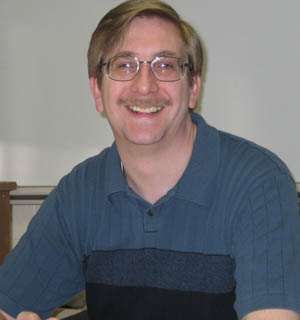
Tim McGrew lectures on undesigned coincidences in the Bible

Dr. Tim McGrew
Dr. Tim McGrew

I have an interesting lecture for you to listen to today, by Dr. Tim McGrew. He is a professor of philosophy at Western Michigan University.

The MP3 file is here.

I do not have a summary of the lecture, but I do have an article that explains what undesigned coincidences are.

Lydia McGrew explains the concept of undesigned coincidences on her blog:

Undesigned coincidences in the Gospels … is an argument that was well-known in the nineteenth century but has, for no really clear reason, simply been forgotten as time has gone on. It is a cumulative case argument that the Gospels reflect, to an important extent, independent knowledge of actual events. Please note that this argument is quite independent of one’s preferred answer to the synoptic question. That is to say, even if, e.g., Mark was the first Gospel and others had access to Mark and show signs of literary dependence on Mark, the argument from undesigned coincidences provides evidence for independent knowledge of real events among the Gospel writers. There are many more of such coincidences beyond those given in the talk.

Basically, this argument finds cases where the same story is in two sources, but where some important detail is left out of one account so that something about the story seems out of place. But the other source has the missing detail that unlocks the mystery. This supports the view that the sources are independent witnesses of the same events. Multiple attestation is an indicator that the material is historical.

My favorite example of undesigned coincidences is the Philip example from John 6.

Lydia explains that example here:

As I was listening to Tim’s examples, I was struck by all the reasons there might be for a real eyewitness not to fill out the explanation for a detail. Think for example how tedious it is to listen to someone who goes back to explain every little detail he mentions in a story.

[…]Similarly, as John is telling the story about the feeding of the five thousand, it would be quite natural for him to say that Jesus asked Philip where they could buy bread if he were really an eyewitness–that is, because he remembered that Jesus did ask Philip. (Tim talks about why it was Philip in the interview.) But John himself might have had to stop and think for a moment if someone had asked him, “Why did Jesus ask Philip rather than any of the other disciples?” Presumably when John told the story, he wasn’t particularly thinking about some special reason for Jesus to select Philip for the question. But if someone were forging the story as fiction, he would have a reason for choosing to use a given disciple as a character at that point in his fictional narrative, and therefore he would be unlikely to choose that character without making the reason clearer to his readers.

All sorts of such things can happen when one is telling a true story, especially a story one has witnessed. One gets caught up in what one actually remembers and drops in incidental references to small facts, which facts are to some extent selected randomly by the memory as one brings the scene back to memory. This is typical of real memoirs but not of elaborate forgeries.

If you think this is interesting and useful, then give the lecture a listen.

New paper from Michael Licona on historical methods and miracle claims

Sherlock Holmes and John Watson
Sherlock Holmes and John Watson about to do some historical inquiry

I hope that all my readers know who Michael Licona is!

The PDF of his new paper is here. It was just published in the Journal for the Study of the Historical Jesus. It talks about how the pre-suppositions of ancient historians can mess with their ability to investigate the past.

Here’s the abstract:

Most biblical scholars and historians hold that the investigation of a miracle report lies outside of the rights of historians acting within their professional capacity. In this essay, I challenge this position and argue to the contrary. A definition of history should not a priori exclude the possibility of investigating miracle claims, since doing so may restrict historians to an inaccurate assessment of the past. Professional historians outside of the community of biblical scholars acknowledge the frequent absence of a consensus; this largely results from conflicting horizons among historians. If this is the present state among professionals engaged in the study of non-religious history, it will be even more so with historians of Jesus. Finally, even if some historians cannot bring themselves to grant divine causation, they, in principle, can render a verdict on the event itself without rendering a verdict on its cause.

Here’s a bit that I found interesting:

It is clear that the horizon of atheist New Testament scholar Gerd Lüdemann is a driving force behind his historical conclusions when he a priori rules out the  historicity of the ascension of Jesus reported in Acts 1.9–11 ‘because there is no  such heaven to which Jesus may have been carried’. Ontological naturalism similarly guides James Tabor.

He writes:

Women do not get pregnant without a male—ever. So Jesus had a human father… Dead bodies don’t rise… So, if the tomb was empty the historical  conclusion is simple—Jesus’ body was moved by someone and likely  reburied in another location.

Not so obvious is Geza Vermes in his 2008 volume The Resurrection: History and Myth. With hardly a comment, Vermes simply dismisses both ‘the out-of-hand rejection of the inveterate skeptic’ and the hypothesis that Jesus rose from the dead since it can only be made from ‘the blind faith of the fundamentalist believer’.

I thought these were interesting because Ludemann and Vermes still agree with some of the minimal facts in a case for the resurrection case, such as Craig, Habermas or Licona might make. Ludemann gives you the post-mortem “visions” of Jesus, and Vermes gives you the empty tomb – yet both are naturalists, as you can see. They both rule out miracle as an explanation of the minimal facts a priori, but they both allow for useful minimal facts because the historical case is there to support them. Isn’t that interesting?

So what would you call a detective who ruled out some causes of death but not others, before looking at the evidence?

More:

Second, methodological naturalism may handicap historians, preventing them in some cases from providing a fuller and more accurate account of the past. Molecular biologist Michael Behe provides a relevant challenge to this approach in his discipline. He writes:

Imagine a room in which a body lies crushed, flat as a pancake. A dozen detectives crawl around, examining the floor with magnifying glasses for any clues to the identity of the perpetrator. In the middle of the room, next to the body, stands a large, grey elephant. The detectives carefully avoid bumping into the pachyderm’s legs as they crawl, and never even glance at it. Over time the detectives get frustrated with their lack of progress but resolutely press on, looking even more closely at the floor. You see, textbooks say detectives must ‘get their man’, so they never consider elephants.

In context, Behe is contending that when scientists limit their considerations exclusively to unguided natural causes they will forever keep themselves from discovering the actual cause if a Designer of some sort was responsible. A similar admonition may be issued to historians who a priori exclude a non-human agent as the cause behind a past event. Those who do so could actually be placing themselves in a position where they cannot appraise history accurately.

The rest of the paper discusses two options for historians who want to resolve this problem.

So, I’m impressed that Mike Licona reads Mike Behe (that quote is from “Darwin’s Black Box”). Pretty cool that he reads across disciplines, and that he reads people who disagree with him. We one-dollar apologists all need to be like that.

Back to his paper. I see this presupposition of naturalism come up in debates on the historical Jesus, where the naturalist will just assume naturalism and then proceed to do history – even at a time where we have so many scientific arguments to undermine naturalism. It’s a bad philosophical view, and we shouldn’t let it influence how we do history.

If you run into these historians who are committed to naturalism, it might be worth it to make them defend it. You ask them – do you believe in naturalism? If they say yes, ask them for scientific evidence for naturalism. And when they finish not giving you any, then you can go on a long monologue on the origin of the universe, the fine-tuning, the origin of life, the Cambrian explosion, the habitability (galactic and stellar), and so on. Then tell them to stop bring their blind religious faith into their historical investigations.