
Tag Archives: Hell

William Lane Craig discusses Romans 9 and “corporate election”

Here’s the post on Reasonable Faith. He’s responding to a questioner who is an atheist,and who thinks that Calvinism makes belief in Christianity impossible.

Part of the question:

In Romans 9, Paul describes Jacob and Esau as being judged as loved and hated (or “loved less”) before they did any good or evil. Paul then goes on to liken all of us as clay molded by a potter, and states that it is not the will of he who runs but of He who shows mercy which saves us. Paul relates God telling Pharaoh: “for this purpose I have raised you up …” and then discusses an idea that the vessels God made for “common use” are there only for the purpose of showing His patience to his more special pots.

Many Reformed think this passage shows double-predestination and unconditional election, and I am forced to agree with them – as is Christ Himself in John 6:65! The Reformed God is something I view as tyrannical and unworthy of worship, and indeed it is tough for someone outside the faith to respond to the Calvinist interpretation of Romans 9 with anything but hatred: as the prominent Reformed scholar James White describes this very chapter, “I understand that the only way one can believe this is by an act of grace.”

In my view, this defeats your position of molinism, since one cannot freely choose God on his own in any potential setting without God’s prior help. Furthermore, the context of the related story in John 6 has disciples abandoning Christ, prompting what He says in 6:65 and proving that Christ is not offered as a free gift to all! What is left for the freedom of man to choose Christ given these passages?

Part of the answer:

Second, let’s talk about Paul’s doctrine of election in Romans 9. I want to share with you a perspective on Paul’s teaching that I think you’ll find very illuminating and encouraging. Typically, as a result of Reformed theology, we have a tendency to read Paul as narrowing down the scope of God’s election to the very select few, and those not so chosen can’t complain if God in His sovereignty overlooks them. I think this is a fundamental misreading of the chapter which makes very little sense in the context of Paul’s letter.

Earlier in his letter Paul addresses the question of what advantage there is to Jewish identity if one fails to live up to the demands of the law (2. 17-3.21). He says that although being Jewish has great advantages in being the recipients of God’s revelatory oracles, nevertheless being Jewish gives you no automatic claim to God’s salvation. Instead, Paul asserts the radical and shocking claim that “He is not a real Jew who is one outwardly, nor is true circumcision something external and physical. He is a Jew who is one inwardly, and real circumcision is of the heart, spiritual and not literal” (2. 28-29).

Paul held that “no human being will be justified in God’s sight by works of the law” (3.20); rather “we hold that a man is justified by faith apart from works of law” (3. 29). That includes Gentiles as well as Jews. “Or is God the God of Jews only? Is He not the God of Gentiles also? Yes, of Gentiles also, since God is one” (3. 29-30).

Do you realize what that meant to Paul’s Jewish contemporaries? Gentile “dogs” who have faith in Christ may actually be more Jewish than ethnic Jews and go into the Kingdom while God’s chosen people are shut out! Unthinkable! Scandalous!

Paul goes on to support his view by appeal to the example of none less than Abraham, the father of the Jewish nation. Abraham, Paul explains, was pronounced righteous by God before he received circumcision. “The purpose,” says Paul, “was to make him the father of all who believe without being circumcised [i.e., the Gentiles] and who thus have righteousness reckoned to them and likewise the father of the circumcised who are not merely circumcised [note the qualification!] but also follow the example of faith which our father Abraham had before he was circumcised” (4.11-12).

This is explosive teaching. Paul begins chapter 9 by expressing his profound sorrow that ethnic Jews have missed God’s salvation by rejecting their Messiah [= Christ]. But he says it’s not as though God’s word had failed. Rather, as we have already seen, “not all who are descended from Israel belong to Israel, and not all are children of Abraham because they are his descendants” (9. 6-7). Being ethnically Jewish is not enough; rather one must be a child of the promise—and that, as we’ve seen, may include Gentiles and exclude Jews.

The problematic, then, with which Paul is wrestling is how God’s chosen people the Jews could fail to obtain the promise of salvation while Gentiles, who were regarded by Jews as unclean and execrable, could find salvation instead. Paul’s answer is that God is sovereign: He can save whomever He wants, and no one can gainsay God. He has the freedom to have mercy upon whomever He wills, even upon execrable Gentiles, and no one can complain of injustice on God’s part.

So—and this is the crucial point—who is it that God has chosen to save? The answer is: those who have faith in Christ Jesus. As Paul writes in Galatians (which is a sort of abbreviated Romans), “So you see that it is men of faith who are the sons of Abraham” (Gal. 3. 7). Jew or Gentile, it doesn’t matter: God has sovereignly chosen to save all those who trust in Christ Jesus for salvation.

That’s why Paul can go on in Romans 10 to say, “There is no distinction between Jew and Greek; the same Lord is Lord of all and bestows his riches upon all who call upon him. For ‘everyone who calls upon the name of the Lord will be saved'” (10. 12-13). Reformed theology can make no sense at all of this wonderful, universal call to salvation. Whosoever will may come.

Paul’s burden, then, in Romans 9 is not to narrow the scope of God’s election but to broaden it. He wants to take in all who have faith in Christ Jesus regardless of their ethnicity. Election, then, is first and foremost a corporate notion: God has chosen for Himself a people, a corporate entity, and it is up to us by our response of faith whether or not we choose to be members of that corporate group destined to salvation.

Of course, given God’s total providence over the affairs of men, this is not the whole story. But Molinism makes good sense of the rest. John 6. 65 means that apart from God’s grace no one can come to God on his own. But there’s no suggestion there that those who refused to believe in Christ did not do so of their own free will. God knows in exactly what circumstances people will freely respond to His grace and places people in circumstances in which each one receives sufficient grace for salvation if only that person will avail himself of it. But God knows who will respond and who won’t. So again the fault does not lie with God that some persons freely resist God’s grace and every effort to save them; rather they like Israel fail to attain salvation because they refuse to have faith.

My view of election and Romans 9 is corporate election. Like middle knowledge, once you understand the concept of corporate election and re-read Romans 9, it turns out that the whole thing reads naturally. If you reject corporate election and middle knowledge because you like Calvinism, then there are lots of problems with the rest of the Bible, as William Lane Craig described here.

If you’d like to see Bill take on an atheist professor from the prestigious University of Michigan – Ann Arbor, who argues that Calvinist theology disproves the existence of a benevolent God, then read this debate.
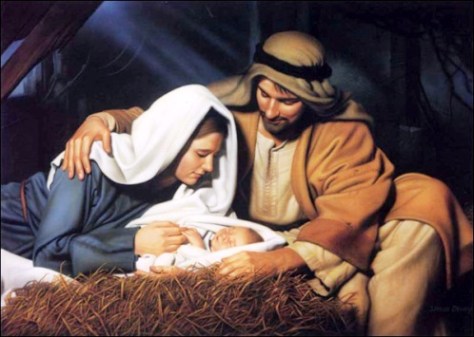
What does Christmas mean to Christians?

It’s the time of year when we explain what Christianity is about.

God exists

Basically, we know from a variety of scientific arguments that the universe was created and fine-tuned for life by an intelligent agent that existed causally prior to the beginning of the universe, because this agent brought the universe into being. Our purpose as humans is to enter into a two-way loving relationship with this Creator/Designer of the universe. This is the only way that we can ultimately be happy and fulfilled.

We avoid God

Now, when you look at human experience, none of us is interested in finding out about the character of this Creator/Designer, because we are afraid that if we find out too much about him then we will have our freedom to do as we please constrained by the demands of a relationship with an all-powerful, all-good being. Just knowing that such a person exists and has a character distinct from our own is enough to cause us to flee from him so that we can stay autonomous from the obligations of the moral law that he expects us to follow.

Christians believe that this universal desire to avoid an all-powerful, all-good God who will judge us is a result of bad behaviors inherited by us from the very first rebellion against God by our ancestors. Ever since that rebellion, the capability for relating to God has been lost, because we no longer have the ability to stop our rebellion against God. Christians call the first rebellion of our ancestors “The Fall of Man”.

What does this rebellion look like for us today? Well, we want to do whatever we want, in order to be happy, and to ignore God’s demands. We want to have happy feelings, including security, community and being morally good, all without a relationship with God. We want to acquire and rearrange matter for our selfish ends without acknowledging and honoring the Creator/Designer of that matter. And, of course, we would like other people to affirm, voluntarily or involuntarily, that our rebellion against God is really the height of moral goodness.

Additionally, some people imagine that God, if he exists at all, must desire our happiness. And of course when their needs are not met by this invented God, then they become even more bitter at God, and eventually decide that God could not really exist since their selfish needs are not being met by him. It never seems to occur to us humans that some pain and suffering may be permitted by God in order to turn our attention away from pleasure and security in this life, and back towards a relationship with him.

This is the mess we find ourselves in. This propensity for turning away from God and trying to pursue selfish happiness and security apart from a relationship with God is what the Bible calls “sin”. Every single one of us deserves severe punishment for refusing to pursue a genuine two-way love relationship with the God who is there. That is the mess we are in before Jesus appears to address this problem.

Jesus saves the day

I cannot say much about how Jesus solves the problem of rebellion against God, because that is really the story of Easter, and today we are dealing with the story of Christmas. But I can say that the solution to the problem requires that God step into history to communicate with his creatures and to perform actions in order to be reconciled with them. That is the message of Christmas: God is stepping into history to do something to end our rebellion. Easter is the story of what he does.

This is talked about in the Bible in John 1, for example.

John 1:1-5:

1In the beginning was the Word, and the Word was with God, and the Word was God.

2He was with God in the beginning.

3Through him all things were made; without him nothing was made that has been made.

4In him was life, and that life was the light of men.

5The light shines in the darkness, but the darkness has not understood it.

You can substitute the word “Word” there for Logos, which really means logic or reason or wisdom. This is a person with a divine nature, identified with the eternal being of God, who exists causally prior to the creation of the universe, who is going to take on an additional human nature, including a human body. (Christians believe that there is one divine “what” being and three divine “who” persons). Software engineers, you can think of Jesus having two natures as multiple inheritance in C++.

And it continues in John 1:10-14:

10He was in the world, and though the world was made through him, the world did not recognize him.

11He came to that which was his own, but his own did not receive him.

12Yet to all who received him, to those who believed in his name, he gave the right to become children of God—

13children born not of natural descent, nor of human decision or a husband’s will, but born of God.

14The Word became flesh and made his dwelling among us. We have seen his glory, the glory of the One and Only, who came from the Father, full of grace and truth.

Here the word grace doesn’t mean like a graceful ballet dancer. It means an instance of mercy received from a superior. A person (a “who”) identified with the divine being (a “what”) has decided to make us a top-down offer of mercy.

The same message of God stepping into history is found in the Christmas carols that people sing at Christmas.

Christmas carols

Here’s the best one, “O, Holy Night“, and it says:

O holy night! The stars are brightly shining.
It is the night of the dear Savior’s birth.
Long lay the world in sin and error pining,
Till He appeared and the soul felt its worth.

When we were in rebellion, we had lost our most valuable capacity – the capacity of being in a direct relationship with God. And if Jesus can accomplish his mission, then we are going to regain that capacity for a direct relationship with God.

Now look at “Hark! The Herald Angels Sing“, which one of my favorites:

Hark! The herald angels sing,
“Glory to the newborn King!
Peace on earth and mercy mild,
God and sinners reconciled.”

Basically, as I often say, there are only two kinds of people in the world. There are people who are willing to respond to the offer of a relationship with God, with all the little sacrifices and compromises that a relationship entails, and then there are people who are not willing to respond. For the people who are willing to respond, the appearance of Jesus is the best thing that could possibly happen, because now we are finally going to have a chance to deal directly with God, face-to-face, to find out what he is like, and change ourselves to be more like him, with his help.

And that is why people celebrate Christmas. It’s the anniversary of the birth of Jesus. It is the story of God stepping into history to be reconciled with his rebellious creatures. It’s the story of the divine Logos divesting himself of his glory and subjecting himself to the life of a creature in order to rescue us from our sinful, self-destructive rebellion. This love for undeserving creatures is above and beyond the call of duty. We didn’t love him, but instead he loved us first, and he loved us enough to come down here and suffer with us so that we could be reconciled with God.

MERRY CHRISTMAS!

Three debates on divine sovereignty, predestination and free will

Earlier in the week I presented a philosophical debate on God and morality/purpose and a scientific/philosophical debate on God’s existence and a scientific/philosophical debate on abortion. But this time I present to you three debates featuring a Calvinist debater and a foreknowledge debater. These debates are incredibly good and very friendly and cordial. If you have never heard a debate on theology before, then these are the ones to get you started. Theological debates are more fun than you think, you just need to choose the good ones.

The two views being debated are Calvinism and Foreknowledge. Calvinism is the view that God unilaterally predetermines a selected group of individuals who will know him – the “elect”. Foreknowledge is the view that God draws people to him who he foreknows will freely respond to his overtures and come to know him. What does the Bible teach about these issues?

The Calvinist debater is Dr. James White:

James White is the director of Alpha and Omega Ministries, a Christian apologetics organization based in Phoenix, Arizona. He is a professor, having taught Greek, Systematic Theology, and various topics in the field of apologetics. He has authored or contributed to more than twenty books, including The King James Only ControversyThe Forgotten TrinityThe Potter’s Freedom, and The God Who Justifies. He is an accomplished debater, having engaged in more than one-hundred moderated, public debates with leading proponents of Roman Catholicism, Islam, Jehovah’s Witnesses, and Mormonism, as well as critics such as Bart Ehrman, John Dominic Crossan, Marcus Borg, and John Shelby Spong. He is an elder of the Phoenix Reformed Baptist Church, has been married to Kelli for more than twenty-eight years, and has two children, Joshua and Summer.

The Foreknowledge debater is Dr. Michael Brown:

Michael L. Brown holds a Ph.D. in Near Eastern Languages and Literatures from New York University and has served as a visiting or adjunct professor at Southern Evangelical Seminary, Gordon Conwell Theological Seminary (Charlotte), Trinity Evangelical Divinity School, Fuller Theological Seminary, Denver Theological Seminary, the King’s Seminary, and Regent University School of Divinity. He has contributed numerous articles to scholarly publications, including the Oxford Dictionary of Jewish Religion and the Theological Dictionary of the Old Testament. Dr. Brown is the author of twenty books, including, Our Hands Are Stained with Blood: The Tragic Story of the “Church” and the Jewish People, which has been translated into more than twelve languages, the highly-acclaimed five-volume series, Answering Jewish Objections to Jesus, a commentary on Jeremiah (part of the revised edition of the Expositor’s Bible Commentary), and several books on revival and Jesus revolution.

Now, let’s get ready to rumble!

First debate

A nice friendly debate that introduces the topic. This is the best debate for casual listeners and non-Christians.

The MP3 file is here.

Summary:

  • Introduction to Calvinist James White and some of his 90 debates
  • What is Calvinism and why is it important?
  • Does God love all people the same way in Calvinism?
  • Does God desire the salvation of all people in Calvinism?
  • Is the offer of salvation to all people a genuine offer on Calvinism?
  • Does Calvinism diminish or augment God’s sovereignty?
  • Can God accomplish his will by permitting evil creaturely actions?
  • Did Jesus die only for the “chosen”, or for the possibility of salvation for all?
  • Does a person’s responding to God’s offer of savaltion detract from Gods glory?
  • Does our ability to resist God’s grace mean that we are “stronger” than God?

There is a little static in the audio for a few seconds every time they come back from a break, but nothing major.

Second debate, on specific passages in the Bible

Same two guys, but this time they tackle the meaning of specific Bible passages.

The MP3 file is here.

The passages being disputed:

  • John 6
  • Romans 8, 9
  • Ephesians 1
Each person gets 8 minutes to exegete the text, followed by 4 minutes of cross-examination by the other debater, followed by 3 minute conclusions by each debater. These texts were chosen by the Calvinist debater.

Third debate, on specific passages in the Bible

Same two guys, but this time they tackle the meaning of specific Bible passages.

The MP3 file is here.

The passages being disputed:

  • Luke 13:34-35 (Deuteronomy 5:28-29)
  • Ezekiel 18:21-32 (Jeremiah 3:19-20; Ezekiel 22:30-31)
  • 1 John 2:1-2 (2 Pet 2:1).
Each person gets 8 minutes to exegete the text, followed by 4 minutes of cross-examination by the other debater, followed by 3 minute conclusions by each debater. These texts were chosen by the foreknowledge debater.