
The best clip from the Thursday night Republican primary debate.
Excerpt:
Iran should be allowed to have a nuclear bomb, Republican candidate Ron Paul suggested during Thursday’s presidential debate.
The maverick Texas Congressman also said it was time to stop the half-century old embargo on Cuba and all troops should be brought home.
His comments brought scorn from rival candidates. Michele Bachmann said she would do everything in her power to prevent Iran becoming nuclear.
Rick Santorum said “Iran is not Iceland, Ron. “It’s been at war with us since 1979.
“Anyone who suggests Iran is not a threat to this country is not seeing the world very clearly.”
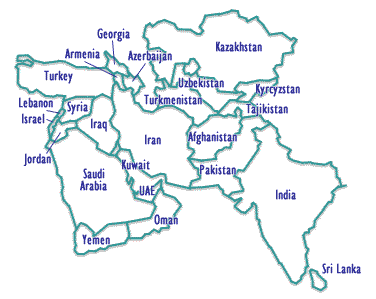
Paul said it is natural for Iran to want a bomb as it is surrounded by countries such as India, Pakistan and Israel which all have one and with China, the United States and Russia all involved in the region. He said the U.S. should not get involved in the country’s internal affairs.
Consider this recent article on Iran’s weapons development, from Investors Business Daily.
Excerpt:
Tehran’s navy deploys ships to the Atlantic capable of launching long-range missiles. This is not a joke. This is a dress rehearsal for the day an EMP attack ends our way of life.
‘Is it possible for us to witness a world without America and Zionism?” Iran’s Mahmoud Ahmadinejad asked at “The World Without Zionism” Tehran conference in 2005. “But you had best know that this slogan and this goal are attainable, and surely can be achieved.” He added that Iran had a “war preparation plan” for, as he put it, “the destruction of Anglo-Saxon civilization.”
Electromagnetic pulse, or EMP, is not a subject familiar to most Americans. But it’s quite familiar to the Iranian military.
It’s been practicing for the day when an Iranian missile tipped with a nuclear warhead lifts off from a vessel parked in international waters off our shores, the warhead detonating high above the American heartland, sending electromagnetic waves rippling across the American landscape, frying every electronic circuit within range.
In a July 18 statement, Rear Adm. Habibollah Sayyari said the Iranian navy plans on deploying warships in the Atlantic Ocean as part of a program to ply international waters.
Two days later, another Iranian rear admiral, Seyed Mahmoud Mousavi, revealed for the first time that his navy has equipped a number of its logistic vessels and units with long-range missiles.
The squadron will be equipped with the Nur missile, which is based on China’s long-range Silkworm C-802 anti-ship cruise missile and has a 125-mile range and 365-pound warhead.
It is not these ships and their missiles that threaten us, but what comes later as they use these forays to gain experience operating far from Iranian shores.
A simple Scud missile, with a nuclear warhead, could be fired from an inconspicuous freighter in international waters off our coast and detonated high over the U.S.
It would wreak devastation on America’s technological, electrical and transportation infrastructure. Masked as a terrorist attack, Iran would have plausible deniability of any responsibility.
Iran has practiced launching and detonating Scuds in midflight, launched from ships in the Caspian Sea. It’s also tested high-altitude explosions of its Shahab-3 ballistic missile, a test consistent with an EMP attack.
The warhead need not be of a staggeringly high yield — nor must the missile have an intercontinental range.
“One nightmare scenario posed,” according to Peter Vincent Pry, an expert on EMP who sits on a congressional panel looking into the threat of such a weapon, “was a ship-launched EMP attack against the U.S. by Iran, as this would eliminate the need for Iran to develop an ICBM to deliver a nuclear warhead against the U.S. and could be executed clandestinely, taking the U.S. by surprise.”
Iran has previously called for Israel, our ally, to be “wiped off the map“.
Excerpt:
Leaders around the world on Thursday condemned a call by Iranian President Mahmoud Ahmadinejad that Israel be “wiped off the map,” and a top Iranian official said that mass demonstrations in his country on Friday would rebuff the rising criticism from abroad.
“I have never come across a situation of the president of a country saying they want to . . . wipe out another country,” British Prime Minister Tony Blair said at a summit outside London of the 25 leaders of the European Union’s member states.
Blair said Ahmadinejad’s comment was “completely and totally unacceptable.”
In a joint statement, the E.U. leaders “condemned in the strongest terms” the Iranian president’s call, saying it “will cause concern about Iran’s role in the region and its future intentions.” President Jacques Chirac of France told reporters that Ahmadinejad risked Iran “being left on the outside of other nations.”
Russia’s foreign minister, Sergei Lavrov, in Israel, called the Iranian president’s statement “unacceptable.”
The statement was widely reported in the Arab world; leaders there reacted for the most part with silence. Most Arab countries have no diplomatic relations with Israel. But the Palestinian negotiator, Saeb Erekat, said, according to the Associated Press: “We have recognized the state of Israel and we are pursuing a peace process with Israel, and . . . we do not accept the statements of the president of Iran. This is unacceptable.”
U.S. and European leaders have grown increasingly worried about the bellicose attitude of Iran at a time when it is pursuing a nuclear program that they have said may be intended to produce a nuclear weapon.
Iran is also sharing weapons technology with North Korea.
Is Ron Paul right to want to let Iran have nuclear weapons and long-range missiles? Does he understand modern weapon systems? Is he aware of the threats that Achmadinejad has made to Israel and the United States? Is he aware of Iran’s military interference in Iraq? Does he understand how Iran influences Syria, which is now imitating Iran in shooting innocent people in the streets? Is he letting facts influence his ideology?

 WINTERY KNIGHT