Tag Archives: Election

Doug Wilson explains the meaning of love and respect

Does government provide incentives for people to get married?
Women need love, men need respect… what does it really mean?

So, Dina sent me an audio book called “Reforming Marriage” by that Calvinist weirdbeard Doug Wilson. It actually sat on my ironing board for some time not being listened to, (I don’t iron, I have all wrinkle-free everything). I just finished listening to Bernard Cornwell’s classic on the battle of Waterloo, so I decided to pick this one up next.

I listened to the first CD, and I found something amazing in chapter 2. I want to make two points about what I heard. Fortunately, I was able to find the entire passage at one of Doug’s online haunts.

He writes:

Now the Scripture plainly gives us our duties. Wives are to respect their husbands, and husbands are to love their wives. But there is more. When we consider these requirements and look at how men and women relate to one another, we can see the harmony between what God requires and what we need both to give and to receive.

The commands are given to our respective weaknesses in the performance of our duties. Men need to do their duty with regard to their wives they need to love . Women need to do their duty in the same way they need to respect . But men are generally poor at this kind of loving. C.S. Lewis once commented that women tend to think of love as taking trouble for others (which is much closer to the biblical definition), while men tend to think of love as not giving trouble to others. Men consequently need work in this area, and they are instructed by Scripture to undertake it. In a similar way, women are fully capable of loving a man and sacrificing for him, while believing the entire time that he is a true and unvarnished jerk. Women are good at this kind of love, but the central requirement given to wives is that they respect their husbands. As Christian women gather together (for prayer? Bible study?), they frequently speak about their husbands in the most disrespectful way. They then hurry home to cook, clean, and care for his kids. Why? Because they love their husbands. It is not wrong for the wives to love their husbands, but it is wrong to substitute love for the respect God requires.

We can also see the commands which are given have regard for our respective weaknesses in another way. Men have a need to be respected , and women a need to be loved . When Scripture says, for example, that the elders of a church must feed the sheep, it is a legitimate inference to say that sheep need food. In the same way, when the Scripture emphasizes that wives must respect their husbands, it is a legitimate inference to say that husbands need respect. The same is true for wives. If the Bible requires husbands to love their wives, we may safely say that wives need to be loved.

But we are often like the man who gave his wife a shotgun for Christmas because he wanted one. When a wife is trying to work on a troubled marriage, she gives to him what she would like, and not what God commands, and not what he needs. She loves him, and she tells him so. But does she respect him and tell him so?

We have difficulty because we do not follow the scriptural instructions. When a man is communicating his love for his wife (both verbally and non-verbally), he should be seeking to communicate to her the security provided by his covenantal commitment. He will provide for her, he will nourish and cherish her, he will sacrifice for her, and so forth. Her need is to be secure in his love for her. Her need is to receive love from him.

When a wife is respecting and honoring her husband, the transaction is quite different. Instead of concentrating on the security of the relationship, respect is directed to his abilities and achievements; how hard he works, how faithfully he comes home, how patient he is with the kids, and so forth.

The specifics may cause problems with some because he thinks he might not come home, and she thinks he doesn’t work nearly hard enough. But love is to be rendered to wives, and respect to husbands, because God has required it, and not because any husband or wife has earned it. It is good for us always to remember that God requires our spouses to render to us far more than any of us deserve.

So I bolded the two parts that I want to talk about.

First thing is about the removing troubles view of love. Now, I had never really consciously thought of this before, but I was thinking about how I treat Dina and suddenly it became clear that this is exactly what I am trying to with her. She hurts her hands, has OCD, wants to vacuum up cat fur, has to lift a heavy vacuum up and down the stairs… I buy her a cordless hand vacuum! She likes to cook with a wok several times a week, uses a horrible, cheap broken-handle wok that has to be washed and dried or it will rust… I buy her a Circulon wok! She hates to iron, has to iron baskets and baskets of clothes with her hurt hands… I buy her a steam iron that makes quick work of ironing! And on, and on, and on. After all, why should she have to suffer when she is trying to do her work so she can clear her schedule in order to do other things, like care for the elderly as a volunteer? She already has a stressful job at work, she doesn’t need more stress at home. My job is to make her life easier, and that shows that I care about what her life is like. I don’t want her to be struggling, I want her to be able to do good for God without being burdened by troubles.

Second thing is about how a woman can give a man respect. Well, an important part of what a man does in a marriage is to give a woman security. And this is not something he can finesse at the end of his life, he has to be thinking about giving her that at the beginning of his life… when he is in school, when he is starting to work. The most praiseworthy way of getting money is by earning it in the private sector, by supplying the needs of consumers in a competitive free market. In order to learn how to do that, you have to study things that are valuable. to others, like mobile devices, petroleum engineering, etc. So when it comes to your education, you don’t get to study what you like or what makes you feel good. You have to study things that will allow you to earn money, money that you can use to give your wife security and freedom. Money that is saved should be invested, so that you earn more than you can even get by working. When a woman comes along, she must recognize which men have done hard things to prepare for her – hard things that were not fun. Choosing a man who understands the role of earned money in a marriage is a way of according him respect. No, he did not do what he felt like. No, he did not win the lottery. No, he did not receive money from his parents. Recognizing those sacrifices and the value others get from them is respect.

I’m going to keep working through this book and see if there are any other secrets for me to find in it. So far, so good.
Ted Cruz wins Fox Business #GOPDebate, Fiorina and Rubio outperform

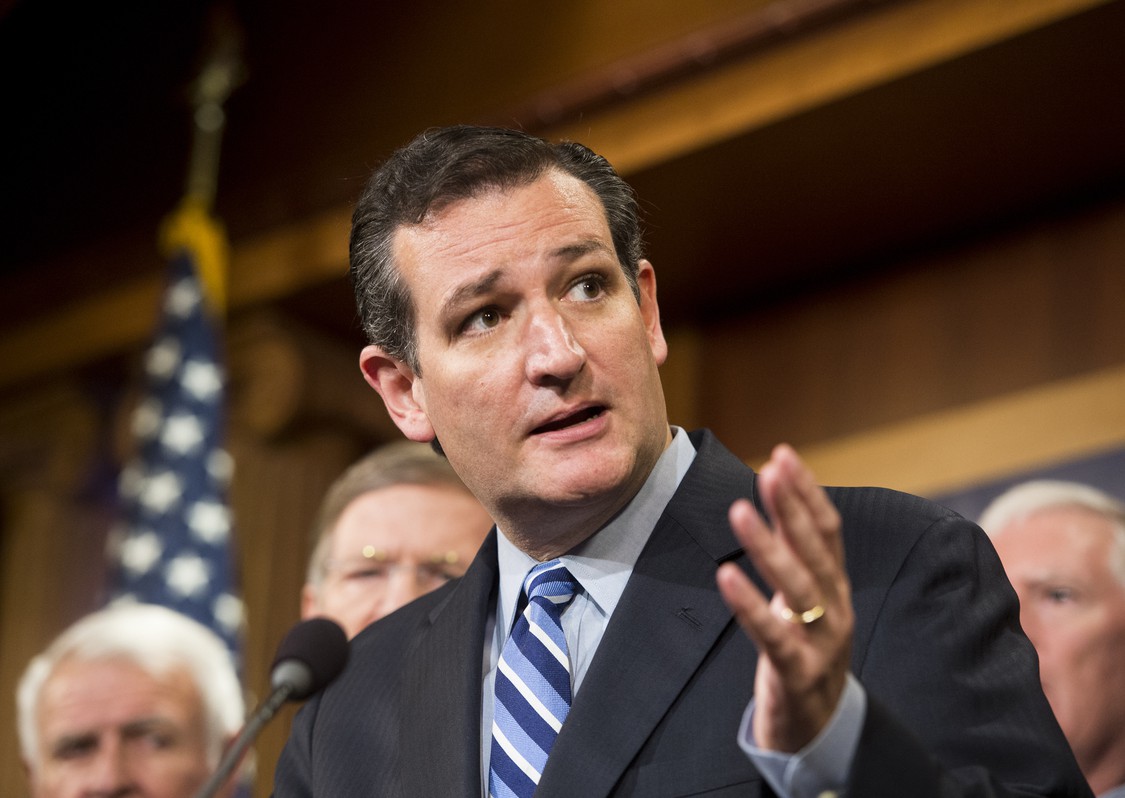
Texas Senator Ted Cruz

I think Cruz did the best, Rubio did well enough to take second place, and Fiorina was much improved, especially on foreign policy, where she gave a clear explanation of the doctrine of peace through strength. She did third best, but had the strongest moment of the debate when she schooled everyone on foreign policy. She really knows foreign policy cold.

Red State does a good job of providing unbiased opinion, here is their assessment:

The Winners

1. Sen. Ted Cruz (R-TX) – While Cruz hit his talking points and made some great statements, like Jeb, he did not stand out. This isn’t as big a problem for him as it is the others, because he has a natural base of conservative voters that will turn out for him no matter what. Bush doesn’t have that, and that’s why he’s free-falling at his point. Cruz coming out swinging against the agriculture lobby could very well be his testing the water for corn subsidy talk in Iowa.

2. Carly Fiorina – Carly showed why she should not be counted out yet. She speaks like a caring grandmother, and she has to be the calmest neoconservative I’ve ever seen on a stage speaking about the Middle East. She spoke calmly and coolly on every issue that came her way, and some issues that didn’t. She cannot yet be counted out.

3. Sen. Marco Rubio (R-FL)  – Rubio did not hurt himself tonight by any stretch of the imagination. He let Sen. Rand Paul (R-KY) ruffle his feathers a little bit, but I think he overall hit his notes correctly. He is clearly courting the warhawks of the Republican Party right now. He hit on his family background only once, focusing instead on global affairs and fighting back against Paul.

They thought Carson and Trump did OK, and Kasich, Paul and Bush “lost”. I think that Carson and Paul did OK, but Trump and Bush underperformed, and Kasich did the worst of all. Trump just has no ability in foreign policy, Bush is too liberal on immigration. Kasich is a big government liberal across the board.

Over at the more establishment Weekly Standard, Jonathan Last – who is a bit wild – said this:

Ted Cruz: If you were forced to pick a winner, it would probably be Cruz. He picked the right fights—with Kasich and Paul. He gave a dynamite explanation of how illegal immigration impacts wage growth and was generally impressive. With each passing debate he looks more like a finalist.

Marco Rubio: This performance wasn’t as strong as his last. Rubio started out talking vocational training and the nexus of family stability, virtue, and economic growth—basically the Santorum 2012 playbook.

Carly Fiorina: She probably had the single strongest moment of the night in her blistering, detailed, canny riff on how she would approach Putin. If she’s going to get a third-look from voters, tonight might prompt it.

Ted Cruz attacks Hillary Clinton’s failed policies:

Ted Cruz says no to bank bailouts, yes to FDIC reimbursing depositors:

Jeb Bush vs Ted Cruz on illegal immigration and LEGAL immigration:

Marco Rubio on the importance of strong families:

Marco Rubio vs Rand Paul on tax credits for families and defense spending:

Carly Fiorina on Putin and foreign policy:

Carly Fiorina on American entrepreneurship:

Ben Carson on the minimum wage:

Finally, there is the latest episode of the Weekly Standard podcast, which is my favorite political podcast, the one you should subscribe to if you subscribe to any. Bill Kristol, the editor of the Weekly Standard, thought that it was a good night for Ted Cruz. I agree.

I also love the Ben Shapiro podcast from the Daily Wire, and I am updating the post now to point to a new episode – episode 24. Shapiro agrees with me: Christie AND Jindal won the undercard debate, and Cruz did the best in the main event.

I spend the night reading and re-tweeting on Twitter – sorry to everyone for the huge number of tweets. What was striking to me was the juvenile nature of the Democrat tweets. Many of them came from professional comedians or Hollywood celebrities… but others came from liberal politicians, and even people from liberal think tanks. Yet not ONE tweet from the left was anything of substance. It was all just dismissive mocking. Literally. Not one serious tweet. It’s not surprising that they are so supportive of a clueless clown who added $10 trillion dollars to the national debt, and point that achievement as a great success. Oh well, that’s why we have elections. I would be happy with any of Jindal, Cruz or Rubio right now. I would even take Fiorina in a pinch.

One final thing. Fox Business put on the fairest and most engaging debate yet. They set the standard for everyone else, and made CNBC look like incompetent college students. Every debate should run this smoothly – the moderators just disappeared, and they let the candidates talk to America, and talk to each other. I learned a lot about the candidate’s views, and nothing at all about the moderator’s views.

Canadian federal election is today: please vote for Stephen Harper!

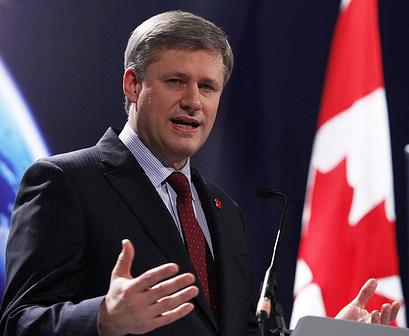
Prime Minister Stephen Harper

I try to keep up with elections in the US, UK, Canada, Australia and New Zealand, so I know that there is a Canadian election today. I want to encourage all my Canadian readers to vote, and to help me answer your concerns about Stephen Harper, I have an absolutely marvelous post from Catholic writer Denyse O’Leary.

She writes:

Why are traditional religious communities dying?

[…][I]n a secular society, religious traditions are usually mediated through private institutions. Each decline in the importance of such institutions shuts off a passage to the life beyond that they mediate.

A child can grow up in a religious home today and discover that there are really only two players that matter: himself and big government. The only mediator and advocate is his entitlement card.

As he loses all interest in traditional spiritual life, he discovers the true faith of the progressive society:

Government controls more and more important stuff, and free association controls less and less. Government grants “freedom” to indulge oneself, of course, but that is almost a sacrament, and one that tends to weaken the citizen.

The transformation does not happen all at once, but by degrees. Recently, I was informed by a woman who considers herself a Catholic that abortion and euthanasia are mere “boutique issues,” compared to the awful things Stephen Harper is doing.

Just take in her basic idea for a moment:

The fundamental duty of government is to protect and advance human lives, but progressives know that their real business is currying favour with the growing numbers of fashionable identity groups. Increasingly, such groups will finance their advances on the public dollar. Some of the largesse may come from stripping traditional religious people and institutions of their property (possibly also in fines for non-compliance with some secularist belief). Most people we run into in the plaza will just be “nice” about the whole thing, no matter what is happening.

How do Christians respond?

Much as I sympathize, bracing for storms to come, I think Christians are mainly victims of ourselves.

Consider the excuses I hear (I am talking about legitimate Christian ones, not fundamentally anti-Christian ones, like the “boutique issue” claim above):

* “But Harper did nothing about abortion!”
Oh, for heaven’s sakes! As someone who dealt at close quarters with the abortion lobby for decades, I know they will gladly shut down free speech and freedom of conscience altogether to gain their ends. The euthanasia people will likely do the same. Until their fangs are drawn, nothing can really be done. Harper knows that drawing their fangs will be a serious struggle. And if you are not in it for the fight of your life, don’t interfere by demanding useless demonstrations of loyalty. Other parties will advance and cement their interests more than Harper’s will.

* “A spell of persecution would do us good”
Why is it always Western Christians who think this, not the Middle Eastern Christian and Yazidi girls sold into sex slavery, partly a result of the policy choices of progressive government? Reality check: Persecution causes the worst of human nature to flourish in our own communities as well as the best. Most communities cannot handle the strain. Do any of the Seven Churches of Asia exist today? Even one? Why is that?

[…]What should we do? It will take decades to send progressivism to its deserved reward. I will start by voting for the only party that is not actually hostile to our traditional values (like the right to live, and to speak freely).

[…]We need to grow up and stop funding, and voting for our enemies, and making excuses for anti-Christian bigots. (All the while making pathetic scolding noises.) If we need to change our bank accounts, our votes, our alumni donor policies, we do it individually because that is the responsible thing for an individual Christian adult to do.

And you don’t have to take her word for it, you can just look over to Europe and see how things are going in left-turning countries that embrace social justice. It’s a Christianity-killer.

Here’s a fairly recent paper (PDF) that explains it:

What accounts for cross-national variation in religiosity as measured by church attendance and non-religious rates? Examining answers from both secularization theory and the religious economy perspective, we assert that cross-national variation in religious participation is a function of government welfare spending and provide a theory that links macro-sociological outcomes with individual rationality. Churches historically have provided social welfare. As governments gradually assume many of these welfare functions, individuals with elastic preferences for spiritual goods will reduce their level of participation since the desired welfare goods can be obtained from secular sources. Cross-national data on welfare spending and religious participation show a strong negative relationship between these two variables after controlling for other aspects of modernization.

Kudos to Denyse for understanding what is happening in her country. At least one Canadian Christian understands the relationship between the Christian church’s influence and the size of government.

Voter Guide

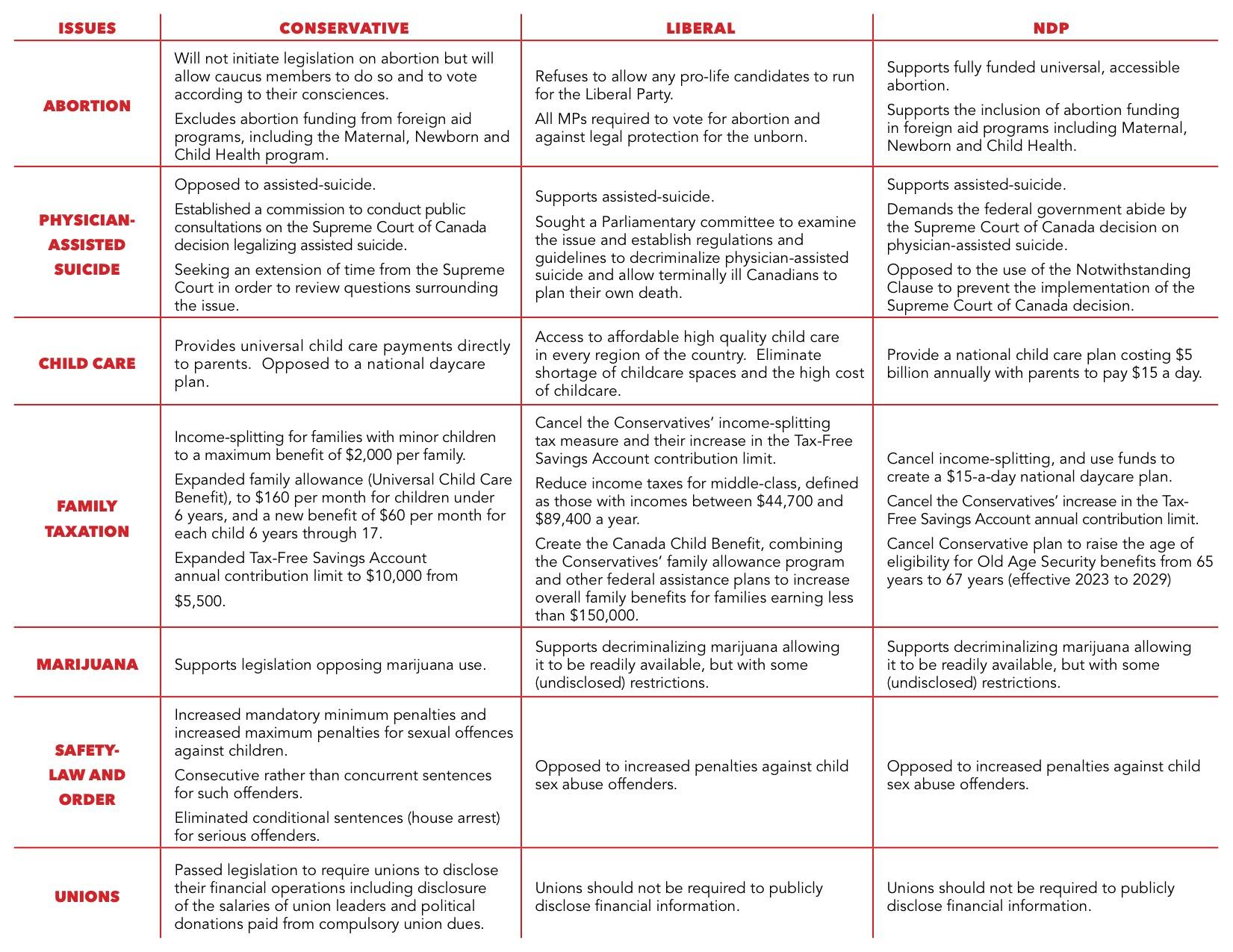
By the way, here is a voter guide to the positions of the 3 parties that will be of interest to voters:

Voter Guide (click for much larger image)

It was posted by my Canadian friend Coralie. She follows these things quite closely.

Notice that both  the leftist parties want to get rid of income splitting and tax-free savings accounts. Income-splitting for seniors allows one spouse to retire, and the income of the working spouse is split with the non-working spouse, so they pay less taxes. Families with young children also are eligible for income splitting, which is a boon to stay-at-home moms. And the tax-free savings account is like a ROTH IRA, except better – you can pull out all the tax-free gains at any time, for any reason, and the gains are NEVER taxed. We have nothing like that in the USA. It has changed the character of Canadians to value saving over spending, making them more responsible and independent from government. TFSAs are how you change the character of a nation.

Why vote for Stephen Harper?

My Canadian friend McKenzie is conservative now, but she was not always, and I remember her asking me a while back to explain what conservatives stand for. Well, I found an article that re-caps what Stephen Harper has achieved in the last 9 years. The article lists 100 accomplishments, with links to each one.

Here are some that stuck out to me:

  • Adoption Expense Tax Credit increased — from a one-time $13,100 to 15,000 in 2014
  • Age of Consent Legislation — raised from 14 to 16 effective May 1, 2008
  • Beyond the Border Agreement with the U.S. — passed in late 2011, on perimeter security co-operation
  • Canada Apprentice Loan Program — up to $4000 for those registered in any Red Seals apprenticeship training announced in January 2015
  • Canada/EU Trade Agreement — although ratification still required, an `End of Negotiations`Agreement signed on September 26, 2014
  • Canadian Wheat Board Monopoly Ends — Bill C18 removed the CWB’s monopoly regarding decisions made by many Western farmers to market their wheat
  • Columbia Free Trade Agreement — went into force on August 15th, 2011
  • Consumer Product Safety Act — came into effect June 20, 2011 to ensure manufacturers do not market dangerous products
  • Corporate Tax Rate — reduced from 18% to 16.5% effective January 2012, with another 1.5% reduction in 2012 to 15%
  • Corrupt Regimes Act (C-61) – allows Canada to act upon the request of a foreign state to freeze the assets that their former leaders and members of their entourage, including family members, senior officials and associates, may have placed in Canadian financial institutions
  • Employment Insurance Premiums Reduced —  in the fall of 2014 by 15% for to encourage small businesses to hire
  • Exploited Persons Act — legislation that received Royal Assent to protect against drug, organized or prostitution type of crime
  • Express Entry Immigration into Canada Program — when skilled immigrants to Canada will get quick entry so that they can contribute to economy
  • Fairness at the Pumps Act (C-14) – protects Canadian consumers from inaccurate measurements when purchasing gasoline effective August 2014
  • Family Caregiver Tax Credit — Bill C-13 established a new $2000 tax credit on December 15, 2011 to help families dealing with challenging medical expenses
  • Family Income Splitting — families with children under 18 will be allowed to split income beginning in 2014 up to $50,000 with credit capped at $2000.00
  • Federal Infrastructure Plan — longest long-term plan in Canadian history supporting projects that enhance economic growth, job creation and productivity
  • Free Trade Agreement — signed on July 2, 2009 — between Iceland, Liechtenstein, Norway and Switzerland
  • Gun Registry Scrapped — as the legislation passed Third Reading
  • GST /HST– Goods & Services Tax Cut — From 7% to 6% and then to 5%
  • Honduras Free Trade Agreement — completed and signed on November 5th, 2013 and will enter into force on June 19, 2014
  • Income Splitting for Canadian Seniors — a change to the Income Tax Act for pensioners starting in 2006
  • Jordan Free Trade Agreement — went into force on October 1st, 2012
  • Kid’s sport tax credit — up to $500 per child
  • Mission Against ISIL extended March 30, 2015 — to aid the people of Iraq and Syria
  • Ombudsman for Victims of Crime — Established
  • Panama Free Trade Agreement — went into force on April 1st, 2013
  • Peru – Canada Free Trade Agreement — adopted by Parliament June 18, 2009
  • Protecting Victims from Sexual Offenders — signed on December 15, 2010 to protect children against sexual predators
  • Safe Streets & Communities Act — passed March June 13, 2012 to protect children and communities against terrorism
  • South Korea Free Trade Agreement Signed on September 22, 2014 — 1st Asia Pacific Agreement with final legislative steps for full implementation on November 26, 2014
  • Tax cuts made 160 Times — since the Conservatives took office in 2006
  • Tax Free Savings Account with an initial annual limit of $5500.00 — which was raised to $10,000 in April 2015 budget
  • Taxpayers Bill of Rights
  • Taxpayers Ombudsman
  • Temporary Foreign Workers Program — reforms made so that Canadians are hired first
  • Universal Child Care Benefit — in 2006 $1,200.00 per year for every child under age six
  • Universal Child Care Benefit Enhancement — effective January 1st, 2015, beginning July 1st, 2015, parents will receive $160.00 per child per month up to age six and $60.00 for each child aged 6 to 17
  • Victims Bill of Rights — Bill C-32 passed on June 18th, 2014

It’s important to know what you are voting for, not just what you are voting against.