Tag Archives: Bravery

On wargames, history and heroes: “this story shall the good man teach his son”

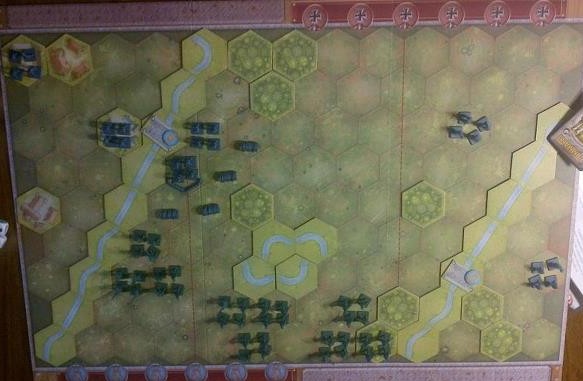
Memoir '44: Pegasus Bridge setup
Memoir ’44: Pegasus Bridge setup

Last night, I played through the Pegasus Bridge scenario from the Memoir ’44 wargame with Dina a few times. We actually played the online version of the game, using Steam. She was very gracious to play a wargame with me, which I don’t think is necessarily the first thing on most women’s lists of things to do on a Thursday night! I appreciated her agreeing to learn how to play and then playing with me several times. I think that Christians need to plan and execute more “together” activities like that – activities that involve interaction, co-operation, communication and engagement. We try to avoid doing things where we are both spectators. Playing wargames is not the only thing we do – we also do Bible study and cooking lessons (for me), for example.

Anyway, the point of this post is to express the deeper meaning behind playing wargames. I think that it is important to recognize and celebrate those who have demonstrated good character, whether it be now, or in the past. I think that it is important for us to search out the best role models ourselves, so that they will influence the way we act in our own lives. The second world war was a clear example of good versus evil. Anyone on the Allied side who demonstrated bravery and courage should be celebrated for safeguarding the security, liberty and prosperity that we enjoy today. In the case of Pegasus bridge, the hero is Major John Howard of the British paratroops.

Here is a quick re-cap of his exploits that day from the New York Times:

Maj. John Howard, the commander of glider-borne British infantrymen who seized the strategically vital Pegasus Bridge in the first battle of the D-Day invasion of Normandy, died Wednesday in a hospital in Surrey, England. He was 86 and had lived in Burford, near Oxford.

Under cover of night on June 6, 1944, six gliders carrying 181 officers and men of the Second Oxfordshire and Buckinghamshire Light Infantry landed on the eastern flank of a 60-mile invasion front on the northern coast of France. The regiment had a heritage going back to the battles of Bunker Hill and New Orleans, to Waterloo and to World War I. Now its soldiers were in the vanguard of the invasion of Hitler’s Europe.

Major Howard’s D Company was ordered to seize two bridges, one over the Caen Canal and the other spanning the parallel Orne River. If the Germans held on to those bridges, panzer units could move across them in a counterattack isolating 10,000 British paratroopers jumping behind the British invasion beach known as Sword, where infantry forces would arrive at daybreak. And Major Howard’s men sought to strike swiftly to prevent the Germans from blowing up the bridges if they were overwhelmed; the British needed those bridges to resupply their airborne units.

British Halifax bombers towed the gliders over the English Channel, then cut them loose.

Major Howard’s lead glider landed at 12:16 A.M., only 50 yards from the Caen Canal bridge, but the glider’s nose collapsed on impact, knocking everybody aboard unconscious for a few seconds. The soldiers quickly emerged, and over the next five minutes the men directly under Major Howard killed the surprised German defenders.

The nearby Orne River bridge was captured by other troops in Major Howard’s unit, and soon the words ”Ham and Jam,” signifying mission accomplished, were radioed to the airborne.

Two British soldiers were killed and 14 wounded in the operation.

Over the next 12 hours, British paratroopers and commandos reinforced Major Howard’s men, and British forces were able to move toward the city of Caen, their flank having been protected by the capture of the bridges.

On July 16, Major Howard received the Distinguished Service Order, Britain’s second-highest award for valor. On the 10th anniversary of D-Day, he received the Croix de Guerre Avec Palme from the French Government, which had renamed the Caen Canal span Pegasus Bridge, for the flying horse symbolizing the British airborne. The road crossing the bridge was later renamed Esplanade Major John Howard.

Why is this important? Well, it’s important to think on the things that are excellent. There are so many things in the culture that are not excellent that we are confronted with every day. We have to make it our business to do things together where goodness is celebrated. Especially when manly virtues like courage are celebrated. We don’t do that much anymore. And I think there’s a connection between wargames and Christian apologetics that we need to deliberately encourage.

Here’s an excellent passage from Shakespeare’s “Henry V” that makes the point:

This day is called the feast of Crispian:
He that outlives this day and comes safe home,
Will stand a tip-toe when this day is named,
And rouse him at the name of Crispian.
He that shall live this day, and see old age,
Will yearly on the vigil feast his neighbours,
And say, ‘To-morrow is Saint Crispian:’
Then will he strip his sleeve and show his scars,
And say, ‘These wounds I had on Crispin’s day.’
Old men forget: yet all shall be forgot,
But he’ll remember with advantages
What feats he did that day. Then shall our names,
Familiar in his mouth as household words,
Harry the King, Bedford and Exeter,
Warwick and Talbot, Salisbury and Gloucester,
Be in their flowing cups freshly remembered.
This story shall the good man teach his son;
And Crispin Crispian shall ne’er go by,
From this day to the ending of the world,
But we in it shall be rememberèd;
We few, we happy few, we band of brothers;
For he to-day that sheds his blood with me
Shall be my brother; be he ne’er so vile
This day shall gentle his condition:
And gentlemen in England, now a-bed
Shall think themselves accursed they were not here,
And hold their manhoods cheap whiles any speaks
That fought with us upon Saint Crispin’s day. (4.3.43)

This is from the famous speech in which King Henry charges his men to fight well before the famous Battle of Agincourt.

You can read more about the history of the British Airborne division and Pegasus bridge. The famous historian of the second world war Stephen E. Ambrose also wrote a history of the Pegasus bridge battle, called “Pegasus Bridge: June 6, 1944“. You won’t find many military historians better than Stephen E. Ambrose!

You might be surprised how many men are interested in military history and wargames, precisely because men instinctively look up to men like John Howard who embody qualities like bravery and courage. We have a dearth of moral character in this society. And we don’t do much to teach young men about manly virtues, even in the church. I think that it is important for us to think of creative ways for us to present good character to our young men. Young women should also learn about good character, because they must separate out the good men from the bad when they are courting.

Thanks to Dina for helping me to edit this post!

What is the meaning of Memorial Day?

Arlington National Cemetary

What is Memorial Day? It’s the day that we remember all those brave men and women who have sacrificed to protect our liberties and our lives so that we could be safe from harm.

This video may help you to understand.

From Hot Air, a quote from Ronald Reagan.

Memorial Day is an occasion of special importance to all Americans, because it is a day sacred to the memory of all those Americans who made the supreme sacrifice for the liberties we enjoy. We will never forget or fail to honor these heroes to whom we owe so much. We honor them best when we resolve to cherish and defend the liberties for which they gave their lives. Let us resolve to do all in our power to assure the survival and the success of liberty so that our children and their children for generations to come can live in an America in which freedom’s light continues to shine.

The Congress, in establishing Memorial Day, called for it to be a day of tribute to America’s fallen, and also a day of national prayer for lasting peace. This Nation has always sought true peace. We seek it still. Our goal is peace in which the highest aspirations of our people, and people everywhere, are secure: peace with freedom, with justice, and with opportunity for human development. This is the permanent peace for which we pray, not only for ourselves but for all generations.

The defense of peace, like the defense of liberty, requires more than lip service. It requires vigilance, military strength, and the willingness to take risks and to make sacrifices. The surest guarantor of both peace and liberty is our unflinching resolve to defend that which has been purchased for us by our fallen heroes.

On Memorial Day, let us pray for peace — not only for ourselves, but for all those who seek freedom and justice.

And check some of my Medal of Honor posts:

If you want to help out our troops, you can send them things through Soldier’s Angels.

God Bless Our Troops!

UPDATE: I am listening to this podcast from the Heritage Foundation about the origin and meaning of Memorial Day.

For more reading, why not check out some of the military bloggers?

If you want to help out our troops, you can send them things through Soldier’s Angels.

If there were such a thing as Christian art, what would it look like?

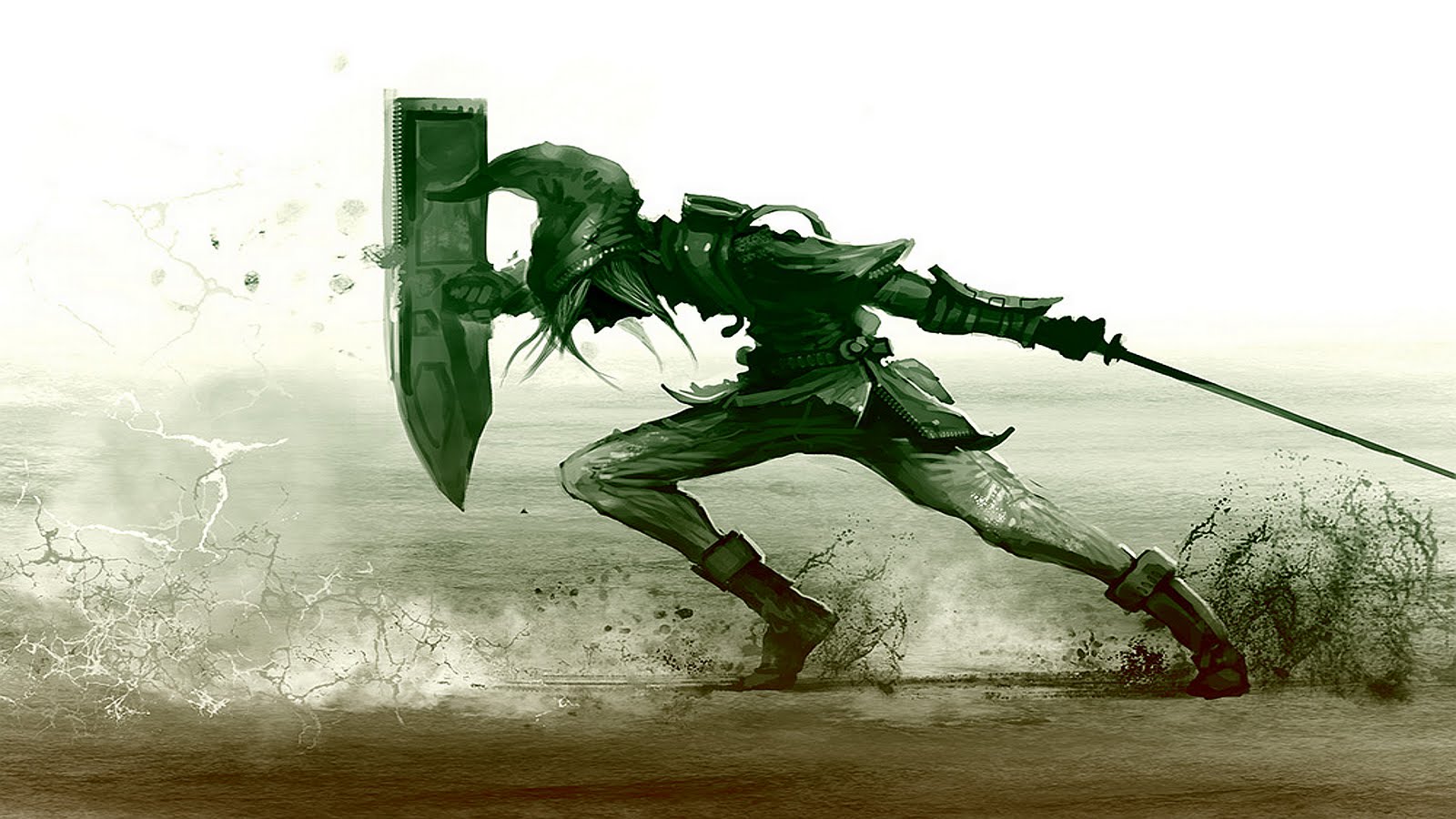
Maybe like this:

Indomitable. Defiance.
Indomitable. Defiant. Unbreakable.

(Click for larger image)

There is actually a pretty strong theme of defiance, courage and non-conformity that runs through the Bible, in the Old and New Testaments.

Here are a few verses that come to mind.

“In all this, they are surprised that you do not run with them into the same excesses of dissipation, and they malign you…”
(1 Pet 4:4)

“But even if you should suffer for the sake of righteousness, you are blessed. And do not fear their intimidation, and do not be troubled…”
(1 Pet 3:14)

And a longer one:

1 This, then, is how you ought to regard us: as servants of Christ and as those entrusted with the mysteries God has revealed.

2 Now it is required that those who have been given a trust must prove faithful.

3 I care very little if I am judged by you or by any human court; indeed, I do not even judge myself.

4 My conscience is clear, but that does not make me innocent. It is the Lord who judges me.

5 Therefore judge nothing before the appointed time; wait until the Lord comes. He will bring to light what is hidden in darkness and will expose the motives of the heart. At that time each will receive their praise from God.

(1 Cor 4:1-5)

Or this one:

12 Dear friends, do not be surprised at the fiery ordeal that has come on you to test you, as though something strange were happening to you.

13 But rejoice inasmuch as you participate in the sufferings of Christ, so that you may be overjoyed when his glory is revealed.

14 If you are insulted because of the name of Christ, you are blessed, for the Spirit of glory and of God rests on you.

(1 Cor 4:12-14)

Or this one:

16 Shadrach, Meshach and Abednego replied to him, “King Nebuchadnezzar, we do not need to defend ourselves before you in this matter.

17 If we are thrown into the blazing furnace, the God we serve is able to deliver us from it, and he will deliver us from Your Majesty’s hand.

18 But even if he does not, we want you to know, Your Majesty, that we will not serve your gods or worship the image of gold you have set up.”

(Dan 3:16-18)

Do you have any verses that draw out this tradition of defiance?

But If Not
But If Not

(Click for larger image)

One of my friends who is a pro-life activist recently was going through some difficult trials and posted the short message “But If Not” on his Facebook page. Every Christian needs to understand the meaning of the phrase “But If Not” from Daniel 3.

Defiance is a very, very Christian thing to feel. So often we have this feminized, sanitized view of Christianity as happiness, politeness and cleanliness. We don’t want to offend anyone, or to be disliked by anyone, or to make anyone feel bad about what they are doing about the God who is there and is not silent.

Here is a trustworthy saying:

“Courage is not simply one of the virtues, but the form of every virtue at the testing point, which means, at the point of highest reality. A chastity or honesty or mercy which yields to danger will be chaste or honest or merciful only on conditions. Pilate was merciful till it became risky.”

– from “The Screwtape Letters” by C.S. Lewis

I think we have to get used to this idea that being a Christian is no guarantee of happiness or popularity.

In my life, I have had to say things like this: “I’m really sorry that you don’t like me. I’m really sorry that my decision to honor God makes you uncomfortable. But I’m not going to change for you. I’m OK with being the underdog. I don’t have to be happy right now. I don’t need you to approve of what I am doing.”

It makes me laugh that people think I care what they think of me just because I don’t act against my conscience to approve of their sinning. I’ve thought through my views, and seen the evidence from peer-reviewed publications, and debated with people who disagree and won. I couldn’t care less about their desire for me to approve their reckless, selfish behavior. I interpret their desire for approval as weakness and I scorn their weakness.

Every Christian comes to a point where the things we hoped that God would do for us do not happen, when our former allies fall away from us, when the people entrusted with caring for us failed in their obligations… at that point we have to decide what we are going to do with God. I think Psalm 27 is an excellent thing for people to read who are in that situation.

By the way, Christians should have an eye out for other Christians who are in distress while striving mightily for the Lord. Act self-sacrificially in a way that you strengthen their relationship with God in Christ. Make plans to support that person, and carry them out. Most of what you are doing elsewhere in your life probably isn’t as important as the deliberate, strategic, intelligent support that you give to other Christians. Love isn’t agreeing with someone’s bad decisions or evasions – it’s being there and telling them the truth, and neutralizing threats to their faith. That could involve the use of money, spending time, expending effort, resolving intellectual challenges, defeating a challenger in a discussion for them, writing them with advice… anything.

You may enjoy listening to this lecture entitled “Giants in the Land“, by Dr. Walter Bradley.