
Tag Archives: Armed Forces

Obama vetoes bill that “authorizes pay, benefits and training for U.S. troops”

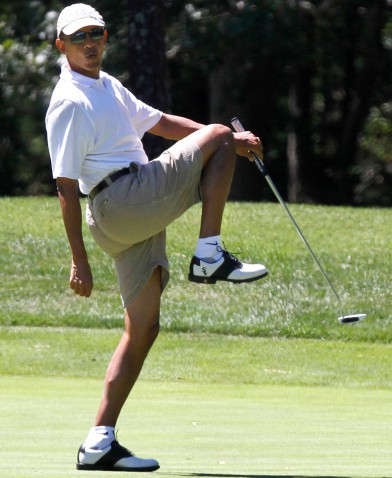
He's better at golf than foreign policy
He’s better at golf than foreign policy, and he sucks at golf

Here’s the Wall Street Journal.

Excerpt:

President Obama is playing politics with national defense, and in the process he is taking down the military’s welfare. In an act of partisan gamesmanship, the president on Thursday vetoed the National Defense Authorization Act, a bill that a bipartisan majority of Congress passed and that delivers the resources needed by troops to defend the nation.

[…]He has become the first commander in chief willing to sacrifice national security by vetoing a bill that authorizes pay, benefits and training for U.S. troops, simply because he seeks leverage to pursue his domestic political agenda.

[…]President Obama’s veto was about broader spending issues that have absolutely nothing to do with defense. By vowing recently that he “will not fix defense without fixing nondefense spending,” the president is holding the military hostage to increase funding for Washington bureaucracies like the Environmental Protection Agency and the Internal Revenue Service.

The Environmental Protection Agency is more important?:
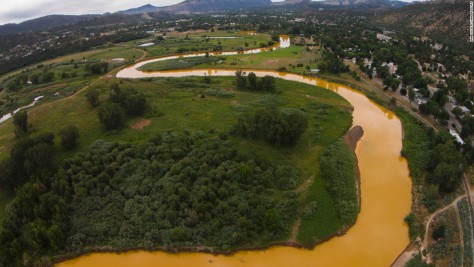
EPA dumps 1 million gallons of mining waste into river

The Internal Revenue Service is more important?:
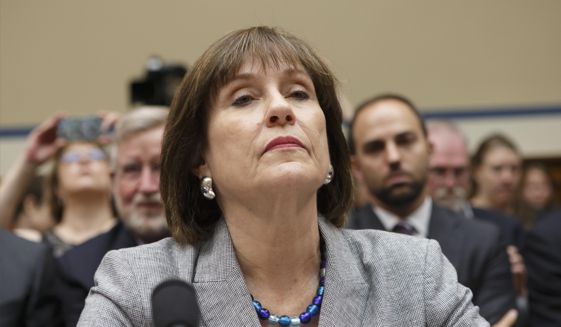
IRS Chief Fascist Lois Lerner

More Wall Street Journal:

In vetoing this bill, the president imposes more harm and uncertainty on the military at a time when America faces dangerous and complex threats from around the world. He has prevented critical policies from taking effect that would immediately improve the lives of service members and military families while addressing needs of wounded, ill or injured service members. For example, President Obama has rejected measures that open service members’ access to medical care; enhance protections for military sexual-assault victims; extend retirement benefits to more than 80% of service members; make significant, long-overdue reforms to the defense acquisition system; and authorize hundreds of other measures that are critical to national security.

Perhaps most disturbingly, the president’s veto has sent a message to America’s enemies and allies alike that he is more concerned about funding broken Washington bureaucracies than he is about maintaining the nation’s distinction for being defended by the world’s greatest fighting force.

That is the wrong message to send when America faces an array of crises that demand a strong national defense, including war in Afghanistan, China’s illegal activities in the South China Sea, Islamic State’s terrorist reign across Iraq and Syria, Bashar Assad’s bombing campaign—now backed by Russia and Iran—against his own people in Syria,Vladimir Putin’s annexation of Crimea and dismemberment of Ukraine, and Iran’s malign activities propping up terrorist proxies destabilizing the Middle East.

These and other threats make it clear that the U.S. faces more national-security threats than at any time since the end of World War II. It is reckless, cynical and downright dangerous for the president to veto the NDAA, denying the American military the authorizations it desperately needs.

We have to fund the EPA and the IRS, but we can’t fund our armed forces. At a time where Russia, China and Iran are arming up and getting more aggressive, we can’t fund our armed forces. Democrat Party priorities.

UPDATE: Reader tells me that it affects things like hazard pay, enlistment bonuses, not the annual pay increase:

The Thursday veto will jeopardize a host of other specialty pays and bonuses, and has inflamed an already bitter budget standoff between Obama and congressional Republicans.

But it does not alter plans for a 1.3 percent raise for troops effective Jan. 1, which is ensured regardless of how the veto fight shakes out.

[…]The defense authorization bill still affects things like enlistment bonuses, hazard pays, and other specialty compensation for which authorization must be renewed each year. If lawmakers has substituted their own pay raise or tried to supercede the presidential order in the bill, Obama’s veto would have affected that, too.

Survey of U.S. military personnel shows steep drop in morale from 2009 to 2014

Military morale from 2009-2014
Military morale from 2009-2014 (Source: Military Times)

Story from the Military Times.

Excerpt:

According to the Military Times survey, active-duty troops reported a stunning drop in how they rated their overall quality of life: Just 56 percent call it good or excellent, down from 91 percent in 2009. The survey, conducted in July and August, found that 73 percent of troops would recommend a military career to others, down from 85 percent in 2009. And troops reported a significant decline in their desire to re-enlist, with 63 percent citing an intention to do so, compared with 72 percent a few years ago.

[…]Survey data show that service members are also feeling pain in their own wallets. Congress this year capped the military pay raise at 1 percent, rather than the 1.8 percent that would have kept pace with average annual growth in private-sector wages. It was the first military pay raise since 1999 that did not at least keep pace with private-sector wages, and it was also the lowest annual military pay raise in 40 years.

To save money, the Pentagon had sought to roll back the tax-free housing benefit provided to troops by, in effect, making troops pay 5 percent of their housing with out-of-pocket cash. The new deal on Capitol Hill will result in next year’s housing allowance covering 99 percent of estimated costs and troops themselves covering the 1 percent shortfall. Service members are unlikely to see an outright reduction in their housing allowance unless they change duty stations, but rates for troops moving into new areas will be set slightly lower when compared to projected housing costs.

Several services also have cut pay for special duty assignments — such as recruiters, divers, drill sergeants and others — while promotions in some fields slow as competition for jobs during a drawdown heats up. And of course, those troops who have frequently collected hazardous duty and deployment pay over the last decade may now have fewer opportunities to do so.

In 2009, 87 percent of active-duty troops who participated in Military Times’ survey rated their pay and allowances “good” or “excellent.” This year, the figure was just 44 percent. When asked how quality of life might change over the next several years, 70 percent of respondents predicted it would decline further.

A Navy fire controlman chief with 10 deployments said budget fears are contributing to a feeling of distrust and abandonment. “If sailors are worried about not getting paid, how am I supposed to do my job?” he said. “I’m not an effective warfighter if I don’t have the backing of my government at home.”

A pervasive sense of pessimism about the post-9/11 wars may also contribute to the overall feeling of dissatisfaction among troops and a feeling of detachment from the decision-makers who sent them to those fights. Of those surveyed, 52 percent said they had become more pessimistic about the war in Afghanistan in recent years. Nearly 60 percent felt the war in Iraq was somewhat unsuccessful or not at all successful.

[…]Troops today are pocketing far smaller annual pay raises. The 2014 bump of just 1 percent was the smallest in the 41-year history of the all-volunteer force. That compares with 3.9 percent in 2009 — and 6.9 percent in 2002. Congress may well vote to authorize just another 1 percent in 2015. In the best-case scenario, that might go to 1.8 percent.

On top of that, the once-vast pool of cash that flowed directly into service members’ pockets in the form of combat pays and re-enlistment bonuses has dried up. In 2014, troops received $3.8 billion in special pays and incentive pays, down from $6.1 billion, adjusted for inflation, in 2003, according to VisualDoD, a company that tracks Pentagon spending. For 2015, that budget is expected to fall to $3.5 billion.

Now we were in both Aghanistan and Iraq in 2009, at the beginning of the survey period, and morale was very high. What changed in 2009? Soldiers who are deployed want to win a war – they don’t want to be stuck in limbo. They don’t want a leader who views winning a war as an excessive use of force.

UPDATE: Defense policy expert Max Boot has an article explaining why he thinks morale is dropping at Commentary magazine.

Republicans join Democrats in cutting pay and benefits of military personnel

That audio above is from the Hugh Hewitt radio show (he is a centrist, but on this issue, he’s pissed off).

The details were reported in the Military Times. (H/T The Federalist Papers)

Excerpt:

All of the pay and benefits trims were backed by the Pentagon and White House in an effort to slow the growth of personnel costs. The housing cuts and pharmacy co-pays were the final sticking points for lawmakers, with a compromise reached after nearly a month of behind-the-scenes fights.

The lower pay raise will be the most obvious hit for troops, who would be in line for a 1.8 percent raise based on anticipated private-sector wage growth.

For an E-3 with three years of service, the lower raise is a loss of about $195 a year. For an E-7 with 10 years, it comes out to $356. For an O-5 with 12 years of service, it’s $667 in annual salary.

Pentagon planners noted that move alone will save them about $3.8 billion over the next five years. Opponents argued that it creates a new wage gap between troops and their civilian counterparts, giving them less disposable income.

In addition, lawmakers approved trimming back the housing allowances paid to troops who live off base. The Pentagon initially sought to reduce the tax-free housing benefit by 5 percent by reducing the 100 percent of troops’ estimated housing costs that are covered now down to an average of 95 percent — in effect making troops pay 5 percent of their housing with out-of-pocket cash.

I am a Republican, and I support Republicans. But this vote really has me shaking my head. If Republicans stand for anything, it’s for a strong military to deter aggression. We should not cut pay and benefits for the military at a time where we lavish Social Security and Medicare on illegal immigrants. That is wrong. Why can’t they just delay this till next year and then pass a real bill that solves whatever problems they are trying to solve but without taking money from the military? Makes me sick.