Alistair Begg preaches on practicality and initiative in the story of Ruth

I finished listening to Alistair Begg’s series on Esther, and I’m now on to his series on Ruth. Sermon #3 stood out to me, because it touches on the important issues of free will vs determinism as well as the two methods of seeking God’s will: mysticism vs wisdom.

The discussion centers around Ruth’s decision to go to the barley fields to work, in order to get something to eat.

The MP3 file is here.

Here is the description:

When we’re facing a future devoid of prospects or possibilities, it’s easy to become overwhelmed and discouraged. Ruth could relate. She was a penniless widow in a foreign land seeking a way to provide for herself and her widowed mother-in-law. Her future was totally dependent upon someone showing her unmerited grace and favor. Instead of giving up, she gives us an example of humility, initiative and faith as she seeks work and sustenance.

As things in the world spin out of control, it’s important to remember that you must always have a plan and be working on that plan. Even when things look very bleak, you have to do something reasonable and practical, and then pray to God for “favor”. That God will do something unexpected that will make your reasonable action bear unexpected fruit.

If you want to listen to sermons #1 and sermon #2 in the series on Ruth, you can find the whole series here. So far, I have listened to 5. The first two were also very good, so if you listen to the first 3, you will definitely benefit. Each one is 35 to 40 minutes.

Why do people tell you not to discuss religion or politics at work?

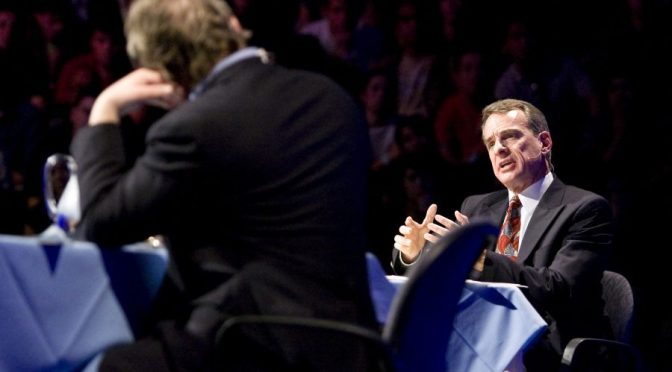
Whenever I bring debate DVDs to work and leave them on my desk, men who like sports more than apologetics ask me: “Was there a winner?” People don’t want to talk about opinions, they only want to talk about things that we know. A while back, there was a formal debate featuring William Lane Craig and Christopher Hitchens. And yes, there was a winner. One of the speakers admitted defeat.

Here is a video clip of an exchange they had in their debate at the massive Biola University showdown:

Isn’t that interesting?

Do you know how to have a conversation with an atheist? You just have to talk to them about the things we really know to be true. For example, that the universe had a beginning, just like scientists said that it did. That the universe is fine-tuned for allowing complex, embodied life. That our galaxy, star and planet are fine-tuned to provide us with a habitable place to live. The the origin of life required an intelligent designer to do the coding. These are not “faith” topics that we “share”. These are facts. And when we tell an atheist these facts, we are not sharing. We are informing about what is true. In some cases, we are correcting false beliefs.

Here’s a quote from famous atheist philosopher Thomas Nagel of New York University:

“In speaking of the fear of religion, I don’t mean to refer to the entirely reasonable hostility toward certain established religions and religious institutions, in virtue of their objectionable moral doctrines, social policies, and political influence. Nor am I referring to the association of many religious beliefs with superstition and the acceptance of evident empirical falsehoods. I am talking about something much deeper–namely, the fear of religion itself. I speak from experience, being strongly subject to this fear myself: I want atheism to be true and am made uneasy by the fact that some of the most intelligent and well-informed people I know are religious believers.

I want atheism to be true and am made uneasy by the fact that some of the most intelligent and well-informed people I know are religious believers. It isn’t just that I don’t believe in God and, naturally, hope that I’m right in my belief. It’s that I hope there is no God! I don’t want there to be a God; I don’t want the universe to be like that.”

(”The Last Word” by Thomas Nagel, Oxford University Press: 1997)

It really makes me think that Christian churches should be more interested in showing these debates, and in learning how to debate like William Lane Craig. Sadly, most churches do not focus on the things that work. Most churches to not want to win. They want to lose. That’s why we put charismatic leftists in charge, who don’t know anything – like Russell Moore and Beth Moore. Because we don’t want to have answers. We just want to lose. Lost the culture. Lose congregants. Lose our children to the secular left.

America today is in religious decline. But it’s not because we don’t have the arguments and the evidence. It’s because most churches have decided to focus on “compassion” and “kindness” and “hearing the voice of God” about their own desires and needs.

If you haven’t seen this debate between William Lane Craig and Christopher Hitchens, then you should watch it. Yes there is a winner. Yes something was decided. It was not just two people sharing their opinions. There was a final score.

Is the “RNA world” hypothesis a good naturalistic explanation for the origin of life?

If you look closely at this blog, you’ll see that I am currently reading  a book called “The Comprehensive Guide to Science and Faith: Exploring the Ultimate Questions About Life and the Cosmos“. Well, there’s an ongoing series of posts about the book at Evolution News, and one of them caught my eye. They are talking about the origin of life, and what’s needed to create life from non-life.

Here is the post from Evolution News.

The article starts by explaining the what is required to show how non-living components could be organized into a living system:

  • plausible biochemical paths from individual bio-building blocks like amino acids or nucleic acids to functional polymers such as proteins and DNA.
  • ways to speed up chemical reactions that are naturally slow.
  • the ordering of amino acids in proteins and nucleotide bases in RNA and DNA that allows them to function properly.

The leading naturalistic explanation to solve these problems is called the “RNA world” hypothesis:

The most popular proposal for the first self-replicating molecule is RNA — where life was first based upon RNA carrying both genetic information (akin to modern DNA) and performing catalytic functions (akin to modern enyzmes), in what is termed the RNA world.

The article lists several problems with the RNA world hypothesis. Dr. Walter Bradley lists two of those problems.

First, the assembly of RNA requires intelligent design:

First, RNA has not been shown to assemble in a laboratory without the help of a skilled chemist intelligently guiding the process. Origin-of-life theorist Steven Benner explained that a major obstacle to the natural production of RNA is that “RNA requires water to function, but RNA cannot emerge in water, and does not persist in water without repair” due to water’s “rapid and irreversible” corrosive effects upon RNA.3 In this “water paradox,” Benner explains that “life seems to need a substance (water) that is inherently toxic to polymers (e.g., RNA) necessary for life.”4

To overcome such difficulties, Benner and other chemists carefully designed experimental conditions that are favorable to the production of RNA. But Robert Shapiro explains that these experiments do not simulate natural conditions: “The flaw is in the logic — that this experimental control by researchers in a modern laboratory could have been available on the early Earth.”5 Reviewing attempts to construct RNA in the lab, James Tour likewise found that “[t]he conditions they used were cleverly selected,” but in the natural world, “the controlled conditions required to generate” RNA are “painfully improbable.”6 Origin-of-life theorists Michael Robertson and Gerald Joyce even called the natural origin of RNA a “Prebiotic Chemist’s Nightmare” because of “the intractable mixtures that are obtained in experiments designed to simulate the chemistry of the primitive Earth.”7 In the end, these experiments demonstrate one thing: RNA can only form by intelligent design.

The second problem is that the RNA world hypothesis is that it requires the existence of a self-replicating RNA molecule in order to get started. But this self-replicator contains a lot of biological information that is beyond the reach of chance to produce:

The most fundamental problem with the RNA world hypothesis is its inability to explain the origin of information in the first self-replicating RNA molecule — which experts suggest would have had to be at least 100 nucleotides long, if not between 200 and 300 nucleotides in length.10 How did the nucleotide bases in RNA become properly ordered to produce life? There are no known chemical or physical laws that can do this. To explain the ordering of nucleotides in the first self-replicating RNA molecule, origin-of-life theorists have no explanation other than blind chance. As noted, ID theorists call this obstacle the information sequence problem, but multiple mainstream theorists have also observed the great unlikelihood of naturally producing a precise RNA sequence required for replication.

Whenever I sit down to write some code or to write a blog post, I can start with one letter, then add another, then add another, until I have a functioning program, or a legible blog post. It might be possible for random chance to make a meaningful word out of 3 letters, like “the” or “hat”. But it’s not possible to make a self-replicating RNA molecule that way. The required sequence is just too long, and every letter has to be just right in order for it to function as a self-replicating system. The simplest self-replicating molecule is extremely complicated.

Anyway, check out the article, and if you want to read all about Walter Bradley (my role model), there is a new book out about him called “For a Greater Purpose: The Life and Legacy of Walter Bradley” which I finished, and it was great.