In her decision released Tuesday, Justice Susan Himel concluded that prohibiting sex-trade workers from operating a common bawdy house, living off the avails of prostitution and communicating for the purposes of prostitution, violate the Charter of Rights.
“I have found that the law as it stands, is currently contributing to the danger faced by prostitutes,” Judge Himel wrote in a 131-page ruling.
The three sections of the Criminal Code ruled unconstitutional, “force prostitutes to choose between their liberty interest and their right to security of the person,” she said.
The long-awaited decision stems from a constitutional challenge initiated last year by three women involved in the sex trade.
“It is important to state at the outset what this case is not about: The court has not been called upon to decide whether or not there is a constitutional right to sell sex or to decide which policy model regarding prostitution is better,” Judge Himel said. “Rather, it is the court’s task to decide the merits of this particular legal challenge, which is whether certain provisions of the Criminal Code are in violation of the Charter.”
[…]“We want to be good citizens and now we can,” said Valerie Scott, executive director of the Sex Professionals of Canada and one of the three women in the constitutional challenge.
I think I understand women fairly well, and I think that what was going through Susan Himel’s head was something like this: “if I make this legal, then women who do this sort of thing will feel a lot better about it, because no one will judge them since it’s legal”.
I read one feminist web site that called Ms. Himel’s decision “Excellent News”, but I didn’t want to link to them. I would say that legalized prostitution is consistent with feminism’s promotion of non-marital sex as a way of eliminating the unequal gender roles inherent in marriage.
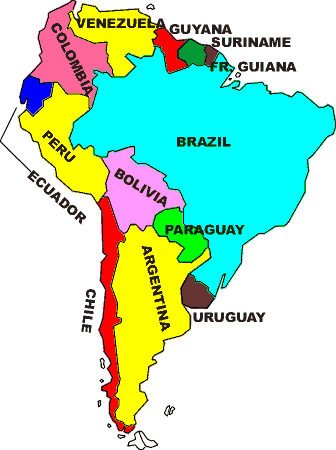
When Juan Manuel Santos came into office as Colombia’s president and emphasized economic issues over the fight against terrorist guerrillas, he was suspected of going soft on those he had combated as minister of defense under the previous administration. Little did his critics know that he was planning the “coup de grace” against the Revolutionary Armed Forces of Colombia (FARC).
The devastating Sept. 22 attack on FARC headquarters in Colombia’s central Meta province all but signifies the end of the five-decade-old conflict. It will take a little while for the official end to be declared, but this war is pretty much over.
[…]For decades, politicians, academics, human rights activists and journalists on both sides of the Atlantic failed to see that there was nothing romantic, “bien-pensant” or Robin Hoodesque about an organization that killed, maimed, kidnapped and extorted for a totalitarian objective.
Colombia’s solitude was such that even the U.S. began to lose faith in its ally a couple of years ago, refusing to approve a free-trade agreement that Bogota had negotiated at a major political cost.
Colombians did not give up and continued to reclaim territory for civilian rule. Much like the defeat of Venezuela’s Cuba-inspired terrorist guerrillas in the 1960s, Colombia’s victory against FARC is the result of civilians awakening to the evil of totalitarian terror.
We get to hear about spectacular military feats, but how many outside Colombia realize that peasants, factory workers, teachers, students and others joined the struggle to defeat FARC, beautifully symbolized by the hundreds of thousands who took to the streets inside Colombia and around the world in 2008 to clamor for the end of terror?
There are still many challenges ahead. The lesson in courage and perseverance that Colombians have given us suggests they are ready to meet them.
I wish that we could sign a free trade deal with them like Canada’s conservative government. Canada is led by a conservative business-friendly economist, and they are very supportive of capitalist democracies like Colombia. Stephen Harper is Canada’s prime minister. He has economics degrees from the University of Calgary. Like Santos, he is very, very tough on terrorism – favoring increased defense spending to protect Canadian interests abroad. And guess what? Canada also has a free trade agreement with another South American country – Chile.
Chile’s peso rose to a 27-month high after a report showed the country’s industrial growth accelerated to the fastest since 2006.
The peso appreciated 0.2 percent to 485.23 per U.S. dollar at 11:43 a.m. New York time, from 486.17 yesterday. The currency touched 483.61, the strongest since June 11, 2008. The peso has risen 13 percent during the quarter and 3.6 percent this month.
Chile’s economy is accelerating after the fifth-largest earthquake in a century struck in February, delaying its recovery from a 2009 recession.
“Retail sales grew and industrial production was better than expected,” said Roberto Melzi, a strategist at Barclays Capital in New York.
Retail sales expanded 13 percent in August from a year earlier, and industrial output grew 6.9 percent, the National Statistics Institute said in Santiago. That’s the most since January 2006. Industrial production shrank 17 percent after the 8.8-magnitude Feb. 27 earthquake and its accompanying tsunami, which caused damage worth more than a sixth of Chile’s gross domestic product.
Chile and Colombia are my two favorite South American countries. Both are led by conservative business-friendly economists. Chile’s president Sebastián Piñerahas a Masters and a Ph.D in economics from Harvard, and is successful in the private sector. The Colombian President Juan Manuel Santos specializes in business and economics, with graduate degrees from Harvard and the London School of Economics.
Fox News story that was sent to me by Jerry, Wes, Timmy, and Mary.
Excerpt:
A new survey of Americans’ knowledge of religion found that atheists, agnostics, Jews and Mormons outperformed Protestants and Roman Catholics in answering questions about major religions, while many respondents could not correctly give the most basic tenets of their own faiths.
Forty-five percent of Roman Catholics who participated in the study didn’t know that, according to church teaching, the bread and wine used in Holy Communion is not just a symbol, but becomes the body and blood of Christ.
More than half of Protestants could not identify Martin Luther as the person who inspired the Protestant Reformation. And about four in 10 Jews did not know that Maimonides, one of the greatest rabbis and intellectuals in history, was Jewish.
The survey released Tuesday by the Pew Forum on Religion & Public Life aimed to test a broad range of religious knowledge, including understanding of the Bible, core teachings of different faiths and major figures in religious history. The U.S. is one of the most religious countries in the developed world, especially compared to largely secular Western Europe, but faith leaders and educators have long lamented that Americans still know relatively little about religion.
Respondents to the survey were asked 32 questions with a range of difficulty, including whether they could name the Islamic holy book and the first book of the Bible, or say what century the Mormon religion was founded. On average, participants in the survey answered correctly overall for half of the survey questions.
Atheists and agnostics scored highest, with an average of 21 correct answers, while Jews and Mormons followed with about 20 accurate responses. Protestants overall averaged 16 correct answers, while Catholics followed with a score of about 15.
[…]On questions about Christianity, Mormons scored the highest, with an average of about eight correct answers out of 12, followed by white evangelicals, with an average of just over seven correct answers. Jews, along with atheists and agnostics, knew the most about other faiths, such as Islam, Buddhism, Hinduism and Judaism. Less than half of Americans know that the Dalai Lama is Buddhist, and less than four in 10 know that Vishnu and Shiva are part of Hinduism.
Gaaaaahhhh!!! How can you be a member of any religion if you don’t know the basic claims of all the religions so you can evaluate them to see if any are true? How can you make a good choice unless you choose the one that is logically consistent and empirically validated by the external world?