Welcome to episode 35 of the Knight and Rose podcast! In this episode, Wintery Knight and Desert Rose continue our discussion on how to choose a worldview. We discuss the predictions and prophecies of different traditions, and whether they were correct. If you like this episode, please subscribe to the podcast, and subscribe to our YouTube channel. We would appreciate it if you left us a 5-star review on Apple Podcasts or Spotify.
Podcast description:
Christian apologists Wintery Knight and Desert Rose discuss apologetics, policy, culture, relationships, and more. Each episode equips you with evidence you can use to boldly engage anyone, anywhere. We train our listeners to become Christian secret agents. Action and adventure guaranteed. 30-45 minutes per episode. New episode every week.
Episode 35:
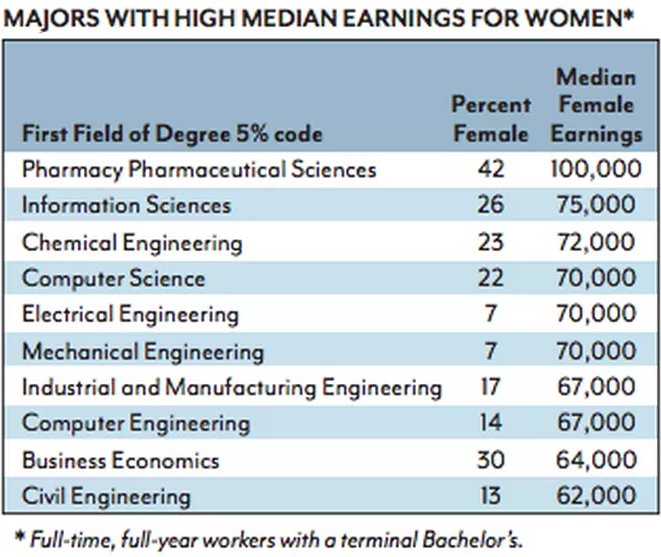
Episode Summary:
Wintery Knight and Desert Rose continue their discussion about whether all religions are equally valid paths to God. In this episode, we look at what different worldviews have predicted about the future. We don’t just focus on the prophecies of various religious, but also look at the predictions of secular, non-religious people. We’ve decided to expand this series to five parts, so this episode is the third in a five-part series.
Speaker biographies
Wintery Knight is a black legal immigrant. He is a senior software engineer by day, and an amateur Christian apologist by night. He has been blogging at winteryknight.com since January of 2009, covering news, policy and Christian worldview issues.
Desert Rose did her undergraduate degree in public policy, and then worked for a conservative Washington lobbyist organization. She also has a graduate degree from a prestigious evangelical seminary. She is active in Christian apologetics as a speaker, author, and teacher.
Notes
Early on in the episode, Rose mentions how Muslims present prophecies in the Quran to non-Christians as evidence. She meant to say non-Muslims.
A few people have asked me about my policy of preferring candidates for wife and mother who have earned STEM degree(s). In this post, I’ll explain 5 goals for my marriage. Then I’ll explain 6 reasons why a STEM degree helps me to execute that plan. Then I’ll answer 3 objections to the STEM degree requirement. Then I’ll explain the relevance of STEM for a woman’s marriage roles.
What is STEM?
So, to start, STEM is an acronym for Science, Technology, Engineering and Math. A STEM degree is a degree in a STEM field. This includes things like petroleum engineering, bioinformatics, and computer science. But it also includes things like economics, accounting and business. Basically, anything with math that involves solving problems in the real world. Anything that encourages logical reasoning and using evidence to sustain an argument.
My goals for marriage
So, here are my goals for marriage:
influence the church with apologetics
influence the university campus (students and professors) with apologetics
be involved in politics, advocate for conservative policy
open the house to students and neighbors to teach apologetics and demonstrate a loving marriage
raise 3-4 financially independent and influential children
Everything I want in a wife is related to this plan. I evaluate women according to these goals, because I want my marriage to make a difference for Christ and His Kingdom. I’m flexible on plans and requirements, so long as the proposed changes result in a greater impact for Christ and His Kingdom.
The best majors for women to avoid student loan debt
How a STEM degree relates to marriage
The plan is for my wife to earn a STEM degree, marry me, and work full-time until the first child is born. Then, she stops working and becomes a stay at home mom. She could return to work after the each child reaches 5 years old. My preference is that she not return to work, but instead homeschool the children, or at least monitor their education in private evangelical Christian schools as a stay-at-home mother.
So, how does a woman’s having a STEM degree help me to achieve my marriage plan goals?
Here are 6 ways:
1. STEM equips her to homeschool influential and effective children. A wife who has completed high school and college courses in math, science, engineering and/or technology will know how to either homeschool our kids, or monitor their homework and grades so they achieve good academic results. Think of how Asian families raise high-performing children. I want that.
2. STEM teaches her to produce results in the real world, e.g. – working code that solves a problem, lab results, bridges that support a load, etc. In the lab, decisions cannot be made based on feelings or peer approval. The lab doesn’t respect horoscopes, devotions, romance novels, essentual oils, romantic comedies, “The Secret” or “The Law of Attraction”.
3. STEM equips her to argue apologetics from her experience of using reason, evidence, reality-based testing. All Christians need to know how to defend their core beliefs (God exists, etc.) to non-Christians. That means doing what works. And what works is logical argumentation supported by evidence. The best kind of evidence is scientific evidence. Then historical evidence. Confidence comes from competence at practical, real-world disciplines.
4. STEM degrees are a path to high paying jobs. Women who are debt-free are better to marry, because they don’t delay the process of buying a house and having children. Any kind of debt has to be paid off first. I’m not looking for a big spender, I’m looking for someone who can earn and save. The more children we can afford to have, the bigger our influence will be. Also, women who choose STEM demonstrate that they can delay gratification, and not be a slave to FOMO, YOLO, “living in the moment”, etc.
5. STEM equips women to find work easily, so she doesn’t feel pressured to accept a bad marriage proposal. She can move out and start saving money. She can buy apologetics books, lectures and debates. She can buy books on economics, marriage and parenting. She can prepare herself to attract the right man, and she can evaluate men to see if they are prepared for marriage.
6. Both the STEM departments AND the STEM workplaces less likely to be woke than non-STEM departments and workplaces. She will be able to hold to her convictions more easily in an environment where results matter more than having the “right” (left) opinions.
Objections to preferring a wife with a STEM degree
1. A woman with a STEM degree will not want to quit her job and become a stay at home mom during the critical period from birth to age 2, or even better, age 5.
2. A woman who takes years off for child-bearing and early childhood years will not be able to resume her job at the same level of pay.
3. Even in STEM departments, a woman will be exposed to an environment with secular left indoctrination, drunkenness and promiscuity. She is unlikely to come out of college as a virgin.
Responses to objections to the STEM requirement
Points 1) and 2) apply to every kind of degree, not just STEM. Any woman who does 4 years of college in any field will be “wasting” it if she stops working. First, in my plan, her education is to equip her to educate her children, because I trust her more than any teacher or stranger to do that important job. Teachers are not paid to produce results – they are unionized, and not paid based on performance. Second, even women with STEM degrees would generally prefer to work part-time or not at all. They want to stay with their young children. Third, we don’t need the money. That’s why I suffered through my BS and MS to earn 6 figures and have a 7 figure net worth. We don’t need her to work.
For point 3), I’m not saying that EVERY woman who graduates with a STEM degree is perfect for marriage. I’m saying that a STEM degree helps to have a marriage that is influential for Christ and His Kingdom. I’m open to other majors, so long as they address the concerns and goals I specified. I’m even open to a different plan. But the overriding concern is that the marriage count for something for the Boss. Even with a STEM degree, the man still has to ask the woman questions about politics and parenting. He still has to evaluate her sobriety, chastity and frugality. A STEM degree is just a starting point.
The difference STEM makes for apologetics
I think it’s obvious that having a wife who has taken courses and even worked a few years before the first child arrives helps her to be able to educate her kids and / or monitor their performance. But it also allows her use apologetics more persuasively on the university campus, in the church, and if we open up the home to college students and neighbors for movies / meals / discussions.
For example, take the fine-tuning argument. A knowledge of physics and chemistry helps you to explain why changing the fundamental forces results in a universe that does not support complex, embodied life. A knowledge of probability theory (e.g. – product rule) helps you to argue for intelligent design in the origin of life. And what about logic? Even in computer science, we had to study symbolic logic, the rules of inference, conditional proofs, Bayes’ Theorem, etc.
My wife’s job is to make the big picture of education clear to the kids, so they know what they can do in the real-world with what they are learning. So many Christians underperformed in school because they didn’t know the relevance of what they were learning for the task of defending their Christian worldviews. My wife’s job is to know how the material being taught relates to real-world goals, like defending Christianity. This is how parents produce children who grow up to be William Lane Craig, Stephen C. Meyer, Luke Barnes or Michael Licona. Boldness comes from knowledge.
Conclusion
First, I hope this post convinces women to start planning for their marriages early. You need to know things that matter for two reasons: 1) to attract a quality man, 2) to evaluate men and filter out the good ones. That means you need to know things like apologetics, politics, etc. Having money helps to buy learning material.
Second, I hope this post convinces men to stop choosing women based on youth and beauty. Your choice of wife will have a huge effect on your influence. Choose a capable, competent partner who complements your strengths with different strengths. Men spend their days in the workplace, where we cannot say much about religion and politics. If you marry an intelligent conservative Christian woman, she can be your voice to the university, the church, and the public square. Not to mention raising effective children. Therefore, choose wisely.
I saw that Katy Faust tweeted this article by Mark Regnerus, a sociologist who specializes in dating, marriage and parenting issues. In the article, Regnerus cites the conclusions from several recent research studies. Once we see what he has to say, I’ll pull the data from a Canadian study that he didn’t mention that also shows the effect of same-sex parenting on children.
The story of “no differences” between same-sex and opposite-sex households with children hinges on a pair of repetitive themes in the published research: (1) hiding behind small and nonrepresentative samples, and (2) employing analytic strategies that all but guarantee motivated researchers can “explain away” those pesky baseline observable differences between children from same-sex and opposite-sex households.
Baseline differences matter. What happens before control variables matters. Building statistical models to hide differences is called p-hacking, a common but problematic practice. A 2020 study of over 1.2 million children in the (gay-friendly) Netherlands, whose primary media message trumpeted how same-sex parents were better than opposite-sex parents, nevertheless revealed that 55 percent of children living with same-sex parents—the vast majority of which were female couples—experienced the separation of these parents, well above the 19 percent of children of opposite-sex parents who experienced the same. “Controlling” for such instability—in effect implying it doesn’t matter—clears the way to proclaim the benefits of same-sex parents. It’s a common statistical practice, but a deceptive one.
Hence, alternative analyses are always a good idea. For example, a 2020 published reexamination of three nationally representative datasets from the United States and Canada revealed that the presence of children tended to stabilize opposite-sex couples but destabilize same-sex couples. Dissolution rates were 43 percent for same-sex couples, but only 8 percent for opposite-sex couples. Its authors agree, saying that “parental instability is an important factor through which parents’ sexual orientation influences children’s outcomes.”
So, the problem of higher separation between partners in a lesbian relationship is well-known. Lesbian couples have the highest instability rates of any kind of couple, heterosexual or homosexual.
In the past, same-sex couples who got a slice of the marriage pie immediately wanted their share of the divorce market. In South Africa, couples who were first to wed under a 2006 law also won the race to divorce court only a year later; two Toronto lesbians who wed in 2003 separated after only five days, petitioning successfully in 2004 for a judge to overturn Canadian law so they could divorce. Or take Los Angeles, where 2008’s historic first same-sex couple divorced this summer although they had been together for 18 years! Lest we think these cases are exceptional, of the same-sex couples who did marry in Sweden, males were 35% more likely to divorce than heterosexual couples, while lesbians were up to 200% more likely.
Before same-sex marriage, the concept of marriage included the concepts of permanence and exclusivity. Natural marriage has the production and raising of children at the core. No-fault divorce damaged that core, saying that the happiness of the selfish adults was more important than the children. Then same-sex marriage damaged the core again, saying that producing children isn’t even central to the concept of marriage. As the selfish adults pass more laws against natural marriage, the children suffer more from the decline of permanence and exclusivity.
I found another study related to same-sex parenting, this one out of Canada.
Almost all studies of same-sex parenting have concluded there is “no difference” in a range of outcome measures for children who live in a household with same-sex parents compared to children living with married opposite-sex parents. Recently, some work based on the US census has suggested otherwise, but those studies have considerable drawbacks. Here, a 20% sample of the 2006 Canada census is used to identify self-reported children living with same-sex parents, and to examine the association of household type with children’s high school graduation rates. This large random sample allows for control of parental marital status, distinguishes between gay and lesbian families, and is large enough to evaluate differences in gender between parents and children. Children living with gay and lesbian families in 2006 were about 65 % as likely to graduate compared to children living in opposite sex marriage families. Daughters of same-sex parents do considerably worse than sons.
The author of the study is a professor of economics at Simon Fraser University in British Columbia. His PhD in economics is from the University of Washington. A previous study had shown that gay relationships typically have far more instability (they last for more shorter times). That’s not good for children either. Another study featured in the Atlantic talked about how gay relationships have much higher rates of domestic violence. That’s not good for children either. So we have three reasons to think that normalizing gay relationships as “marriage” would not be good for children.




 WINTERY KNIGHT