
New video series on intelligent design starts off discussing the Cambrian explosion

I am always on the lookout for good resources on science and Christianity. And I found some. Well, Uncommon Descent found them, and I read their blog, so I found them too. The first four episodes are out, and the topics are: 1) introducing the Cambrian explosion, 2) pre-Cambrian fossils, 3) punctuated equilibrium, and 4) Darwin’s “tree of life”. Each video is 12-20 minutes long.

So, before we see the videos, I feel I should explain the outline for arguing for a creator / designer of the universe from scratch. There are six main arguments. 1) the origin of the universe from nothing, 2) fine-tuning of the creation event, 3) fine-tuning for habitability in the galaxy, solar system, and planet, 4) the origin of the first living self-replicating organism, 5) irreducible / minimal complexity in molecular machines, 6) the sudden origin of basic body plans in the Cambrian explosion (a geological period a long time ago).

These four videos introduce you to the sixth argument in that list, the Cambrian explosion.

First video: Introducing the Cambrian explosion

Description:

When Charles Darwin published “On the Origin of Species” in 1859, he was painstakingly aware of the fact that the fossil record diametrically opposed his theory. Ever since Darwin’s time, paleontologists have put their finger on the Cambrian explosion, where most of the major animal phyla appear abruptly in the fossil record suddenly and without any evidence of intermediate forms preceding them in Precambrian strata.

Second video: evaluating precursors to the Cambrian explosion

Description:

Are there transitional forms and Precambrian fossils which reveal the evolution of the diverse animal phyla that appear in the Cambrian explosion? The history of paleontology shows the answer is no! As paleontologists have learned more about the fossil and geological record, the challenge of the Cambrian explosion to Darwinian theory has only increased.

Third video: evaluating punctuated equilibrium

Description:

In the 1970s, paleontologists Stephen Jay Gould and Niles Eldredge proposed a model of evolution called punctuated equilibrium, intended to resolve the lack of transitional forms in the fossil record. Can “Punk Eek,” as it’s often called, resolve the abrupt appearance of new animal phyla in the Cambrian explosion? This video explains why the answer is No—among many other problems, Punk Eek requires too much evolutionary change too quickly and lacks a biological mechanism to account for the rapid origin of anatomical novelty we see in the Cambrian period.

Fourth video: evaluating homology and phylogenetics

Description:

As more scientists have realized that the fossil record poses serious challenges to Darwin’s theory of evolution, many have turned to molecular homologies and phylogenetic trees to defend Darwin’s tree of life. But do these approaches really support Darwin’s tree? Nope.

If you like these videos, you can read a much longer, more detailed book about it by Dr. Stephen C. Meyer, called “Darwin’s Doubt”. Or, you can do what I’m doing and just read a chapter about it in the new book “The Comprehensive Guide to Science and Faith“. That book covers all 6 of the arguments I mentioned before. You can see the table of contents on the Discovery Institute web site. The chapter by Dr. Gunter Bechly entitled “Does the Fossil Record Demonstrate Darwinian Evolution?” covers the fossil record, and the Cambrian explosion in particular. I like Gunter a LOT, because he had a recent debate on the Unbelievable show on this topic, and he really cleaned the clock of his opponent, a slippery theistic evolutionist named Joshua Swamidass. It was beautiful. He cut through all the theistic evolution garbage and got straight into the science.
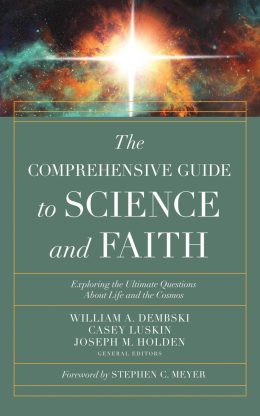
I’m reading the book right now. Or rather, I’m having it read to me, because I got the audio book version. If you remember reading books like “Mere Creation” (1998) and “The Creation Hypothesis” (1994) as a young man like I do, then you will love this book.

I like to know a little about every interesting topic, and then watch lots of university lectures and formal debates about them, so I can debate these topics in the places where I live and work. The new book has a lot of different authors from a lot of different perspectives writing on a lot of different topics. You could find a way to talk about these topics in pretty much any environment.

So far, I like Dr. Fazale Rana’s chapter on Adam and Eve the best, but I’m still in Section I. I’m just starting on Jay Richards chapter next.
What kinds of Christians should we look up to?

Many Christians admire celebrities, athletes, entertainers, and other famous people. But the Christians who impress me are the ones who use their minds to explain Christianity to non-Christians, get into trouble for it, and stand by their beliefs. Three of the ones who come to mind for me are William Dembski, Guillermo Gonzalez and Richard Sternberg. And the first two have posted new stuff.

Frank Turek posted a new podcast about this Substack from William Dembski, where he talks about his thoughts after reading Meg Basham’s new book.

Here is his main point, illustrated with many Bible verses:

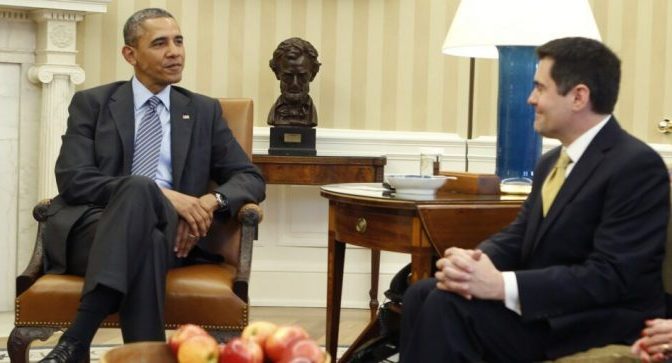
My point in this post is not to name evangelical elites who have compromised themselves or the secular philanthropies who have tempted them into compromise. You can get the details in Basham’s book. But here’s an example that Basham gives that’s emblematic of the temptations faced by elite evangelicals. It’s the the case of an elite evangelical being invited to dinner at the Obama White House. I knew this individual 20 years ago early in his career. He has since had a meteoric rise in elite evangelical circles. In the introduction to a recent book that he wrote, he inserts a paragraph that seems out of place about his dinner at the Obama White House (confirming Basham’s account). No doubt, it must be personally gratifying to be invited to the White House. But ego aside, is that really something for an evangelical to be proud of given that the Obama presidency was so opposed to core evangelical beliefs and practices?

I think he’s talking about Russell Moore, who met with Obama. I have an extremely, extremely low opinion of Russell Moore. I don’t think he’s an authentic Christian at all. I think he pretended to be a Christian when he was young, to impress the Christians around him. And then when he fell in with a secular left crowd, he adapted his views so that they would praise him, too. He never put in the work to know whether Christianity is true. People who don’t know whether Christianity is true tend to just USE Christian language to decorate what is essentially a narcissistic enterprise. And of course he doesn’t work at showing non-Christians that it is true, with evidence. That would run counter to his real goal of feeling good, and getting people to like him.

More:

Let me put this point more starkly. The Scriptures teach repeatedly that we should guard against recognition, accolades, and advancement from those hostile to the faith and that in fact we are on much safer ground when those hostile to the faith persecute rather than praise us. This is not to say that we should purposely make ourselves so annoying or distasteful that we receive the reproach of unbelievers (as when Christians act as hypocrites). But it is to say that by quietly and consistently living out our faith, we will naturally attract opposition (consider the ongoing saga of the Denver baker Jack Phillips).

The New Testament makes this point so consistently, as illustrated in the following verses, that it is hard to dismiss it simply as proof texting:

Matthew 5:10–12
“Blessed are those who are persecuted because of righteousness, for theirs is the kingdom of heaven. Blessed are you when people insult you, persecute you and falsely say all kinds of evil against you because of me. Rejoice and be glad, because great is your reward in heaven, for in the same way they persecuted the prophets who were before you.”

Matthew 10:22
“You will be hated by everyone because of me, but the one who stands firm to the end will be saved.”

Luke 6:22–23
“Blessed are you when people hate you, when they exclude you and insult you and reject your name as evil, because of the Son of Man. Rejoice in that day and leap for joy, because great is your reward in heaven. For that is how their ancestors treated the prophets.”

John 15:18–20
“If the world hates you, keep in mind that it hated me first. If you belonged to the world, it would love you as its own. As it is, you do not belong to the world, but I have chosen you out of the world. That is why the world hates you. Remember what I told you: ‘A servant is not greater than his master.’ If they persecuted me, they will persecute you also. If they obeyed my teaching, they will obey yours also.”

Acts 5:40–41
“They called the apostles in and had them flogged. Then they ordered them not to speak in the name of Jesus, and let them go. The apostles left the Sanhedrin, rejoicing because they had been counted worthy of suffering disgrace for the Name.”

2 Timothy 3:12
“In fact, everyone who wants to live a godly life in Christ Jesus will be persecuted.”

1 Peter 2:20b–21
“If you suffer for doing good and you endure it, this is commendable before God. To this you were called, because Christ suffered for you, leaving you an example, that you should follow in his steps.”

Luke 6:26
“Woe to you when everyone speaks well of you, for that is how their ancestors treated the false prophets.”

John 5:44
“How can you believe since you accept glory from one another but do not seek the glory that comes from the only God?”

John 12:42b–43
“Because of the Pharisees, [many] would not openly acknowledge their faith for fear they would be put out of the synagogue; for they loved human praise more than praise from God.”

Galatians 1:10
“Am I now trying to win the approval of human beings, or of God? Or am I trying to please people? If I were still trying to please people, I would not be a servant of Christ.”

James 4:4
“You adulterous people, don’t you know that friendship with the world means enmity against God? Therefore, anyone who chooses to be a friend of the world becomes an enemy of God.”

So the prime lesson I take from Basham’s book, and one I would like readers of this post to take with them also, is that we do well not to sell our Christian birthright for a mess of liberal or progressive pottage. We should be better than that and our Christian faith demands better than that.

If you’re not familiar with what the Baptists elites did to Dembski at Baylor University, he talks about it in that column.

He’s not the only one who was persecuted. In a recent interview, Guillermo Gonzalez talked about what happened to him at Iowa State University:

And there is the story of Richard Sternberg, which is reported on here and here. I could go on, but there are 3 examples.

I believe that these men will have a much larger crowns in Heaven than famous “Christian” athletes, celebrities and entertainers. They had to pay a price for their faith. Do you know who they are? And what about you? Is there something that happened to you that hurt you, because you put Boss above your own reputation with non-Christians? You think that what happened to you is a loss, but actually, sharing in the sufferings of Jesus for obedience to the Father is a sign that you are a real follower of Jesus. This is something that many elite Christian leaders do not know.

How is the Democrat party economic plan working out in European countries?

We just recorded a two episodes of Dr. Frank Turek’s “I Don’t Have Enough Faith to be an Atheist” podcast, over at CrossExamined.org and we talked about some of the policies of the Democrat party. Not just the ethical issues like abortion and LGBT, but also their economic policies. Whenever I could, I tried to point out where Democrat party policies had already been tried.

And here is a very good article from the Daily Signal, about how the economies of European countries are doing under similar policies as are being proposed by the Harris-Walz ticket.

It says:

New numbers say the European Union has joined Japan in the “lost decades” brigade, with per-person gross domestic product in dollar terms nearly flat since 2008.

According to the Organization for Economic Cooperation and Development, while disposable household income in the U.S. is $51,000, it’s just $39,000 in Germany, $34,000 in France, $29,000 in Italy, and $21,000 in Greece. For perspective, Mexico is about $16,000.

A very good way to measure poverty in a country is to look at GDP per capita. This is the median amount produced by individuals in that country. A high GDP per capita means high individual productivity, which typically corelates with high individual earnings.

So why do people in Europe have such low productivity, and low earnings?

Simple: Government took over. Government spending is nearly half of Europe’s GDP, which hogs physical resources—steel, workers, etc.—while predatory tax rates punish production and welfare tempts workers away. Nobody produces, everybody takes.

Add in mandates from environment to social policy that hike prices and slap straitjackets on companies, and the smart ones leave, the rest grimly soldier on, staying in business till their factories wear out, then it’s lights out.

In short, it doesn’t pay to produce in Europe.

Notice the countries that he lists: France, Germany, Greece, and Italy. These are European countries that have government control of their economies. According to the Index of Economic Freedom, which measures how socialist an economy is, Germany is ranked #18 best out of 184 countries. But France is ranked 62, Italy is ranked 81, and Greece is ranked 113. A significant cause of Germany’s poverty is the massive inflation caused by their green energy policies, bu their economy is largely free, as well as their open border immigration policy.

Many Americans on the secular left say that those countries are not doing “real” socialism. They want us to look at countries like Denmark, Sweden, and Norway. and they call what’s happening in those countries “socialism”. But those are not socialist countries. Again, according to the Index of Economic Freedom, the economies of those countries are more free than the United States. Denmark is ranked #7 for most capitalist economy. Sweden is ranked #9 and Norway is ranked #10. The difference is that those economies have very high tax rates and very high government spending.

What makes an economy “free”?

The Heritage Foundation explains in this article:

We measure economic freedom based on 12 quantitative and qualitative factors, grouped into four broad categories, or pillars, of economic freedom:

  • Rule of Law (property rights, government integrity, judicial effectiveness);
  • Government Size (government spending, tax burden, fiscal health);
  • Regulatory Efficiency (business freedom, labor freedom, monetary freedom); and
  • Open Markets (trade freedom, investment freedom, financial freedom).

Each of the twelve economic freedoms within these categories is graded on a scale of 0 to 100. A country’s overall score is derived by averaging these twelve economic freedoms, with equal weight being given to each.

Sadly, the Harris-Walz plans for the United States are NOT to turn us into Denmark or Sweden or Norway. They aren’t going for a free market economy that is isolated from government, with higher taxes and more social spending. They are going for the model of France, Italy and Greece, with higher taxes, but also reducing property rights, fiscal health, business freedom, labor freedom, monetary freedom, trade freedom, investment freedom and financial freedom. But they also want to increase activist courts, government spending, and the tax burden on businesses and individuals.

I think the articles I linked to above are worth reading, because if you are a Christian, you will find it much harder to achieve the goals you have as a Christian in an economic system that is unfree. It’s hard to think about apologetics and evangelism when you can’t afford electricy or food. That’s happening right now in secular left countries like Cuba, Venezuela and North Korea.