
Richard Dawkins: “the hypothesis of theism is a scientific hypothesis”

I’m not sure if you’ve been following Richard Dawkins lately, but he has been getting less and less beastly. First of all, he did several debates with Christian scholars. Second, he’s realized the difference that Christian values make for morality and civilization. And thirdly – and this is the new one – he thinks that the intelligent design hypothesis is a valid scientific hypothesis. Let’s take a look.

In this clip from the preview of a debate that Richard Dawkins had with John Lennox, he explains (at around the 3-minute mark) that a “reasonably respectable case” can be made for a deistic God. That means a God who creates and designs the universe, but does not intefere:

That happened back in 2008. And in their debate he said this: “A serious case could be made for a deistic God”.

So already, he was starting to sound more like Anthony Flew, who, atheist though he was, always showed that he would be willing to go wherever the evidence led. I remember in Flew’s debate with William Lane Craig, an atheist questioner asked him why he was accepting the case for a supernatural cause of the beginning of the universe, instead of trying to proposing a different model that would get out of the need for a Creator. And Flew said that he had to go with the scientific consensus, which requires a beginning of the universe. A few years later, Flew gave up atheism and accepted theism (although not Christianity). He was honest about what science shows. I can tell a smart atheist from a dumb atheist.

Anyway, round 2 of Dawkins is when he recently lamented the fact that the decline of Christianity (which he spent his life trying to achieve) had caused changes in British culture that he didn’t like.

Here it is from Christian Post:

Atheist author Richard Dawkins described himself as a “cultural Christian” and lamented the faith’s waning cultural influence in Europe, though he still derided its key tenets as “nonsense,” during an interview on Easter Sunday.

Speaking with British journalist Rachel Johnson, Dawkins noted that the United Kingdom is “fundamentally a Christian country,” and he still personally values the Christian ethos despite not believing the religion from which it emerged.

“I call myself a cultural Christian,” said the evolutionary biologist and author of The God Delusion. “I’m not a believer, but there’s a distinction between being a believing Christian and being a cultural Christian. And so, I love hymns and Christmas carols, and I sort of feel at home in the Christian ethos. I feel that we are a Christian country in that sense.”

All right, here is the latest Richard Dawkins news, from Evolution News:

Recently Dr. Dawkins had a moving dialogue with former New Atheist Ayaan Hirsi Ali, who is also a former Muslim. She has announced her conversion to Christianity for what she describes as “very subjective” reasons. It was in response to a “personal crisis”: “I lived for about a decade with intense depression and anxiety and self-loathing. I hit rock bottom. I went to a place where I actually didn’t want to live anymore, but wasn’t brave enough to take my own life.” Faith was her way out of the crisis.

Dawkins answers kindly that belief in a creator or designer is more than a mere subjective response: “You appear to be a theist,” he tells her. “You appear to believe in some kind of higher power. Now, I think that the hypothesis of theism is the most exciting scientific hypothesis you could possibly hold” (emphasis added). Hold that thought in your mind.

Obviously, Dawkins wasn’t giving up his own atheism. He goes on: “And the idea that the universe was actually created by a supernatural intelligence is a dramatic, important idea. If it were true, it would completely change everything we know. We’d be living in a totally different, different universe. That’s a big thing. It’s bigger than personal comfort and nice stories and these things. The idea that the universe has lurking beneath it an intelligence or supernatural intelligence that invented the laws of physics, that invented mathematics, is a stupendous idea, if it’s true.” Minus the reference to “lurking,” that is of course the thesis of intelligent design. He adds, “To me that simply dwarfs all talk of nobility and morality and comfort and that sort of thing.”

This is a remarkable response, granting the premise of arguments for intelligent design like those of Stephen Meyer in Return of the God Hypothesis: Three Scientific Discoveries Revealing the Mind Behind the Universe. The premise is that in discussions of ID, there really is a scientific question to consider. The design hypothesis could be wrong, or it could be right. But let’s weigh it on its own terms as the scientific hypothesis that it is. Thank you to Richard Dawkins for using his authority to point that out.

And of course, anyone who has looked into these things knows the elements of the scientific case for theism:

  1. origin of the universe
  2. cosmic fine-tuning
  3. galactic, stellar and planetary habitability
  4. origin of life
  5. Cambrian explosion
  6. molecular machines / irreducible complexity

A lot of atheists don’t go near enough to the evidence to be able to make a statement like what Dawkins said. I’m impressed with Dawkins, because he was even able to correct Ayann Hirsi Ali about what Christianity actually involves. Christianity is not primarily about subjective beliefs or communities or even a set of moral teachings. Christianity is a knowledge tradition. It’s a set of claims about reality that are either true or false. And he knows that Christianity makes testable claims, and some of them can be verified or falsified by science. Dawkins has a more respectful view of what Christianity is than many Christians. Impressive.
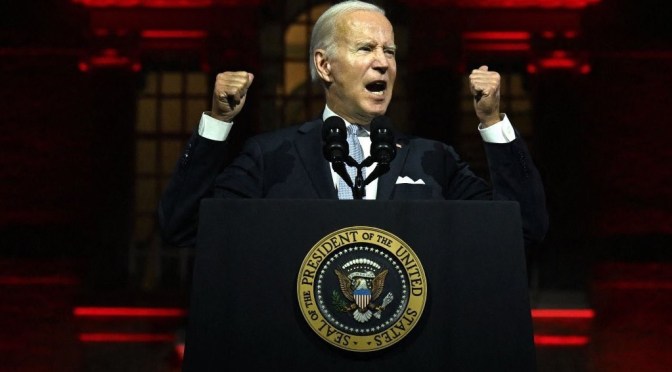

Secular left fascism: FEMA workers directed to avoid homes with Trump signs

Atheists are the most politically active group in America. They are overwhelmingly for leftist policies. As I have shown before, atheists do not have a rational foundation for moral values and duties. When doing the right thing goes against their self-interest, they have no rational justification to do the right thing. So what happens when they go into government? Can they be trusted to do their jobs?

Here’s an article from the New York Post:

A Federal Emergency Management Agency (FEMA) supervisor told disaster relief workers in Florida to “avoid homes” with signs supporting President-elect Donald Trump, the agency confirmed Friday.

The FEMA official — Marn’i Washington — conveyed her edict both verbally and in a Microsoft Teams chat used by relief workers canvassing Lake Placid homes ravaged by Hurricane Milton last month, according to the Daily Wire.

“Avoid homes advertising Trump,” Washington wrote in a “best practices” memo to employees.

The order was the second bullet point in a list instructing workers to not go “anywhere alone,” practice “de-escalation,” stay hydrated and to “follow the rules.”

FEMA employees told the outlet that at least 20 homes displaying Trump signs or flags — a common sight during election season — were passed between the end of October and into November because of the order.

“Trump sign no entry per leadership,” read messages left by workers in FEMA’s tracking system when homes were skipped because of the banners.

By ignoring the homes, residents were denied the opportunity to sign up for federal FEMA disaster relief assistance in the wake of the Category 3 hurricane’s landfall.

You might remember that we learned previously that FEMA was deliberately blocking relief efforts for people in North Carolina, specifically in areas with many Republican voters.

Remember this article from Fox Business?

Elon Musk on Friday slammed the Federal Emergency Management Agency (FEMA), claiming that it is blocking shipments of Starlink satellite internet deliveries in hurricane-ravaged North Carolina.

“FEMA is not merely failing to adequately help people in trouble, but is actively blocking citizens who try to help!” the billionaire claimed on X.

Musk said he had just received a note from a SpaceX engineer, Starlink’s parent company, in Asheville, North Carolina, who said the company has “powered up two large operating bases for choppers to deliver goods into hands. We’ve deployed 300+ starlinks and outpour is it has saved many lives.”

But Musk said the engineer claimed that FEMA is “actively blocking shipments and seizing goods and services locally and locking them away to state they are their own. It’s very real and scary how much they have taken control to stop people helping. We are blocked now on the shipments of new starlinks coming in until we get an escort from the fire dept. but that may not be enough.”

It’s very important for taxpayers to reflect on the actions that we see from secular leftists who are in government.

We see:

  • pre-dawn raids on the homes of enemies of the Democrat party
  • false dossiers used to obtain warrants to spy on political opponents
  • statements claiming that laptops are “Russian disinformation” when they are actually genuine
  • slow-walking prosecutions of relatives of Democrat party members
  • labeling concerned parents of students as “domestic terrorists”
  • persecuting Christian business owners for their religious beliefs
  • forcing Christian medical professionals to perform violent acts that go against their consciences
  • seizing children from parents when disagree with secular leftist sexual ideologies
  • launching criminal prosecutions of their political opponents before an election

And this is not to mention all the times that actual political violence has been committed by Democrats against Republicans, such as the attempted murder of Congressman Steve Scalise by a former Bernie Sanders campaign worker. There are many such cases.

When you find these cases happening, and you ask secular leftists what is an appropriate measure to take to deter it, they say they will suspend the person(s) who were caught, and launch an investigation. Is it enough, though? When secular leftists get angry with Christians who merely disagree with them, they drag them into court, and try to shut down their businesses and take their life savings. Maybe it’s time for Republicans to start thinking about how to deter the secular left from using government as a weapon against their fellow Americans who have every right to speak up and participate in the political process without being punished.

Why I admire people in the armed forces more than famous entertainers

I’ve noticed that many Christians can tell me a lot about famous entertainers. It doesn’t matter if it’s singers, musicians, actors, athletes, etc., they seem to know details of their biographies, achievements, etc. And it doesn’t really matter if those people are Christians, or whether they have performed actions consistent with a Christian worldview in their private lives.

Anyway, speaking for myself, I mostly admire two kinds of people. The first kind is the kind I blog about here all the time: Christian scholars engage non-Christians intellectually using logic and evidence. The second kind, as you can tell from my reading list, is people who distinguish themselves in conflict with those who oppose the principles and policies that allow me to live out my Christian life. And I am especially interested when people who are fighting evil (imperialists, Nazis, socialists, communists, leftists, etc.) exhibit Christ-like character in risking their lives to save others, or in giving their lives to save others.

Lt. Walt Chewning charges unto burning F-6F Hellcat to save trapped pilot

I have a war story to tell you that happened on November 10th, 1943.

Lieutenant (later Lieutenant Commander) Walter Lewis Chewning of Cynwyd, Pennsylvania, steps on the burning fuel tank of an F6F-3 Hellcat flown by Ensign (later Lieutenant) Byron Milton Johnson of Potter, Nebraska to effect a successful rescue of the pilot on November 10, 1943. Johnson had flown out to USS Enterprise from Barbers Point, Hawaii, enroute to Makin Atoll in the Gilberts to support the United States Army invasion, which occurred on November 20, 1943. The afternoon of November 10, Johnson took off in F6F Hellcat Number 30 for a routine training exercise. He immediately developed engine trouble and requested an emergency landing. He was waved off three times as he struggled to maintain control, but his tail hook caught the third arresting gear wire, and Johnson’s Hellcat was slammed into the deck, coming to rest in the port catwalk. The plane came to rest on its external belly fuel tank, which started to leak. As the engine vibrated horribly as the propeller bent itself on the deck, sparks ignited the fuel. The hard landing had jammed Johnson’s canopy closed, shearing the retaining pin; he could not exit the plane. Chewning, who had joined the ship October 2, 1943 as Enterprise new catapult officer, scrambled out of the catwalk and came through the smoke. Stepping on the burning belly tank, he forced open the canopy and pulled Johnson to safety.

He received the two highest non-combat medals available:

Chewning was awarded the Navy and Marine Corps Medal for his actions.

He was a well-educated and accomplished person before joining the Navy:

Chewning played soccer and Lacrosse at Cornell while studying Mechanical Engineering, breaking his rib and left ankle in one game. He graduated in 1936 and studied at the Massachusetts Institute of Technology before joining the Navy in January 1941. He was the assistant to the Chief Engineer at the Naval Aircraft Factory in Philadelphia, Pennsylvania before joining USS Enterprise. He served as Enterprise’s catapult officer until December 1944, when he transferred to Dutch Harbor Naval Air Station in Alaska as ordinance officer. Chewning served in the Navy until December 1949; he also was awarded the Bronze Star. After the war he assisted research and development for various aeronautical companies, the United States Air Force, and the fledgling National Aeronautics and Space Administration. Motion picture film of the crash, taken from Enterprise’s bridge, was shown as part of the television program “Victory at Sea” on January 25, 1953. Chewning and Johnson gave interviews to several newspapers about the accident after the program aired.

I found a colorized version of the picture above here:

Lt. Walt Chewning charges unto burning F-6F Hellcat to save trapped pilot

This image was colourized from the original by Paul Reynolds.

What I thought was interesting about Chewning was how he had everything going for him in terms of his education and career, but he chose to join the Navy anyway, in order to defend his country from Japanese imperialism. Those who understand how the Japanese treated prisoners and conquered peoples will know which side of that conflict was good, and which side was evil. Chewning wasn’t some sort of loser who took risks for fun and thrills. It had to be a risk where the prize was worth the risk. And he had the humility to consider others better than himself, so that their life was worth the risking of his own.

I just think that it’s important for young Christians to have the right kind of heroes. The heroes who are promoted to young Christians by the cultural elites are not usually the right role models. And there is a reason for that. The secular leftists don’t want young Christians to be emulating people who excel according to the standards of the Christian worldview. We are in a religion where self-sacrificial love is the centerpiece. Taking trouble on yourself for someone else. Doing your job, when it goes against your own self-interest.