
Category Archives: News

What do split-brain experiments tell us about mind-body dualism?

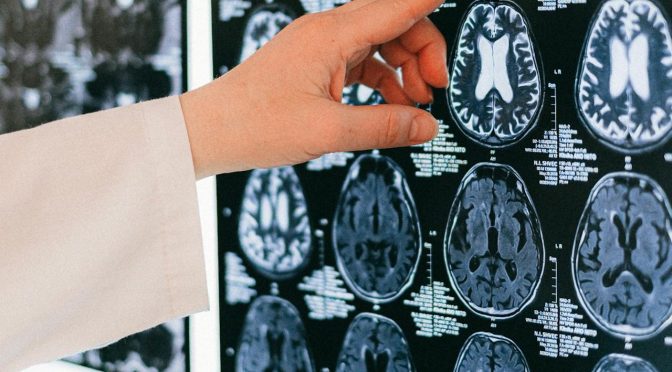
On the weekend, I went for an hour walk, and listened to a 3-part series of discussions between Pat Flynn and neurosurgeon Michael Egnor. The first episode of the series was especially good, talking about the scientific evidence against materialist / physicalist views of our minds. I went hunting around on the Mind Matters web site, and was able to find a good article about two of those evidences.

Here’s the first article from Mind Matters, which talks about the ways that neuroscience is disconfirming materialist views of mind, with scientific evidence.

First evidence:

Dr. Egnor, Professor of Neurosurgery and Pediatrics at Stony Brook University in New York State, offers a number of specific examples, including the pioneering work of neurosurgeon Wilder Penfield (1891–1976) in treating epilepsy. Penfield, observed closely what happens in an epileptic seizure. But the most interesting element he found was what didn’t happen.

Seizure victims might collapse, feel tingles, see flashing lights, experience strange smells. They could have powerful emotions, a sense of doom, oir a sense that everything is hilarious. They can even remember things they thought were long forgotten, like an incident from school days:

But Penfield said that’s where it ends. That is that there’s no other mental content that ever appears in a seizure. He said, for example, you never have a mathematics seizure. You never have a seizure where you can’t stop doing calculus. You never have a logic seizure, you never have a philosophy seizure, you never have a music seizure, you never have a literature seizure. This whole range of abstract thought, things that kind of make us human are never a part of a seizure. And Penfield said, why not? If random electrical discharges in the brain will spark off a thought, why aren’t the thoughts ever abstract? Why aren’t they ever about math?

And Penfield did more experiments, which also raised problems for materialism:

Penfield had started out as a materialist but he ended up thinking, as Egnor puts it, that “maybe the mind isn’t entirely from the brain. Maybe there are aspects of the mind that are spiritual and not material.”

His conviction was strengthened by the more than 1100 “awake” brain operations he did. During surgery, he would stimulate an area of the brain of a patient with serious epilepsy in order to find out if that area did anything important. If not, he could simply remove it if it were damaged, lessening the chances of another serious seizure. Meanwhile, he mapped the areas of the brain he was working on.

And Penfield found exactly the same thing that he had found in his review of epilepsy. That is that when he stimulated the brain, he could stimulate people to move their limbs. He could stimulate people to have perceptions like flashes of light or feelings on the skin. He could stimulate emotions by stimulating certain parts of the brain and he could stimulate memories, but he could never stimulate abstract thought. He could never stimulate mathematics. No matter where he touched in the brain, you didn’t start saying one plus one is two.

That first podcast also contained a second evidence that falsifies materialist conceptions of mind – split-brain surgeries.

This second article from Mind Matters explains:

Split-brain surgery, which gives even Dr. Egnor, who has done it, “the chills,” is a radical effort to control epileptic seizures that jump through the corpus callosum — the huge bundle of nerve fibres that connects the two halves of the brain. By the 1940s, surgeons realized that if they just cut the bundle, severing the connection, the seizure was confined to one side. That cut down on life-destroying seizures. But was the patient then living with two brains that mirror each other but can’t communicate?

Neuroscience pioneer Roger Sperry (1913–1994) won a Nobel Prize for his clever experiments on split-brain subjects, showing what they could and couldn’t do. But, Egnor notes, the big story is the one that receives very little emphasis: “You could cut the brain in half and practically nothing happens.”

[…]McGill University neuroscience researcher Justine Sergent (1950–1994) picked up on this in the 1980s and decided to focus on it:

Egnor: … there are ways that you could present a picture, like an image to the right hemisphere and a picture, an image to the left hemisphere. And if you’re a split brain patient, these hemispheres can’t talk to one another. They don’t communicate.

So she would present, for example, an arrow pointing up to the right hemisphere, and an arrow pointing sideways to the left hemisphere. She would ask the person who had had the split brain surgery, are the arrows pointing in the same direction or different directions?

And the split brain patients almost always got it right. They almost always could tell, they could compare something that the right hemisphere sees with something that the left hemisphere sees.

The problem is that there was no part of their brains that saw both things. And so how did they know? How do you compare things when no part of your brain sees both things?

So, a couple of pieces of scientific evidence that contradict the materialist / physicalist view of mind. Do you think I should add this argument to my list of 6 scientific evidences for a Creator / Designer? It might be fun to have a discussion with Grok AI about this and see if it is good enough to add to my list of 6.

Anyway, here is the podcast. And there is also a transcript for it, if you prefer to listen. If you like that one, you can listen to all three in the series, but the first one was the best, and the second was good.

New study: Risks associated with pediatric “gender-affirming” care

I’m not so old that I have forgotten Joe Biden and the entire Democrat party talking about the need to give children access to “gender-affirming care”. This is the term used to describe steps to deny children’s gender by 1) social denial of gender, 2) injecting them with gender-denying drugs, and 3) performing gender-denying surgeries on children. Let’s see what the new study says.

Here is the new study about treatments for children (ages 10-18), published by Springer in Current Sex Health Reports.

A key question at the center of the controversy regarding pediatric gender-affirming care is whether it is safe and effective. Therefore, analysis of the evidence base for PB/GAH use requires understanding of the potential risks and benefits. Thus, the relevant questions are: what are the goals of PB/GAH in the context of pediatric gender-affirming care? To this end, is treatment effective? What are the risks? Are these treatments safe?

Here is the list of risks that are identified in the study:

  1. Decreased bone mineralization.
  2. Negative impact on neuropsychological functioning.
  3. Metabolic and cardiovascular risks.
  4. Infertility.
  5. Impaired sexual function.
  6. Surgical complications.
  7. Detransition and/or regret.

The study looks at studies about the supposed benefits of “gender-affirming” care, and whether those are proven, as well as the risks of “gender-affirming” care and whether those are proven. It uses previous research to reach conclusions, such as the famous Cass Review from the UK, as well as studies from Sweden and Finald.

The report concludes that the evidence supporting mental health improvements from hormone treatment in pediatric “gender-affirming” care is of low quality. Why? Because the studies often show no significant reduction in psychological distress, suicidality, or other mental health issues. In fact, there are indications of potential worsening of symptoms in certain cases. So, even in the best case, the benefits are not proven.

What about the 7 risks? The report discusses the seven risks I listed above, using clinical studies and reviews. Each risk is supported by evidence.

Here they are, in descending order, from most risky to least risky:

Infertility

The article shows strong proof that puberty blockers and hormones can make it hard or impossible for kids to have children later, especially if treatment starts young. Many studies agree on this risk, and there’s little evidence that fertility can be fully saved, making it the best-supported concern.

Bone Health Deterioration

Research in the article clearly links puberty blockers to weaker bones, which can lead to more fractures, and stopping treatment may not fully fix this. The evidence is solid but ranks second because we don’t know enough about how bones recover over time.

Cardiovascular Complications

The article points to studies showing hormones, especially estrogen, raise the chance of blood clots and heart problems, based on adult experiences. There’s less information for kids, so it ranks third since the evidence partly relies on adults.

Sexual Dysfunction

Puberty blockers can affect sexual development, causing issues like low sex drive or trouble with orgasm, according to some studies in the article. The evidence isn’t as strong as for infertility or bones because long-term effects in kids aren’t well-studied.

Regret/Detransition

Some kids later regret treatment or want to detransition, with studies showing this happens in 1–10% of cases, but the numbers vary. This ranks lower because the evidence is mixed and depends on personal and social factors.

Mental Health Concerns

The article finds little proof that gender-affirming care improves mental health, and some studies suggest it might not help or could worsen things. The evidence is weaker because results differ across studies, making it less certain.

Cancer Risk

Hormones might increase the risk of cancers like breast or prostate cancer, but the article says there’s no solid proof yet, just guesses. This has the least evidence since there are no long-term studies on kids to back it up.

My thoughts:

So, I hope this will help you to have conversations about this topic. I would especially remember the two at the top: infertility and bone health detioration, as the most well-supported by the evidence.

Knight and Rose Show #63: Sean McDowell: Fate of the Apostles

Welcome to episode 63 of the Knight and Rose podcast! In this episode, Wintery Knight and Desert Rose welcome Dr. Sean McDowell to discuss the fate of the Apostles (and Paul and James the brother of Jesus). If you like this episode, please subscribe to the podcast, and subscribe to our YouTube channel. We would appreciate it if you left us a 5-star review on Apple Podcasts or Spotify.

Podcast description:

Christian apologists Wintery Knight and Desert Rose discuss apologetics, policy, culture, relationships, and more. Each episode equips you with evidence you can use to boldly engage anyone, anywhere. We train our listeners to become Christian secret agents. Action and adventure guaranteed. 30-45 minutes per episode. New episode every week.

Episode summary:

Wintery Knight and Desert Rose welcome Dr. Sean McDowell to discuss the fate of the twelve Apostles, as well as Paul and James the brother of Jesus. Many Christians incorporate the willingness of the earliest Christians to die for their beliefs in their case for the resurrection of Jesus. Sean takes a deep dive into history to find out what we know about these early Christians.

Outline and transcript

Here is a transcript of the show provided by TurboScribe AI. TurboScribe AI allows you to translate the transcript into many, many different languages. You can also export the transcript into many different formats, with optional timestamps.

Episode 63:

Speaker biographies

Sean McDowell is a professor of Apologetics at Talbot School of Theology at Biola University. He has earned two Master’s degrees, one in philosophy and one in theology, both from the Talbot school of Theology. And he has a Ph.D. in Apologetics and Worldview Studies from the Southern Baptist Theological Seminary.  He is the author, editor, or co-author of over 20 books, including my favorite introductory apologetics book “Is God Just a Human Invention?” which he co-authored with Jonathan Morrow. His most recent academic book is the 2nd edition of “The Fate of the Apostles”, published by Routledge. He is the co-host of the Think Biblically podcast where he talks about the intersection of faith and culture. Sean has a popular YouTube channel and blog. He’s also an experienced public speaker, including speaking on university campuses. Sean has also participated in debates, including with Matthew Vines, Michael Shermer and James Corbett. 

Wintery Knight is a black legal immigrant. He is a senior software engineer by day, and an amateur Christian apologist by night. He has been blogging at winteryknight.com since January of 2009, covering news, policy and Christian worldview issues.

Desert Rose did her undergraduate degree in public policy, and then worked for a conservative Washington lobbyist organization. She also has a graduate degree from a prestigious evangelical seminary. She is active in Christian apologetics as a speaker, author, and teacher.

Podcast RSS feed:

https://feed.podbean.com/knightandrose/feed.xml

You can use this to subscribe to the podcast from your phone or tablet. I use the open-source AntennaPod app on my Android phone.

Podcast channel pages:

Video channel pages:

Music attribution:

Strength Of The Titans by Kevin MacLeod
Link: https://incompetech.filmmusic.io/song/5744-strength-of-the-titans
License: https://filmmusic.io/standard-license