
All posts by Wintery Knight

https://winteryknight.com/

Government troops shooting protesters in Syria

Now that violence has broken out in Jordan and Syria, countries where we have much more vital strategic interests, will Obama open up a fourth and a fifth military front as well?

Excerpt:

Even as the Obama administration defends the NATO-led air war in Libya, the latest violent clashes in Syria and Jordan are raising new alarm among senior officials who view those countries, in the heartland of the Arab world, as far more vital to American interests.

Deepening chaos in Syria, in particular, could dash any remaining hopes for a Middle East peace agreement, several analysts said. It could also alter the American rivalry with Iran for influence in the region and pose challenges to the United States’ greatest ally in the region, Israel.

In interviews, administration officials said the uprising appeared to be widespread, involving different religious groups in southern and coastal regions of Syria, including Sunni Muslims usually loyal to President Bashar al-Assad. The new American ambassador in Damascus, Robert Ford, has been quietly reaching out to Mr. Assad to urge him to stop firing on his people.

As American officials confront the upheaval in Syria, a country with which the United States has icy relations, they say they are pulled between fears that its problems could destabilize neighbors like Lebanon and Israel, and the hope that it could weaken one of Iran’s key allies.

The Syrian unrest continued on Saturday, with government troops reported to have killed more protesters.With 61 people confirmed killed by security forces, the country’s status as an island of stability amid the Middle East storm seemed irretrievably lost.

For two years, the United States has tried to coax Damascus into negotiating a peace deal with Israel and to moving away from Iran — a fruitless effort that has left President Obama open to criticism on Capitol Hill that he is bolstering one of the most repressive regimes in the Arab world.

[…]Indeed, the crackdown calls into question the entire American engagement with Syria. Last June, the State Department organized a delegation from Microsoft, Dell and Cisco Systems to visit Mr. Assad with the message that he could attract more investment if he stopped censoring Facebook and Twitter. While the administration renewed economic sanctions against Syria, it approved export licenses for some civilian aircraft parts.

The Bush administration, by contrast, largely shunned Damascus, recalling its ambassador in February 2005 after the assassination of a former Lebanese prime minister, Rafik Hariri. Many Lebanese accuse Syria of involvement in the assassination, a charge it denies.

When Mr. Obama named Mr. Ford as his envoy last year, Republicans in the Senate held up the appointment for months, arguing that the United States should not reward Syria with closer ties. The administration said it would have more influence by restoring an ambassador.

Diplomacy only works when it is backed by the CREDIBLE threat of FORCE. For two years, Obama didn’t show that he was willing to use force, and it emboldened the Iran-backed Syrian government to behave violently. Look at how Obama fumbled the Iranian election, where civilians were being shot down in the streets. That’s what causes violence – appeasement of evil. If evil people thought that they were going to have to pay a price for being evil, then they wouldn’t be evil. Obama made friends with bad people – he emboldened them to do bad things.

What is the strategic advantage of war in Libya?

From ABC News.

Excerpt:

Secretary of Defense Robert Gates said that Libya did not pose a threat to the United States before the U.S. began its military campaign against the North African country.

On “This Week,” ABC News’ Senior White House Correspondent Jake Tapper asked Gates, “Do you think Libya posed an actual or imminent threat to the United States?”

“No, no,” Gates said in a joint appearance with Secretary of State Hillary Clinton. “It was not — it was not a vital national interest to the United States, but it was an interest and it was an interest for all of the reasons Secretary Clinton talked about.  The engagement of the Arabs, the engagement of the Europeans, the general humanitarian question that was at stake,” he said.

Why didn’t the Obama administration go to Congress before engaging in military action in oil-rich Libya?

During his campaign for the Presidency, in December, 2007, Barack Obama told The Boston Globe that “The President does not have power under the Constitution to unilaterally authorize a military attack in a situation that does not involve stopping an actual or imminent threat to the nation.”

Earlier in 2007, then-Senator Hillary Clinton said in a speech on the Senate floor that, “If the administration believes that any — any — use of force against Iran is necessary, the President must come to Congress to seek that authority.”

Bush debated the war in Iraq for 6 months and got permission from Congress before going in. Why couldn’t Obama do it? Why does Obama have to rush to war?
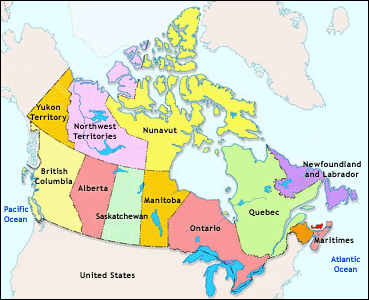
Conservatives lead Liberals by 19 points in latest 2011 election poll

Map of Canada
Map of Canada

Canada’s opposition parties decided not to support Stephen Harper’s Conservative Party, so Canada will hold a federal election in early May 2011. But should the opposition parties have called an election? Not according to the latest poll.

From the liberal Ottawa Citizen.

Excerpt:

Prime Minister Stephen Harper’s Conservatives begin an election campaign this weekend far ahead of their political rivals in public favour and would be poised to win a “comfortable” majority if Canadians cast their votes now, a new poll has found.

The national survey, conducted exclusively for Postmedia News and Global National, reveals that voter support is declining for the opposition Liberals who have put forward a non-confidence motion that will lead to the defeat of the Conservative government in the House of Commons Friday afternoon.

The March 22-23 poll by Ipsos Reid found that public support remains solid for the Tories despite recent opposition attempts to draw attention to such controversies as the government’s treatment of Parliament and revelations that an ex-senior aide to Harper lobbied a department to get funds for his fiance, a former escort.

The Conservatives are now supported by 43 per cent of decided voters — up by three points from two weeks ago.

Just as important, the Tories now have a widening 19-point lead over the Liberals led by Michael Ignatieff.

[…]”The Tories are starting this election campaign in a better place than they have started the last three campaigns,” Ipsos Reid president Darrell Bricker said in an interview Thursday. “With 43 per cent, they’re probably quite comfortably in majority territory.”At dissolution of Parliament, the Tories will have 143 seats. They need to win just 12 more — to reach the 155-seat mark — to get a majority government.Bricker said the problem for the Liberals is that their efforts to discredit the Tories on ethics are going nowhere. 

[…]According to the poll, the Tories have opened up a commanding lead in vote-rich Ontario. In that key battleground, the Conservatives stand at 46 per cent, compared to 30 per cent for the Liberals, 16 per cent for the NDP and eight per cent for the Greens.

In Quebec, the Tories appear poised to easily hang on to their seats. While the Bloc would receive 41 per cent of the vote, the Conservatives (25 per cent) have moved into second position, followed by the Liberals (18 per cent), the NDP (13 per cent) and the Greens (three per cent).

In another key battleground — British Columbia — the Conservatives (50 per cent) hold a solid lead over the Liberals (22 per cent), with the NDP (20 per cent) not far behind. The Greens (seven per cent) trail.

[…]In Alberta, the Tories stand at 54 per cent support, while the Liberals have 23 per cent, the NDP have 17 per cent and the Green party has five per cent.In Saskatchewan/Manitoba, the Tories are ahead at 66 per cent, while the Liberals have 18 per cent and NDP has 13 per cent.

In the Atlantic region, the Tories are at 41 per cent, followed by the Liberals at 28 per cent, the NDP at 20 per cent, and the Greens at 11 per cent.

Just to refresh you, the Liberals are the socialist party, and the NDP are the communist party, and the Bloc is the French communist party. The conservatives are strong on defense and fiscal issues, and they do have some good social conservatives like Maurice Vellacott and Rob Anders. The Conservatives do understand the need for strong families, low unemployment rates and low taxes as a support for social conservatism, but there is not much they can do about that while they are still a minority party. That could all change with this election, and you might see some common sense reforms to strengthen marriage (reform divorce laws and custody laws), and have some restrictions on abortion, like the kind that the state Republican parties pass.

For example, you might finally see moderate reforms like parental consent or born alive infant protection or a bill to make coerced abortion a prosecutable offense or more ultrasounds in hospitals or tax deductions for adoptions. This would be in addition to all the wonderful military and economic laws they could pass if they were a majority: a helicopter carrier, new guided-missile frigates, new safe nuclear reactors, lower minimum wage rates to raise the employment rate, free trade deals (e.g. – with Singapore, India, South Korea, Ukraine, Georgia and the Baltic nations), employer payroll tax cuts to encourage hiring of more employees, vouchers for school choice so parents could choose schools, lower corporate tax rates to encourage businesses to move to Canada, a national right-to-work law so workers wouldn’t have to join a union, dismantle the long gun registry to encourage self-defense of homes and property, abolish all Human Rights Commissions and Human Rights Tribunals, privatize CBC, Canada Post and other Crown corporations to make them more balanced politically and more responsive to consumers, double the child tax credit for married couples to encourage married couples to have children, and put in income splitting for married couples to allow mothers to stay home for a couple of years with new kids, etc. At least they could ask the Canadian people what they want and try to put in common sense reforms that support working families.

The election is set for May 2011. I cannot believe that the Conservatives are more popular in Saskatchewan than in Alberta. Alberta used to be the conservative headquarters of Canada, with Calgary at the center. Now I am not so sure what to think.

Libyan opposition forces linked to Al-Quaeda

From the UK Telegraph. (H/T Gateway Pundit)

Excerpt:

Abdel-Hakim al-Hasidi, the Libyan rebel leader, has said jihadists who fought against allied troops in Iraq are on the front lines of the battle against Muammar Gaddafi’s regime.

In an interview with the Italian newspaper Il Sole 24 Ore, Mr al-Hasidi admitted that he had recruited “around 25″ men from the Derna area in eastern Libya to fight against coalition troops in Iraq. Some of them, he said, are “today are on the front lines in Adjabiya”.

Mr al-Hasidi insisted his fighters “are patriots and good Muslims, not terrorists,” but added that the “members of al-Qaeda are also good Muslims and are fighting against the invader”.

His revelations came even as Idriss Deby Itno, Chad’s president, said al-Qaeda had managed to pillage military arsenals in the Libyan rebel zone and acquired arms, “including surface-to-air missiles, which were then smuggled into their sanctuaries”.

Mr al-Hasidi admitted he had earlier fought against “the foreign invasion” in Afghanistan, before being “captured in 2002 in Peshwar, in Pakistan”. He was later handed over to the US, and then held in Libya before being released in 2008.

Columnist Charles Krauthammer is not happy with the way Obama is handling Libya.

Excerpt:

And as for the United States, who knows what American policy is. Administration officials insist we are not trying to bring down Qaddafi, even as the president insists that he must go. Although on Tuesday Obama did add “unless he changes his approach.” Approach, mind you.

In any case, for Obama, military objectives take a back seat to diplomatic appearances. The president is obsessed with pretending that we are not running the operation — a dismaying expression of Obama’s view that his country is so tainted by its various sins that it lacks the moral legitimacy to . . . what? Save Third World people from massacre?

Obama seems equally obsessed with handing off the lead role. Hand off to whom? NATO? Quarreling amid Turkish resistance (see above), NATO still can’t agree on taking over command of the airstrike campaign, which is what has kept the Libyan rebels alive.

This confusion is purely the result of Obama’s decision to get America into the war and then immediately relinquish American command. Never modest about himself, Obama is supremely modest about his country. America should be merely “one of the partners among many,” he said Monday. No primus inter pares for him. Even the Clinton administration spoke of America as the indispensable nation. And it remains so. Yet at a time when the world is hungry for America to lead — no one has anything near our capabilities, experience, and resources — America is led by a man determined that it should not.

A man who dithers over parchment. Who starts a war from which he wants out right away. Good God. If you go to take Vienna, take Vienna. If you’re not prepared to do so, better then to stay home and do nothing.

I am as much a warmonger as anyone could be, but I do think it is important to do your homework first. The first question to ask before going to war is “what is the objective?” I am still not sure what to make of this Libyan action – why is it good for the United States to risk our blood and treasure in Libya? The Telegraph story makes me think that it is a bad idea for us to get involved in Libya, unless we intended to occupy it and build it up, like we did with Iraq. But conquering Iraq and building it back up made sense strategically. What is the point of getting involved in Libya?