All posts by Wintery Knight

https://winteryknight.com/

Who halted the FBI investigation of Hillary’s private unsecure e-mail server?

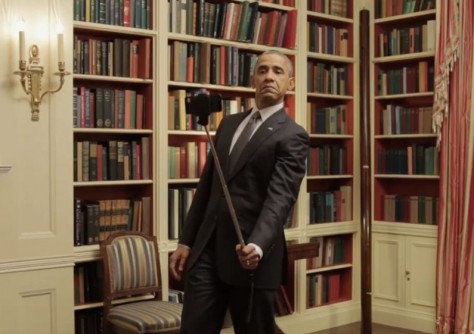
Is Barack Obama focused on protecting the American people?

That’s the question I’ve been asking myself: who killed the FBI investigation of Hillary’s e-mail server and the Clinton Foundation?

Former attorney general Michael Mukasey has an answer to the question in the Wall Street Journal.

First a quick review of the facts:

Nonetheless, in July [FBI director Comey] announced that “no reasonable prosecutor” would seek to charge [Hillary Clinton] with a crime, although Mrs. Clinton had classified information on a private nonsecure server—at least a misdemeanor under one statute; and although she was “extremely careless” in her handling of classified information such that it was exposed to hacking by hostile foreign nations—a felony under another statute; and apparently had caused the destruction of emails—a felony under two other statutes. He then told Congress repeatedly that the investigation into her handling of emails was closed.

Those decisions were not his to make, nor were the reasons he offered for making them at all tenable: that prosecutions for anything but mishandling large amounts of classified information, accompanied by false statements to investigators, were unprecedented; and that criminal prosecutions for gross negligence were constitutionally suspect.

Members of the military have been imprisoned and dishonorably discharged for mishandling far less information, and prosecutions for criminal negligence are commonplace and entirely permissible. Yet the attorney general [Loretta Lynch], whose decisions they were, and who had available to her enough legal voltage to vaporize Mr. Comey’s flimsy reasons for inaction, told Congress she would simply defer to the director.

That July announcement of Mr. Comey, and that testimony by Attorney General Loretta Lynch, also had a history.

When the FBI learned that two of the secretary’s staff members had classified information on their computers, rather than being handed grand-jury subpoenas demanding the surrender of those computers, the staff members received immunity in return for giving them up. In addition, they successfully insisted that the computers not be searched for any data following the date when Congress subpoenaed information relating to its own investigation, and that the computers be physically destroyed after relevant data within the stipulated period was extracted.

The technician who destroyed 30,000 of Mrs. Clinton’s emails after Congress directed that they be preserved lied to investigators even after receiving immunity. He then testified that Clinton aides requested before service of the subpoena that he destroy them, and that he destroyed them afterward on his own initiative.

Why would an FBI director, who at one time was an able and aggressive prosecutor, agree to such terms or accept such a fantastic story?


Yes, why did Comey stop the FBI investigation of Hillary Clinton given all of these facts?

Mukasey explains who called off the investigation and why:

The search for clues brings us to an email to then-Secretary Clinton from President Obama, writing under a pseudonym, that the FBI showed to Ms. Abedin. That email, along with 21 others that passed between the president and Secretary Clinton, has been withheld by the administration from release on confidentiality grounds not specified but that could only be executive privilege.

After disclosure of those emails, the president said during an interview that he thought Mrs. Clinton should not be criminally charged because there was no evidence that she had intended to harm the nation’s security—a showing required under none of the relevant statutes. As indefensible as his legal reasoning may have been, his practical reasoning is apparent: If Mrs. Clinton was at criminal risk for communicating on her nonsecure system, so was he.

That presented the FBI director with a dilemma that was difficult, but not complex. It offered two choices. He could have tried to proceed along the course marked by the relevant laws. The FBI is powerless to present evidence to a grand jury, or to issue grand-jury subpoenas. That authority lies with the Justice Department, headed by an attorney general who serves, as her certificate of appointment recites, “during the pleasure of the President of the United States for the time being.”

[…]Instead, Mr. Comey acceded to the apparent wish of President Obama that no charges be brought. 

Obama would have wanted the FBI investigation stopped because if the Department of Justice decided that Clinton “was at criminal risk” for communicating on Clinton’s nonsecure system, then so was he. Fortunately for Obama, he appointed Loretta Lynch as attorney general, and we know she won’t prosecute Democrats, because she refused to go after the IRS for persecuting conservative organizations ahead of the 2012 election, so that Obama would win.

So, did Obama know that he was communicating to Secretary Clinton on an unsecure private e-mail server?

"We need to clean this up" = We need to cover this up
“We need to clean this up” = We need to cover this up

His own staff sent e-mails confirming that he knew.

The far-left New York Times reports:

In a March 2015 interview, President Obama said that he had learned about Hillary Clinton’s use of a private email server as secretary of state “the same time everybody else learned it, through news reports.”

But that assertion concerned aides of Mrs. Clinton, who knew that the president himself had received emails from the private address, according to a hacked email made public on Tuesday by WikiLeaks.

“We need to clean this up — he has emails from her — they do not say state.gov,” Cheryl D. Mills, a top aide, wrote to John D. Podesta, another senior adviser, on March 7, 2015.

Two days later, Mr. Obama’s spokesman, Josh Earnest, tried to clarify the president’s remarks, saying that he had, in fact, exchanged emails with Mrs. Clinton through her private account.

And far left CNN confirms:

A top Hillary Clinton adviser said President Barack Obama’s answer on Clinton’s private email use as secretary of state needed “clean up,” according to hacked emails from her campaign chairman released Tuesday.

In a March 2015 email chain, Cheryl Mills, a top legal adviser and longtime member of Clinton’s inner circle, told campaign Chairman John Podesta of an interview in which Obama said he learned about Clinton’s private email setup from news reports.

“We need to clean this up — he has emails from her — they do not say state.gov,” Mills wrote to Podesta.

So, who ordered the FBI to stop investigating Hillary’s private e-mail server? Who ordered the Department of Justice not to proceed with the criminal investigation? Obama was the one with the authority to call it off, and Obama had a reason for calling it off: he was at risk of criminal charges himself.
Reformation Day celebrates the supremacy of Scripture and reason in theology

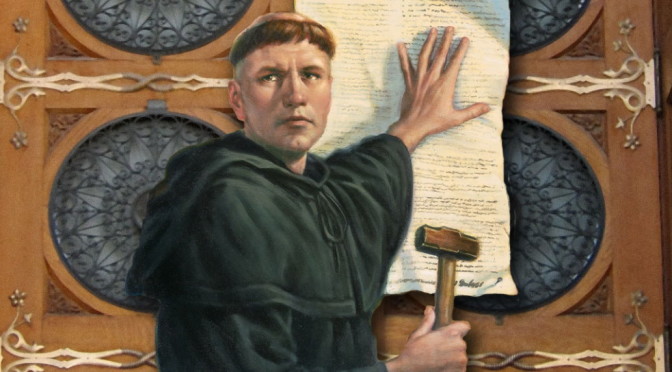
Martin Luther defies the Roman Catholic hierarchy with his 95 Theses

The Ligonier Ministries web site has a summary of the event that kicked off the Reformation.

Excerpt:

On October 31, 1517, Martin Luther tacked up 95 theses on the church door at Wittenberg. With this act, he hoped to provoke a discussion among the scholars about the abuses of the indulgences by the Roman Catholic Church. He was not trying to create a public furor by any means, but within a fortnight, these theses had spread through the country like wildfire. The last thing Luther had in mind was to start some kind of major controversy, but nevertheless major controversy did begin.

From the discussions at Wittenberg, the disputations began to accelerate and escalate. Copies of the theses reached Rome and critical meetings were scheduled with the young monk. In these debates, Luther was maneuvered into proclaiming publicly that he had questions about the infallibility of church councils and also that he thought that it was possible that the pope could err. In 1520 a papal encyclical was issued which condemned Martin Luther as a heretic. Luther burned the document in a public bonfire and his defiance before the church was now a matter of record.

In response, Martin Luther picked up his pen to challenge the entire penitential system of the Roman Catholic Church, which undermined in principle the free remission of sins that is ours in the gospel. By doing so, he was unswervingly advocating his commitment to sola fide, the doctrine of justification by faith alone.

In 1521, Luther was summoned to the Imperial Diet, an authoritative meeting that involved the princes of the church, called by the Emperor of the Holy Roman Empire to be held in the city of Worms in Germany. Luther was an outlaw. For him to appear at the Diet was to risk his very life; therefore, he was given safe conduct by the Emperor to attend. With a few friends, Luther traveled from Wittenberg to Worms. The eyewitnesses of that episode tell us that when Luther’s little covered wagon appeared around the corner of the bend, there were lookouts posted in the church tower at Worms. All the people were agog waiting for the arrival of this notorious person. When Luther’s caravan was sighted, people were throwing their hats in the air, blowing trumpets, and creating all the fanfare of the arrival of the hero. It was the 16th century answer to a ticker-tape parade.

Things, however, became very solemn in a hurry because the next day he appeared before the Diet. His books were stacked on a table in the room, and he was asked and ordered to recant of his writings. This surprised Luther because he thought he was going to have an opportunity to defend his writings; but the only question really of any importance that was asked of him was this: “Are these your writings?” And when he said yes, they said, “Are you ready to recant of them?”

Hollywood has their version of Luther standing there boldly with his fist in the air saying, “Here I stand!” and so on. But instead he dropped his chin on his chest and muttered something that nobody could understand, so they asked him to speak up. “What did you say?” He said, “May I have 24 hours to think about it.” And so Luther was granted a reprieve of 24 hours to return to his room to contemplate the seriousness of this occasion.

The prayer that Luther wrote in that ensuing 24-hour period was one of the most moving prayers I have ever read in my life. In that prayer, Luther cried out for God in his sense of total loneliness fearing that God had abandoned him, and proclaimed, “O Lord, I am Thine, and the cause is Thine, give me the courage to stand.”

And on the morrow, Luther was called once again back to the court and was told to reply to the question. He said to the Diet, “Unless I am convinced by sacred Scripture or by evident reason, I cannot recant, for my conscience is held captive by the Word of God, and to act against conscience is neither right nor safe. Here I stand. I can do no other. God help me.” And with that there was an instant uproar.

The Protestant Reformation emphasizes the responsibility of each person to become familiar with what the Bible teaches for themselves and to make sense of it using the laws of logic for themselves. There is an enormous focus on the individual’s responsibility to puzzle theology out for himself, using the tools available to him: reason, science, Scripture, and history. When doing theology, Protestants do not accept the authority of someone who has a fancy title, fancy hat, fancy robe or fancy staff. Everyone is responsible to read the Bible, read systematic theology, consult history, and determine what the truth is based on evidence, not authority.

The Reformation put forward the famous five Solas: “Sola Scriptura” (Scripture Alone); “Sola Gratia” (Grace Alone); “Sola Fide” (Faith Alone); “Solus Christus” (Christ Alone); and “Soli Deo Gloria” (To God Alone Be Glory). The vertical relationship with God is seen as more important than making people feel good here and now. True beliefs about God are deemed to be more important than being a good social worker. And that’s why Jesus said that the most important commandment is to love God, then secondly, to love your neighbor. It’s important to get that in the right order, because true beliefs about God’s existence, God’s character, and God’s actions in history are the most important things.

The Reformation was the beginning of evangelical Protestantism, which is really the view that the Christian religion ought to be rooted in actual historical events that are documented in the Bible.

Hillary Clinton, the Clinton Foundation, and Russia’s acquisition of American uranium

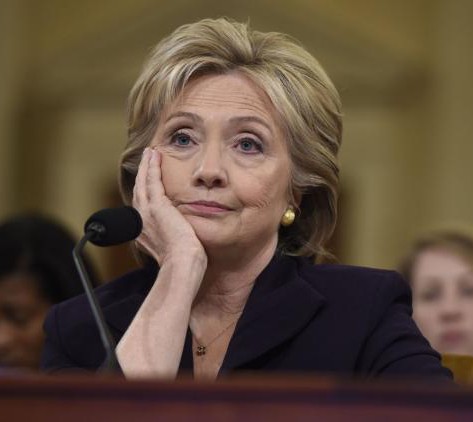
Hillary Clinton look bored about the deaths of 4 Americans who asked for her help

That headline is sensational, but consider this article by Andy McCarthy in National Review.

It says:

Hillary and her husband, former president Bill Clinton, operated the Clinton Foundation. Ostensibly a charity, the foundation was a de facto fraud scheme to monetize Hillary’s power as secretary of state (among other aspects of the Clintons’ political influence). The scheme involved (a) the exchange of political favors, access, and influence for millions of dollars in donations; (b) the circumvention of campaign-finance laws that prohibit political donations by foreign sources; (c) a vehicle for Mrs. Clinton to shield her State Department e-mail communications from public and congressional scrutiny while she and her husband exploited the fundraising potential of her position; and (d) a means for Clinton insiders to receive private-sector compensation and explore lucrative employment opportunities while drawing taxpayer-funded government salaries.

While the foundation did perform some charitable work, this camouflaged the fact that contributions were substantially diverted to pay lavish salaries and underwrite luxury travel for Clinton insiders. Contributions skyrocketed to $126 million in 2009, the year Mrs. Clinton arrived at Foggy Bottom. Breathtaking sums were “donated” by high-rollers and foreign governments that had crucial business before the State Department. Along with those staggering donations came a spike in speaking opportunities and fees for Bill Clinton. Of course, disproportionate payments and gifts to a spouse are common ways of bribing public officials — which is why, for example, high-ranking government officeholders must reveal their spouses’ income and other asset information on their financial-disclosure forms.

While there are other egregious transactions, the most notorious corruption episode of Secretary Clinton’s tenure involves the State Department’s approval of a deal that surrendered fully one-fifth of the United States’ uranium-mining capacity to Vladimir Putin’s anti-American thugocracy in Russia.

Here are the details about the donations:

In a nutshell, in 2005, under the guise of addressing the incidence of HIV/AIDS in Kazakhstan (where the disease is nearly nonexistent), Bill Clinton helped his Canadian billionaire pal Frank Giustra to convince the ruling despot, Nursultan Nazarbayev (an infamous torturer and human-rights violator), to grant coveted uranium-mining rights to Giustra’s company, Ur-Asia Energy (notwithstanding that it had no background in the highly competitive uranium business). Uranium is a key component of nuclear power, from which the United States derives 20 percent of its total electrical power.

In the months that followed, Giustra gave an astonishing $31.3 million to the Clinton Foundation and pledged $100 million more. With the Kazakh rights secured, Ur-Asia was able to expand its holdings and attract new investors, like Ian Telfer, who also donated $2.35 million to the Clinton Foundation. Ur-Asia merged with Uranium One, a South African company, in a $3.5 billion deal — with Telfer becoming Uranium One’s chairman. The new company proceeded to buy up major uranium assets in the United States.

[…][L]ater, it was announced that Russia’s Rosatom had purchased 17 percent of Uranium One.

Later on:

[…][T]he Russian company sought to acquire a controlling interest in Uranium One. That would mean a takeover not only of the Kazakh mines but of the U.S. uranium assets as well. Such a foreign grab requires approval by the Committee on Foreign Investment in the United States, a powerful government tribunal that the secretary of state sits on and heavily influences. Though she had historically postured as a hawk against foreign acquisitions of American assets with critical national-security implications, Secretary Clinton approved the Russian takeover of Uranium One. During and right after the big-bucks Russian acquisition, Telfer contributed $1.35 million to the Clinton Foundation. Other people with ties to Uranium One appear to have ponied up as much as $5.6 million in donations.

Does this sound unbelievable? Well consider this article from the far left New York Times, of all places.

Excerpt:

The headline in the website Pravda trumpeted President Vladimir V. Putin’s latest coup, its nationalistic fervor recalling an era when its precursor served as the official mouthpiece of the Kremlin: “Russian Nuclear Energy Conquers the World.”

The article, in January 2013, detailed how the Russian atomic energy agency, Rosatom, had taken over a Canadian company with uranium-mining stakes stretching from Central Asia to the American West. The deal made Rosatom one of the world’s largest uranium producers and brought Mr. Putin closer to his goal of controlling much of the global uranium supply chain.

But the untold story behind that story is one that involves not just the Russian president, but also a former American president and a woman who would like to be the next one.

At the heart of the tale are several men, leaders of the Canadian mining industry, who have been major donors to the charitable endeavors of former President Bill Clinton and his family. Members of that group built, financed and eventually sold off to the Russians a company that would become known as Uranium One.

Beyond mines in Kazakhstan that are among the most lucrative in the world, the sale gave the Russians control of one-fifth of all uranium production capacity in the United States. Since uranium is considered a strategic asset, with implications for national security, the deal had to be approved by a committee composed of representatives from a number of United States government agencies. Among the agencies that eventually signed off was the State Department, then headed by Mr. Clinton’s wife, Hillary Rodham Clinton.

As the Russians gradually assumed control of Uranium One in three separate transactions from 2009 to 2013, Canadian records show, a flow of cash made its way to the Clinton Foundation. Uranium One’s chairman used his family foundation to make four donations totaling $2.35 million. Those contributions were not publicly disclosed by the Clintons, despite an agreement Mrs. Clinton had struck with the Obama White House to publicly identify all donors. Other people with ties to the company made donations as well.

And shortly after the Russians announced their intention to acquire a majority stake in Uranium One, Mr. Clinton received $500,000 for a Moscow speech from a Russian investment bank with links to the Kremlin that was promoting Uranium One stock.

That’s what Hillary Clinton did as Secretary of State. I wonder if Democrat voters are paying attention. I wonder if national security is important to them.