
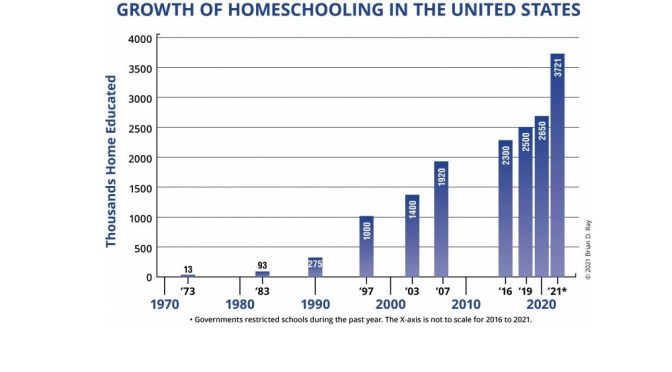
So, I’ve noticed that lately, many Christian, conservatives express Christian and conservative convictions when they are in a Christian, conservative audience. But when they are in the company of secularists, feminists and socialists, they keep quiet. In this post, I’ll explain why I think that using evidence from studies helps us to be bolder, then we’ll see a study about homeschooling.
Well, I can only explain why I am so inclined to fight. Just because I have an alias online, that doesn’t mean that I don’t fight for what I believe in under my real name in person. I take every opportunity to push for authentic Christian (not woke) truth claims and values in person. It’s especially important for Christians and conservatives of color to do this, in the current culture.
But how can you fight with people? I recently faced off against a bully in my company at a large company meeting. I had heard that this guy was a yeller, and had previously yelled at other employees. And that he was extremely progressive, and in a liberal echo chamber where he never heard any intellectual conservatives or Christians. I attacked him on two issues: socialized medicine and gun control. By using studies to explain how I changed my mind, I was able to escape his caricature of Christian conservatives as stupid fundamentalists who don’t think critically.
With that said, here is a report from the Wall Street Journal about a new study that you might be able to use to be bold with people who oppose homeschooling. (Full text of the article here)
It says:
Elizabeth Bartholet, a Harvard Law School professor, sparked debate in May 2020 by calling for a presumptive ban on home schooling. Home-schooled children, Ms. Bartholet asserted, are less likely than their school-attending peers to receive a “meaningful education” and more likely to be subject to physical abuse or indoctrination by “extreme religious ideologues.”
[…]Ms. Bartholet criticized home schooling for both diminishing children’s educational attainment and undermining their physical and mental health. One of us (Ms. Chen) recently examined how school type affected adolescents on a range of long-term outcomes into young adulthood, including educational attainment, mental health and social integration. Looking at data on more than 12,000 children of nurses (mostly white and mostly well-off) surveyed from 1999 to 2010, we estimated the effects of school type independently from other factors such as socioeconomic status, race and region.
To the extent that college graduation is a fair proxy for having received a “meaningful education,” Ms. Bartholet was right to point to a disadvantage for home schooling: The home-schoolers in our sample were 23% less likely to attend college than public-school students. This may reflect lower attainment in learning or less interest in attending college, but it may also be a result of admissions policies at some U.S. universities that disadvantage home-schooled students.
Parents want their kids to be well-educated and professionally successful, but they also want them to be healthy, happy and virtuous. By this broader measure of success, home schooling has advantages. Among the students we examined, home-schoolers were 33% more likely to volunteer, 31% more forgiving and 51% more likely to attend religious services in young adulthood than those who attended public school. (“Levels of forgiveness” were measured on a self-reported four-point scale, which other research has shown predicts some subsequent health and well-being outcomes.) The difference in religious participation has public-health implications, since those who attend services regularly have substantially lower risks of alcohol and drug abuse, depression and suicide. They also have a lower risk of premature death for any reason than those who never attend.
The picture of the home-schooled student that emerges from the data doesn’t resemble the socially awkward and ignorant stereotype to which Ms. Bartholet and others appeal. Rather, home-schooled children generally develop into well-adjusted, responsible and socially engaged young adults.
The libertarians at the Foundation for Economic Education (FEE) reached out to the researchers, and they got more information about that concern about lower rates of university attendance:
I reached out to Case and Chen for additional comments on their study’s findings, including how they think the homeschooling data and outcomes might have changed since 2010, when their data set ended.
“We are also glad to see that some colleges, including some top-tier colleges, have become more flexible in their admission policies for homeschoolers over the past years,” Chen responded.
Indeed, more colleges and universities have implemented clearer guidelines and policies for homeschooled students in recent years, and many are now eager to attract homeschooled applicants. In 2015, Business Insider noted that homeschooling is the “new path to Harvard,” and in 2018 the university profiled several of its homeschooled students.
The researchers also suspect that the well-being gap between homeschoolers and public school students has widened over the past decade, with homeschoolers faring even better.
“For instance, social media apps have come to smartphones over the past few years, leading to their widespread adoption by teenagers and even younger children,” Chen told me this week. “Some prior studies suggested that such increasing smartphone use may have contributed to the recent huge spikes in adolescent depression, anxiety, and school loneliness. Cyberbullying, sexting and ‘phubbing’ have also become more common in children’s daily lives, especially in school settings. We might expect that these issues may be less common among homeschoolers than their public school peers.”
I think if you are going to do homeschooling, it will have to be very practical. I think the world is too dangerous right now. We need to focus on learning practical skills that pay. So, don’t focus on things classics and Latin early on. I love the classics, but only the classics that teach something practical should be relied on. Instead, math and computer science should be the most important subjects, along with economics. Or choose the hard sciences like biology, chemistry, physics, etc. Get your STEM degrees, get your private sector work experience, then homeschool your kids with a focus on STEM.
I do think that after you get a job, then you should go back and work on the classics, literature and philosophy. But the financial situation we are in – with so much government debt, so many people in debt, and so many people on welfare – suggests that we should make sure that we are independent of the government and debt-free as quickly as possible.
(Image source: NHERI.org)
 WINTERY KNIGHT
Shocking!!!!
LikeLiked by 1 person